
The best places to go skiing depend on questions most lists never ask. Do you want groomed cruisers or steep couloirs? Can you fly into a major hub, or do you need a resort within driving distance? Is your budget built around a five-star chalet, or a shared apartment and a lift pass? Once those questions are answered, the list narrows fast.
This guide sorts the world’s strongest ski destinations by what actually separates them: terrain size and difficulty, snow reliability, cost, and season. You’ll find the Alpine giants that define European skiing. There are North American resorts built for long days on wide runs. Japan supplies the powder that skiers plan entire trips around. A Southern Hemisphere pick covers anyone chasing snow in July. Read the picks below, then use the buying framework afterward to match a resort to the trip you actually want to take.
How to actually choose between the best places to go skiing
Every “best ski resort” list skips the variable that matters most: fit. A resort that thrills an expert can intimidate a first-timer. A budget pick in the Alps can still cost more than a week in North America once flights and food are counted.
Start with skill level. Beginners do better at resorts with wide, low-angle terrain and dedicated learning zones. Park City and Andorra’s Grandvalira both fit that description well. Steep, expert-heavy mountains like Jackson Hole are the wrong first trip. Intermediate skiers get the most from large, linked ski areas. The Arlberg and Espace Killy both open hundreds of kilometers on one lift pass.
Snow reliability changes by region and month. The Alps and the Rockies are most consistent from January through March. Japan’s Hokkaido resorts hold reliable powder from late December into February. Cold air moving off the Sea of Japan makes that possible. If you want snow in June or July, the Southern Hemisphere is the only real option.
Budget swings more on flights and food than on the lift pass itself. Eastern European and Pyrenean resorts routinely undercut the Alps and North America on lodging and meals. Lift tickets can be similar in price even when everything else is cheaper.
Finally, weigh terrain size against crowds. A famous name draws lift lines. A smaller, well-run resort can deliver better skiing per day, even with fewer marked runs.
Best places to go skiing in the European Alps
The Alps still set the standard for scale. Two resorts show why: linked terrain that runs for days, and snow-sure altitude in towns built around the sport.
Zermatt, Switzerland
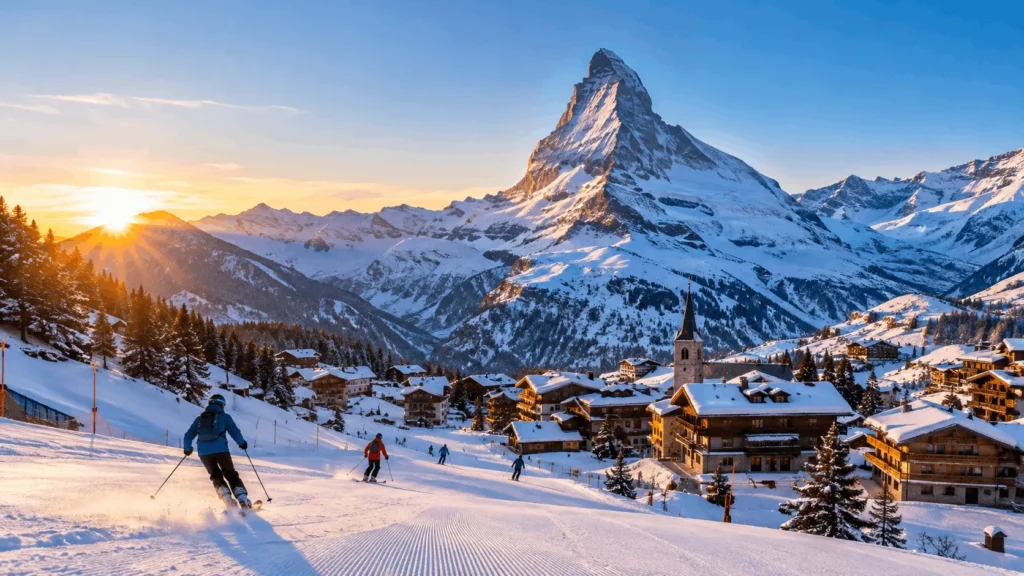
Zermatt sits below the Matterhorn at 1,620 meters. Lifts run up to Matterhorn Glacier Paradise at 3,883 meters, the highest cable car station in Europe. That altitude keeps the glacier skiable through summer, so this is one of the few Alpine resorts open year-round. The Matterhorn Alpine Crossing links Zermatt to Cervinia in Italy, letting skiers cover two countries on one pass. The car-free village keeps the base pedestrian-friendly. The mountain restaurants here are genuinely good, not just convenient. Zermatt suits strong intermediates and advanced skiers who want big vertical and postcard scenery. Beginners will find gentler terrain lower down, but the main appeal is the high alpine.
The Arlberg (St. Anton and Lech Zürs), Austria
St. Anton is where modern alpine skiing effectively began. It still plays that role for advanced skiers who want steep pitches and serious off-piste terrain. The Flexenbahn lift connected St. Anton to Lech and Zürs, and the Arlberg is now Austria’s largest linked ski area. More than 300 kilometers of runs span three distinct ski regions. Lech and Zürs offer a calmer, more upscale base for the same terrain network. St. Anton keeps the rowdier après-ski reputation. Intermediates can explore the whole region without trouble. True beginners will do better basing in Lech’s gentler sectors instead.
Best places to go skiing in North America
North America trades some of the Alps’ village charm for bigger single mountains. Logistics are easier from major airports, and the terrain rewards a full day of laps.
Whistler Blackcomb, Canada
Whistler Blackcomb is North America’s largest ski resort, with 8,171 acres across two mountains. The Peak 2 Peak Gondola connects them, a 4.4-kilometer span that ranks among the highest and longest lift systems in the world. Skiers get more than 200 marked runs, 16 alpine bowls, and three glaciers. A week here rarely feels repetitive. The resort sits about two hours from Vancouver, so an international trip doesn’t require a rural transfer. Whistler suits nearly every skill level. Wide beginner runs sit near the village, and steep bowls built the resort’s reputation among experts.
Park City, Utah
Park City became the largest single ski resort in the United States after Park City Mountain and Canyons merged. The combined resort covers more than 7,300 skiable acres served by 38 lifts. It sits roughly 35 minutes from Salt Lake City International Airport. That makes it one of the easiest major resorts to reach from a domestic flight. The terrain leans friendly, with wide groomers and a genuine Main Street town rather than a purpose-built village. Families and intermediate skiers get the most value here. Advanced skiers still have enough steep terrain to stay busy for a week.
Jackson Hole, Wyoming
Jackson Hole is built for skiers who have outgrown groomed cruisers. The Aerial Tram climbs 4,139 continuous vertical feet to Rendezvous Mountain. That’s home to Corbet’s Couloir, a chute that opens with a blind drop onto a steep pitch. It has intimidated experts for decades. Half the resort’s terrain is rated expert, with only 10 percent classed as beginner, so this isn’t the place to learn. What it offers instead is real Wyoming scenery and a small western town rather than a purpose-built village. The terrain stays challenging even after a dozen visits.
Best place to go skiing for deep, reliable powder: Niseko, Japan
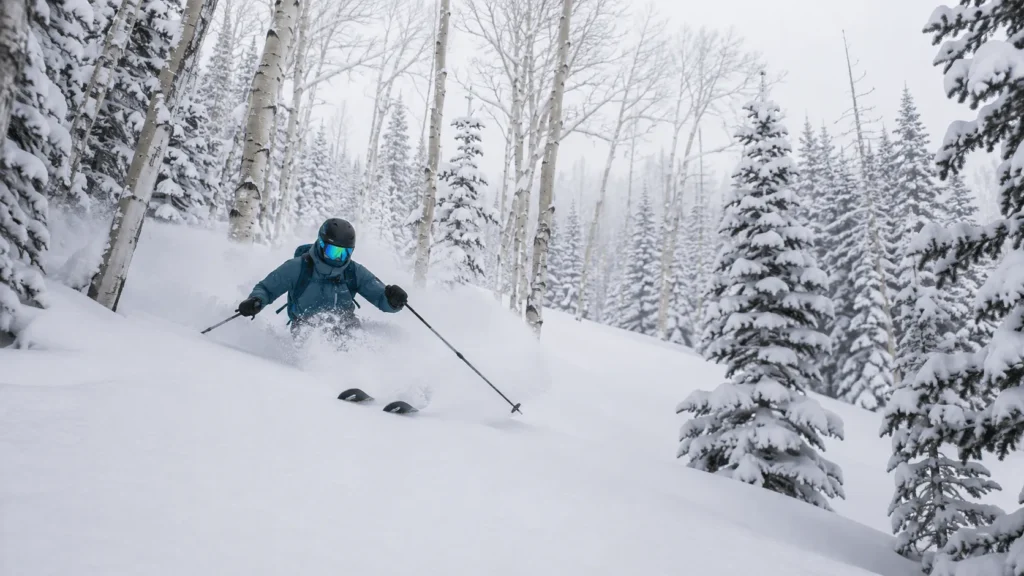
If powder quality is the only criterion, Niseko wins. The resort sits on Hokkaido’s western coast, where cold, dry air crosses the Sea of Japan. It drops fine, light snow almost daily through January and February. Niseko United links four separate ski areas on a single pass: Grand Hirafu, Hanazono, Niseko Village, and Annupuri. Together they cover more than 2,000 acres of varied terrain without a resort change. Snow here is often measured in meters rather than inches. Tree skiing is unusually good too, since the trees are naturally spaced for it. Beyond the mountain, Niseko pairs the skiing with hot spring baths and excellent ramen. It suits intermediate and advanced skiers most, since the draw is powder, not groomed cruising.
Best place for summer skiing in the Southern Hemisphere: Portillo, Chile
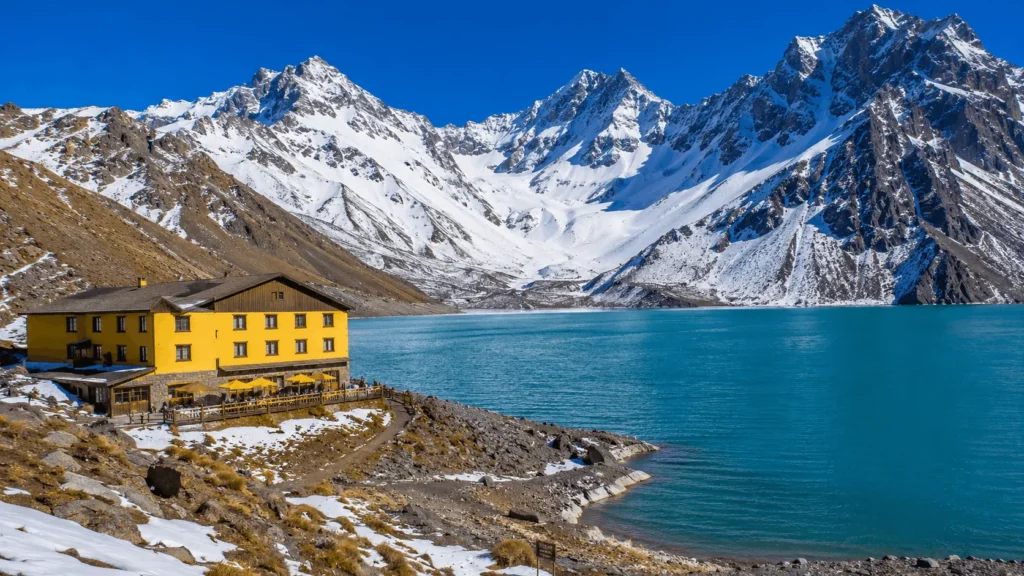
For northern hemisphere skiers, Portillo solves a real problem. What do you do when your home mountains close for summer? The resort sits above Chile’s Laguna del Inca at 2,580 meters, about two hours from Santiago. It runs from late June through September. Capacity is capped at 450 guests, so lift lines are close to nonexistent even during the July and August peak. Portillo is entirely all-inclusive. A single weekly rate covers the iconic yellow hotel, meals, and lift access, which keeps budgeting simple despite the remote setting. The terrain suits strong intermediates and experts best. The Va et Vient rope tows reach couloirs that most resorts would leave unskiable. This isn’t a beginner trip, and it isn’t a cheap one. It is the clearest way to ski in July without changing hemispheres by accident.
Best budget-friendly places to go skiing
Skiing doesn’t require Alpine prices. Andorra’s Grandvalira is the largest ski area in the Pyrenees, with more than 210 kilometers of pistes across seven linked sectors. Day passes typically run well under what Chamonix or Zermatt charge. Lodging and meals cost noticeably less too, since Andorra keeps sales tax low across the board. Bansko, in Bulgaria’s Pirin National Park, goes further. Seasonal passes and equipment rental there can cost roughly a third of equivalent prices in Switzerland. The terrain still covers beginner through advanced runs. Neither destination sacrifices much on lift infrastructure or snowmaking, which is what actually determines whether a budget resort feels like a compromise. The trade-off is smaller terrain than the biggest Alpine names, not worse skiing for the price.
When is the best time to go skiing?
Timing depends on what you’re optimizing for. January and February bring the deepest, most reliable snow across the Alps, the Rockies, and Japan. They also bring the highest prices and the biggest crowds during school holidays. Early season, from late November through mid-December, and late season, through April, cost less and draw fewer people. Snow coverage in those windows is less predictable, and depends heavily on a resort’s altitude. If you’re traveling from the northern hemisphere and want to ski outside the usual window, look south. The Southern Hemisphere season runs from June through early October. July and August deliver the most consistent snowpack in Chile and Argentina. Resorts with snowmaking and higher base elevations, like Grandvalira or Zermatt’s glacier, are the safest bets. Choose them if your travel dates can’t move around the weather.
Ski-in/ski-out, rental gear, and other questions worth answering before you book
Ski-in/ski-out lodging is worth the premium mainly at resorts with long or awkward transfers. Whistler and Park City both fit that pattern. At compact resorts like Zermatt or Bansko, a five-minute walk saves little and costs a lot. Renting gear rather than flying with your own skis makes sense for most travelers. Checked ski bags add fees and hassle, and rental shops at every resort in this guide carry current equipment. Bringing your own boots is the one exception worth the extra bag. A properly fitted boot affects comfort more than the skis themselves. Book lessons in advance during peak weeks, particularly in Europe. Popular instructors fill their schedules early at resorts like St. Anton and Zermatt.
The resorts above cover most of what skiers actually search for: big terrain, reliable powder, and a manageable budget. Some also solve for snow when it’s summer everywhere else. Matching the destination to your skill level and travel dates matters more than chasing whichever name currently tops a ranking. Use the framework earlier in this guide, and pick the season that fits your calendar. Then book the resort built for the skiing you actually want to do.