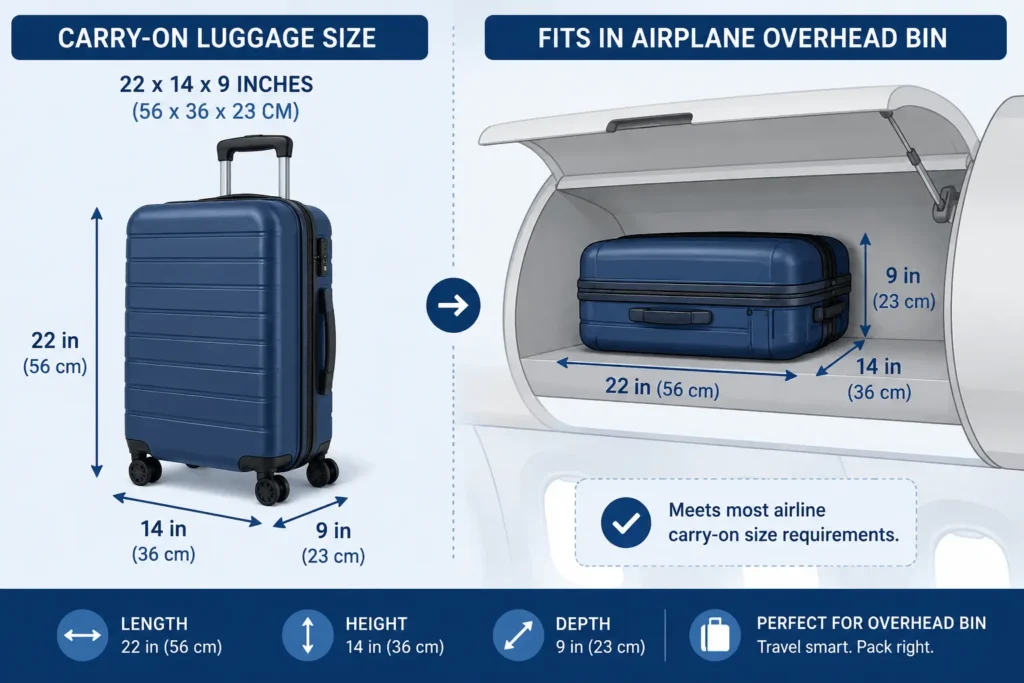
A standard carry-on measures around 22 x 14 x 9 inches (56 x 36 x 23 cm), a medium checked bag runs 24 to 26 inches, and a large checked bag runs 27 to 32 inches. Airlines set their own limits, so it’s worth checking yours before you pack.
What the Sizes Actually Mean
Suitcase sizes are usually named by height alone, but airlines measure length, width, and depth combined, often including the wheels and handle. A bag listed as “22 inch” can still get rejected at the gate if the wheels push it past the limit. That gap between the labeled size and the measured size is where most oversized-bag fees come from.
Most domestic U.S. carriers cap hand carry luggage size dimensions at 22 x 14 x 9 inches.
Carry-On Luggage Size Chart
Most international carriers cap carry-ons at 22 x 14 x 9 inches (55 x 35 x 20 cm), but the number moves by a few centimeters depending on the airline. Air India allows a combined length, width, and height of 157 cm, while IndiGo, Vistara, and SpiceJet cap it at 158 cm. Emirates, Qatar Airways, and Etihad generally allow 55 x 38 x 20 cm and up to 7 kg in economy. If you fly on more than one airline in a trip, pack to the tightest limit on your itinerary, not the average.
Under-Seat Bags Vs Standard Carry-Ons
Under-seat bags, sometimes sold as “personal item” luggage, run about 18 x 14 x 8 inches and are built to slide beneath the seat in front of you. Standard carry-ons are taller and go in the overhead bin instead; see our guide to the best carry-on luggage for international travel for recommended models. If your airline allows both a personal item and a carry-on, packing an under-seat bag for short trips means you skip the overhead-bin scramble entirely.
Checked Luggage Size Chart
Checked bags are grouped into medium and large. A medium checked bag (great if you need to know how to pack a suit in a suitcase) measures roughly 24 x 16 x 10 inches (61 x 41 x 25 cm) and suits a 4 to 7 day trip. A large checked bag runs 28 x 18 x 12 inches (71 x 46 x 30 cm) or bigger, built for longer trips or family travel where you’re packing for more than one person.
Most airlines cap checked bags at a combined 158 cm (62 linear inches) of length, width, and height, and 23 kg per bag in economy. British Airways allows up to 90 x 75 x 43 cm per checked bag, while Lufthansa and Air Canada both hold to the 158 cm combined limit. Go past either number and you’re paying an oversize or overweight fee, sometimes both.
Weight Limits Vary More Than Size
Dimensions stay fairly close across airlines, but weight allowances swing widely. Economy checked bags run anywhere from 20 kg to 23 kg depending on the carrier and route, and business or first class often doubles that. A hard-shell bag that’s within size limits can still cost extra if it’s packed heavy, so weigh your bag at home before you leave for the airport.
Personal Item Size Limits
A personal item is the smaller bag you tuck under the seat, things like a laptop bag, tote, or small backpack. Most airlines cap it around 18 x 14 x 8 inches (46 x 36 x 20 cm), and it doesn’t count against your carry-on allowance. Airlines rarely measure personal items at the gate, but budget carriers have started enforcing this more strictly, so don’t assume it’s a free pass for extra luggage.
Luggage Size Chart By Trip Length
Matching bag size to trip length keeps you from overpacking or running out of room.
- 1 to 3 days: a carry-on or under-seat bag, 18 to 22 inches, 30 to 45 liters
- 4 to 7 days: a medium checked bag, 24 to 26 inches, 60 to 80 liters
- 8 days or more: a large checked bag, 27 to 32 inches, 90 to 120 liters or more
Luggage Capacity In Litres
Litre capacity measures the space inside the main compartment, and it’s a more reliable way to compare bags than the labeled inch size, since hard-shell and soft-shell bags of the same height can hold different amounts. A cabin bag averages around 35 to 45 liters, a medium checked bag around 70 to 85 liters, and a large checked bag 100 liters or more once you factor in an expander panel.
How To Measure Your Own Suitcase
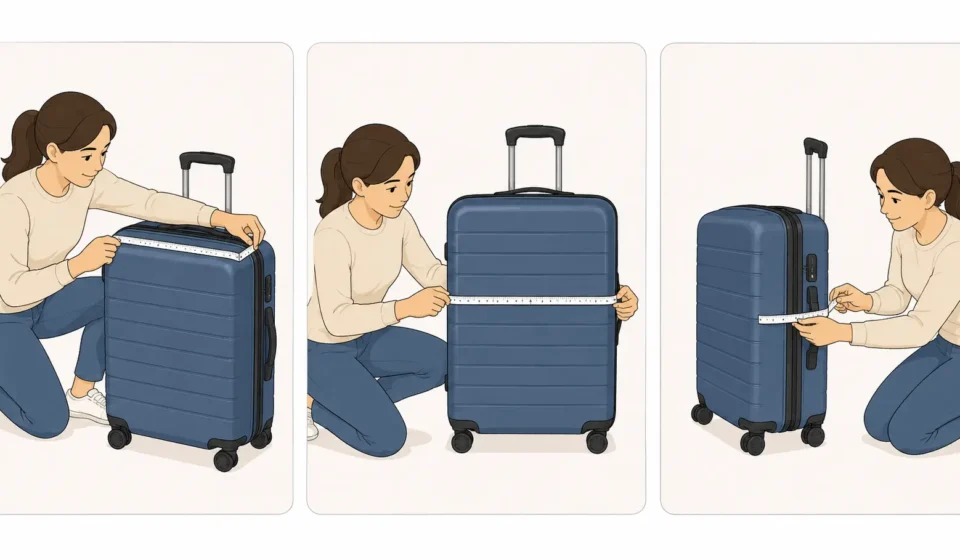
Lay the bag flat and measure length, width, and depth in inches or centimeters, including the wheels and any external handle housing. Add the three numbers together to get the linear total most airlines use for checked-bag limits. If you’re checking a carry-on limit instead, compare each dimension separately against the airline’s chart rather than relying on the total.
What Happens If Your Bag Is Oversized
Gate agents typically catch oversized carry-ons during boarding, and the bag gets checked on the spot, often at a higher fee than if you’d checked it at the counter. For checked bags, oversize and overweight charges are assessed separately and can stack, so a bag that’s both too big and too heavy gets hit twice. Airlines publish these fees on their websites, and they tend to run higher for last-minute gate checks than for bags declared at check-in.
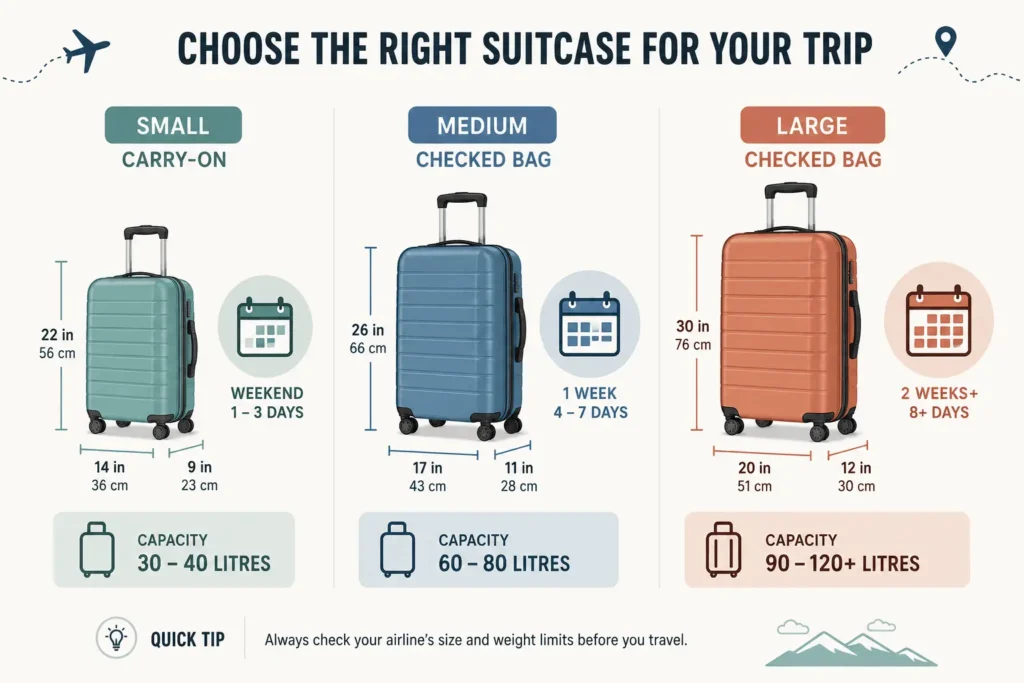
Choosing The Right Size For Your Next Trip
Start with your trip length, then check the specific airline’s chart rather than a generic one, since a few centimeters can be the difference between a free carry-on and a checked-bag fee. Keep a soft measuring tape in your travel kit and measure a new bag before your first trip with it, not after a gate agent flags it.
Frequently Asked Questions
What is the standard luggage size chart for carry-on bags?
Most airlines cap carry-ons at 22 x 14 x 9 inches (55 x 35 x 20 cm), though a handful of carriers allow slightly larger or smaller dimensions. Always check the specific airline before your trip, since gate agents enforce their own carrier’s limit, not a general standard.
What size is a medium checked bag?
A medium checked bag runs about 24 to 26 inches, or 61 to 66 cm, and typically holds 70 to 85 liters. It suits trips of about 4 to 7 days for one traveler.
How many inches is a large checked suitcase?
Large checked suitcases run 27 to 32 inches (69 to 81 cm) and hold 90 to 120 liters or more, depending on the brand and whether the bag has an expander.
Does luggage size include the wheels and handle?
Yes. Airlines measure a bag’s full external dimensions, which includes wheels, side pockets, and handle housings. A suitcase labeled “22 inch” by its shell size can still exceed the airline’s limit once wheels are factored in.
Can I bring both a personal item and a carry-on?
Most full-service airlines allow both, but many budget carriers only include one in the base fare and charge extra for the second. Check your fare class, not just the airline’s general policy, since allowances often differ by ticket type.