The best places to visit in Switzerland are easier to plan by region than by single list. Most travelers pick ten famous spots off the internet and end up crisscrossing the country. A better approach is to choose two or three regions, settle into each one, and let the trains connect them. The six regions that matter are the Bernese Oberland around Interlaken, Lucerne and central Switzerland, Zermatt and the Matterhorn, Zurich and Bern, the Lake Geneva region, and Ticino in the Italian-speaking south. For each one, this guide tells you how many days it needs, when to go, and how it fits into a realistic trip.
Why Regions Beat A Single Checklist
Switzerland measures only about 220 miles from end to end, but its geography makes distance misleading. The train system, not driving distance, decides how a trip should be planned. Zurich to Zermatt takes roughly three and a half hours by rail, while Lucerne sits under an hour from Zurich. Grouping stops by region keeps you from repacking every night. It also matches how Swiss travel passes are priced, since moving between regions is where the costs pile up. This framing connects naturally to the broader list of best places to visit in Europe, where Switzerland works best as one stop in a two-country rail trip rather than a standalone sprint.
The Bernese Oberland (Jungfrau Region)
Plan on three to four days here at minimum. This is the Switzerland of postcards: sheer valley walls, waterfalls, and the big three peaks (Eiger, Mönch, and Jungfrau) looming over everything.
Interlaken, Lauterbrunnen, Grindelwald, And The Villages
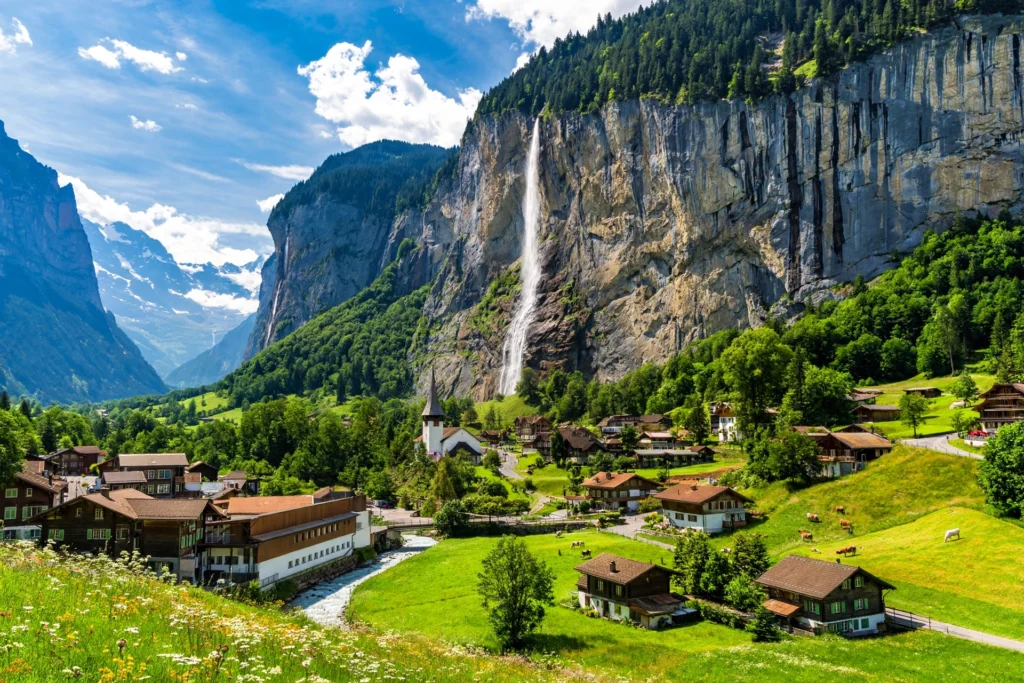
Interlaken sits between Lake Thun and Lake Brienz and works as the base for the whole region. The town itself is a jumping-off point rather than the main attraction. Stay here for the connections, not the scenery. Lauterbrunnen, twenty minutes away by train, is the valley people picture when they think of Switzerland. Sheer cliff walls carry waterfalls straight off the edge, including the 300-meter Staubbach Falls. Grindelwald is the livelier mountain village on the other side of the valley, with the First cable car and its cliff walk. Wengen and Mürren are smaller, quieter, and car-free, the kind of places where you hear cowbells from your hotel window.
Jungfraujoch And Cheaper Alternatives
Jungfraujoch, reached by a cogwheel railway that climbs through the mountain itself, sits at 3,454 meters and holds the title of highest railway station in Europe. The trip from Lauterbrunnen takes about two hours each way. It is genuinely expensive (check current prices before you go, for the exact 2026 fare), so travelers on a tighter budget often substitute Schilthorn or Männlichen for a similar panoramic payoff at a fraction of the cost. One warning that matters: check the summit webcam before you buy the ticket. On a cloudy day you pay full price to stand inside a cloud.
Best Time To Visit The Bernese Oberland
June through September gives the longest days and the most reliable weather for cable cars and higher trails. Late October through May sees many of the smaller mountain lifts close, so do not plan a hiking trip for November and expect the infrastructure to be running. December through March is ski season, which is its own draw.
Lucerne And Central Switzerland
One full day covers Lucerne itself, though two or three lets you add the surrounding mountains without rushing. This is the easiest region to pair with the Bernese Oberland, since Lucerne to Interlaken runs about two hours by train.
The Old Town And Lake
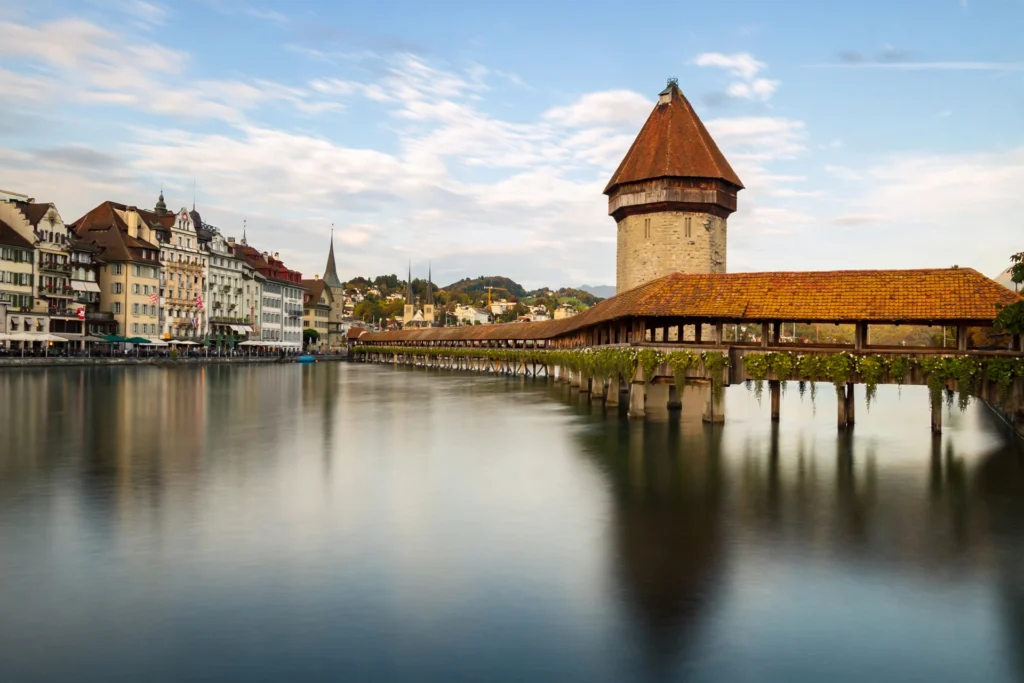
The Chapel Bridge, a wooden footbridge dating to the 14th century, anchors the old town. It burned in 1993 and was rebuilt, which locals will tell you with visible pride. A boat cruise on Lake Lucerne remains one of the more relaxing ways to spend an afternoon here, and the Lion Monument is worth the short walk.
Pilatus Vs Rigi: Which Mountain To Pick
Picking between the two classic day trips usually comes down to pace. Pilatus, reached by the world’s steepest cogwheel railway, delivers a livelier experience with more infrastructure at the summit. Rigi feels quieter and less crowded, with a boat-to-cogwheel connection from Vitznau that makes for one of the more scenic combined journeys in the country. If you only have time for one, Rigi is the calmer choice and Pilatus is the bigger thrill.
Best Time To Visit Lucerne
Lucerne works well nearly year-round, since the city itself does not depend heavily on weather. Winter draws snow-sports travelers to nearby resorts, while museums and indoor attractions in the city stay noticeably quieter during that stretch.
Zermatt And The Matterhorn
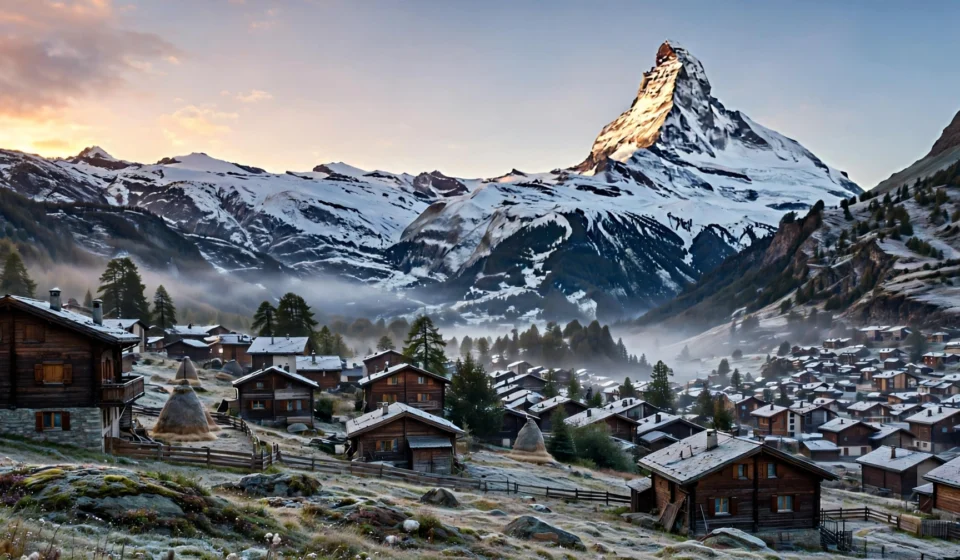
Plan one to two days. Zermatt is a small, car-free town best suited to a short, focused visit rather than a long stay. Cars stop at Täsch, a few minutes away by train, and Zermatt itself is walkable in under half an hour end to end. The draw is entirely the Matterhorn, the 4,478-meter peak that inspired the Toblerone pyramid and remains one of the most recognized mountains anywhere. Winter visitors should know Zermatt is also one of the country’s most reliable ski areas thanks to its elevation, which puts it on any serious list of best places to go skiing.
Getting There And Around A Car-Free Town
You cannot drive into Zermatt, full stop. Park or leave the rental in Täsch and take the shuttle train for the last few minutes. Inside the village, everything is on foot or by small electric taxi. This sounds limiting until you realize it makes the town quiet in a way almost no other resort town manages.
Glacier Paradise Vs Gornergrat
Matterhorn Glacier Paradise, also called Klein Matterhorn, reaches 3,883 meters by cable car and counts as the highest cable car station in Europe. It takes real time and a real budget to visit properly. Gornergrat offers a lower-cost alternative with arguably better direct views of the Matterhorn itself, since Glacier Paradise sits at an angle that partly obscures the peak. Budget travelers should pick Gornergrat without hesitation.
Best Time To Visit Zermatt
Zermatt works in every season, unusual for a Swiss mountain town. Summer (June through September) suits hiking, while winter (December through March) turns the same trails into high, snow-sure ski terrain.
Zurich And Bern: The Cities Worth Your Time
Give Zurich one day, usually your arrival day. It is the largest city, the main international airport, and a genuinely pleasant old town along the Limmat River with Bahnhofstrasse for shopping and Lake Zurich for an evening walk. Most travelers underrate it and then wish they had stayed a night instead of rushing straight to the mountains. Bern deserves a day trip or an overnight. The old town is a UNESCO World Heritage site, a medieval arcaded streetscape with the Zytglogge clock tower putting on its mechanical show before the hour. The Bear Park and the riverside setting make it one of the calmer capitals in Europe. Both cities work year-round and need no seasonal planning.
The Lake Geneva Region
Two to three days covers Geneva, Lausanne, and Montreux without constant repacking. They sit within an hour of each other by train along the lake’s shore, and the region gives your trip a French-speaking change of pace after the German-speaking mountains. Geneva carries an international feel from hosting the United Nations and the Red Cross. The Jet d’Eau, a fountain that shoots water about 140 meters into the air, marks the waterfront. Lausanne has the Olympic Museum and a steep, characterful old town. Montreux is the resort town of the three, famous for its July jazz festival and its sheltered microclimate.
Château De Chillon And The Lavaux Vineyards
Château de Chillon, an 11th-century castle on a small island near Montreux, ranks as the most-visited historic building in the country. It is an easy stop between Geneva and Lausanne and worth half a day. The Lavaux vineyard terraces, a UNESCO World Heritage site on the slopes above the lake between Lausanne and Montreux, add a wine-country layer that is easy to underrate next to the bigger mountain names. September and October are harvest season here, and the autumn color on the terraces rivals anything in the Alps, which is why the region earns a mention among the best places to see fall foliage.
Best Time To Visit Lake Geneva
Spring and early summer bring the vineyards into their most photogenic stretch. Winters here run milder than the mountain regions, since the lake keeps temperatures from dropping as sharply.

Ticino, The Italian-Speaking South
Two to three days works for Lugano and the surrounding valleys. Lugano sits on its own lake with a Mediterranean feel that catches most first-time visitors off guard, complete with palm trees along the promenade and a warmer climate than the rest of the country.
Lugano And Lake Lugano
Ticino is where Switzerland starts to feel like Italy: espresso culture, grotti (rustic local restaurants), and stone villages in the valleys. It is the least-visited of the six regions on this list, which is exactly its appeal on a second trip. For a first trip, it pairs well with the Lake Geneva region as your “slow” half of the itinerary.
Arriving On The Bernina Express
The Bernina Express, a train connecting Chur to Tirano in Italy, crosses UNESCO-listed rail scenery over the Albula and Bernina passes. It is one of the most scenic ways to arrive in the region rather than a separate excursion, so building it into the itinerary as actual transport saves both time and money. Tirano also makes a natural handoff into the best places to visit in Italy if you are continuing south.
Best Time To Visit Ticino
Ticino’s microclimate runs warmer than the rest of Switzerland most of the year, which makes it a reasonable choice even in shoulder seasons like April or October when the Alps further north are less cooperative. Summer here gets genuinely hot, closer to Mediterranean Italy than to alpine Switzerland.
Which Region Suits Your Trip
| Traveler type | Best regions | Why |
|---|---|---|
| First-timers | Lucerne, Bernese Oberland | Classic sights, easy logistics, everything works |
| Honeymooners | Zermatt, Lake Geneva | Scenery plus good hotels and dining |
| Hikers | Bernese Oberland, Zermatt | Highest trail density, best hut infrastructure |
| Families | Lucerne, Interlaken area | Short travel days, boat rides, mountain playgrounds |
| City lovers | Zurich, Bern, Geneva | Museums, food, walkable old towns |
| Second-trip travelers | Ticino, Lake Geneva | Quieter, more local feel, wine country |
How Many Days You Need
Seven days covers two regions comfortably. The classic pairing is Lucerne plus the Bernese Oberland, connected by a two-hour train ride. Ten to fourteen days covers three regions without feeling rushed, most commonly the Bernese Oberland, Lucerne, and either Zermatt or Lake Geneva. Flying into Zurich and out of Geneva, or the reverse, avoids backtracking across the country. You do not need a car for any of the six regions. In several places, like Zermatt, cars are not allowed at all, and mountain parking elsewhere is limited or expensive.
Is The Swiss Travel Pass Worth It
Usually yes, if you are visiting two or three regions and plan to use trains, buses, or boats regularly. The pass covers unlimited travel on all three and knocks 50 percent off most mountain cable cars and cogwheel trains, which matters since those rides are often the single most expensive line item in a Swiss itinerary. The honest way to decide: add up your two or three longest train rides plus your planned mountain excursions, then compare that total against the pass price for your trip length. Mountain days are what tip the math.
A 10-Day Sample Itinerary
- Days 1-2: Zurich and Lucerne. Arrive in Zurich, see the old town, then train to Lucerne (under an hour). Chapel Bridge, lake cruise, and one mountain day (Pilatus or Rigi).
- Days 3-5: Bernese Oberland. Train to Interlaken (about two hours). Day trip to Lauterbrunnen valley, one day in Grindelwald or Wengen, and Jungfraujoch on the clearest morning.
- Days 6-7: Zermatt. Train south (about three hours from Interlaken with changes). Matterhorn viewpoints, Gornergrat railway, village time.
- Days 8-10: Lake Geneva. Train west to Montreux. Château de Chillon, Lavaux terraces, a day in Geneva. Fly home from Geneva. This route runs in a rough line with no backtracking. Swap Zermatt for Ticino (via the Bernina Express) if you prefer lakes and food over peaks.
What To Eat In Switzerland
Fondue is the social one, best shared in a mountain restaurant after a cold day. Raclette is the Valais specialty, melted cheese scraped over potatoes, and the region around Zermatt does it best. Rösti, the crisp potato pancake, is the everyday staple of German-speaking Switzerland. Chocolate deserves its own stop: the Lindt Home of Chocolate near Zurich is an easy half-day from the city. In the west, the village of Gruyères pairs its medieval castle with the cheese that carries its name, and the local dairies run short tours.
5 Mistakes First-Timers Make
1. Trying to see everything. Six regions in seven days means you see train stations, not Switzerland. Two regions done well beats four done badly.
2. Booking Jungfraujoch on a cloudy day. Check the summit webcam the morning of. The ticket is expensive and non-refundable in practice, and a whiteout is a whiteout at any price.
3. Underestimating mountain excursion costs. A family of four can spend more on two cable car days than on three nights of hotel. This is exactly what the Swiss Travel Pass discount is for, so run the math before you go.
4. Packing for one climate. Ticino in October can be 20 degrees warmer than the Jungfraujoch on the same day. Layers are not optional.
5. Renting a car by default. The trains reach nearly every destination on this list, often faster than driving once parking and mountain roads are factored in. Rent only if you are chasing small villages off the rail network.
The Short Version
Pick two or three regions, not ten scattered sights. The Bernese Oberland and Lucerne make the classic first trip, Zermatt adds the iconic peak, Zurich and Bern cover the cities, Lake Geneva brings the French-speaking side, and Ticino rewards the curious. Plan around the trains, check the weather before the expensive mountain days, and give each region enough nights to actually settle in. Those are the best places to visit in Switzerland, and more importantly, that is how to see them without burning out.