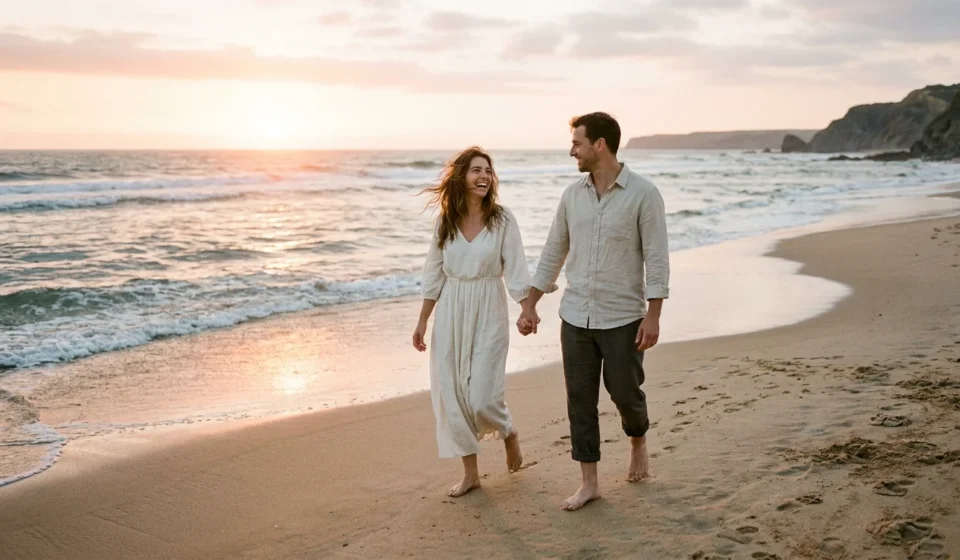
A honeymoon is the trip a newly married couple takes right after the wedding to rest and celebrate. It is usually their first time traveling together as spouses. If you are asking what is a honeymoon in the everyday sense is, that is the answer.
The word has a second meaning: the early stretch of a relationship when everything feels easy and exciting. That is why many people also search for how long a honeymoon lasts and how long the honeymoon phase lasts. This guide covers both, with typical trip lengths and what the research says about how long the glow lasts.
What a Honeymoon Means Today
Today the word covers two separate ideas that share a name. One is a trip. The other is an emotional stage of a relationship. Knowing which one you mean keeps the rest of the topic simple.
The Trip After the Wedding
As a trip, a honeymoon is a vacation taken soon after a couple marries. It gives them a break from the planning, the guests, and the logistics of the wedding itself. Some couples leave the morning after the reception, and others wait weeks or months.
The trip does not have to be expensive or far away. A cabin two hours from home counts as much as a resort across an ocean. What makes it a honeymoon is the purpose, which is time alone to celebrate the marriage.
The Honeymoon Phase in a Relationship
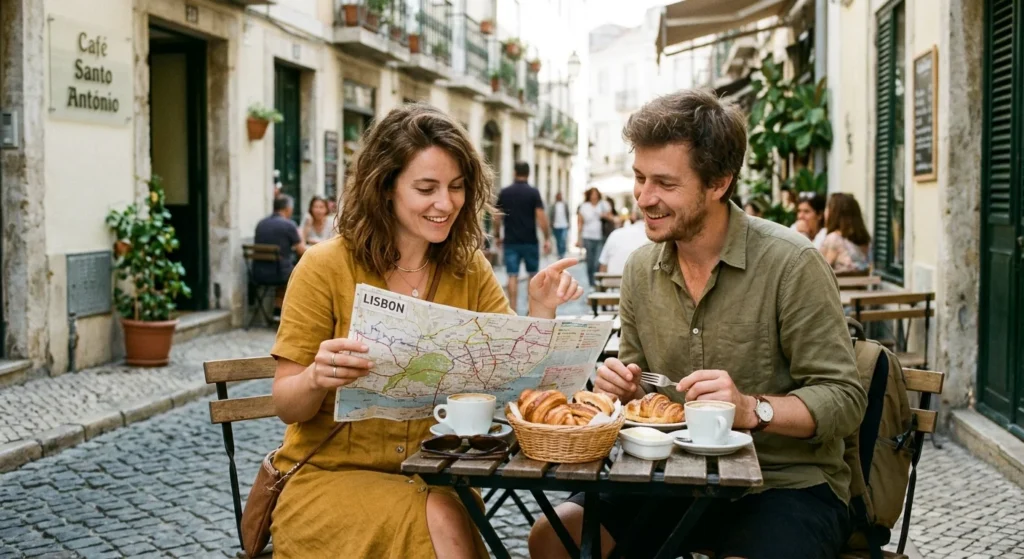
As a relationship stage, the honeymoon phase is the early period when attraction is intense and small annoyances barely register. The couple wants to be together constantly. It is not limited to married couples, and dating partners and new live-in couples describe it too.
Psychologists usually study this stretch under other names, such as passionate love or limerence. Those terms come up again below, because they explain why the phase has a shelf life.
Where the Word Honeymoon Comes From
The word dates to the 1500s. Etymonline traces it to the 1540s, when “hony moone” described the sweetest period of a new marriage, expected to wane like the moon. Honey stood for the sweetness and the moon for change.
Notice that the original meaning was the phase, not the trip. The journey attached itself to the word later. In the nineteenth century, British upper-class couples began taking a “bridal tour” after the wedding, often to visit relatives who had not attended, and the custom spread. Niagara Falls became one of the best-known American honeymoon destinations during that century.
How Long Is a Honeymoon?
A week to ten days is a sensible default for a honeymoon, and many couples plan for one to two weeks. There is no official length. The right number depends on budget, work leave, and how far you are traveling.
Here is how the main options compare:
- Mini-moon: 2 to 4 days, usually close to home, taken right after the wedding when time off is tight.
- Standard honeymoon: 7 to 10 days, enough for one destination or a short two-stop trip.
- Extended honeymoon: 14 days or more, usually for couples with flexible work or a distant destination.
How to Pick Your Length
Start with travel time, not the calendar. A twelve-hour flight each way plus jet lag can eat three or four days. A ten-day trip to a far destination may leave you only six real days on the ground.
Then ask three questions. How much leave can both of you take without stress? What does the budget allow once flights and lodging are paid? Do you want a trip of rest or a trip of activity? A beach week and a road trip through three cities need different amounts of time.
Build in two empty days, either right after the wedding or right after you return. Weddings are tiring, and walking straight from the airport into the office makes the break feel shorter than it was.
Mini-Moons and Delayed Honeymoons
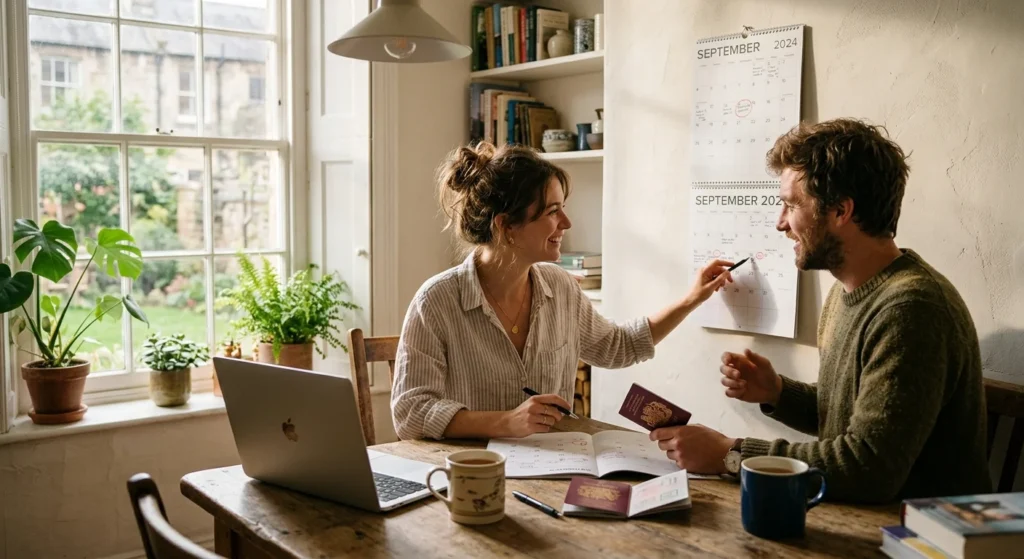
Many couples split the trip in two. They take a short mini-moon right after the wedding and save the big trip for six months or a year later, when money and leave are easier to arrange. Nothing about the tradition requires leaving the day after the reception.
A delayed honeymoon also gives the couple something to look forward to once the wedding excitement fades. It is a common choice for couples who marry in busy work seasons or who want to spread out the cost.
Practical Details Worth Settling Early
Book flights in the name that appears on your passport. If you plan to change your surname after the wedding, your passport will usually still show your old name on the trip unless you have already updated it. Matching tickets to passports avoids problems at check-in and border control.
Check visa and passport validity rules for your destination well before the wedding. Many countries require a passport that stays valid for months after your arrival date. Also confirm whether any seasonal weather, such as monsoon or hurricane periods, overlaps with your dates.
How Long Does the Honeymoon Phase Last?
The honeymoon phase typically lasts from about six months to two years, and the research points to a gradual fade rather than a sudden end. No study gives one fixed number for everyone. Here is what the main sources report.
Psychologist Dorothy Tennov coined the word limerence in her 1979 book Love and Limerence. She estimated that the intense, obsessive stage of romantic infatuation lasts roughly eighteen months to three years.
A 2004 study by Donatella Marazziti and Domenico Canale, published in Psychoneuroendocrinology, compared people newly in love with other groups. They found differences in hormone levels, including cortisol and testosterone. Those differences were gone when the same people were retested twelve to eighteen months later.
Happiness research gives a similar timeline. Richard Lucas and colleagues, writing in the Journal of Personality and Social Psychology in 2003, followed a large German panel of adults. They found that life satisfaction rose around marriage, then returned to its earlier level after about two years on average.
Marital satisfaction follows a related curve. Justin Lavner and Thomas Bradbury followed roughly 170 newlywed couples for four years and reported that satisfaction declined on average over that period. The drop was gradual, and it happened even in couples who stayed together.
1. What Happens in the Brain
Early romantic love activates the brain’s dopamine-rich reward areas. Arthur Aron, Helen Fisher, and colleagues showed this in a 2005 Journal of Neurophysiology paper that used brain scans of people who were newly in love.
The fade is not proof that love is failing. In 2012, Bianca Acevedo and colleagues scanned 17 people who had been married about 21 years on average and said they were still intensely in love. The scans showed activity in the same reward regions, along with areas linked to attachment. So the intensity can change shape without disappearing.
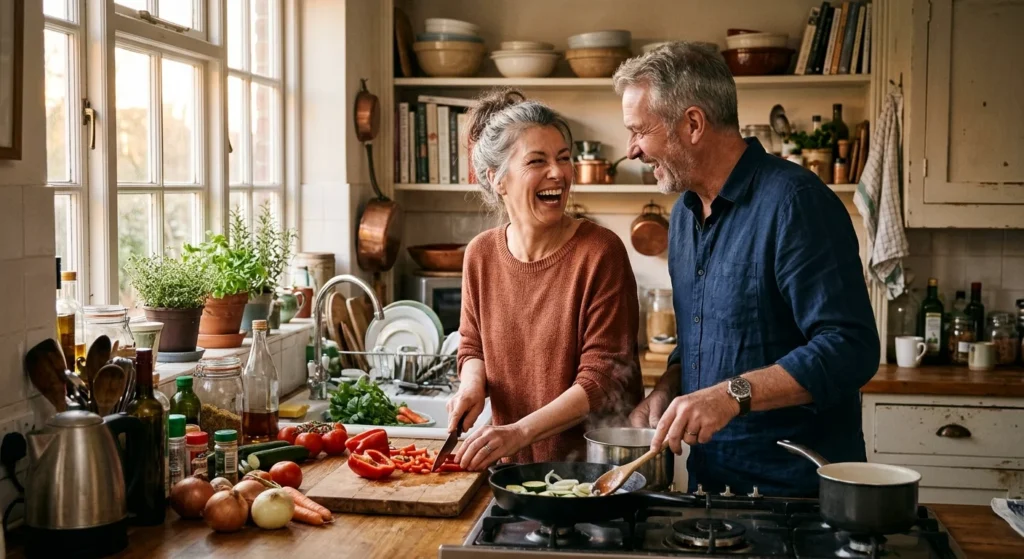
2. Signs the Honeymoon Phase Is Fading
Most signs are ordinary. You notice habits that once seemed charming, you argue about chores, and the urge to text all day eases. Sleep and work start competing with each other for your attention again.
These shifts usually mean the relationship is moving from infatuation to attachment, which is steadier and quieter. The thing to watch is not the drop in excitement but how the two of you handle disagreements. The Gottman Institute’s long-running couples research points to how partners resolve conflict and how they respond to each other’s small everyday requests for attention as strong predictors of how a relationship goes.
3. Does Everyone Get a Honeymoon Phase?
Not in the same way. Couples who start as close friends or who have long-distance stretches often describe a milder rush. Others feel the intensity but notice it settling within months.
None of these patterns says anything about how strong the relationship will be. The phase is a feature of early attraction, and its absence is not a warning sign by itself.
Why a Honeymoon Trip Can Help the Feeling Last
This is where the two meanings connect. In 2000, Arthur Aron and colleagues published experiments in the Journal of Personality and Social Psychology. Couples who did novel, mildly exciting activities together reported higher relationship quality than couples who did pleasant but familiar ones.
A honeymoon is built for exactly that: new places, unfamiliar food, and small shared challenges like working out a foreign train station. You do not need a honeymoon to benefit from the effect. A new hobby, a weekend in an unfamiliar town, or a class taken together can repeat it.
Be realistic about what a trip can do. It will not stop the natural shift from infatuation to attachment, and it should not be expected to. What it gives you is a shared set of memories to return to, and a habit of making time for each other that outlasts the first year.
So what is a honeymoon? It is a trip taken at the start of a marriage, and it is also a feeling that changes shape long after the suitcases are unpacked.