For most people, the best compact camera for travel in 2026 is the Fujifilm X100VI; if it has to fit in a jeans pocket, choose the Ricoh GR IV; and if you want real zoom, go with the Sony RX100 VII. Each one beats a phone in specific situations, and each has a trade-off worth knowing before you pay.
The six cameras below are sorted by how you travel, not by brand. Specs and prices follow 2026 roundups by National Geographic, MPB, and Independent Travel Cats.
Quick Comparison of the Six Picks
| Camera | Best For | Sensor | Lens |
| Fujifilm X100VI | Best overall | 40MP APS-C | 23mm f/2 |
| Ricoh GR IV | Pocket carry | 26MP APS-C | 28mm equivalent f/2.8 |
| Sony RX100 VII | Zoom range | 1-inch | 24-200mm f/2.8-4.5 |
| Panasonic Lumix ZS99 | Long zoom | 1/2.3-inch | 24-720mm |
| Kodak PixPro FZ55 | Tight budget | Small sensor | 12x zoom |
| Leica Q3 | Luxury | 60MP full-frame | 28mm f/1.7 |
Do You Need a Compact Camera Over a Phone?
Not always. If you mostly post photos from sunny streets, a recent flagship phone is enough, and you carry nothing extra.
A compact camera earns its place in three situations: dim restaurants and night streets, subjects far away, and trips where you simply enjoy making photographs. Larger sensors collect more light, and real optical zoom keeps detail that digital cropping on a phone throws away.
How to Choose a Travel Compact in Five Minutes
1. Check Your Favorite Focal Length First
Open your phone’s photo library and look at the lens details on 50 recent travel shots. Most phones record their main camera at roughly 24 to 28mm equivalent and switch to a zoom lens at 2x or higher.
If most of your keepers came from the main lens, a fixed 28mm or 35mm camera like the Ricoh or Fujifilm will feel natural. If you reach for the zoom constantly, buy a zoom camera. This check prevents the most common regret: buying a beautiful fixed lens, then missing the far shot.
2. Understand Sensor Size Without the Jargon
An APS-C sensor has roughly three times the surface area of a 1-inch sensor, and a 1-inch sensor has several times the area of the small sensors in budget zoom cameras. More area means cleaner photos in dim light. A bright lens and image stabilization close part of the gap, a point in Fujifilm’s favor in dim rooms.
3. Run the Pocket Test Honestly
A camera left in the hotel takes no pictures. Independent Travel Cats lists the Ricoh GR IV at 9.2 ounces, while the Fujifilm X100VI weighs close to 520 grams with its battery, roughly double. Carry a weight equal to the camera in your day bag for one week before you buy.
4. Plan for Power and Storage
Most compacts manage a few hundred shots per charge, so a spare battery matters more than a spare lens. The FAA requires spare lithium batteries to travel in carry-on bags, never in checked luggage. Check whether your camera charges over USB-C, so one cable and one power bank can serve your phone and camera.
Fujifilm X100VI: Best Overall
The X100VI pairs a 40.2MP APS-C sensor with a fixed 23mm f/2 lens, equal to 35mm on full frame, and adds in-body image stabilization. That gives sharp handheld shots in dim bars and temples at night. The Cotswold Photographer, a site whose author owns one and has shot it in the Philippines and the Scottish Highlands, names it the best compact of 2026.
Hostelworld’s 2026 travel camera guide puts the price around $1,599. The hybrid viewfinder and Fujifilm’s film simulations produce finished-looking JPEGs, which cut editing time on the road.
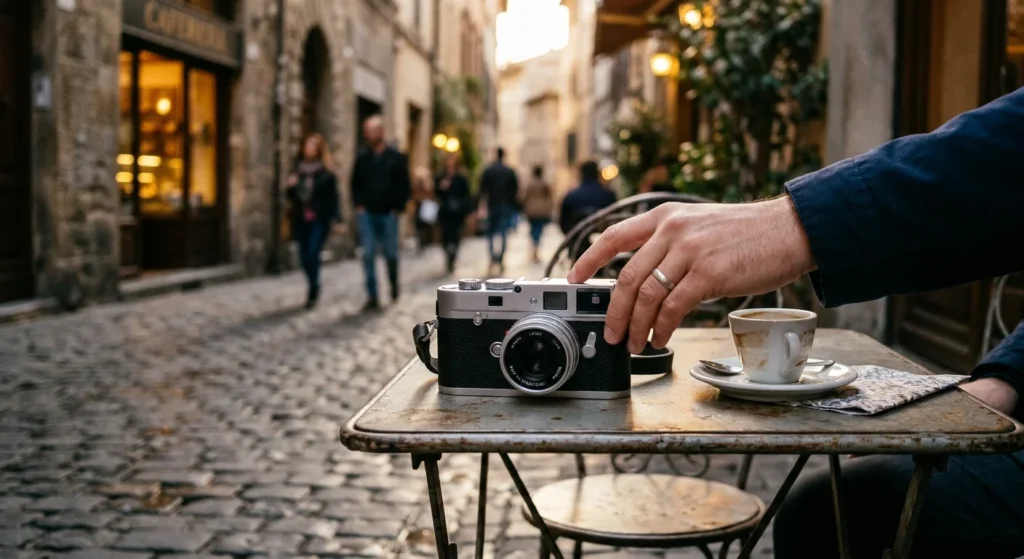
The catches are real. The lens does not zoom, 35mm feels tight in small interiors, and weather resistance needs Fujifilm’s adapter ring and filter. Stock has also been uneven since launch, so confirm availability before your departure date.
Ricoh GR IV: Best for Pockets and Street Photography
The GR IV puts a 26MP APS-C sensor behind an 18.3mm f/2.8 lens (28mm equivalent) in a body Independent Travel Cats lists at 9.2 ounces and about $1,500. It is the camera you will actually bring to dinner, a market, or a long hike.
The 28mm view suits street scenes, architecture, and cramped interiors. It has no viewfinder, no zoom, and no weather sealing, and the GR line has a reputation among owners for sensor dust, so pack a rocket blower. Pick it over the Fujifilm when size and weight outrank everything else
Sony RX100 VII: Best Pocket Zoom
MPB named the RX100 VII its overall best compact camera for travel in 2026. A 1-inch sensor sits behind a 24-200mm f/2.8-4.5 lens, so one camera covers wide street scenes and distant statues. It also has a pop-up viewfinder, a flip-up screen, and a microphone jack for video.
The design dates to 2019, menus take patience, and the smaller sensor produces noisier files than the APS-C cameras above in dim light. Choose it if your photos include far-off subjects such as wildlife, stage shows, or building details.
Panasonic Lumix ZS99: Best Long Zoom for the Money
The ZS99, sold as the TZ99 outside North America, stretches to a 24-720mm equivalent lens on a small 1/2.3-inch sensor, with a viewfinder and 4K video. That reach suits safaris, birdwatching, and distant landmarks, where no fixed-lens camera can follow.
It is an older model, so check availability and used prices. Expect softer detail at full zoom and weak results after sunset. In daylight, it covers a huge range for much less money than the cameras above.
Kodak PixPro FZ55: Best on a Tight Budget
Independent Travel Cats picks the FZ55 as its budget compact. You get 12x optical zoom, image stabilization, Wi-Fi, NFC, and 1080p video in a body that weighs just over 5 ounces.
It suits a first trip, a teenager’s camera, or a backup you will not mourn losing. Image quality trails every other camera here, and 1080p video is the ceiling. Treat it as a cheap way to get optical zoom.
Leica Q3: Best Luxury Pick
MPB calls the Q3 the best luxury compact for travel. It carries a 60MP full-frame sensor and a fixed 28mm f/1.7 lens, and it is weather-sealed, so light rain is less of a worry than with the cameras above. Leica listed it at about $5,995 at launch, so check today’s price.
Match the Camera to the Trip
A city break with museums, cafes, and narrow streets favors the 28mm Ricoh, because wide framing fits interiors and architecture. A trip built around people, markets, and food suits the 35mm Fujifilm, which frames a dinner table or a portrait naturally. If you cannot decide, pick by the focal length you used most in the check above.
Safaris, cruises, and stadium or stage events need reach, so the Sony or the Panasonic is the right tool. Beach and trekking trips favor the cheapest camera you can afford to scratch, which makes the Kodak sensible.
Common Mistakes When Buying a Travel Compact
The first mistake is buying on zoom numbers. A 30x label means little if the lens is dim and the sensor is tiny, because detail falls apart at full extension.
The second is buying too close to departure. Popular models sell out, and you want a couple of weeks to learn the controls before you rely on them.
The third is skipping accessories. Budget for a second battery, a pair of fast SD cards, a wrist or neck strap, and a small pouch, which adds cost but prevents a dead camera on day three.
Where Your Phone Still Wins
Phones win on sharing speed, computational night modes, and panorama stitching, and they are always in your hand. Compact cameras need a Bluetooth or Wi-Fi transfer step before a photo reaches social media, which can feel slow on a long day. If you post constantly in real time, plan to keep your phone as the publishing tool and the camera as the capture tool.
Which One Should You Buy?
If you want one camera and can spend around $1,500, buy the Fujifilm X100VI. If pocket size matters most, buy the Ricoh GR IV. If your photos include distant subjects, buy the Sony RX100 VII, or the Lumix ZS99 when money is tight.
Whichever you choose, hold it in a shop or rent it for a weekend before the trip. A few days of shooting in your own city market will tell you more than any spec sheet.
Habits That Make Any Compact Camera Better
Set the camera up before you leave. Assign the controls you use most, format the card, and shoot a few test frames at home so the menus are familiar when a moment happens.
Back up every evening. Copy the day’s photos to your phone or laptop, and keep two smaller cards instead of one large card so a single failure does not take the whole trip with it.
Shoot early and late. Low sun gives soft light on stone and faces, which flatters even a small sensor and cuts the need for editing. Wipe the lens with a microfiber cloth each morning, because a fingerprint smear is a common reason for a hazy travel photo.
The best compact camera for travel is the one you will carry every day, and that is a decision your own legs and pockets will make for you.