The best places to see bioluminescence are Mosquito Bay in Puerto Rico, Toyama Bay in Japan, and Vaadhoo Island in the Maldives, where glowing plankton and marine life light up the water after dark. Each spot has its own season, its own species, and its own reason it ranks among the brightest natural light shows on the planet.
What Makes the Water Glow
Bioluminescence happens when living organisms produce their own light through a chemical reaction inside their bodies. In most of the bays and beaches on this list, the glow comes from dinoflagellates, tiny single-celled plankton that flash blue-green light when the water around them is disturbed.
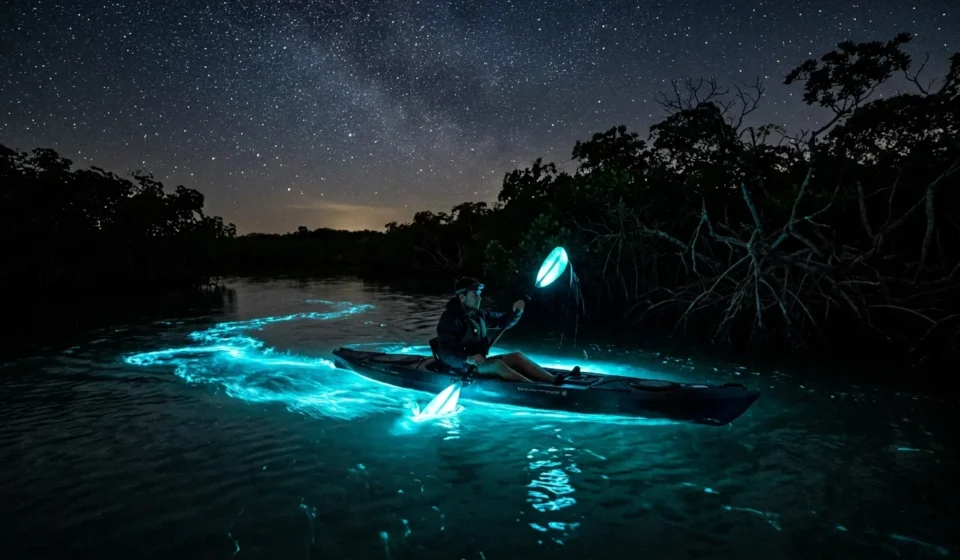
A paddle stroke, a fish swimming by, or waves breaking on the shore can trigger thousands of these organisms at once. The result looks like sparks of electric blue moving through the water, brightest on calm, moonless nights when your eyes have fully adjusted to the dark.
Mosquito Bay, Vieques, Puerto Rico
Mosquito Bay on the island of Vieques holds the Guinness World Record for the brightest bioluminescent bay on Earth. The water here stays glowing almost every night of the year because the bay is nearly enclosed, with a narrow channel that keeps the dinoflagellate population dense and undisturbed by ocean currents.
Kayak tours run nightly and are the only way in, since motorized boats are banned to protect the ecosystem. Visitors often describe trailing their hands through the water and watching blue light stream off their fingers, a moment that tends to outshine every other stop on a Puerto Rico trip.
La Parguera, Puerto Rico
Puerto Rico is home to three bioluminescent bays, and La Parguera on the southwest coast is the only one where swimming is still allowed. The glow is fainter than Mosquito Bay’s, but the chance to actually get in the water and watch light ripple off your own body draws a steady stream of visitors.
Tours depart from the town dock after sunset, and a new moon is the best time to book, since even a half moon can wash out the dimmer flashes.
Toyama Bay, Japan
Toyama Bay on Japan’s western coast glows for a different reason entirely. Each spring, millions of firefly squid rise from the deep to spawn near the surface, and their bodies produce a soft blue light that turns the shoreline into a glowing carpet.
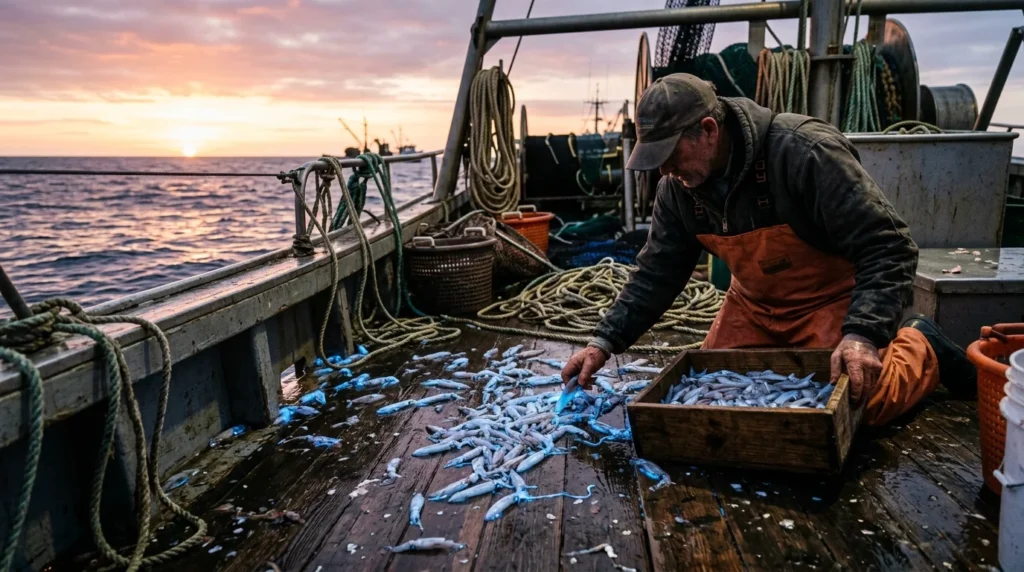
The season runs roughly from March through May, with the peak typically in April. Early morning boat tours from Namerikawa let visitors watch fishermen haul in nets full of the glowing squid, an experience tied to a real local fishing tradition rather than a staged tourist show.
Vaadhoo Island, Maldives
Vaadhoo Island became known online as the “Sea of Stars” after photos of its glowing shoreline spread widely. Waves rolling onto the beach at night trigger the plankton, so the surf itself looks lit from within, a striking contrast against the dark sand.
The effect is strongest during warmer months and on nights with little to no moonlight. Several nearby resorts run evening beach walks timed to the tide specifically for this reason.
Gippsland Lakes and Jervis Bay, Australia
Australia’s southeastern coast has become one of the more reliable bioluminescence spots outside the tropics. The Gippsland Lakes in Victoria and Jervis Bay in New South Wales both see regular blooms, especially in the warmer months from November through March.
Local paddleboard and kayak operators track plankton activity closely and often post real-time updates, since blooms here can appear and fade within a few days depending on water temperature and rainfall.
Luminous Lagoon, Jamaica
The Luminous Lagoon near Falmouth on Jamaica’s north coast is fed by a mix of saltwater and freshwater from the Martha Brae River, a combination that keeps its dinoflagellate population unusually dense. Boat tours run every night the weather allows, and some operators let guests swim directly in the glowing water.
Fish darting beneath the surface leave visible glowing trails, which makes the lagoon a favorite for visitors who want to see the phenomenon interact with marine life rather than just plankton alone.
San Diego and Southern California
Along the coast of Southern California, certain algae blooms known locally as “red tide” can turn ordinary beach waves into glowing surf after dark. Unlike the tropical bays on this list, this bioluminescence is unpredictable and tied to specific algae species that bloom irregularly, sometimes for a few nights and sometimes for weeks.
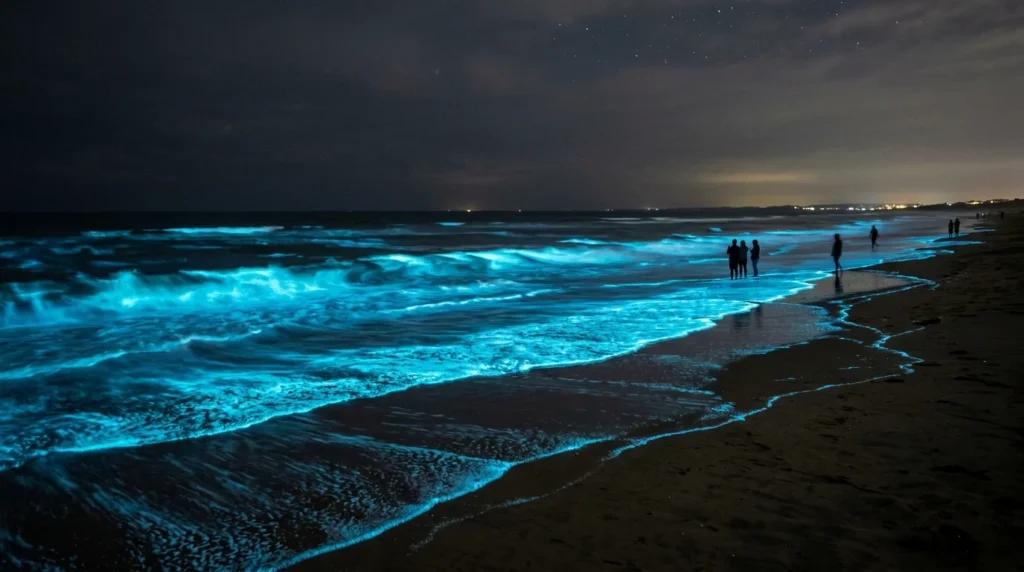
When conditions line up, beaches from La Jolla to Newport Beach can glow bright blue with every breaking wave. Local marine research groups and surf reports are the best way to track an active bloom before planning a trip.
Matsu Islands, Taiwan
The Matsu Islands off Taiwan’s coast are known locally for “blue tears,” a bioluminescent bloom that lights up the rocky shoreline each spring and early summer. The glow is strong enough that it shows up clearly in long-exposure photography, and it has become a major draw for photographers visiting the islands specifically for this reason.
April through June tends to be the most active window, though exact timing shifts year to year based on water temperature.
Norwegian Fjords
Norway’s fjords offer a rarer, cold-water version of the phenomenon. In late autumn and winter, certain plankton blooms can light up the dark water along the coast, sometimes visible from a kayak or even from shore on a calm night.
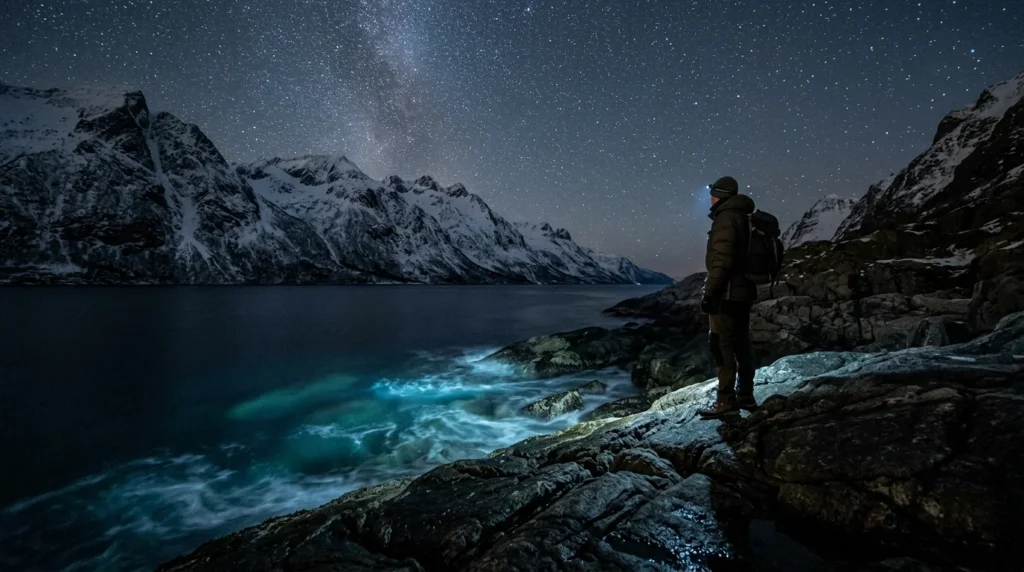
It is far less consistent than in the tropical bays, but travelers already in Norway chasing the northern lights sometimes get a bonus show in the water beneath them.
When to Go and What to Bring
Timing matters more than the destination itself. A new moon or the days just before and after it gives the darkest skies and the brightest contrast, since even moderate moonlight can make the glow hard to see.
Warm water speeds up plankton reproduction, so tropical bays tend to glow most reliably during their warmer, rainier months. Firefly squid and algae blooms follow their own separate calendars tied to water temperature and spawning cycles rather than moon phase.
A few practical tips apply almost everywhere on this list. Book a guided tour rather than trying to find these spots alone, since operators track bloom activity daily and know which nights actually deliver. Avoid sunscreen or bug spray right before getting in the water, since chemical residue can interfere with the organisms. Bring a red-light flashlight instead of a white one, since white light disrupts night vision for everyone nearby and can spook a fading bloom.