Chile runs over 2,600 miles from the driest desert on earth to glaciers near Antarctica, so the honest answer to “when should I go and where” depends entirely on which version of the country you want. This guide breaks down the regions, costs, transport, and timing so you can build a route that matches your time and budget instead of copying someone else’s itinerary
When to Go: Chile’s Seasons by Region
Because Chile spans so many climate zones, there is no single “best” season. December through February is summer, and it is peak season for Patagonia, when Torres del Paine and the Carretera Austral are fully open and daylight stretches past 10 p.m. That same window is the hottest and driest stretch in the Atacama Desert, where daytime temperatures can pass 85°F even though nights drop close to freezing. When planning South American routes, compare weather timing against the best time to visit Panama. Patagonia’s natural reserves make Chile one of South America’s best places to see wildlife.
Shoulder months, specifically October, November, March, and April, are worth prioritizing if you can only take one trip. Patagonia still has long hiking days with fewer crowds, and Santiago and the Central Valley wine region sit at a comfortable 65 to 75°F. Winter (June through August) shuts down most Patagonian trekking but opens up the ski resorts near Santiago, including Valle Nevado and Portillo.
Getting Into and Around Chile
Entry Requirements
Most travelers from the US, Canada, the EU, UK, and Australia can enter Chile visa-free for stays up to 90 days on a tourist basis; check your specific country’s requirements against the current list on Chile’s Ministry of Foreign Affairs site before booking, since reciprocity rules and fees have changed for a handful of nationalities in recent years. You will need a passport valid for at least six months beyond your entry date and, in some cases, proof of onward travel.
Domestic Transport
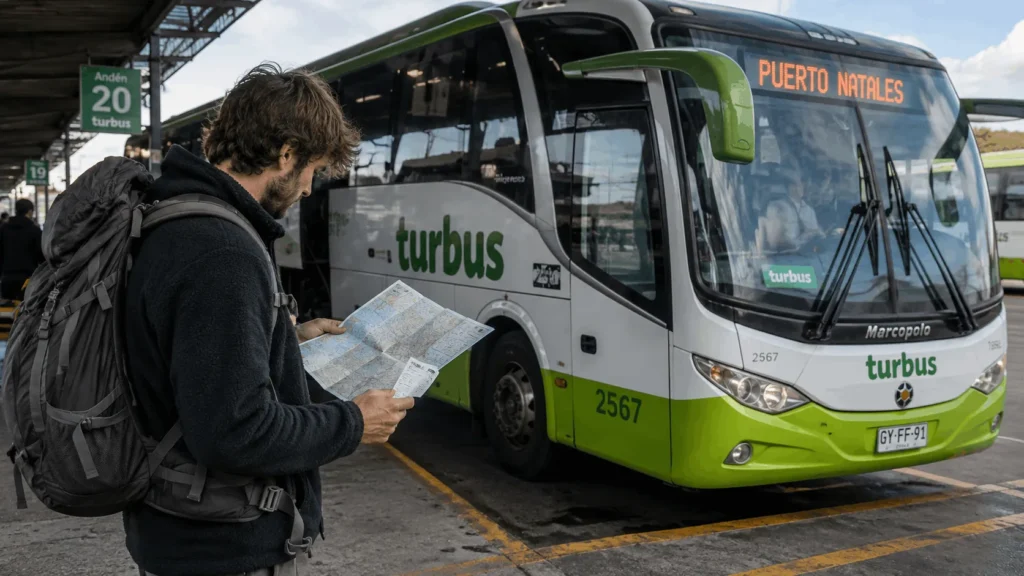
Chile’s length means internal flights matter more here than in most South American countries. LATAM and Sky Airline both run frequent routes (ideal when traveling with carry-on luggage for international travel) between Santiago, Calama (for the Atacama), and Punta Arenas (for Patagonia), and booking six to eight weeks out keeps fares reasonable. Long-distance buses, run by companies like Turbus and Pullman, are comfortable and far cheaper for the central and lake regions, where distances are shorter. Renting a car makes the most sense in the Lake District and along the Carretera Austral, where public transport is thin and the scenery rewards stopping wherever you want.
Where to Go: Chile’s Regions at a Glance
The North: Atacama Desert
San Pedro de Atacama is the base for the driest non-polar desert on the planet, and it earns its reputation. Valle de la Luna delivers otherworldly rock formations at sunset, the El Tatio geysers require a 4 a.m. start but reward it with steam columns lit by sunrise, and the salt flats around Laguna Chaxa attract flamingos year-round. Altitude here climbs past 8,000 feet in town and higher on excursions, so budget a slow first day
Central Chile: Santiago and the Valleys
Santiago works best as a two to three night stopover rather than a destination in itself. The historic center around Plaza de Armas, the Bellavista neighborhood for nightlife, and a cable car ride up Cerro San Cristóbal for skyline views cover the essentials in a couple of days. From Santiago, the coastal city of Valparaíso is an easy day trip or overnight, known for its hillside funiculars and street art, and the Casablanca and Colchagua valleys offer some of Chile’s best wine tastings within an hour or two of the capital.
The Lake District
South of Santiago, the Lake District around Pucón and Puerto Varas trades desert scenery for volcanoes, lakes, and temperate rainforest. Villarrica volcano is climbable in good conditions, and the region works well by rental car with stops at hot springs and smaller towns like Valdivia.
Patagonia and the South
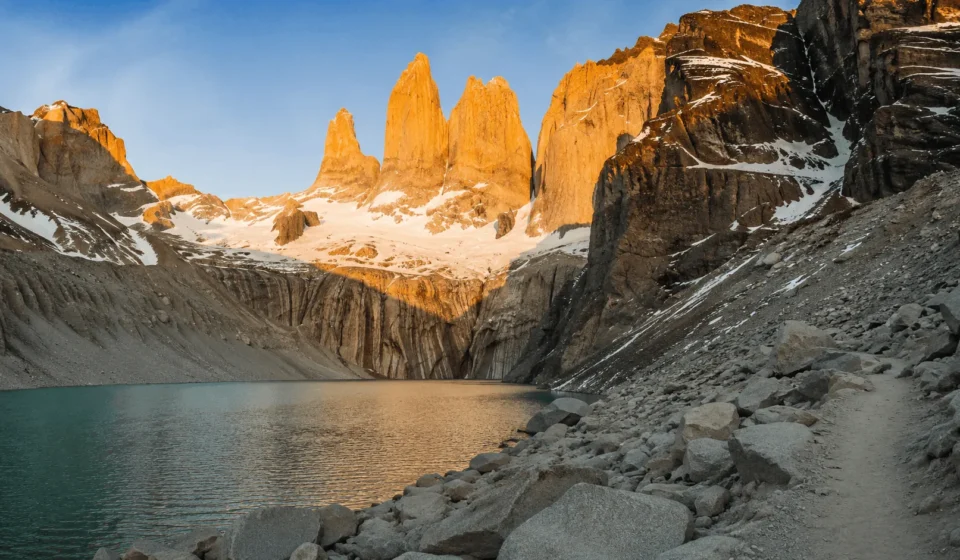
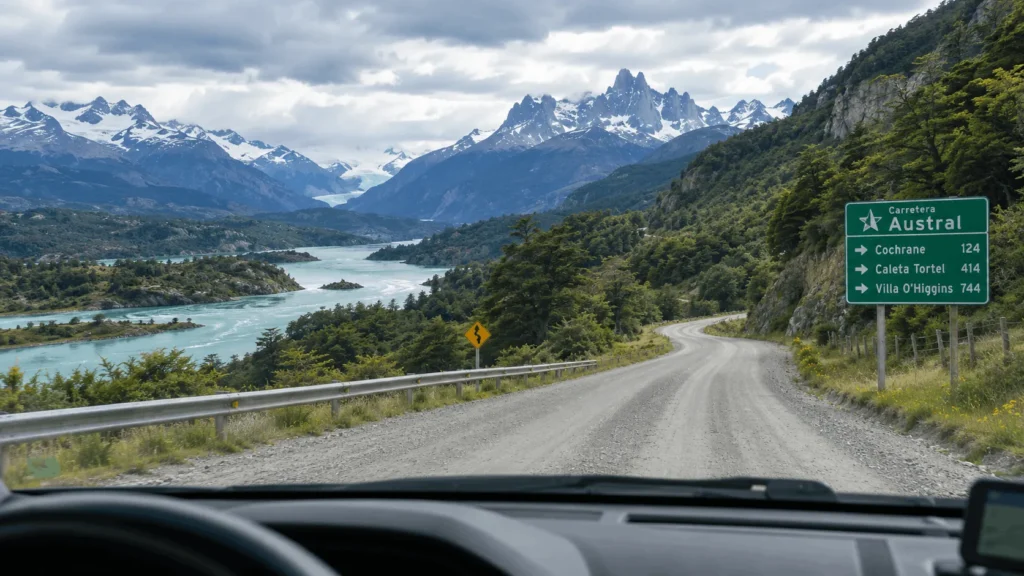
This is what draws most first-time visitors to Chile. Torres del Paine National Park anchors the region (a great place for staying fit while traveling), with multi-day treks like the W and the full O Circuit as the main draw, though day hikes are available for travelers with less time. Puerto Natales serves as the gateway town for gear rental and permits. Farther south, Punta Arenas connects to penguin colonies at Isla Magdalena, and the Carretera Austral, a mostly unpaved highway through fjords and glaciers, rewards travelers with a car and extra time
What It Actually Costs
Chile is one of the more expensive countries in South America, closer to Western European prices than to its neighbors. A rough daily budget for a mid-range traveler, covering a private room, three meals, and local transport, runs $60 to $90 in Santiago and the Lake District, and $90 to $140 in Patagonia during peak season, largely due to park fees, gear rental, and limited competition among lodges. Budget travelers using hostels and cooking some meals can cut those figures by roughly a third.
| Region | Budget (hostel, self-catering) | Mid-range (private room, restaurants) |
| Santiago | $30 to $45 / day | $65 to $90 / day |
| Atacama | $40 to $55 / day | $80 to $110 / day |
| Lake District | $30 to $45 / day | $60 to $85 / day |
| Patagonia (peak season) | $55 to $75 / day | $95 to $140 / day |
Multi-day Patagonia treks with refugio bookings are the single biggest expense most itineraries face, since bunk beds inside Torres del Paine routinely run $60 to $100 a night per person once meals are included, and popular dates sell out five to six months ahead. Camping your own gear along the W or O Circuit cuts that cost sharply but still requires paying for a campsite reservation at each stop.
Building an Itinerary by Trip Length
For 10 days, pick one region and go deep rather than trying to cover the whole country. Santiago plus the Atacama, or Santiago plus Patagonia, both work without excessive flight time. For two to three weeks, a north-to-south combination of the Atacama, Santiago and the Central Valley, and Patagonia is realistic if you fly the longest legs instead of busing them. A month or more opens up the Lake District and the Carretera Austral as connective tissue between the desert and Patagonia, turning the trip into more of a slow overland route than a highlight reel
What to Eat and Drink
Chilean food leans heavily on seafood along the coast and hearty, simple dishes inland. Curanto, a mix of shellfish, meat, and potato dumplings traditionally cooked in a pit over hot stones, is a Chiloé specialty worth seeking out in the Lake District. In Santiago and most cities, a completo, Chile’s version of a loaded hot dog piled with avocado, tomato, and mayonnaise, is the standard street food, and empanadas de pino, filled with beef, onion, egg, and olive, show up on nearly every lunch menu.
Wine is where Chile competes on the world stage rather than just the regional one. The Casablanca Valley near Santiago specializes in cool-climate Sauvignon Blanc and Chardonnay, while Colchagua, farther south, is known for bold reds, particularly Carmenère, a grape that nearly disappeared from France but found a permanent home in Chilean soil. Most valley wineries offer tastings and tours that can be booked directly or through a Santiago-based day tour.
Safety and Practical Tips
Chile is generally regarded as one of the safer countries in South America for travelers, though petty theft in central Santiago and tourist areas warrants normal city precautions. Tap water is safe to drink in most cities, including Santiago, which is not the case in much of the region. Tipping around 10 percent at sit-down restaurants is standard and sometimes added automatically to the bill as “propina voluntaria,” which you can decline if you choose. Spanish is the primary language, and Chilean Spanish moves fast and drops consonants compared to other dialects, so a translation app helps more here than in, say, Mexico or Peru.
Packing and Connectivity
Layering matters more than any single piece of gear, since a single day in Patagonia can move from sun to sleet and back. Waterproof hiking boots, a wind-resistant outer shell, and a warm mid-layer cover most of what Patagonia and the Lake District throw at you, while the Atacama calls for sun protection and a proper layer for near-freezing desert nights. A refillable water bottle is worth packing too, since tap water is safe in most cities and cuts down on the plastic bottles sold at every kiosk.
A local SIM or eSIM from Entel or Movistar, available at the Santiago airport, covers most of the country reasonably well, though signal drops out along stretches of the Carretera Austral and deep inside Torres del Paine, where downloading offline maps in advance is worth the extra step. Cash still matters outside major cities, particularly for smaller lodges, ferry crossings, and rural bus tickets, so carry Chilean pesos rather than relying solely on cards. ATMs, run mostly through the Banco de Chile and Banco Estado networks, are reliable in cities but sparse once you get deep into Patagonia or the Carretera Austral, so plan your cash withdrawals a town or two ahead.