
The short answer: you stay fit while traveling by planning three things ahead of time, movement, food, and sleep, instead of hoping willpower shows up once you land. None of it requires a gym membership or a suitcase full of equipment. It requires a routine that survives a change of time zone, a cramped hotel room, and a schedule you don’t control.
Most people don’t fall off track on trips because they lack discipline. They fall off track because their home routine depends on a specific gym, a specific fridge, and a specific bedtime, and none of those travel with them. The fix isn’t more motivation. It’s a smaller, more portable version of your routine that works from an airport lounge, a rental car, or a 300 square foot hotel room. Maintaining an active routine is straightforward when visiting the best solo travel destinations.
Why Travel Actually Derails Fitness
It’s rarely the flight itself. It’s the compounding effect of small disruptions: a 6 a.m. wake-up call, a dinner meeting that runs late, a hotel gym that’s either locked or occupied, and a body clock that thinks it’s still three time zones away. Each one is manageable on its own. Stacked together across a four or five day trip, they add up to skipped workouts and irregular meals.
The Centers for Disease Control and Prevention recommends at least 150 minutes of moderate aerobic activity and 2 days of muscle strengthening per week. That number matters here because it’s a weekly target, not a daily one. A single missed hotel workout doesn’t undo your progress. A whole week of zero movement does. The goal on the road isn’t a perfect routine, it’s hitting that weekly floor by whatever means the day allows.
Pack a Travel Fitness Kit That Fits in a Carry-On
You don’t need a gym bag. You need three or four items that take up almost no space and remove every excuse related to “I didn’t bring the right gear.”
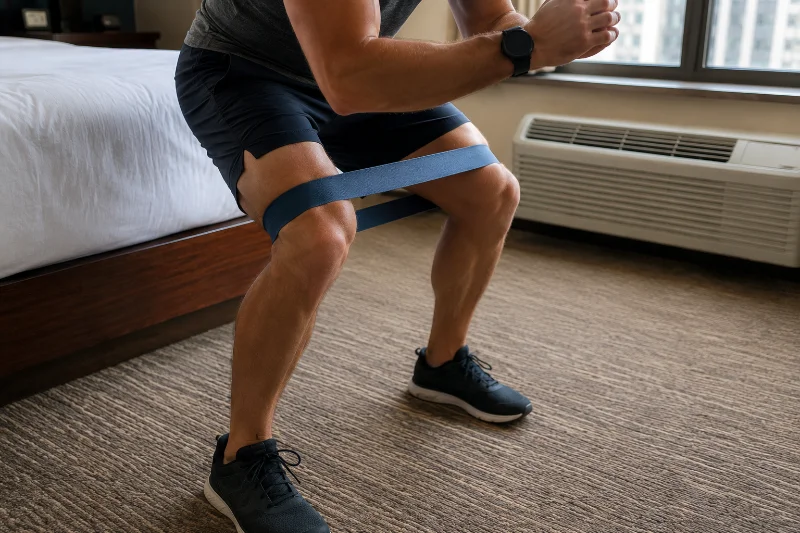
- A resistance band or two (loop bands weigh next to nothing and roll into a sock)
- A jump rope, which packs flat and turns any hallway or parking lot into a cardio session
- Running or walking shoes you’d actually use, not just shoes that happen to be comfortable
- A reusable water bottle you fill after airport security (packed in your international carry-on luggage), since dehydration from cabin air makes workouts and normal energy levels harder
Skip the packable yoga mat unless you specifically use one at home. Most hotel room floors, even carpeted ones, work fine for bodyweight training, and one less thing to pack is one less reason to leave the workout gear at home next time.
Bodyweight Workouts You Can Do in a Hotel Room
This is where most people get stuck. They picture “hotel workout” as either a full circuit routine pinned from Pinterest or nothing at all. The middle ground is a short, repeatable session you can do in the same amount of time it takes to check email.
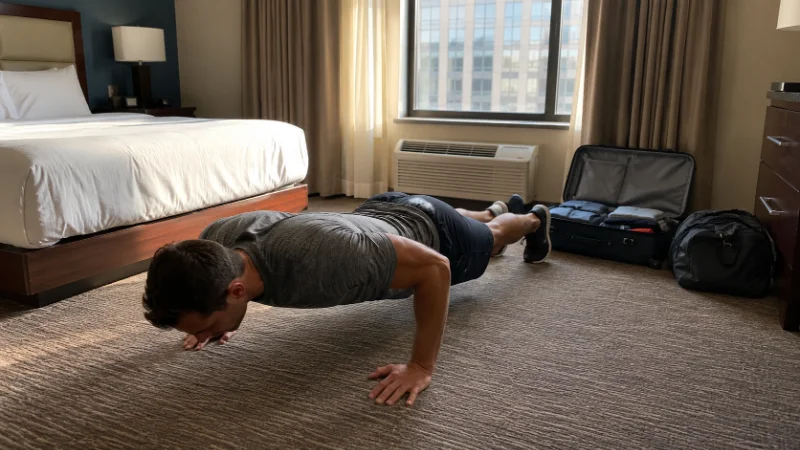
A 20-Minute No-Equipment Circuit
Run through this three times with minimal rest between exercises, resting one to two minutes between full rounds:
- 12 push-ups (knees down if needed)
- 15 bodyweight squats
- 30-second plank
- 12 walking lunges per leg
- 20 mountain climbers
It uses no equipment, needs about six feet of floor space, and hits the major muscle groups the CDC recommends training at least twice a week. If a round feels too easy, add a second resistance band around the thighs during squats and lunges. If it feels too hard on day one of a trip with a red-eye flight behind you, cut it to two rounds. The point is finishing something, not finishing everything.
Turn the City Itself Into Your Gym
Once you leave the hotel room, the destination becomes the equipment. This is where travel actually gives you an advantage over your home routine, not a disadvantage.
Walk or Bike Instead of Booking a Ride
If a destination is under two miles away, walk it (a key principle in our Scotland travel tips guide). Under four miles and the weather cooperates, look for a bike-share option, which most mid-size and large U.S. cities now have. Runners and cyclists on the fitness tracking platform Strava routinely map out new routes in unfamiliar cities using the app’s segment and route-discovery features, which is a practical way to find a safe, scenic loop near a hotel without guessing . A 30-minute walk to a meeting or a museum counts toward your weekly activity total exactly the same as 30 minutes on a treadmill.
Stair climbing works the same way. Skip the hotel elevator for anything under six or seven floors. It’s a small habit that adds real cardio volume across a multi-day trip without taking any extra time out of the schedule.
Eating on the Road Without Losing Your Progress
Fitness on a trip isn’t just the workout, it’s what you eat around it, and travel food defaults toward convenience over nutrition. A few adjustments make a real difference without turning every meal into a negotiation.
Order protein first, then build the rest of the plate around it. Most airport and hotel menus have at least one option built around eggs, chicken, fish, or a protein-forward salad. Ask for dressings and sauces on the side, since restaurant portions of both tend to run heavier than what you’d use at home. Carry a couple of shelf-stable snacks, like nuts or a protein bar, for the gap between a delayed flight and the next real meal, so you’re not making decisions on an empty stomach at a convenience store.
Alcohol is worth a specific mention because business dinners and vacation nights both push it. It’s fine in moderation, but it also disrupts sleep quality, which is the next piece of the puzzle and arguably the one that matters most.

Sleep and Jet Lag: The Overlooked Fitness Variable
Workouts and food get most of the attention, but sleep debt is often the real reason people feel like they “fell off” during a trip. Poor sleep raises perceived effort during exercise, increases cravings for high-calorie food the next day, and makes early workouts feel far harder than they should.
For trips across time zones, get outside in daylight as soon as possible after landing. Morning light exposure is one of the most effective, cost-free ways to reset your internal clock, and it pairs naturally with the walking habit already mentioned above. Keep your phone off the pillow and set a consistent wind-down time even in an unfamiliar hotel room. A short trip rarely justifies fully adjusting your sleep schedule to the new time zone, so for stays of two or three days, some travelers do better staying closer to their home sleep schedule instead of fighting jet lag from both directions.
Fitting Strength Training Into a Packed Business Trip
Cardio is easy to sneak in through walking and stairs. Strength training takes more intention, since it usually means either finding equipment or getting comfortable with resistance bands and bodyweight work.
Fitness equipment brands like Valor Fitness build home gym gear specifically around the idea that strength training doesn’t require a commercial gym setup, which is the same principle that applies on the road: a resistance band, a doorframe anchor, and 15 minutes can replace a full dumbbell rack for the length of a trip . If a hotel does have a gym, even a small one, check it before assuming it’s not worth the walk down. A treadmill, one rack of dumbbells, and a bench cover almost every exercise in a basic strength routine.
Block the workout into your calendar the same way you’d block a meeting. People who treat a 20-minute session as a scheduled commitment follow through far more often than people who plan to “find time” for it between calls.
Tools That Help You Track Movement on the Go
A fitness tracker or phone app removes the guesswork of whether a busy travel day actually added up to enough activity. Step counts, active minutes, and heart rate data give a quick gut check at the end of the day, before deciding whether to squeeze in a short walk after dinner. Writers who cover travel and wellness, including independent voices on platforms like Medium, have documented similar low-effort systems: picking one metric to watch each day, whether that’s steps, active minutes, or workouts completed, rather than trying to replicate an entire home routine on the road .
Keep it simple. One number tracked consistently across a trip beats five metrics tracked for one day and then abandoned.
Staying fit while traveling comes down to the same handful of habits repeated with less friction: move with the schedule instead of against it, eat protein-first at whatever restaurant is available, protect sleep even when the itinerary doesn’t make it easy, and use a short, equipment-light routine instead of chasing a full gym session that isn’t realistic that day.
Planning your itinerary connects smoothly with careers like travel nursing.