The best carry-on luggage for international travel is durable, fits within the tightest size limits your airlines use, and rolls or carries easily on uneven ground. Hardside spinners suit frequent flyers, while expandable softside bags work better for longer, souvenir-heavy trips.
What Makes a Carry-on Suitable for International Flights
International flights are less forgiving than domestic ones. Overhead bins vary by aircraft, gate agents measure bags more often on crowded routes, and a bag that clears one airline’s sizer can still get flagged by another. A good international carry-on is built around this uncertainty, not around a single airline’s chart (see full luggage size chart).
International carriers enforce strict hand carry luggage size limits that differ noticeably from domestic U.S. standards.
International size Limits vs Domestic size Limits
Most U.S. domestic carriers allow a carry-on around 22 x 14 x 9 inches, including wheels and handles. Many international airlines, especially in Europe and Asia, run slightly tighter, often closer to 21.5 x 15.5 x 9 inches. The gap is small on paper but matters at the gate. If you fly both routes regularly, buy for the tighter limit and treat the extra domestic room as a bonus, not the other way around.
Weight Limits Airlines Actually Enforce
Size gets the attention, but weight causes more problems on international routes. Budget carriers in Europe, the Gulf, and Southeast Asia commonly cap carry-on weight between 15 and 22 pounds, well under the roughly 40-pound bins most U.S. airlines tolerate. A bag that’s light when empty gives you more room to actually pack before hitting that ceiling.
Hardside vs Softside: Which Material Holds up Better
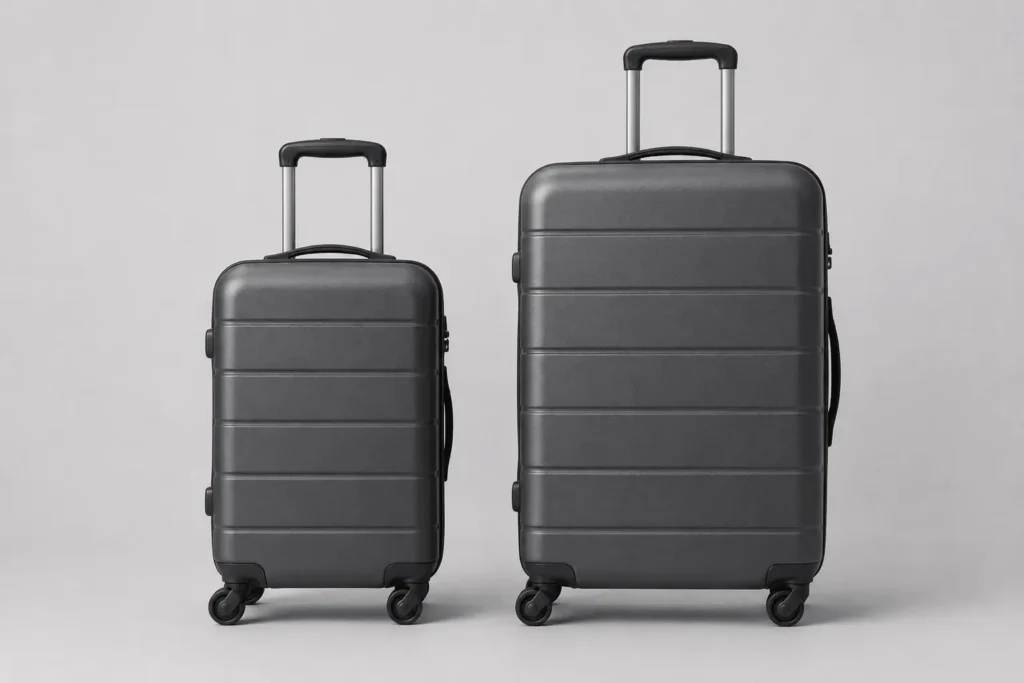
Hardside cases, usually polycarbonate, resist rain and shrug off rough handling on trains, tuk-tuks, and cobblestone streets better than fabric. They’re also easier to wipe clean after a bag gets tossed onto a luggage cart. The tradeoff is less give, so an overstuffed hardside case can crack at the seams instead of just bulging.
Softside bags flex to absorb an extra souvenir or two, and scuffs disappear into the fabric instead of showing as visible scratches. They usually open with a top lid rather than a full clamshell, which is a real advantage in a cramped guesthouse room with no floor space to spread a suitcase open. Nylon holds up better than polyester over years of use, though it costs more.
Wheels, Handles, and Durability for Rough Travel Days
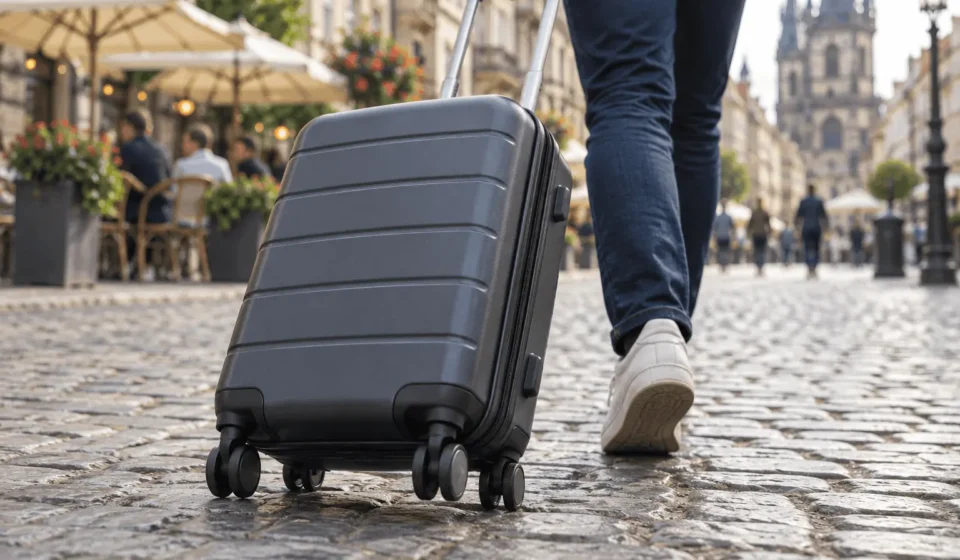
Four-wheel spinners glide easily through smooth terminals but can tip on uneven sidewalks or cobblestones. Two-wheel designs are steadier when you’re dragging a bag over broken pavement, gravel, or curbs, which is common in older European city centers and smaller regional airports. Neither style is universally better; it depends on where you’re actually walking, not just where you’re flying into.
Telescoping handles with several height settings matter more than they sound. A handle locked at one height forces a hunch or a stretch depending on your build, and that adds up over a long layover walk. Look for at least three or four stop points rather than a single fixed length.
Features Worth Paying for on an International Trip
TSA-approved Locks
A built-in TSA lock lets U.S. and international security agents open your bag for inspection without cutting it off. It’s a small feature, but replacing a cut lock mid-trip is an annoyance nobody wants on day two of a three-week trip.
Expandable Compartments
An expansion zipper adds an extra inch or two of depth, which is usually the difference between a bag that closes and one that doesn’t on the flight home. This matters most on trips where you expect to bring something back, whether that’s clothing, gifts, or gear you didn’t plan to buy.
Built-in Organization and Packing Cubes
Interior compression straps, a separate shoe or laundry pocket, and a padded laptop sleeve reduce how much you need to buy separately. Removable packing cubes are useful early on, since you can decide later whether to upgrade to dedicated ones without being locked into a system you don’t like.
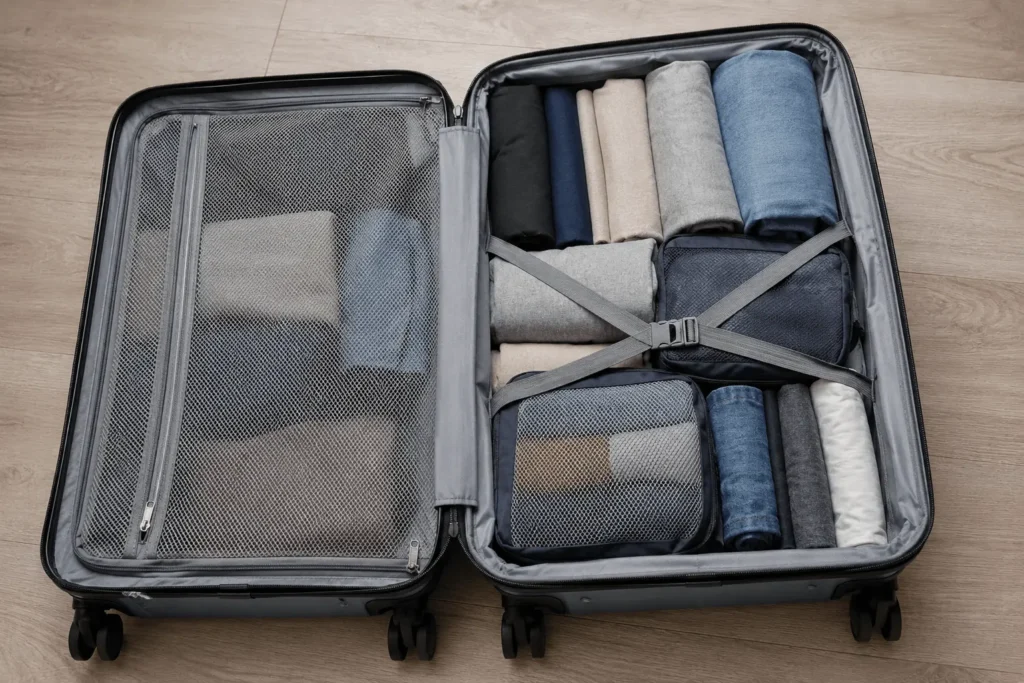
How to Pack a Carry-on for a Long International Trip
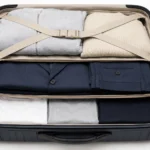
Roll casual clothing like t-shirts and activewear to save space and reduce wrinkles, and fold structured pieces like blazers (or check how to pack a suit in a suitcase) along their natural creases. Pack heavier items near the wheels so the bag stays balanced when you’re pulling it through a terminal. Keep a change of clothes and any medication in the top compartment so you’re not digging through the whole bag at security or during a layover.
Choose a bag color other than plain black if you can. Black carry-ons look identical on a crowded jet bridge, and a distinctive color or a bright luggage tag makes yours easier to spot when everyone’s grabbing bags from the same overhead bin during boarding or deplaning.
Common Mistakes that get carry-ons Gate-Checked
Oversized carry-ons marketed as “carry-on friendly” sometimes stand taller than the 22-inch depth many overhead bins allow, which forces a gate check on full flights even when the bag technically fits a sizer. Packing a bag to its absolute weight limit at check-in leaves no buffer if a gate agent’s scale reads differently from the one at home. And skipping the airline’s specific size chart in favor of a general “standard carry-on” assumption is the single most common reason travelers get stopped at the gate on international routes.
Conclusion
There’s no single best carry-on for every international trip. A frequent flyer with tight layovers benefits from a light, durable hardside spinner, while someone doing a long, souvenir-heavy trip is better off with an expandable softside bag. Match the bag to how you actually travel, check your specific airline’s size and weight limits before you fly, and prioritize durability over extra features you won’t use.
FAQ’S
Is 22x14x9 inches the standard carry-on size for international flights?
It’s common among U.S. carriers, but many international airlines use a slightly smaller limit, often close to 21.5 x 15.5 x 9 inches. Always check the specific airline’s website before your trip, since limits vary by carrier and even by aircraft type.
Is hardside or softside luggage better for international travel?
Hardside luggage handles rain and rough baggage handling better and stays cleaner-looking over time. Softside luggage flexes for extra packing space and hides scuffs, and it’s easier to fit into small hotel rooms. Choose based on your route and how much flexibility you need in your packing.
Do budget international airlines really enforce carry-on weight limits?
Yes, more strictly than most U.S. carriers. Many budget airlines in Europe and Asia weigh carry-ons at the gate and charge a fee, or require checking the bag, if it exceeds their limit, which is often 15 to 22 pounds.
What size carry-on won’t get gate-checked?
Staying a couple of inches under your airline’s published limit, especially in depth, gives you a buffer against tighter sizers on smaller regional aircraft. Bags marketed as oversized carry-ons are the most likely to get pulled aside on full international flights.
Are expandable carry-ons worth it for international trips?
Yes, particularly for longer trips where you expect to bring items back. The extra inch or two of depth is often the difference between a bag that zips shut and one that doesn’t on the return flight.