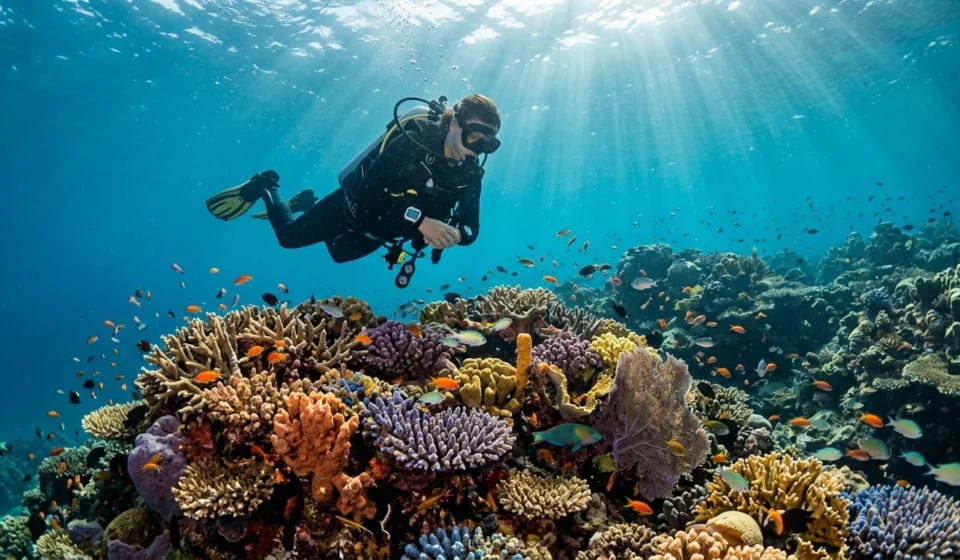
The best places to scuba dive right now are Raja Ampat in Indonesia, the Great Barrier Reef in Australia, the Red Sea in Egypt, the Galápagos Islands, Palau, the Similan Islands in Thailand, and Cozumel in Mexico. Each one rewards a different kind of diver, from beginners chasing calm, colorful reefs to experienced divers hunting big pelagic animals in open water.
Picking a destination comes down to what you actually want underwater. Some sites are built for slow, shallow drifting past coral gardens. Others demand strong certification, a drysuit, or a live-aboard boat because the best diving sits far from shore. The list below breaks down what each destination offers, who it suits, and what to expect once you’re in the water.
Raja Ampat, Indonesia
Raja Ampat sits at the center of the Coral Triangle, and marine surveys from Conservation International have repeatedly found it holds the highest coral and reef fish diversity recorded anywhere on the planet. Divers here see dense schools of fusiliers, wobbegong sharks resting on the seafloor, and pygmy seahorses tucked into sea fans barely larger than a fingernail.
Most of Raja Ampat is only reachable by live-aboard boat, since the islands are spread across a remote stretch of West Papua with limited land infrastructure. Currents can run strong at sites like Cape Kri and Blue Magic, so this destination suits divers who already have some open-water experience rather than someone on their first certification trip.
The dry season from October to April brings the calmest water and the best visibility, often exceeding 20 meters.
The Great Barrier Reef, Australia
The Great Barrier Reef stretches more than 2,300 kilometers along Australia’s northeastern coast, and UNESCO lists it as the largest living structure on Earth. Its size means the diving experience varies enormously depending on where you enter the water, from easy pontoon dives near Cairns to remote outer-reef sites accessible only by multi-day charter.
Beginners tend to start at inner reef sites close to Cairns or Port Douglas, where operators run daily boats and instructors are on hand for first-time certifications. Divers chasing bigger animals, including minke whales during their June to July migration, usually book a live-aboard heading to the Ribbon Reefs or the outer edge near Osprey Reef.
Coral bleaching events tied to rising sea temperatures have damaged sections of the reef over the past decade, according to monitoring from the Australian Institute of Marine Science, so site conditions do shift year to year. Checking recent reef health reports before booking is worth the extra step.
The Red Sea, Egypt
The Red Sea combines warm water, strong visibility, and a cluster of well-preserved shipwrecks that draw wreck divers from around the world. The SS Thistlegorm, a British cargo ship sunk in 1941, sits in around 30 meters of water off Sharm el-Sheikh and still holds motorcycles, trucks, and rifles in its cargo holds.
Sites around Sharm el-Sheikh and Hurghada are accessible from shore or short boat rides, which makes the Red Sea more approachable for divers with moderate experience compared to a remote live-aboard-only region. Water temperatures rarely drop below 21 degrees Celsius even in winter, so a 5mm wetsuit covers most of the year.
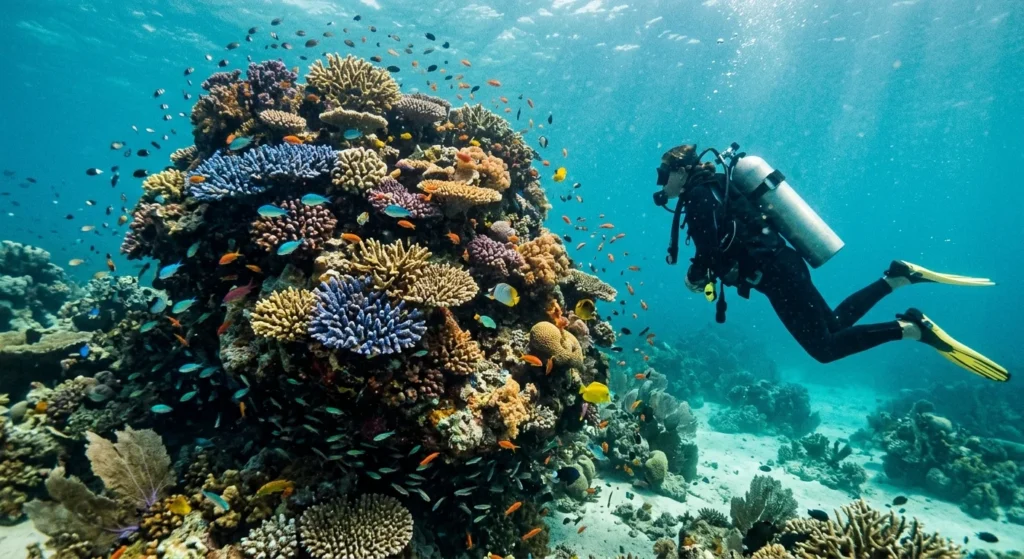
Reef sharks, Napoleon wrasse, and dense schools of barracuda show up regularly at sites like Ras Mohammed National Park, which has protected status and strict no-touch rules for divers.
The Galápagos Islands, Ecuador
The Galápagos draws divers who want big animals more than colorful coral. Hammerhead shark schools, whale sharks passing through from June to November, and playful sea lions are the main draw at sites like Darwin’s Arch and Wolf Island.
Cold upwelling currents from the Humboldt and Cromwell currents feed the nutrient-rich water that supports this marine life, but they also mean water temperatures can drop into the low 60s Fahrenheit and currents can be strong and unpredictable. Ecuador’s national park authority requires most divers here to book through a live-aboard operator, and many sites are restricted to advanced open-water divers or higher.
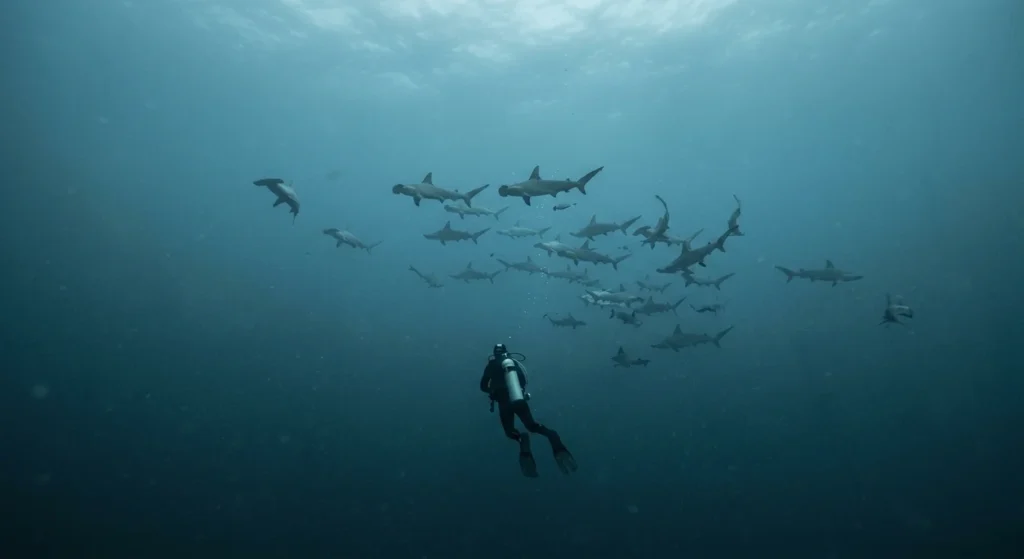
This is not a destination for a first certification dive. It suits divers who already feel comfortable managing current, buoyancy, and limited visibility.
Palau, Micronesia
Palau’s Blue Corner is one of the most consistently recommended drift dive sites among experienced divers, thanks to a wall that drops into deep blue water where gray reef sharks, eagle rays, and large schools of barracuda gather to feed on the current. Divers typically hook into the reef with a reef hook to hold position and watch the action without fighting the current.
Jellyfish Lake, a marine lake cut off from the ocean thousands of years ago, gives snorkelers and divers with a special permit the chance to swim among millions of stingless golden jellyfish. Palau’s government has protected this site closely, and access rules change periodically, so confirming current permit requirements before a trip matters.
Palau sits far from major hub airports, usually requiring a connection through Guam or Manila, which keeps visitor numbers lower than more accessible destinations on this list.
The Similan Islands, Thailand
The Similan Islands in the Andaman Sea offer granite boulder formations, swim-throughs, and consistently good visibility, usually 15 to 30 meters during the November to April diving season. Richelieu Rock, a horseshoe-shaped pinnacle a short boat ride from the main island chain, is a well-known spot for whale shark sightings, particularly in March and April.
Thailand’s national park authority closes the Similan Islands entirely from May through October to let the reef recover from monsoon conditions and tourist traffic, so the diving season here is shorter and more fixed than most other destinations on this list. Most operators run live-aboard trips out of Khao Lak or Phuket, though day trips are available for divers staying closer to shore.
The site mix here works well for both newer certified divers and experienced ones, since depths and current strength vary widely from one dive site to the next.
Cozumel, Mexico
Cozumel sits along the Mesoamerican Reef, the second-largest barrier reef system in the world, and its main draw is drift diving along coral walls in warm, clear Caribbean water. Palancar Reef and Santa Rosa Wall are two of the most dived sites on the island, known for swim-throughs, large barracudas, and consistent visibility that often exceeds 30 meters. With so many strong options, the right pick usually comes down to certification level, the kind of marine life you want to see, and how much travel and planning you’re willing to take on.
With so many strong options, the right pick usually comes down to certification level, the kind of marine life you want to see, and how much travel and planning you’re willing to take on.
el sponges, and consistent visibility that often exceeds 30 meters.
Because most Cozumel dives are drift dives with a boat following the divers’ bubbles, minimal swimming effort is required, which makes the island a common choice for divers who want a relaxed pace after a day of travel. The island is also close to Playa del Carmen and Cancún, so it works well as an add-on to a broader Mexico trip rather than a standalone dive expedition.
Water stays warm year-round, typically between 77 and 84 degrees Fahrenheit, so a 3mm wetsuit is enough for most of the year.
How to Choose the Right Dive Destination for You
With so many strong options, the right pick usually comes down to certification level, the kind of marine life you want to see, and how much travel and planning you’re willing to take on.
1. Match the Site to Your Certification Level
Destinations like Cozumel and the Red Sea’s shore-accessible sites work well for newer divers because currents are manageable and boats stay close to land. Sites like the Galápagos, Blue Corner in Palau, and Raja Ampat’s stronger current sites are better suited to advanced open-water divers or those with a drift diving or deep diving specialty.
If you’re still working through certification, it’s worth asking a dive shop directly which sites on your shortlist match your current skill level before booking flights.
2. Consider Seasonality and Water Temperature
Every destination on this list has a season where visibility, water temperature, or animal sightings peak, and a season where conditions get rougher, or the site closes entirely, as with the Similan Islands’ May to October closure. Booking around the right season often matters more than the destination itself, since even a top-rated site can disappoint during monsoon months or a cold-water upwelling period.
Checking recent trip reports from operators or dive forums for your specific travel dates gives a more accurate picture than general seasonal averages alone.