

Egypt rewards a well-timed trip more than almost any other destination. Time it right, and you’ll wander the Giza plateau in a light jacket, sip tea on a felucca as the sun drops behind the Nile, and walk through Karnak’s hypostyle hall without dodging tour groups at every column. Time it wrong, and you’ll be photographing the Sphinx through a heat shimmer at 9am because it’s already too hot to linger outside.
The best time to visit Egypt is between October and April, when daytime highs sit in the comfortable 70s and 80s Fahrenheit instead of the punishing 100s of midsummer. That six-month window isn’t uniform, though. Which part of it suits you depends on your tolerance for crowds, your budget, and whether Nile cruising, diving, or ruin-hopping is the real point of the trip. Mild winter temperatures make desert exploration comfortable, similar to conditions described in the best time to visit Oman. Broad continent trips require cross-referencing safari seasons in the best time to visit Tanzania.
The Short Answer: October Through April
If you only read one section, read this one. From October through April, Egypt sits in its dry season with minimal rain and moderate heat across the country. Nights cool down enough for a sweater, mornings are crisp, and afternoons stay warm without becoming unbearable. This is the window nearly every seasoned Egypt traveler and tour operator points to first.
Inside that window, November through February is the most popular stretch. Temperatures are at their mildest, but so are the crowds at Giza, Luxor, and Abu Simbel. October and March through April sit on the edges of peak season, still comfortable, noticeably less crowded, and usually cheaper on flights and Nile cruises.
May through September is Egypt’s low season for a reason. Cairo regularly climbs past 95°F, and Upper Egypt cities like Luxor and Aswan push past 105°F with long stretches of cloudless, dry heat. It’s not an impossible time to visit, but it asks more of you.
Why Egypt’s Climate Isn’t the Same Everywhere
Egypt is a large country, and the best time to visit changes depending on which part of it you’re planning around. A date that’s perfect for Cairo can feel uncomfortably hot in Aswan, or slightly too cool for relaxed swimming on the Red Sea.
Cairo and the Nile Delta
Cairo sits in the north, where a Mediterranean influence takes some of the edge off the heat. Winter days average in the upper 60s to low 70s Fahrenheit, with cool evenings that call for a jacket. Summer is hot and dry rather than humid, typically in the mid-90s, and rain is rare enough that you can plan outdoor sightseeing almost any day of the year.
Luxor, Aswan, and Upper Egypt
Head south toward Luxor and Aswan and the desert climate intensifies. These cities sit far from any coastline, so temperature swings are more extreme in both directions. Winter mornings can start in the 40s before climbing into pleasant afternoon warmth, while summer afternoons regularly exceed 105°F. If the Valley of the Kings or the Temple of Karnak is on your list, aim for the cooler months here more than anywhere else in the country.
The Red Sea Coast and Sinai
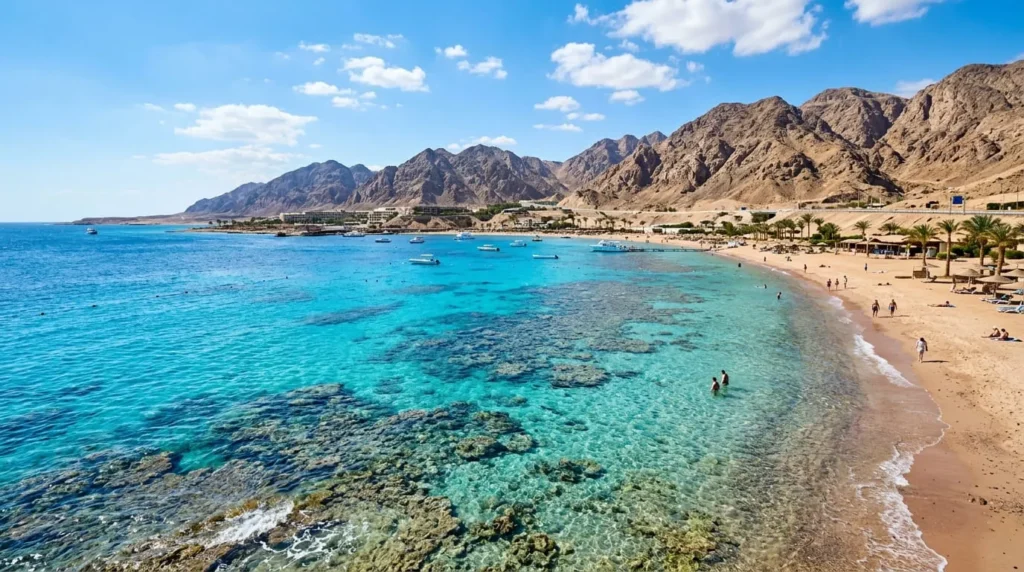
Hurghada, Sharm El Sheikh, and the Sinai coast run warmer than the rest of Egypt through winter, since the sea moderates temperatures on both ends. Water stays swimmable nearly year-round, and even January afternoons often reach the mid-70s. This is the one region where a summer trip makes genuine sense, since sea breezes and the water itself keep things comfortable when Cairo and Luxor are baking.
Best Time to Visit Egypt by Season
Winter (December to February): Peak Season
Winter is Egypt’s most popular and most reliable season. Daytime temperatures across Cairo and the Nile Valley typically land between 65°F and 75°F, dropping into the 40s and 50s after dark. January is the coolest month of the year, and also one of the busiest, with holiday travelers overlapping with the traditional peak season crowd. Expect higher prices on Nile cruises and Cairo hotels, and book flights and river cruise cabins well ahead if you’re traveling in December or January.
Spring (March to May): Warm Days and the Khamsin Wind
Spring brings rising temperatures and thinner crowds once February ends. March and April are still comfortable for sightseeing, though afternoons warm up noticeably compared to winter. The one wildcard is the khamsin, a hot, dry desert wind that can kick up sand and dust for a few days at a time, usually sometime between March and May. It rarely derails a trip entirely, but it’s worth building a flexible day or two into your itinerary in case visibility drops at an outdoor site.
Spring is also when Ramadan sometimes falls, depending on the year, which shifts daily routines in ways worth planning around.
Summer (June to August): Extreme Heat, Lowest Prices
Summer is Egypt’s off-season, and the heat is the reason why. Cairo regularly hits the mid-90s, while Luxor and Aswan push past 105°F, sometimes touching 115°F during peak stretches. Sightseeing outdoors is genuinely tough in the middle of the day, so most travelers who visit in summer start tours before 9am, retreat indoors or onto a shaded boat deck through early afternoon, and resume once the sun softens in the evening.
What summer does offer is value. Flights, hotels, and Nile cruise cabins drop to their lowest prices of the year, and major sites like the pyramids see a fraction of their winter crowds. It’s also a strong window for the Red Sea coast, where water and sea breeze take the sting out of the heat.
Fall (September to November): The Best-Kept Secret
Fall is arguably the best value season in Egypt, and one fewer travelers plan around compared to winter. September is still warm, but by October, temperatures have dropped into a comfortable range close to spring’s, while crowds and prices haven’t yet climbed to winter peak levels. November offers some of the year’s most pleasant weather and often lines up with the Abu Simbel Sun Festival in late October, when sunlight famously illuminates the inner sanctuary of Ramses II’s temple.

Choosing Your Dates Based on What You Want to Do
For a Nile Cruise
Nile cruises run year-round, but the on-deck experience changes with the season. Winter and early spring give you comfortable temperatures for sitting outside as the boat passes Luxor and Aswan’s temple sites. Summer cruises are genuinely pleasant on the water thanks to the breeze, even as temperatures on land climb, but stops at open-air sites like Karnak demand more of you at midday.
For Diving and Snorkeling in the Red Sea
Red Sea water temperatures stay warm enough to dive comfortably nearly all year, ranging from the low 70s in winter to the high 80s in summer. Visibility tends to be best from April through June and again in September and October, when winds are calmer and the water is clear. Winter diving is still good, just with a wetsuit for comfort rather than the bare-skin conditions of summer.

For Fewer Crowds
If dodging tour groups matters more than shaving a few degrees off the temperature, aim for October, early November, or March through April. You’ll get most of the comfortable weather of peak season with noticeably thinner crowds at Giza, Luxor, and Abu Simbel.
For the Lowest Prices
Summer is unambiguously Egypt’s budget season. Flights and Nile cruise cabins can run significantly cheaper than winter rates, and the major sites feel genuinely uncrowded. Just plan your daily schedule around the heat rather than against it.
Watch the Calendar for Ramadan
Ramadan follows the Islamic lunar calendar, so its dates shift roughly eleven days earlier each year and can fall anywhere from late winter to summer depending on when you’re planning your trip. During Ramadan, many restaurants and shops keep shorter daytime hours since observant Muslims fast from sunrise to sunset, and some businesses open later or close briefly around sunset for the evening meal. Tourist sites, hotels, and Nile cruises continue running normally, and dinner service often shifts later into the evening.
None of this rules out a trip during Ramadan. It’s simply worth checking the current year’s dates before you book, since it changes what a typical travel day looks like, particularly around meal times and shop hours in smaller towns.
The Worst Time to Visit Egypt
If you’re avoiding extremes, steer clear of July and August in Luxor and Aswan, where daytime highs regularly exceed 105°F and outdoor sightseeing becomes a genuine endurance test. The Red Sea coast is the exception, since sea breezes make even peak summer manageable there. Outside of the heat, there’s no month when major sites close or become inaccessible, so “worst” here is really about comfort rather than availability.
How to Lock In Your Travel Dates
Start with the season that fits your priorities, then narrow things down once you know the current year’s Ramadan dates and any holidays that affect flight prices. October and November offer the best balance of comfortable weather, manageable crowds, and reasonable prices for most travelers. If low prices and thin crowds matter more than mild weather, summer deserves serious consideration, especially if a Red Sea stop is part of the plan. Whatever window you choose, book Nile cruise cabins and Cairo hotels early if you’re traveling between December and February, since that stretch fills up fastest every year.