Fold the jacket inside out along one shoulder, lay the trousers flat with creases matched, then place both between soft layers of clothing. A garment bag or a dry-cleaning bag underneath the fold cuts down on the friction that actually causes most wrinkles.
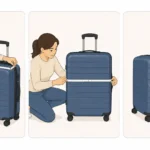
Wrinkles in a packed suit rarely come from folding itself. They come from fabric rubbing against fabric while your suitcase gets tossed around and stacked under other bags. Once you understand that, the method you choose matters less than reducing that friction. Below are the four methods worth knowing, plus how to decide which one fits your trip. If packing inside a structured weekender like a Louis Vuitton travel bag, lay suit jacket shoulders flat. Verify your suitcase dimensions on a luggage size chart so your suit lays flat without creasing.
How to Fold a Suit Jacket for a Suitcase
The inside-out shoulder fold is the most common method, and it works because it protects the outer fabric instead of exposing it to friction from other clothes.
The Inside-Out Shoulder Fold, Step by Step
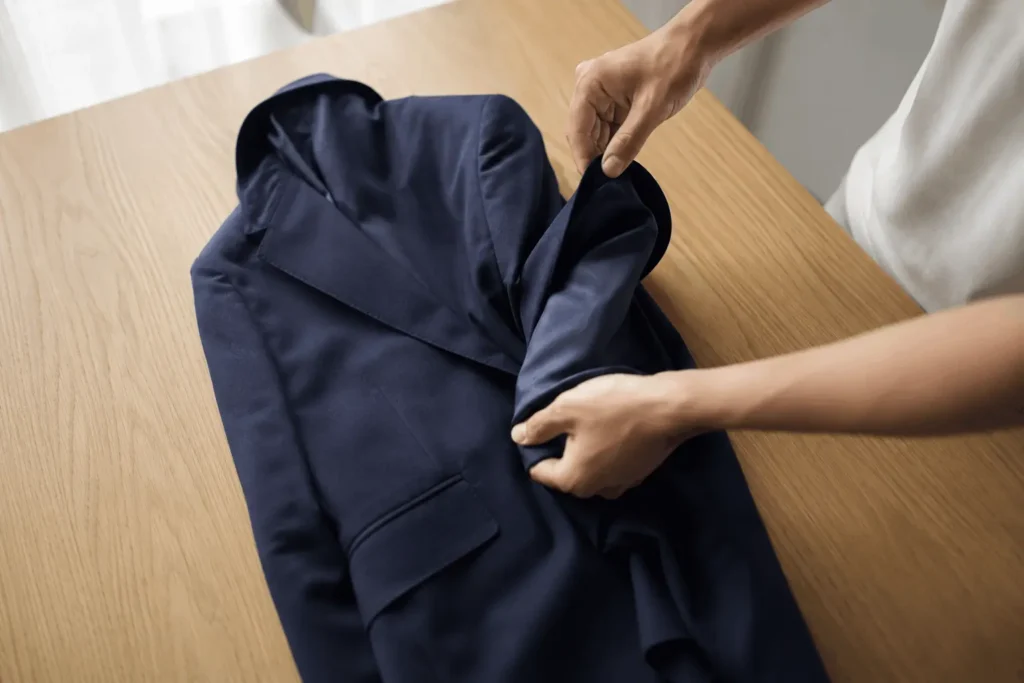
Lay the jacket face down on a bed or table. Reach into one shoulder and pull it through so that shoulder turns inside out. Then tuck the other shoulder inside the first, nesting them together so the jacket folds in half vertically. Smooth the lapels and seams flat before folding the jacket once more horizontally, bringing the hem up toward the collar. The result is a compact rectangle with no sharp crease across the chest or lapel.
Garment Bag or Suitcase, Which Should You Use
A garment bag keeps the jacket hanging in its natural shape, which is why tailors generally recommend it over folding when you have the option. If you don’t own one, a hard-shell suitcase (see best carry-on luggage for international travel) gives better protection than a soft-shell case because it resists crushing under heavier luggage.
Bi-Fold vs Tri-Fold Garment Bags
A bi-fold garment bag folds once at the waist, creating a single crease that usually falls out within minutes of hanging. A tri-fold bag creates two crease lines instead of one, but it’s more compact and easier to fit in a car trunk or a smaller overhead bin. Most airlines allow a bi-fold bag as a carry-on if it fits standard hand carry luggage size rules, and attendants will often hang it in the cabin closet if you ask before the flight fills up.
The Hanger and Dry-Cleaning Bag Method
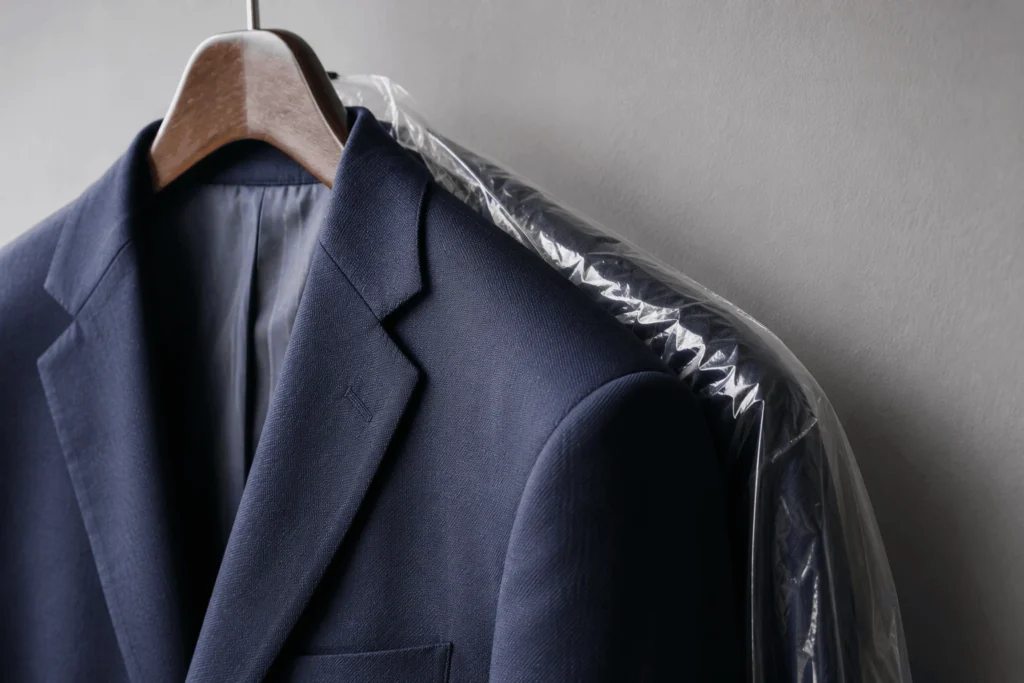
This method skips folding almost entirely. Start with a wide-shoulder hanger built to hold the jacket’s structure, slip a thin plastic dry-cleaning bag over it, then add a second jacket on top with another bag between the two. You can typically stack four to six jackets this way, then place the hanger inside the suitcase, folding it in half at the middle if the case is too small to fit it flat.
The plastic layer is what makes this work: a smooth surface lets garments slide slightly instead of gripping each other during transit. It’s a good option if you’re traveling with more than one jacket and want to avoid new creases entirely.
The Bundle Method for Zero Crease Lines
The bundle method avoids sharp fold lines altogether. Start with a soft core, a rolled sweater or a stuffed packing cube works well, and lay the jacket right side out and flat. Place the core on the jacket’s chest area, wrap the sleeves around it, then fold the bottom hem up and over. Wrap the trousers around the outside starting from the waistband, then place the whole bundle into the suitcase as one piece, with nothing heavy on top.
Because every fold curves around the core instead of creasing flat, there’s no sharp line for a wrinkle to set into. The trade-off is more suitcase space and a few extra minutes, so save it for fabrics that wrinkle easily or trips where you can’t risk any creasing.
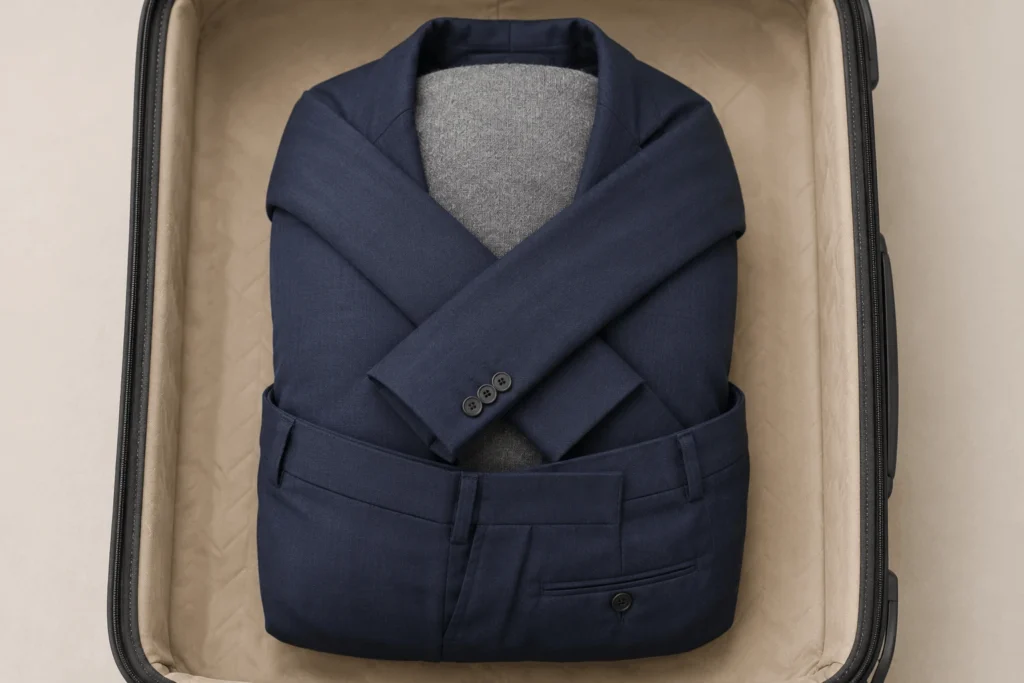
Where to Place the Suit Inside the Suitcase
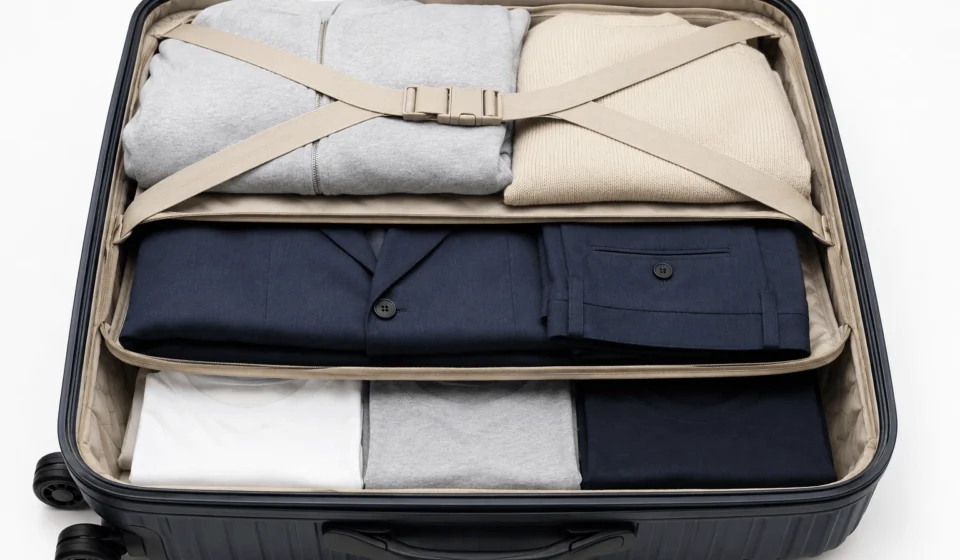
Packing order matters as much as the folding method. Start with a soft cushion at the bottom, T-shirts, underwear, or knitwear work well, since this absorbs shock from below. Lay the folded jacket and trousers on top, then add another soft layer above the suit rather than anything rigid. If your suitcase has compression straps, tighten them just enough to hold everything in place; straps pulled too tight will crease the fabric they’re meant to protect.
Hard-Shell or Soft-Shell, Which Suitcase Wins
A hard-shell suitcase protects a folded suit better because its rigid frame resists the crushing weight of other bags in a cargo hold or overhead bin. Look for one with built-in compression straps and a separate shoe compartment, since keeping shoes away from clothing prevents both dirt transfer and pressure-point wrinkles. A soft-shell case flexes more under weight, which is fine for casual clothing but works against a tailored jacket.
How to Pack Shirts, Ties and Shoes Alongside the Suit
Button a dress shirt fully, flip it face down, fold the sleeves across the back, then fold it in half from bottom to top. Stack folded shirts into a single plastic bag so they don’t grip each other in transit. Never fold a tie; roll it from the narrow end toward the wide end and tuck it inside a shoe, which protects the tie and uses otherwise wasted space. Pack shoes in shoe bags along the suitcase’s edges, sole-first, never on top of the suit.
How to Remove Wrinkles After You Land
Unpack the jacket and trousers as soon as you arrive and hang them up, even before you unpack anything else. Most light creases fall out on their own within an hour once the fabric can hang freely. For anything that lingers, hang the suit in the bathroom during a hot shower; the steam relaxes the fibers without the risk of a hotel iron scorching the fabric. A travel steamer works even faster if you pack one.
Which Method Should You Actually Use
For a one-night business trip with a single jacket, the inside-out shoulder fold packed inside a hard-shell carry-on is fast and reliable. If you’re bringing more than one jacket, the hanger and dry-cleaning bag method scales better without adding new creases. For a wedding, an important meeting, or a delicate fabric you can’t risk wrinkling, the bundle method or a garment bag is worth the extra suitcase space. There’s no single best answer, only the method that matches how many suits you’re bringing and how much you can afford to have go wrong.
Frequently Asked Questions
What is the best way to pack a suit in a suitcase without wrinkles?
The inside-out shoulder fold combined with a soft cushion of clothing above and below the suit gives the most reliable results. A dry-cleaning bag around the folded jacket reduces friction further.
Does the inside-out shoulder fold damage the jacket’s structure?
No, but it can slightly distort the shoulder if not smoothed out carefully. The hanger and dry-cleaning bag method preserves the shoulder’s shape more precisely.
Should suit trousers be folded in half or in thirds?
Fold in thirds for a carry-on, or quarters for a checked suitcase. Line up the front creases first so you’re not creating new ones.
Is a garment bag better than folding a suit into a suitcase?
A garment bag generally protects the jacket’s shape better since it hangs rather than folds. A folded suit in a hard-shell suitcase is a solid second option.
Can you pack more than one suit jacket in the same suitcase?
Yes. The hanger and dry-cleaning bag method lets you stack several jackets on one hanger, separated by plastic, limiting friction even with multiple garments packed together.