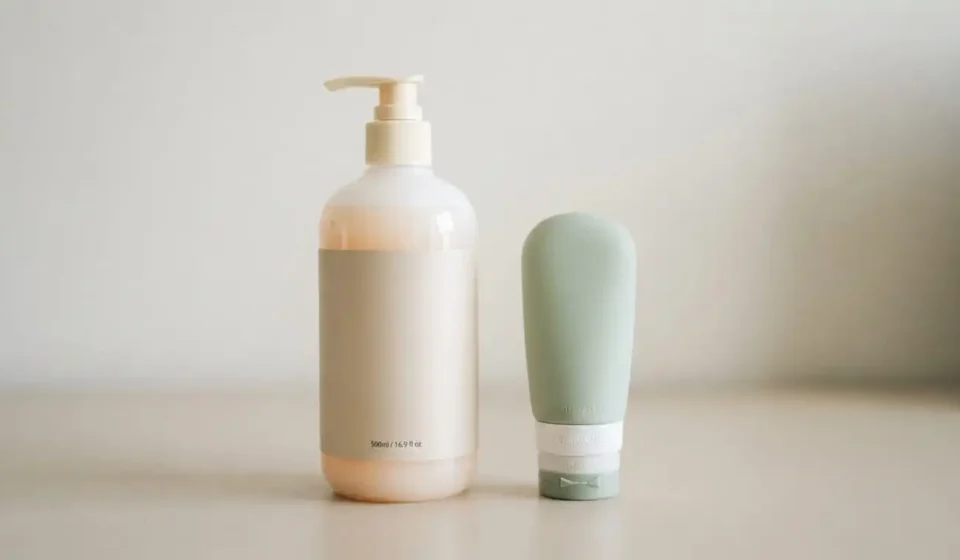
The best travel bottles for toiletries are silicone or hard-plastic containers under 3.4 ounces with a locking cap, since a loose or single-seal lid is the main reason liquids leak in a bag. Look for a wide mouth for easy refilling, a flip-top or screw-lock closure, and a size that fits your trip length.
Why regular bottles don’t survive a flight
Cabin pressure drops during a flight, and air trapped inside a sealed bottle expands as it does. A shampoo bottle that seals fine at home can push its cap open at 35,000 feet, which is why so many people open their suitcase to a shampoo-soaked shirt. A dedicated travel bottle is built with either a pressure-release valve or a double-seal cap to handle that shift.
Weight matters too. Full-size bottles add up fast in a carry-on, and airlines with strict cabin weight limits will charge for the extra kilos. Swapping five full bottles for five travel-size ones can save close to a kilo of luggage weight on a two-week trip.
What makes a travel bottle actually leak-proof
The lid matters more than the material
Most leaks come from the cap, not the bottle wall. A flip-top with a single rubber gasket will loosen faster than a screw-down lid with a secondary inner seal. Bottles with a swivel loop, like the GoToob+ line from Humangear, add a second layer of protection since the loop itself locks the flip-top shut when clipped closed.
Silicone vs hard plastic vs refillable pods
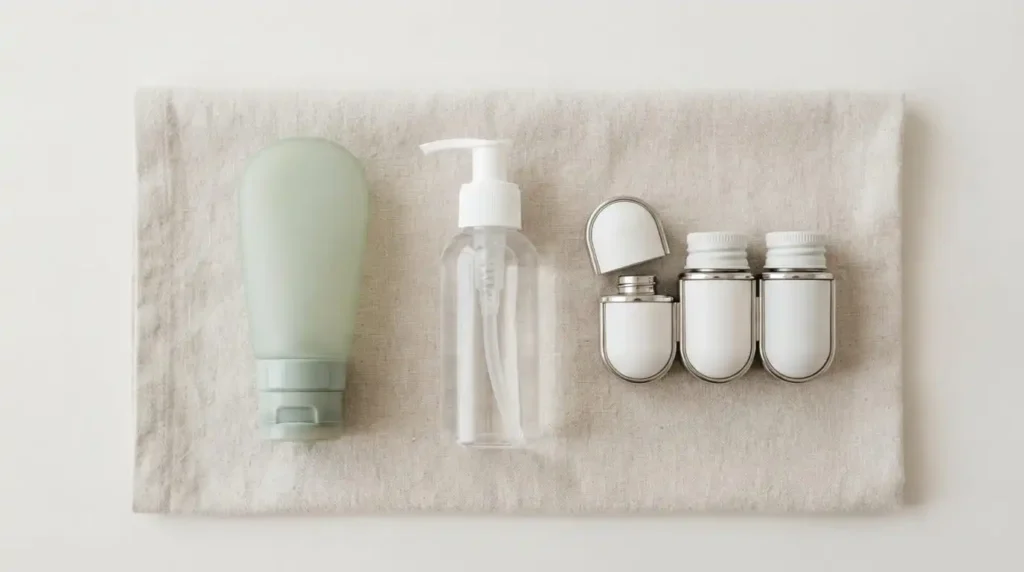
Silicone bottles squeeze easily and work well for shampoo, conditioner, and body wash, but they can feel slippery with wet hands in the shower. Hard plastic bottles, like the Nalgene travel bottle kit, hold their shape better and suit thicker products such as lotion or sunscreen. Magnetic pod systems, such as Cadence Capsules, skip the squeeze bottle shape entirely and use snap-together jars instead, which works well for makeup and skincare but not for larger volumes of shampoo on a longer trip.

The TSA liquids rule, explained simply
The TSA 3-1-1 rule (essential when checking a luggage size chart) allows containers of 3.4 ounces (100 ml) or less, all packed into a single quart-size clear bag, one bag per passenger. This applies to carry-on luggage only. Checked bags don’t have the same size limit, so if you’re checking a bag, larger travel bottles in the 6 to 8 ounce range are fine.
A container that’s only half full still counts by its printed size, not by how much liquid is inside, so a 5-ounce bottle with 2 ounces of shampoo in it still won’t pass a carry-on check. Buy bottles sized at 3.4 ounces or under if you’re flying with a carry-on only.
Best travel bottles by use case
For carry-on only travelers
Stick to a set of 3-ounce and 2-ounce silicone bottles, the same split used in most starter kits like the Eagle Creek Silicone Bottle Set. Two larger bottles cover shampoo and body wash, two smaller ones handle conditioner and face wash. A clear TSA bag, often included in these sets, keeps everything in one place at security.
For checked luggage and longer trips
Once you’re not limited to 3.4 ounces, look at 6 to 8-ounce refillable bottles or bring a slightly larger toiletry kit. A double-walled bottle, like the Cadence Capsule or a Nalgene wide-mouth container, resists drops better since it doesn’t rely only on the cap seal to stay closed.
For thick products like lotion and sunscreen
Thick products do better in a jar with a screw lid than a squeeze bottle, since a narrow flip-top opening makes it hard to get the last bit of lotion out. Small travel jars in the 1 to 2-ounce range, often sold alongside silicone bottle sets, work well for this.
How to fill and pack travel bottles without a mess
Fill bottles over a sink, not over your suitcase, and leave a little headroom at the top instead of filling to the brim, since liquids expand slightly with pressure changes. Screw or snap the cap shut, then turn the bottle upside down over the sink for a few seconds before packing it. If it leaks there, it’ll leak in your bag too.
Label each bottle right after filling it. A set of adjustable stick-on labels or a paint pen works better than trying to remember which clear bottle holds shampoo versus conditioner three days into a trip. Pack the filled bottles standing upright inside a zip-top bag as a second layer of protection, even if the bottle itself is rated leak-proof.
Common mistakes that cause spills
Overfilling is the most common one. A bottle filled to the very top has nowhere for trapped air to go, so the cap pushes open under pressure. Reusing an old bottle whose seal has worn out is another. Silicone gaskets and rubber seals degrade after repeated use, usually somewhere between 6 months and a year of regular travel, so a bottle that leaked once is worth replacing rather than trusting again.
Packing bottles loose in a bag, without a secondary bag or pouch around them, turns a small leak into a ruined stack of clothes. A dedicated toiletry bag or even a spare zip-top bag solves this for the cost of almost nothing.
A good travel bottle setup isn’t about buying the most expensive option. It’s about matching the bottle to the product, checking the seal before you pack, and giving liquids somewhere to go if a cap does loosen. Get that right and your toiletries stay where they belong for the whole trip.
Frequently asked questions
What size travel bottles are allowed on a plane?
Carry-on liquids must be in containers of 3.4 ounces (100 ml) or less, packed into one clear quart-size bag per passenger. Checked bags don’t have this size limit.
Are silicone travel bottles better than plastic ones?
Silicone bottles squeeze more easily and work well for shampoo, conditioner, and body wash. Hard plastic bottles hold their shape better and suit thicker products like lotion or sunscreen, so the better choice depends on what you’re packing.
How do I stop my travel bottles from leaking?
Leave headroom instead of filling to the brim, tighten the cap fully, and test it upside down over a sink before packing. Pack filled bottles inside a zip-top bag as a backup layer.
Can I bring travel bottles filled with lotion or cream?
Yes, as long as the container is within the size limit for your bag type. Thicker products like lotion often work better in small screw-top jars than in flip-top squeeze bottles.
How long do travel bottles last before they need replacing?
Most silicone and rubber seals hold up for 6 months to a year of regular use before they start to wear down. If a bottle leaks once, it’s worth replacing rather than reusing.
Planning your itinerary connects smoothly with carry-on luggage guidelines.