

A ceramic travel mug uses a ceramic or porcelain interior instead of stainless steel or plastic, so coffee and tea keep their natural taste without a metallic or plastic aftertaste. Here is the short version of how to buy a ceramic travel mug. Pick solid ceramic if pure taste is your priority and your routine is gentle. Pick a ceramic-lined stainless steel hybrid if you want clean taste plus real drop protection. Skip ceramic entirely if your mug gets thrown around, goes hiking, or needs to stay hot for hours. That is the whole decision in three lines. The rest of this guide fills in the details: what “ceramic” actually means on the box, how the three construction types compare, and the buying mistakes to avoid.
What “Ceramic Travel Mug” Actually Means
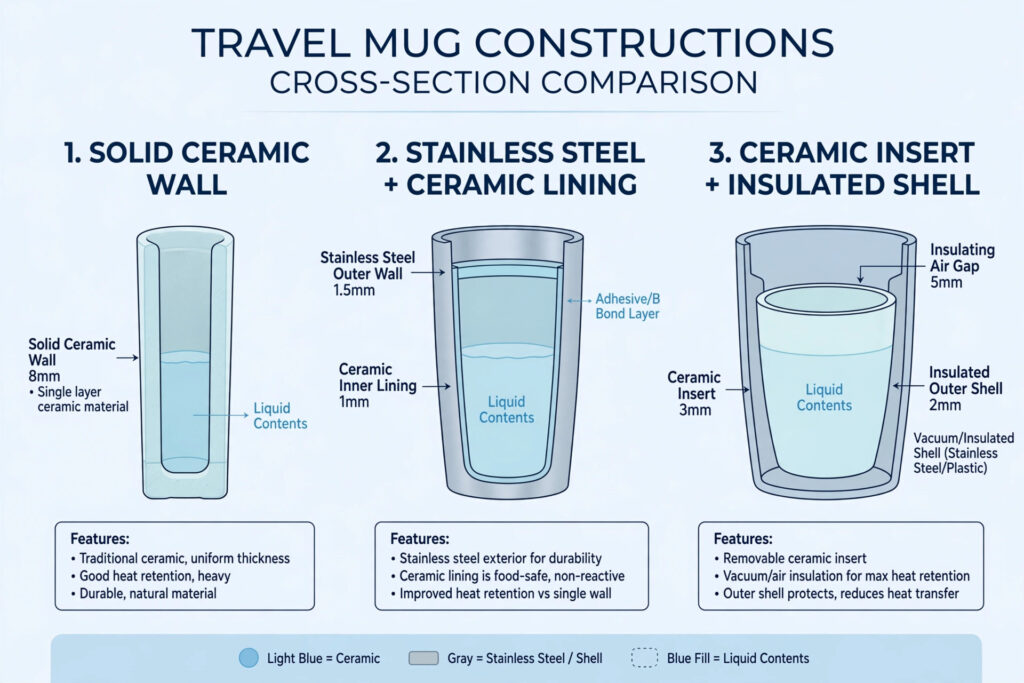
Not every ceramic travel mug on the shelf is the same underneath. The label covers three different constructions, and they perform very differently once you use them daily. A solid ceramic mug is ceramic from rim to base, like a regular coffee cup with a travel lid on top. Your drink touches nothing but glaze, which gives the cleanest taste. It is also the most fragile and the worst at holding heat. A ceramic-lined or ceramic-coated hybrid is a stainless steel body with a ceramic layer on the inside. The steel shell gives it drop resistance and insulation. The ceramic interior gives it the neutral taste. This is the most popular type for commuting. A removable ceramic insert design puts a real ceramic cup inside an insulated shell. You get solid-ceramic taste with some protection around it. The tradeoff is weight and bulk, and fewer brands make this style. Check the product description before you buy a ceramic travel mug. If it says “ceramic coated” or “ceramic lined” without saying solid ceramic, the core is steel or plastic. That changes the taste, the durability, and whether you can microwave it.
Why A Ceramic Travel Mug Wins On Taste
Stainless steel can leave a faint metallic note, especially with acidic coffee or delicate teas. Plastic linings can absorb odors over time and slowly release them into your next drink. Ceramic does neither. A glazed ceramic surface is non-porous, so it does not hold old flavors and does not react with hot liquid. This is why many people switch to a ceramic travel mug after years of stainless steel. They say plain black coffee finally tastes like plain black coffee, cup after cup.
One nuance most guides skip: that metallic taste is not always the metal. Coffee writers who dig into the subject point out that the bare steel drinking rim, coffee oils trapped in lid gaskets, leftover detergent, or coffee gone stale from hours of heat can all create an off taste that people blame on the steel. If your steel mug tastes wrong, deep-clean the lid and gaskets before you declare war on the material.
The Three Types Compared
| Factor | Solid Ceramic | Ceramic-Lined Hybrid | Removable Insert |
|---|---|---|---|
| Taste purity | Best | Very good | Best |
| Heat retention | Weak (cools within about an hour) | Strong (double-wall vacuum models) | Moderate |
| Drop survival | Low, chips or cracks | High, dents at worst | Medium, shell protects but adds bulk |
| Weight | Medium | Medium to heavy | Heavy |
| Microwave safe | Usually yes | Usually no (steel core) | Usually yes (ceramic cup alone) |
| Typical buyer | Desk and car commuters | Daily commuters, rough bags | Taste-first buyers who accept bulk |
If taste is the entire point of your ceramic travel mug, solid ceramic or a removable insert wins. If you want taste plus a mug that survives real life, the hybrid is the practical pick.
Ceramic Vs Stainless Steel Vs Plastic
Stainless steel wins on drop resistance and, in a double-walled design, on how long it keeps a drink hot. Plastic wins on weight and price. Ceramic sits in the middle on durability but wins on taste and on how a mug feels in the hand, closer to drinking from a real cup than a bottle. Choose by your priority. If you commute by bike, hike, or throw your bag around, stainless steel is the safer daily pick. If you want a drink to stay genuinely hot for most of a workday, vacuum-insulated steel or dedicated insulated travel bottles built for long heat retention are the better tools. If your mug mostly travels between kitchen, car, and desk, a ceramic travel mug gives you the better drinking experience along the way. Plastic makes sense only on a tight budget or when every ounce counts. It absorbs flavors over time, so coffee drinkers who also drink tea will notice yesterday’s brew in today’s cup.
When A Ceramic Travel Mug Is The Wrong Pick
Honesty first: a ceramic travel mug is not for everyone. If any of these describe you, buy stainless steel instead and do not look back. You carry your mug in an outside backpack pocket or a bike bottle cage. One hard knock on tile or concrete can crack solid ceramic, and even a hybrid’s coating can chip if it slams into something sharp. You need coffee to stay hot for four or more hours. A solid ceramic mug cools within about an hour. Long heat retention is a steel vacuum vessel’s job, not ceramic’s. You drink while moving and never want to think about the mug. Ceramic asks for small courtesies: a silicone sleeve, no metal spoons, no abrasive scrubbers on coated interiors. If that sounds like maintenance you will skip, a ceramic travel mug will disappoint you. There is no shame in this. The right mug is the one that survives your actual routine, not the one with the best taste in theory.
How To Choose The Right Ceramic Travel Mug
Capacity And Cup Holder Fit
Most ceramic travel mugs run between 12 and 18 ounces. Twelve ounces fits nearly every car cup holder and suits a shorter commute. Sixteen to eighteen ounces suits people who want a full mug without a refill, but check the mug’s widest point against your cup holder before buying. Some ceramic designs taper outward near the base and will not drop in cleanly.
Single Wall Or Double Wall Construction
A single-wall ceramic mug is lighter and simpler, but it loses heat at roughly the same rate as a ceramic mug on your kitchen counter. Your coffee will cool within an hour or so. A double-wall ceramic mug adds an air gap between two ceramic layers, which slows heat loss and keeps the outside cooler to the touch. If you sip slowly over a long commute or a long work session, double wall is worth the extra cost. If you drink fast, single wall is lighter and usually cheaper.
Lid Style And Leak Resistance
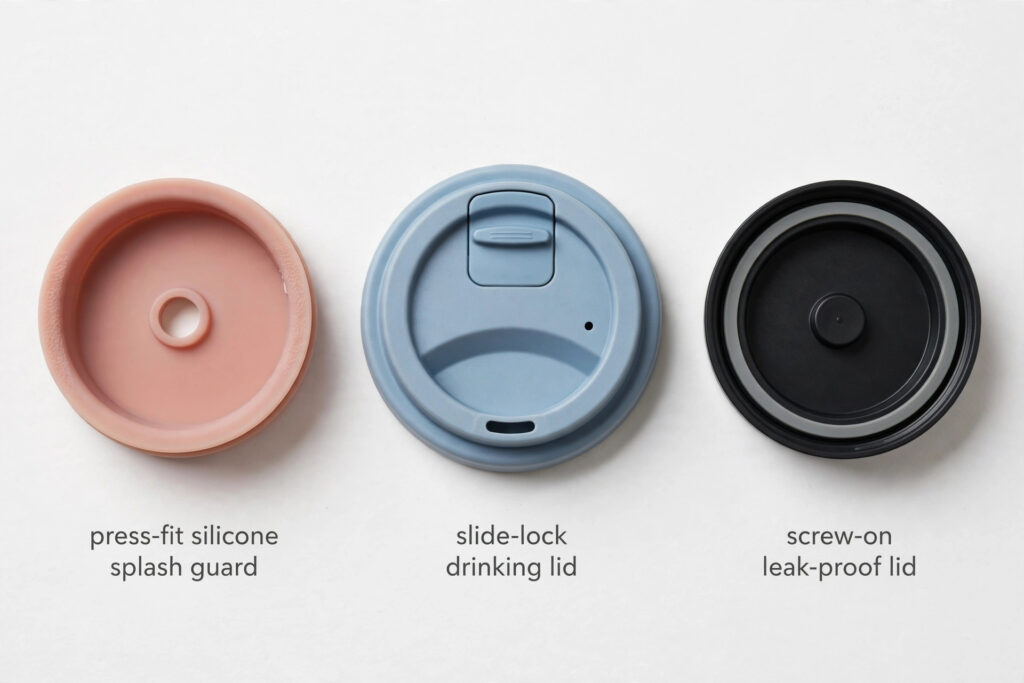
Lids fall into three common types: a press-fit splash guard, a slide-lock opening, and a full screw-on seal. Splash guards stop spills if the mug tips over but are not airtight. Slide-lock lids are easier to open one-handed but can be harder to clean around the opening mechanism. Screw-on seals give the best leak resistance for a bag or car seat pocket, though they are slower to open for a quick sip. If your ceramic travel mug will ride in a bag, prioritize a screw-on or slide-lock seal over a simple press-fit lid. One more buying check most people skip: see whether the lid comes apart for cleaning and whether the brand sells replacement gaskets. Lids wear out before mug bodies do, and a lid you cannot fully clean will eventually make every drink taste stale.
Weight, Drop Risk, And Silicone Sleeves
Ceramic travel mugs are heavier than plastic and often heavier than stainless steel of the same size, since ceramic is a denser material. That weight means a hard drop onto tile or concrete can chip or crack the mug in a way a dented steel mug simply survives. A silicone sleeve or boot around the base absorbs most everyday bumps and softens a fall onto a hard floor, so choose a mug that includes one rather than adding a separate accessory later. Also weigh the packed size: a bulky double-wall mug eats real space in a daypack, so measure it against your luggage size chart and your bag’s bottle pocket before you commit.
Read The Label: Glaze, Lid, And Safety
For solid ceramic travel mugs, look for a “food-safe” or “lead-free” glaze statement from the manufacturer. Regulators including the US FDA set limits on how much lead and cadmium can leach from ceramic tableware, and reputable brands formulate and fire their glazes to stay within them. Cheap unbranded imports with bright, low-fired decoration are the ones worth caution about. Buy from a brand that states its safety standards in writing. For any mug type, check the lid materials too. Look for BPA-free plastics and silicone (not mystery rubber) in the seal. If the listing does not name the lid materials at all, treat that as a red flag and move on.
Care And Cleaning Tips
Check the manufacturer’s label before microwaving. Fully ceramic mugs are usually microwave safe, but a ceramic travel mug built over a metal or plastic core often is not. Hand-washing the lid extends its life even on mugs marked dishwasher safe. The small parts inside a slide-lock or screw-on lid wear out faster in a dishwasher’s heat and pressure. Take detachable gaskets and valve parts out, wash them separately, and let every piece dry fully before reassembling. A spotless mug body with a dirty lid still makes fresh coffee smell stale. Avoid abrasive scrubbers on the glaze itself. They can dull the finish and, over years of use, make it easier for stains to catch in tiny scratches. For stubborn coffee stains, soak with warm water and a little baking soda, then clean with a soft bottle brush and rinse well.
Common Mistakes To Avoid
A lot of buyers pick based on capacity alone and skip the lid type, then find out a press-fit lid is not enough for a bag or a bumpy car ride. Others buy the lightest ceramic mug they can find without checking for a silicone sleeve, then chip it within the first month. Some assume the ceramic travel mug they bought is fully ceramic, when the description actually says “ceramic coated,” which changes the taste and drop resistance you should expect. And many buyers ignore the lid’s cleanability until trapped coffee oils start flavoring every drink. Check the lid design and replacement-part availability before you buy, not after.
Match The Mug To Your Routine
Match the ceramic travel mug to how you actually use it. A short commute with a cup holder calls for a 12-ounce single-wall mug with a press-fit lid. A longer day at a desk or in the car calls for double-wall insulation and a screw-on or slide-lock seal. Check the capacity against your cup holder, confirm whether your ceramic travel mug is fully ceramic or coated, and look for a silicone sleeve before you buy. Toss it in your carry-on for trips where a real cup beats a paper one, and if it is coming along on long-haul flights, make sure the seal is genuinely leak-proof before it goes near your bag. A ceramic travel mug is a small upgrade that pays off every single morning. Buy the right construction for your routine, read the label once, and you will taste the difference on day one.