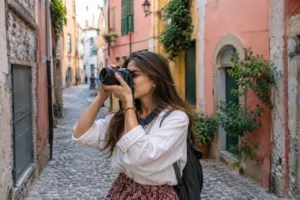
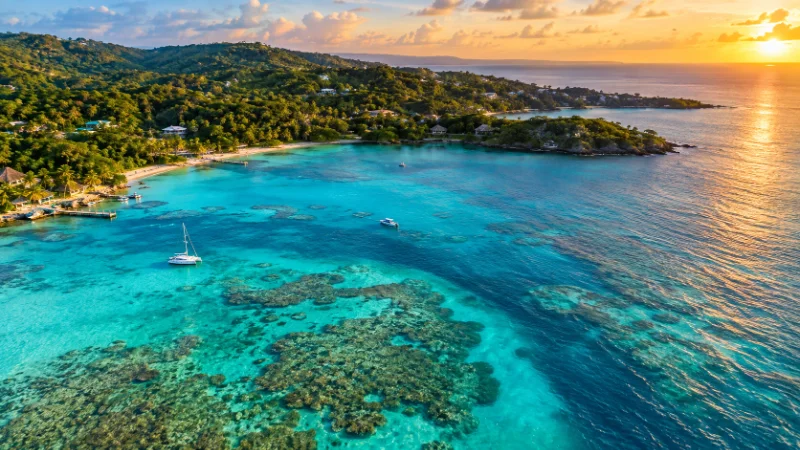
Honduras gets skipped by a lot of travelers who assume Belize or Costa Rica is the safer, easier choice. That’s a mistake. The things to do in Honduras cover an unusual range for a country this size: a UNESCO Maya site, a stretch of the second-largest barrier reef on earth, cloud forest thick with toucans and howler monkeys, and colonial towns that see a fraction of the tourists you’d find elsewhere in Central America. This guide focuses on the activities and destinations that actually justify a trip, along with the practical details (safety, timing, logistics) that most lists skip.
Walk Through the Maya Ruins of Copán
Copán Ruinas, near the Guatemalan border, is the single most important archaeological site in Honduras and one of the best-documented Maya cities anywhere. Unlike the flat plazas at many Maya sites, Copán is known for its stone carving. The Hieroglyphic Stairway holds the longest known Maya text, and the stelae scattered around the main plaza are carved in far more detail than what you’ll see at Tikal or Chichen Itza.
Give yourself at least half a day. Hire a certified guide at the entrance rather than wandering alone. The site has almost no posted information, so a guide is the difference between seeing rocks and understanding a thousand years of history. Pair the ruins with the nearby Copán Sculpture Museum, which houses the original (and far better preserved) version of a temple facade that’s been replicated at the outdoor site to protect it from weather damage.
The town of Copán Ruinas itself is worth an extra day. It’s small, walkable, and has a cluster of family-run coffee farms in the surrounding hills that offer tours ending in a cupping session.
Dive or Snorkel the Bay Islands
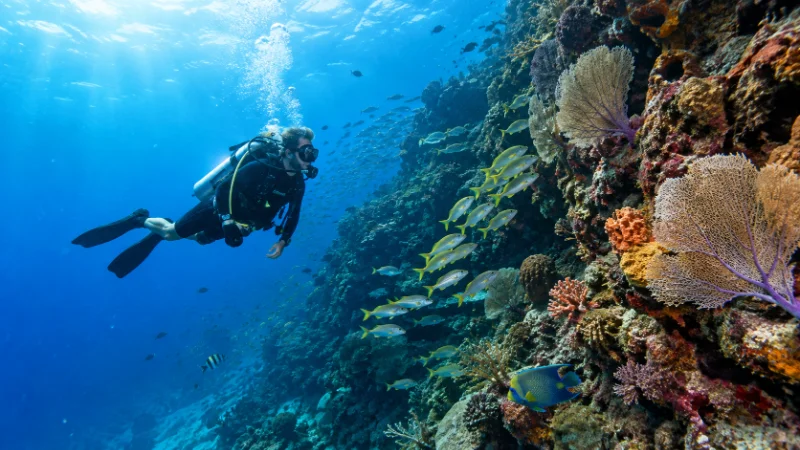
The Bay Islands sit on the Mesoamerican Barrier Reef, the second-largest barrier reef system in the world after Australia’s Great Barrier Reef. Water visibility regularly exceeds 30 meters, and the diving here is cheaper than almost anywhere else in the Caribbean.
Roatán
Roatán is the most developed of the three main islands and the easiest entry point, with direct flights from several US cities. West Bay and West End are the two main dive and snorkel bases. Certification courses run noticeably cheaper here than in most of the Caribbean, which is why Roatán has become a hub for people getting their open water certification. Whale sharks pass through seasonally, most reliably between February and April, though sightings are never guaranteed.
Utila
Utila is smaller, cheaper, and has a stronger backpacker culture than Roatán. It’s one of the least expensive places in the world to get PADI certified, and whale shark sightings here happen closer to shore than almost anywhere else on the planet. If budget matters more than beach resorts, Utila beats Roatán.
Hike and Zip-Line Through Pico Bonito National Park
Pico Bonito, near the city of La Ceiba, protects one of the most biodiverse patches of cloud forest in the country. Over 400 bird species have been recorded here, which makes it one of the top birdwatching destinations in Central America, alongside Lago de Yojoa further west.
The park has a range of activities depending on your fitness level and how much time you have. Short trails lead to waterfalls that are reachable in an hour or two. Longer, guided treks push deeper into the cloud forest and can run a full day or more with an overnight camp. Several lodges near the park entrance run zip-line canopy tours that are less strenuous but still put you at eye level with the forest canopy.
Bring rain gear regardless of season. This is genuine rainforest, and afternoon showers are common even outside the official wet season.
White-Water Raft the Río Cangrejal
The Río Cangrejal, which borders Pico Bonito, has some of the best commercially run white water in Central America. Rapids range from Class II sections suitable for first-timers to Class IV and V stretches for experienced rafters, depending on the season and rainfall.
Most outfitters run half-day trips out of La Ceiba, and the river’s proximity to Pico Bonito means it’s easy to combine both in a single stay. If you’re traveling with kids or nervous rafters, ask specifically about the lower sections, since some companies default to the more technical upper river.
Explore the Cayos Cochinos Marine Reserve
The Cayos Cochinos are a cluster of small islands and cays off the north coast, protected as a marine reserve since the 1990s. Because access is restricted and regulated, the reef here has suffered far less damage than more heavily trafficked dive sites elsewhere in the Caribbean.
Day trips depart from La Ceiba, Roatán, or the mainland town of Sambo Creek, usually combining snorkeling stops with a visit to one of the small Garífuna fishing communities that live on the cays. Overnight stays are limited and should be booked well ahead, since only a small number of beds exist on the islands themselves.
Watch Birds and Take a Boat Trip on Lago de Yojoa
Lago de Yojoa is the largest natural lake in Honduras and sits between two national parks, which makes it a magnet for birders. Around 400 species have been recorded around the lake, rivaling Pico Bonito’s numbers.
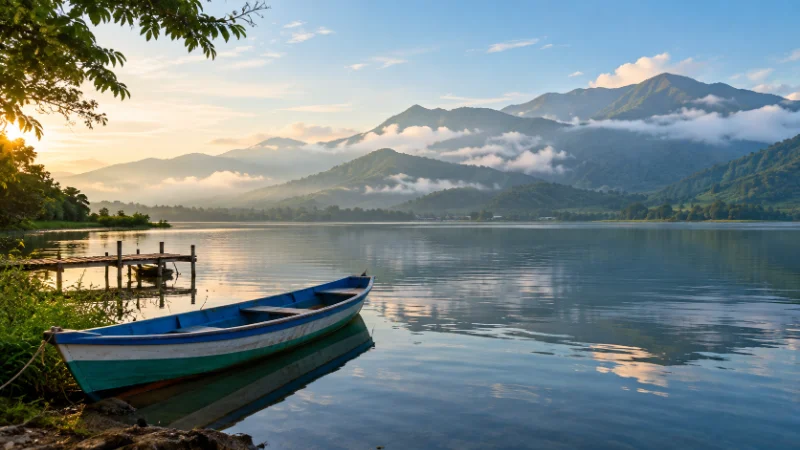
Beyond birdwatching, the lakeside area has a handful of well-regarded restaurants and a small craft brewery, an unusual find in rural Honduras. Boat tours in the late afternoon are the best way to see waterbirds settling in for the evening, and several nearby waterfalls, including Pulhapanzak, make an easy add-on for the same day.
Wander a Colonial Town: Trujillo or Gracias
Most travelers only see Honduras’ cities in transit, which means they miss its colonial towns entirely. Trujillo, on the Caribbean coast, has cobblestone streets, a restored Spanish fort, and a laid-back mix of Garífuna and mestizo culture that feels distinct from the rest of the country. It also briefly served as the capital of Honduras.
Gracias, in the western highlands, is quieter still. It sits near Celaque National Park, home to the country’s highest peak, and has thermal hot springs a short drive from town. Neither destination sees heavy tourism, so infrastructure is basic, but that’s also why prices stay low and the towns still feel lived-in rather than staged for visitors.
Eat Your Way Through Honduran Food
Honduran food doesn’t get the international attention that Mexican or Peruvian cuisine does, but it’s worth building time into your trip specifically for it. The baleada, a thick flour tortilla folded around refried beans, cheese, and crema, is the everyday street food you’ll eat most often, and every region has its own variation. On the coast, look for sopa de caracol, a coconut-based conch soup, and tapado, a hearty seafood or meat stew. Inland, try catrachas, fried tortillas topped with beans and cheese, and rosquillas, a corn-based snack often eaten alongside coffee.
Markets are the best place to try most of this rather than tourist restaurants, and prices at a market stall are usually a fraction of what you’d pay at a sit-down spot.
Spend a Day in Tegucigalpa or San Pedro Sula
Honduras’ two largest cities rarely make it onto shortlists, and for good reason: neither is a primary destination. But if your flights route through one, a day is enough to see the highlights. Tegucigalpa’s El Centro has a walkable historic core with colonial-era churches and a handful of small museums. San Pedro Sula, the country’s industrial hub, is less scenic but has better nightlife and serves as the main jumping-off point for Copán and the Bay Islands.
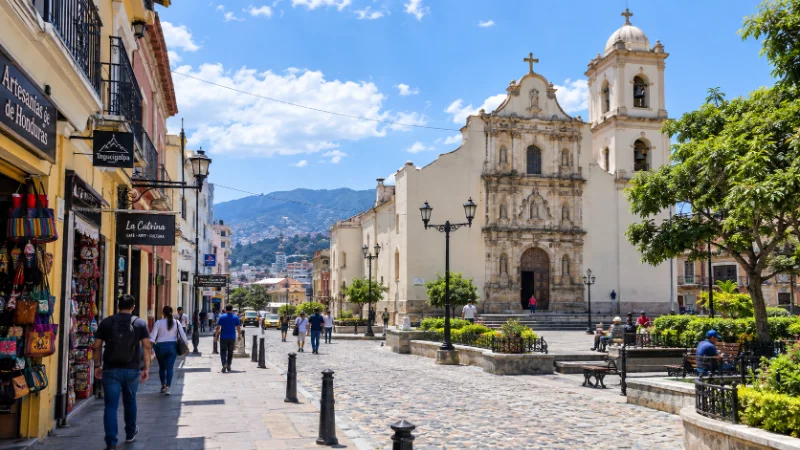
Stick to well-trafficked areas during daylight in both cities, and take a taxi rather than walking after dark. This isn’t unique to Honduras, but it matters more here than in some neighboring countries.
Practical Tips: Safety, Timing, and Getting Around
1: Is Honduras Safe to Visit?
Honduras has a real crime problem, concentrated heavily in specific urban neighborhoods that tourists have no reason to visit. The tourist circuit, Copán, the Bay Islands, La Ceiba’s outdoor activities, and the colonial towns, sees a fraction of the violence associated with the country’s overall statistics. Standard precautions apply: avoid displaying valuables, use registered taxis or your hotel’s transport at night, and check current government travel advisories before booking, since conditions shift by region and over time.
2: Best Time to Visit
The dry season, from roughly February through May, gives the most reliable weather across the country and is the best window for hiking and diving visibility. Whale shark season on Utila and Roatán runs later, typically February through April. The Caribbean coast sees rain year-round, so pack for it regardless of when you go.
3: Getting Around
Domestic flights connect Tegucigalpa, San Pedro Sula, La Ceiba, and Roatán, and are worth the cost given how long overland routes can take on Honduras’ mountain roads. For travel between mainland towns, first-class bus lines like Hedman Alas run more comfortable and secure routes than local buses. Rental cars give the most flexibility for reaching places like Lago de Yojoa or Gracias, but a domestic flight plus local transport is the simpler option for a first visit.
Honduras rewards travelers willing to look past its reputation. Between Copán’s carvings, the reef off Roatán and Utila, and the cloud forest around Pico Bonito, there’s enough here to fill two weeks without repeating a single day.