

If you lose your passport, the first steps are to retrace your recent movements, report the loss to local police if you’re abroad, and contact your embassy or consulate right away to start an emergency travel document application. Acting within the first few hours matters, since a missing passport can also be used for identity fraud.
Stay Calm and Retrace Your Steps
Panic is normal, but it wastes time you need for a proper search. Walk back through the last few hours before you noticed the passport was gone. Check jacket pockets, hotel safes, rental car glove boxes, and the bottom of any bag you were carrying.
Call the last two or three places you visited, such as a restaurant, taxi company, or ticket counter. Many venues hold onto lost documents for a few days before turning them over to local authorities, so a quick phone call sometimes solves the problem in minutes.
If the search comes up empty after thirty minutes or so, stop looking and move straight to reporting it. The sooner you report a missing passport, the sooner someone else is blocked from using it.
It also helps to note the exact circumstances while they’re fresh. Write down the last time you definitely had the passport, where you’ve been since, and whether a bag or pocket was ever left unattended. Consular officers and police often ask these same questions, and having clear answers ready speeds up both the report and the replacement application.
Report the Loss Immediately
1. Report to Local Police
If you’re traveling internationally and the passport is gone rather than just misplaced somewhere nearby, file a police report at the nearest station. Ask for a written copy, since most embassies require it before they’ll process a replacement.
A police report also matters if your passport was stolen rather than lost. It creates an official record that protects you if someone later tries to use your identity to open accounts, cross a border, or commit fraud in your name.
2. Contact Your Embassy or Consulate
Your country’s embassy or consulate is the only place that can legally issue a replacement or emergency travel document while you’re abroad. Look up the nearest location before you travel, or search for it on your phone once you realize the passport is missing.
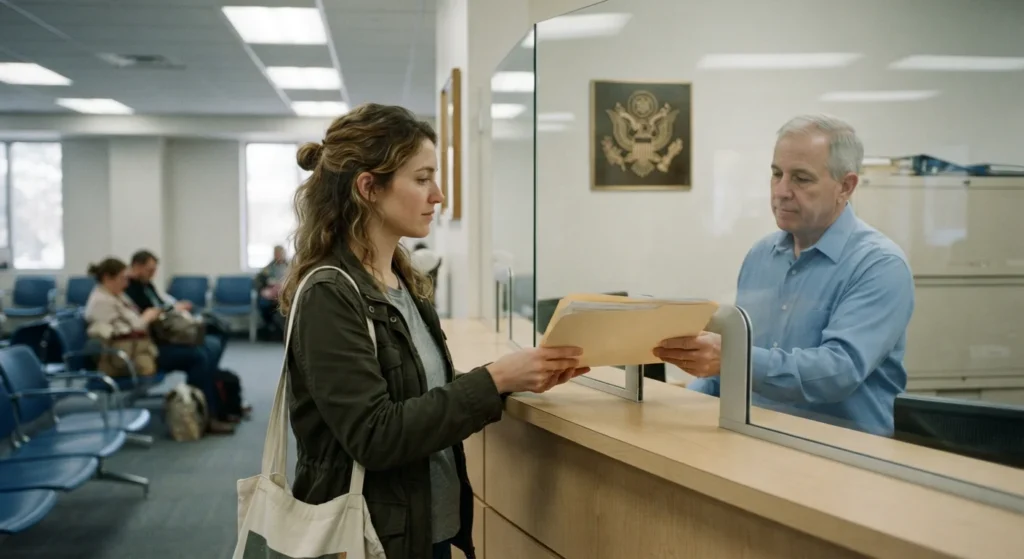
Most embassies have an emergency after-hours line for exactly this situation. Call ahead if possible, since some offices require an appointment and won’t process walk-ins outside of scheduled hours.
Applying for an Emergency Passport
1. Documents You’ll Need
Embassies generally ask for the same core paperwork no matter which country issued your original passport. Bring whatever you can gather from this list:
- A government-issued photo ID, such as a driver’s license
- A copy of your passport’s photo page, if you saved one on your phone or email before the trip
- Your police report or loss report
- Proof of citizenship, such as a birth certificate copy
- Passport-sized photos, which many embassies can take on-site for a fee
- Proof of travel plans, like a flight itinerary, if you need the document urgently to make a connection
Keeping a scanned or photographed copy of your passport’s photo page in your email or a cloud drive before you leave home cuts this process down significantly, since it gives the embassy something concrete to verify your identity against.
2. How Long It Takes
A limited-validity emergency passport, meant to get you home or to your next destination, can often be issued the same day or within a day or two. A full replacement passport, valid for the standard ten-year period, usually takes longer and may need to be mailed to you once you’re back home.
Processing speed depends heavily on the specific embassy, the time of year, and how complete your paperwork is. Ask the consular officer directly what timeline to expect for your situation rather than assuming a fixed number of days.
Weekends and public holidays can add an extra day or two if the embassy isn’t staffed for consular services on those dates. If your flight is close, mention that to the officer handling your case, since urgent departures are sometimes prioritized over routine applications.
What to Do if You Lose Your Passport Abroad
Losing a passport overseas adds a layer of urgency because you also need a way to legally leave the country or continue your trip. After reporting the loss and starting the embassy application, check whether your destination country’s immigration office needs to be notified separately, since some countries track passport numbers against entry records.
Hold off on rebooking flights until you know how soon the embassy can issue your document. Airlines generally won’t board you without valid identification, so changing a flight before you have a replacement in hand can waste money.
If your original visa was in the lost passport, ask the embassy whether it can be transferred to the new document or whether you’ll need to reapply with the destination country’s immigration authority.
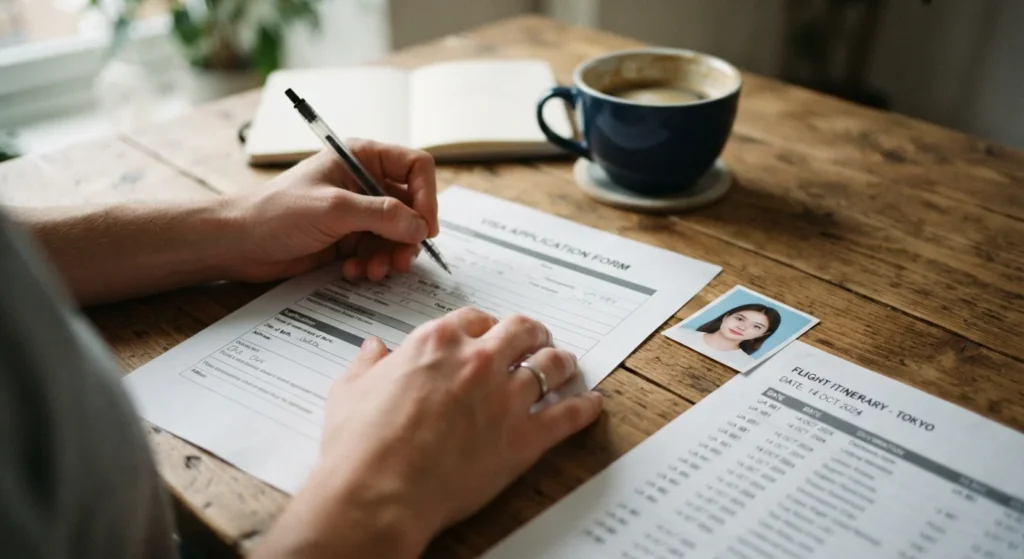
It also helps to notify your accommodation and any tour operators you booked with. Some hotels ask for a valid passport number at check-in for local registration requirements, and a tour company may need updated identification before letting you continue an itinerary that crosses a border.
What to Do if You Lose Your Passport at Home
If the passport goes missing before you’ve left your home country, the process is simpler but still requires a formal report. File a police report if theft is suspected, then apply for a replacement through your country’s passport agency using its standard lost-or-stolen passport form.
Most agencies flag the old passport number as invalid the moment you report it lost, which prevents anyone else from using it to travel or open accounts. Keep the confirmation number or receipt from your report in case a bank or government office later asks for proof you reported the loss.
If you have an upcoming trip, ask about expedited processing. Many passport agencies offer a faster turnaround for a higher fee, and some allow in-person appointments at regional offices for trips departing within two weeks.
It’s worth double-checking your home before filing anything. A passport left at home is far more often misplaced in a coat pocket, a desk drawer, or a car than it is actually stolen, so a careful second search of your usual storage spots can save you the fee and paperwork of a full replacement.
What a Replacement Passport Costs
Fees vary by country and by how quickly you need the document. A standard replacement usually costs about the same as a routine renewal, while an emergency or expedited version almost always carries an additional fee on top of that.
Some embassies also charge separately for passport photos taken on-site, for courier delivery of the finished document, or for same-day processing. Ask for a full breakdown before you pay, since these add-on charges aren’t always listed on the embassy’s website.
If your travel insurance policy includes document loss coverage, keep every receipt from the police report, the embassy visit, and any rebooked travel. Many insurers will reimburse part of the cost once you file a claim with the paperwork attached.
Traveling on an Emergency Passport
An emergency or limited-validity passport works for getting home or reaching a specific destination, but it isn’t always accepted the same way a full passport is. Some countries won’t issue a new visa against an emergency document, and a few airlines flag it for extra scrutiny at check-in.
Call the airline directly before your flight to confirm it will accept the emergency passport for boarding. If you have connecting flights through a third country, check that country’s entry rules too, since a limited-validity document sometimes isn’t enough for a layover that requires clearing immigration.
Once you’re home, most emergency passports need to be exchanged for a standard one within a set window, often a few months. Treat the emergency document as a bridge, not a long-term replacement, and start the full application as soon as you’re back.
Getting a Replacement Visa
A lost passport sometimes means losing a visa that was stamped or attached inside it. If you’re on a work, student, or long-stay visa, contact the immigration authority of the country you’re in, not just your own embassy, since they’re the ones who control your visa status.
Some countries allow a visa to be reissued into a new passport once you show your embassy’s loss report and the replacement document. Others require you to restart part of the visa application, which can affect your legal status if you’re not careful about deadlines. Ask directly rather than assuming your visa carries over automatically.
How to Prevent Losing Your Passport Again
Going through the loss and replacement process once is usually enough to make anyone more careful, but a few habits make a real difference once you have your new passport in hand and don’t want to repeat the experience.
- Keep a photo or scanned copy of the photo page saved in your email and in a cloud drive you can access without your phone
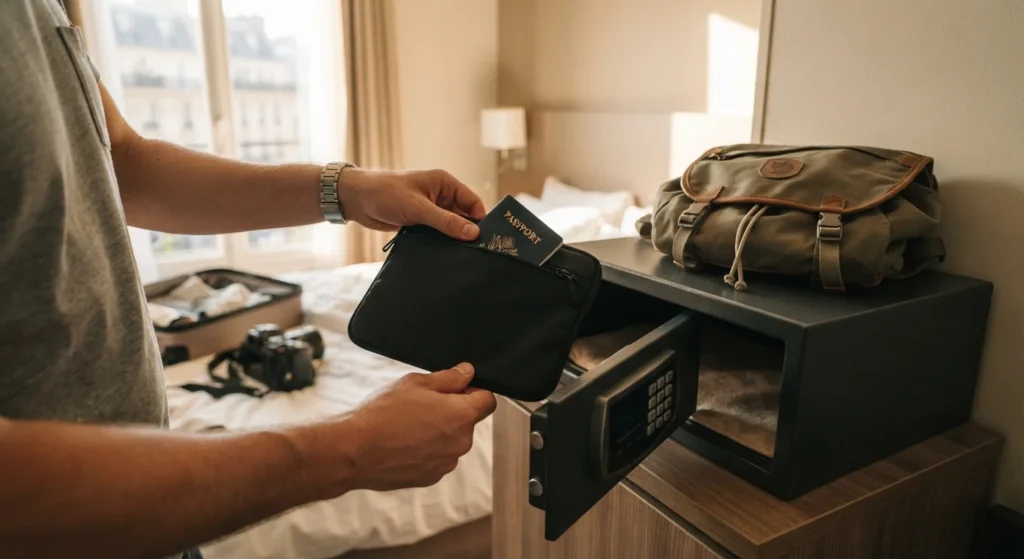
- Use a dedicated document pouch instead of loose pockets or the bottom of a bag
- Leave your passport in a hotel safe when you don’t need it for the day, rather than carrying it everywhere
- Write down your passport number separately from the document itself
- Register your trip with your embassy before you travel, if that service is available, so they already have your information on file if something goes wrong
None of these steps guarantee a passport never goes missing, but they cut down on how much time and stress the situation costs you if it happens again. A little preparation before you ever pack a bag turns a potential travel emergency into, at worst, a short delay.