
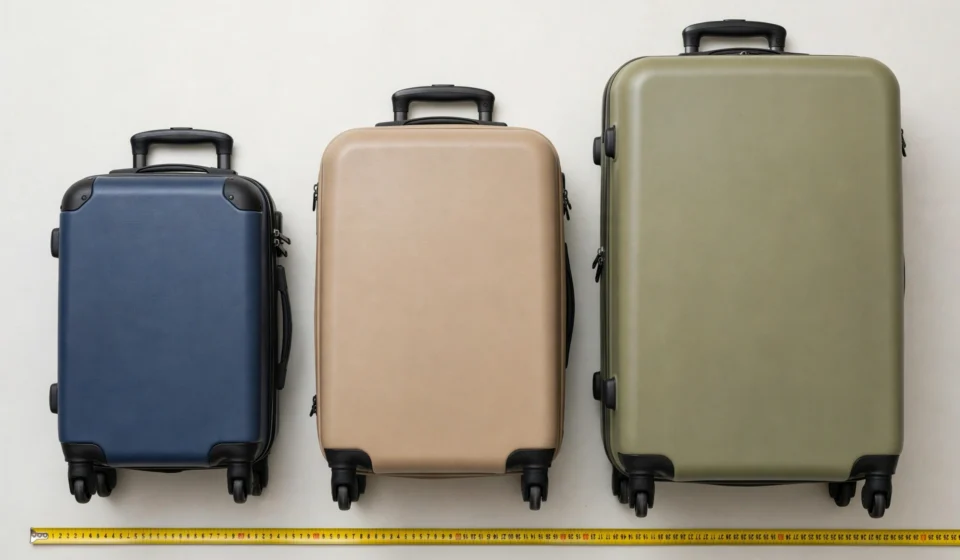
You need one reliable luggage size chart before you book, buy, or pack. Here is the short answer. A standard carry-on is 22 x 14 x 9 inches (56 x 35 x 23 cm). A typical personal item is 18 x 14 x 8 inches (46 x 35 x 20 cm). Checked bags can usually go up to 62 linear inches and 50 lbs (23 kg). Airline rules do change, so always confirm your airline’s current baggage page before you fly. Everything below uses widely published figures. They are accurate as a reference, but your carrier’s page is the final word.
Quick Luggage Size Chart: All Bag Types At A Glance
This master table puts every bag type in one place. Dimensions are height x width x depth. “Linear inches” means height + width + depth added together, which is how many airlines state their limits.
| Bag type | Inches (H x W x D) | CM (H x W x D) | Linear in | Typical capacity | Typical weight limit |
|---|---|---|---|---|---|
| Personal item | 18 x 14 x 8 | 46 x 35 x 20 | 40 | 15-25 L | No published limit on most airlines |
| Carry-on (US standard) | 22 x 14 x 9 | 56 x 36 x 23 | 45 | 30-45 L | None published by most US majors; 15-22 lbs on many international carriers |
| Medium checked | 24 x 17 x 11 | 61 x 43 x 28 | 52 | 60-75 L | 50 lbs / 23 kg |
| Large checked | 28 x 20 x 13 | 71 x 51 x 33 | 61 | 85-100 L | 50 lbs / 23 kg |
| Extra-large checked | 32 x 22 x 14 | 81 x 56 x 36 | 68 | 100-130 L | Often charged as oversize (over 62 linear in) |
How To Read This Luggage Size Chart
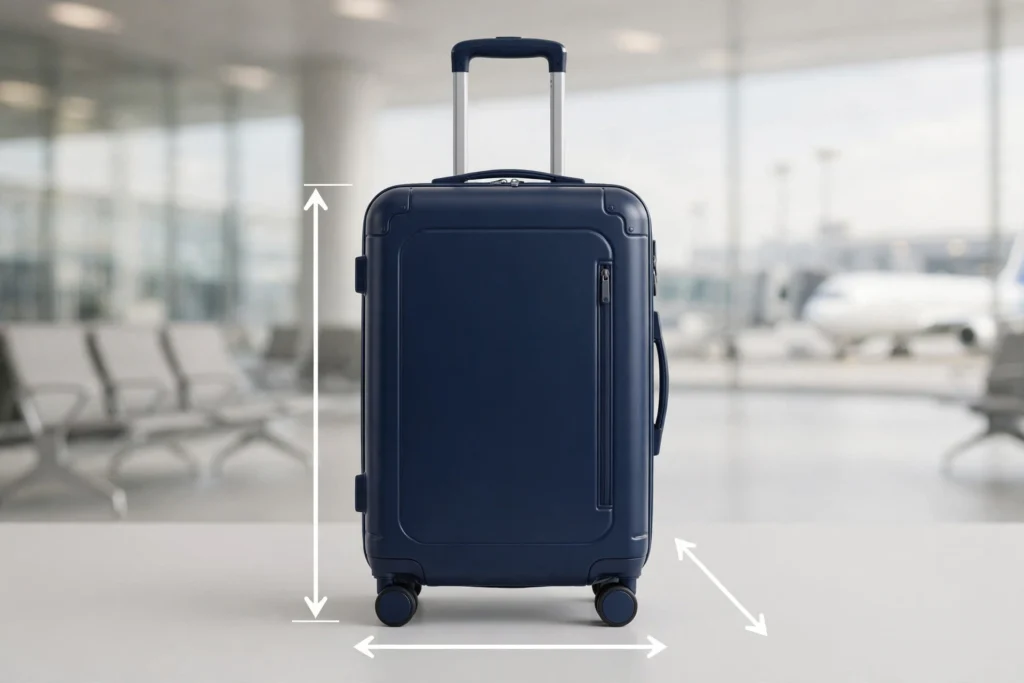
Luggage sizes are always listed as height x width x depth. Height is measured with the bag standing upright. When an airline says “including wheels and handles,” it means the tallest and widest points of the whole bag, not the suitcase body alone. To convert inches to centimeters, multiply by 2.54. To convert centimeters to inches, divide by 2.54. A 22-inch carry-on is 56 cm. A 50 lb checked limit is 23 kg.
Carry-On Luggage Size Chart
The standard US carry-on size is 22 x 14 x 9 inches (56 x 36 x 23 cm), including wheels and handles. This is the figure most major US airlines publish, and it fits the overhead bins on most mainline aircraft. Travelers also run into three other common carry-on figures. Some airlines in Europe and Asia use 55 x 40 x 20 cm (about 21.5 x 15.7 x 9 in). Some airlines list a compact standard around 20 x 14 x 9 inches for smaller aircraft. And some international carriers describe the same bag as 45 linear inches, which works out to the same total. For a deeper look at cabin bags, including what counts as hand-carry and how enforcement differs by carrier, see our full hand carry luggage size guide.
Personal Item Size Chart
A personal item is the small bag that fits under the seat in front of you. A backpack, laptop bag, purse, or small tote all qualify. The widely used personal item size is 18 x 14 x 8 inches (46 x 35 x 20 cm). Several US airlines publish their own numbers. American, Allegiant, and Frontier typically list 18 x 14 x 8 inches. JetBlue typically lists 17 x 13 x 8 inches. United typically lists 17 x 10 x 9 inches. Other carriers, including Delta, Alaska, and Southwest, simply require the item to fit under the seat. Your personal item is the best place for in-flight essentials: phone, charger, travel documents, snacks, and TSA-compliant toiletries. If you fly with liquids, our best travel bottles guide helps you pick leak-proof sizes that fit the 3-1-1 rule.
Checked Luggage Size Chart
Most airlines cap a standard checked bag at 62 linear inches (157 cm) and 50 lbs (23 kg). Go past either limit and you pay overweight or oversize fees. Here is how checked suitcase sizes break down and which trip each one fits.
| Size | Typical dimensions | Capacity | Best for |
|---|---|---|---|
| Medium checked | 24 x 17 x 11 in (61 x 43 x 28 cm) | 60-75 L | 4-7 day trips, one person |
| Large checked | 28 x 20 x 13 in (71 x 51 x 33 cm) | 85-100 L | 1-2 week trips, or packing for two |
| Extra-large checked | 32 x 22 x 14 in (81 x 56 x 36 cm) | 100-130 L | Long stays, moves, bulky gear |
A medium checked bag covers a week of travel for most people. A large checked bag suits longer trips or shared packing. Extra-large bags often exceed 62 linear inches, so expect an oversize fee before you commit to one. If you travel with suits or formal wear, size matters even more. You need enough room to pack flat without hard creases.
US Airline Carry-On Limits
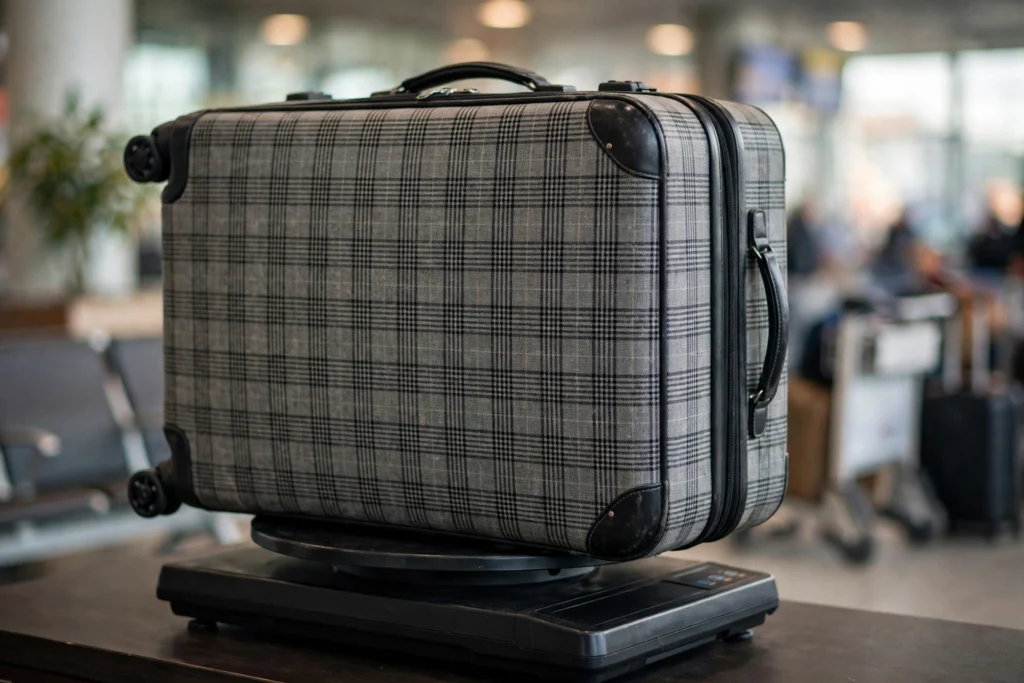
These are widely published figures. Airlines change policies, so check your carrier’s official baggage page before you fly. “Not published” means the airline does not list a weight limit and mainly enforces size.
| Airline | Carry-on size (inches) | Carry-on weight limit |
|---|---|---|
| American Airlines | 22 x 14 x 9 | Not published |
| Delta Air Lines | 22 x 14 x 9 | Not published |
| United Airlines | 22 x 14 x 9 | Not published |
| Alaska Airlines | 22 x 14 x 9 | Not published |
| JetBlue | 22 x 14 x 9 | Not published |
| Southwest Airlines | 24 x 16 x 10 | Not published |
| Frontier Airlines | 24 x 16 x 10 | 35 lbs |
| Allegiant Air | 22 x 16 x 10 | Not published |
| Hawaiian Airlines | 22 x 14 x 9 | 25 lbs |
| Spirit Airlines | Personal item included; paid carry-on typically 22 x 18 x 10 | Not published |
Two patterns stand out. Southwest and Frontier are more generous on dimensions than the 22-inch standard. Spirit and Frontier low fares often exclude the overhead-bin carry-on entirely, so read the fare terms before assuming your bag flies free.
International Carry-On Limits
International rules look similar on paper but run stricter in practice. Many European and Asian carriers use 55 x 40 x 20 cm (about 21.5 x 15.7 x 9 in). Weight limits are far more common abroad, typically 7 to 12 kg (15 to 26 lbs). The IATA passenger baggage guidance uses 56 x 45 x 25 cm (22 x 18 x 10 in) as a general reference. That is a guideline, not a rule. Each airline sets its own numbers. Enforcement is the real difference. US carriers rarely weigh carry-ons. Many international carriers weigh bags at check-in or the gate, and budget carriers like Ryanair and easyJet treat their limits as firm. A bag that sails through a US domestic gate can get flagged on a European connection.
Linear Inches Explained
Linear inches are just height + width + depth. Airlines use this single number because it covers oddly shaped bags without listing three dimensions. For carry-on, 45 linear inches is the common US figure. A 22 x 14 x 9 bag adds up to exactly 45. For checked bags, 62 linear inches (157 cm) is the standard most airlines publish. A 28 x 20 x 13 bag adds up to 61, which fits. A 30 x 21 x 14 bag adds up to 65, which usually triggers an oversize fee.
How To Measure Your Bag Correctly
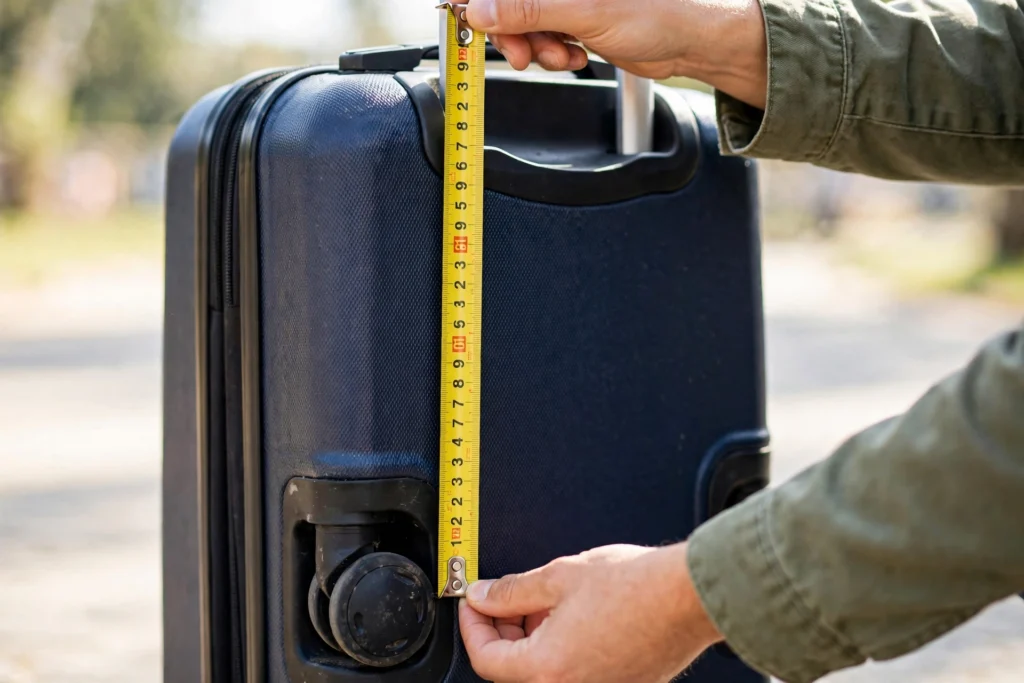
Manufacturer listings can mislead. Some list only the suitcase body, leaving out wheels and handles. Airlines measure the whole thing. Here is how to get the real number.
- Stand the bag upright as it will go into the overhead bin.
- Measure height from the floor (or wheel bottom) to the top of the raised handle.
- Measure width across the front, including side handles and pockets.
- Measure depth from front to back, including expanded front pockets and compression straps.
- Add all three numbers for the linear total.
The most common mistake is measuring the body only and ignoring wheels and handles. Those add 2 to 3 inches. That is enough to fail a gate sizer.
Size Mistakes That Cost Travelers Money
The wrong size rarely means a polite warning. It usually means a fee.
Trusting the listing without measuring. A bag labeled “22-inch” can measure 24 inches with wheels and handles. Measure it yourself before the airport.
Ignoring budget airline rules. Some low fares include only a personal item. Bringing a full carry-on on a personal-item-only fare means paying at the gate, which is the most expensive place to pay.
Expanding before the sizer. Expandable zippers add real inches. Measure the bag expanded if you plan to travel that way.
Assuming the gate is flexible. Gate agents on budget and international carriers use sizer boxes regularly. An oversized bag gets gate-checked, often with a fee that runs higher than checking in advance.
For long flights where your carry-on doubles as your day bag, packing smart matters as much as sizing. Our best travel pillow for long flights guide covers comfort gear that fits inside a standard personal item.
Conclusion
A good luggage size chart saves you money and stress at the gate. Remember the three anchor numbers: 22 x 14 x 9 inches for a US carry-on, 18 x 14 x 8 inches for a personal item, and 62 linear inches with a 50 lb cap for checked bags. Measure your bag with wheels and handles included, match the size to your trip length, and verify your airline’s current limits before you fly.