The best honeymoon destinations depend less on a single “top spot” and more on what kind of trip you and your partner actually want: total seclusion, a busy list of things to see, warm water, or somewhere you can just sit still. This guide breaks down eight destinations that consistently work well for newlyweds, along with how to match a location to your budget, the season you’re traveling in, and how much activity you want packed into your days.
What Makes a Destination Good for a Honeymoon
A strong honeymoon spot usually has three things working in its favor: privacy that doesn’t require constant planning to get, a pace that matches what the couple actually wants (slow versus packed), and logistics that don’t eat into the trip itself, meaning reasonable flight times and manageable visa or entry requirements. Weather matters too. A destination that looks perfect in photos but sits in the middle of a rainy season during your travel window can undercut the whole trip, so checking seasonal patterns before booking is worth the extra ten minutes.
It also helps to think about how much of the trip you want planned versus decided once you arrive. Some couples prefer a full daily itinerary booked before departure, down to specific restaurants and excursion times. Others do better with a loose framework, a base hotel and a rough number of days in each place, filled in as the trip unfolds. Neither approach is wrong, but picking one before you start comparing destinations makes the actual booking process faster.
Best Honeymoon Destinations Around the World
1. The Maldives for Overwater Privacy
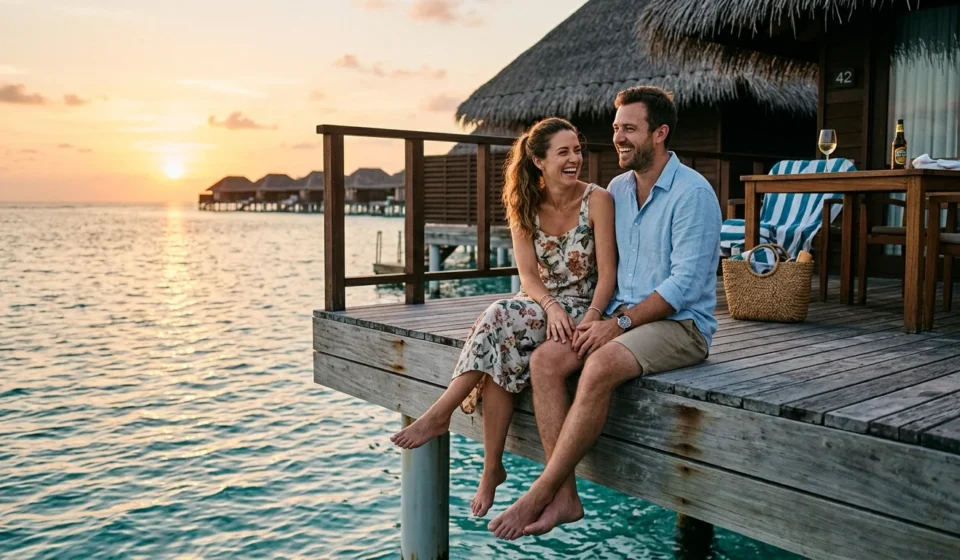
The Maldives built its reputation on overwater villas set above shallow, clear lagoons, and it remains one of the few places where that specific setup is the default rather than a rare upgrade. Most resorts occupy their own private island, so once you check in, you rarely see anyone outside your own group unless you choose to. Snorkeling straight off your villa’s deck is common, since house reefs sit close to shore at many properties.
The tradeoff is cost and distance. Flights typically route through Malé before a seaplane or speedboat transfer to the resort, adding hours to an already long journey for most travelers. Peak dry season runs from roughly December through April, which also means higher rates, so couples on a tighter budget often look at May through October instead, accepting a slightly higher chance of rain in exchange for lower prices.
2. Santorini for Classic Caldera Views
Santorini earns its place on nearly every honeymoon list because the geography does most of the work. The island’s caldera, formed by a volcanic collapse thousands of years ago, gives towns like Oia and Fira their dramatic cliffside position, with white buildings stacked above the water and unobstructed sunset views most evenings.
Where Santorini differs from the Maldives is pacing. It rewards couples who want to walk narrow streets, eat at small tavernas, and take a boat out to the volcanic hot springs, rather than staying in one place the entire trip. Shoulder season, from late April to early June or September into October, offers noticeably thinner crowds and lower prices than the peak July and August stretch, without losing much in terms of weather.
3. Bali for Range Within One Trip
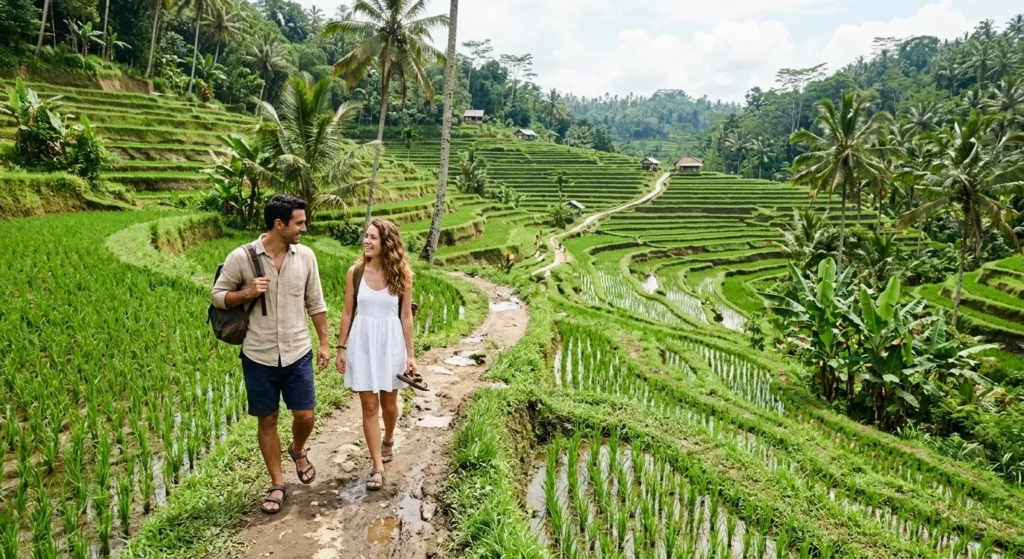
Bali covers more ground, in both geography and price point, than almost anywhere else on this list. A couple can spend three nights at a beach resort in Uluwatu, three more surrounded by rice terraces in Ubud, and finish with a quieter stretch on the Gili Islands, all without changing countries or dealing with long domestic flights.
Costs run lower than in the Maldives or Santorini for comparable comfort, which makes Bali a common pick for couples who want a longer trip on a fixed budget. The dry season from April through October is generally the more reliable window, though Bali’s tourism infrastructure has grown enough that shoulder months are increasingly manageable too.
4. Kyoto for Quiet and Culture
Kyoto suits couples who want a honeymoon built around atmosphere rather than beaches. The city holds over a thousand temples and shrines, along with preserved districts like Gion where wooden machiya buildings still line the streets. Fushimi Inari’s thousands of vermilion torii gates and the bamboo grove in Arashiyama are two spots that consistently show up on first-time visitor itineraries, and both are worth the early start needed to see them before tour groups arrive.
Cherry blossom season in late March through early April and the autumn foliage in November draw the largest crowds and highest hotel rates. Couples who can travel in early December or February often get a calmer version of the same city at a lower cost, along with the option to soak in an onsen if a day trip to somewhere like Kinosaki fits the itinerary.
5. The Amalfi Coast for Coastal Drama
Positano, Ravello, and Amalfi town line a stretch of Italian coastline where cliffs drop straight into the Tyrrhenian Sea, and the driving route between them, the SS163, is itself part of the experience for couples who enjoy scenic road trips. Ravello sits higher up and offers a quieter base with views over the coastline below, while Positano is livelier and closer to the water.
Ferries connect the towns during the warmer months, which is often a more relaxed way to move between them than driving the narrow coastal road. Late May through June and September are generally considered the better windows, avoiding both the August crowds, when much of Italy is also on vacation, and the higher risk of closures during the winter off-season.
6. Seychelles for Wildlife and Isolation
Seychelles offers a version of the tropical honeymoon that leans more toward untouched nature than resort infrastructure. Granite boulders on beaches like Anse Source d’Argent on La Digue create a landscape that looks different from the flatter sand of the Maldives or Bora Bora, and the islands host wildlife, including giant tortoises on Curieuse Island, that couples can see without a dedicated safari.
Because the islands are spread out, getting between them usually means a mix of inter-island flights and ferries, so a Seychelles honeymoon often benefits from choosing two or three islands rather than trying to see everything. April, May, October, and November tend to have the calmest seas and least wind, which matters more here than in destinations without as much inter-island travel.
7. New Zealand for Active Couples
New Zealand fits couples who want their honeymoon to include real activity rather than mostly lounging. The South Island alone covers glacier hikes near Franz Josef, the fjords of Milford Sound, and wine regions around Marlborough, all reachable by a single road trip if the itinerary is planned with enough driving days built in.
Because New Zealand sits in the Southern Hemisphere, its summer runs from December through February, which is also peak tourist season and the best window for hiking trails that close in winter. Shoulder months in March and April keep good weather while thinning out the crowds somewhat, particularly outside the main holiday weeks.
8. Tuscany for Slow Travel
Tuscany works best for couples who want a honeymoon with almost nothing scheduled. Hill towns like San Gimignano, Montepulciano, and Cortona sit close enough together that a single farmhouse rental can serve as a base for day trips, with long stretches of the day left open for a vineyard visit, a slow lunch, or simply staying at the property.

Renting a car is close to essential here, since public transit between the smaller towns is limited. Late spring and early fall offer the most comfortable temperatures for driving and walking between towns, while the wine harvest in September adds an extra reason to visit if timing allows.
How to Choose the Right Destination for You
Start with pace before location. A couple who wants to spend most of the trip in one place, reading and eating well, will get more out of somewhere like Tuscany or a single Maldives resort than a multi-stop itinerary through Bali or New Zealand. Couples who get restless sitting still usually do better with a destination built around movement, whether that’s a road trip, hiking, or island-hopping.
Budget narrows the list quickly. Bali and parts of Southeast Asia generally offer the most comfort for the lowest cost, while the Maldives and Seychelles sit at the higher end, largely because of transfer logistics and the exclusivity of overwater or private-island properties. Santorini, the Amalfi Coast, and Tuscany fall somewhere in the middle, with costs shifting a lot depending on season.
Season should be checked against the destination, not assumed. A December wedding followed by a Mediterranean honeymoon runs into cold, quiet off-season towns, while that same December date lines up well with peak dry season in the Maldives or high summer in New Zealand.
It’s also worth thinking about how the two of you handle travel logistics day-to-day. A destination like New Zealand or the Amalfi Coast, where you’re driving between towns and managing your own schedule, suits couples who enjoy figuring things out together on the road. A single-resort stay in the Maldives or Seychelles removes almost all of that decision-making, which some couples want right after a wedding, when the last thing either of you wants is another set of choices to make.
When to Book and What to Budget
Booking six to nine months ahead generally secures better rates and room availability at popular destinations, particularly for travel during peak seasons like European summer or the Maldives’ dry months. Flights are usually the least flexible cost, so locking those in early, even before finalizing every hotel, tends to save the most money overall.

Budget ranges vary widely by destination and trip length, but a rough starting point for a seven to ten night trip covering flights, accommodation, food, and a few activities looks something like this: Bali and similar Southeast Asian destinations often run lower than $3,000 to $4,000 per couple, the Amalfi Coast, Santorini, and Tuscany commonly fall in the $4,000 to $7,000 range depending on hotel choice, and the Maldives or Seychelles frequently start above $6,000 once overwater accommodation and transfers are included. Building in a buffer of ten to fifteen percent beyond the initial estimate covers the meals, excursions, and small purchases that rarely make it into an upfront budget.