
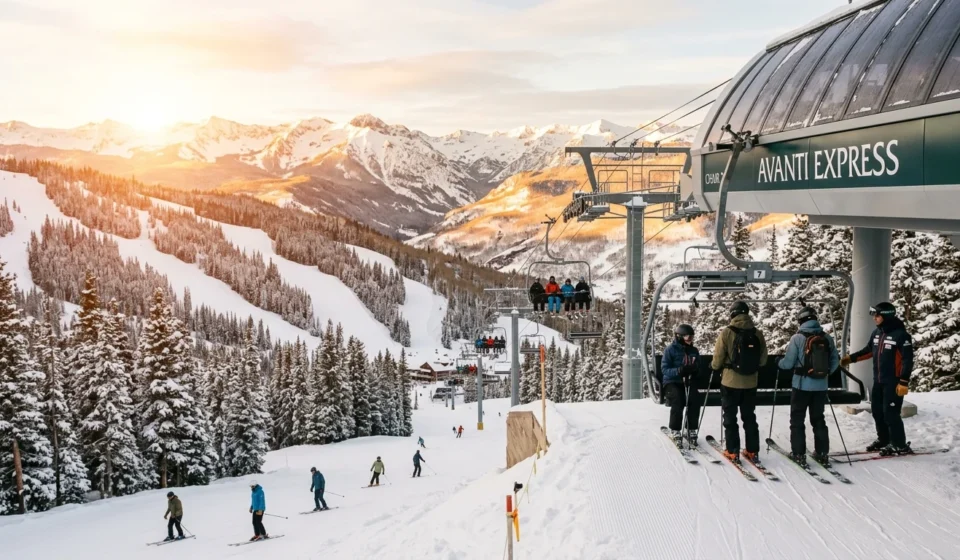
Colorado has more than two dozen ski resorts, and the best one for you depends on what you actually want out of a trip. Vail and Aspen Snowmass deliver the biggest terrain and the biggest price tags, while spots like Winter Park and Crested Butte offer real Rocky Mountain skiing without the crowds or the cost. Below is a rundown of the resorts worth knowing before you book.
Vail
Vail is the resort most people picture when they think of Colorado skiing, and it earns that reputation with more than 5,300 skiable acres spread across seven legendary back bowls. The terrain suits nearly everyone, from wide beginner runs near the village to the steep, ungroomed bowls that draw experts from around the country.
The town itself is part of the draw. Vail Village has a walkable, alpine feel with high-end shopping and dining right at the base, so nonskiers in your group have plenty to do. The tradeoff is cost. Lift tickets and lodging here run higher than almost anywhere else in the state, and the resort gets busy on weekends and holidays.
Aspen Snowmass
Aspen Snowmass is really four mountains under one pass: Aspen Mountain, Aspen Highlands, Buttermilk, and Snowmass. Each has its own personality, which makes it one of the more versatile options on this list. Aspen Mountain is known for steep, expert terrain right above town; Highlands has some of the toughest lift-served runs in the state; Buttermilk is built for beginners and families; and Snowmass has the most acreage and the longest vertical drop of the four.
Aspen, the town, leans upscale, with fine dining and a lively après scene, but Snowmass Village offers a more relaxed, family-oriented base if that is more your speed. Because the four mountains are connected by a free shuttle, you can match the terrain to your skill level day by day instead of committing to one mountain for the whole trip.
Breckenridge
Breckenridge sits at over 9,600 feet at its base, which is high even by Colorado standards, and it spreads across five peaks with terrain for every ability. What sets Breck apart is its terrain parks. Peak 8 and Peak 9 both have well-built park features, and the resort draws a strong freestyle crowd because of it.
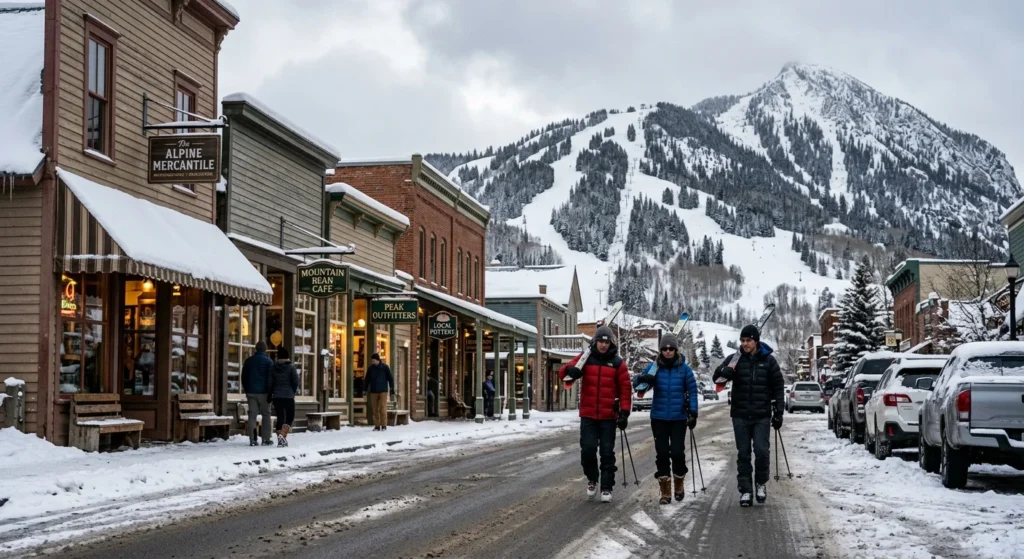
The town of Breckenridge is a former mining settlement with a walkable Main Street full of bars, breweries, and casual restaurants, so it works well for groups who want skiing during the day and a real nightlife scene afterward. It is also one of the more accessible resorts from Denver, which means it fills up fast on weekends.
Steamboat Springs
Steamboat is known locally for its tree skiing, and the reputation is earned. The aspen groves here are spaced widely enough that intermediate skiers can comfortably ski through them, which is rare. Steamboat also gets a distinct, dry snow that locals call champagne powder, a nickname tied to the region’s low-moisture snowfall.
Beyond the slopes, Steamboat has kept more of its ranching-town character than some of the more polished resort towns. There are natural hot springs nearby, a working rodeo in summer, and a base area that feels less manufactured than Vail or Beaver Creek. It is a good fit for families and for skiers who want a slower pace off the mountain.
Telluride
Telluride is tucked into a box canyon in the San Juan Mountains, in the southwestern part of the state, and the drive alone is worth it. The terrain here is genuinely challenging, with steep chutes and high alpine bowls that attract experienced skiers, but there is also a gentler beginner area right in town.
What makes Telluride different is the free gondola connecting the historic town of Telluride to the newer Mountain Village at the base of the slopes. The town has preserved its Victorian-era buildings, and because it sits farther from a major airport, it tends to draw fewer day-trippers than the Summit County resorts.
Winter Park
Winter Park is one of the closest major resorts to Denver, about 67 miles via US-40, which makes it a popular choice for a day trip or a quick weekend. It is owned by the city and county of Denver, and that public ownership history shows in its reputation as a solid, no-frills option rather than a flashy destination resort.
The terrain includes Mary Jane, a separate section known for bump runs and tree skiing that has its own dedicated following among Colorado locals. Winter Park tends to have shorter lift lines than resorts closer to I-70, and lift ticket prices are generally more reasonable, which makes it a good pick for families or anyone trying to keep costs down.
Copper Mountain
Copper Mountain is laid out in a way that naturally separates terrain by ability. Beginner runs sit on the west side, intermediate terrain fills the middle, and the east side holds the steeper, more advanced bowls. That layout makes it easier for mixed-ability groups to split up and regroup at the base without anyone ending up on terrain they are not ready for.
Copper also tends to pick up serious snowfall through the season, often among the higher seasonal totals in the state. The base village is smaller and less developed than Vail or Breckenridge, which some visitors prefer, since it keeps the focus on the mountain rather than shopping or nightlife.
Crested Butte
Crested Butte sits farther from Denver than most resorts on this list, roughly a five-hour drive, and that distance keeps the crowds down. It has a reputation among serious skiers for its extreme terrain, including hike-to bowls and steep couloirs off the summit, but the front side of the mountain is friendly to beginners and intermediates.
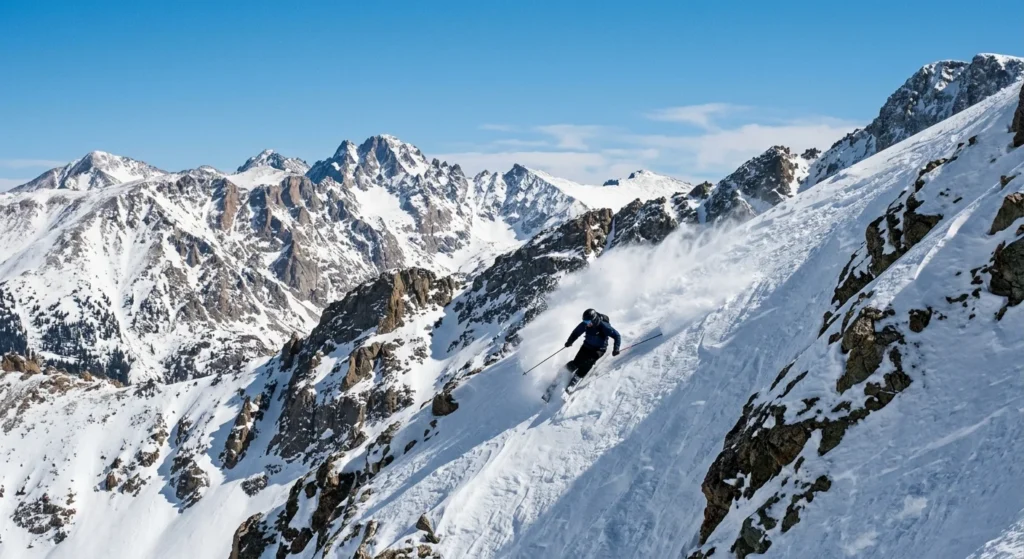
The town of Crested Butte itself is a well-preserved former mining town with colorful Victorian buildings, and it has kept a more local, less commercialized feel than resorts along the I-70 corridor. It is a good choice for skiers who want challenging terrain without the resort-town polish of Vail or Aspen.
How to Choose Between Colorado’s Ski Resorts
With this many good options, the right pick usually comes down to three practical factors rather than which resort has the best marketing.
1. Skill Level
If your group is mostly beginners, Winter Park, Buttermilk at Aspen Snowmass, and the front side of Crested Butte are easier to learn on than Vail’s back bowls or Telluride’s steep chutes. Advanced skiers looking for a challenge should look at Aspen Highlands, the east side of Copper Mountain, or Crested Butte’s hike-to terrain.
2. Season Pass Access
Your existing pass can decide for you. Vail, Breckenridge, and Crested Butte are on the Epic Pass, while Aspen Snowmass, Steamboat, Copper Mountain, and Winter Park are on the Ikon Pass. Checking which resorts your pass covers before booking lodging can save a meaningful amount of money.
3. Distance From Denver
Winter Park, Breckenridge, and Copper Mountain are all within about two hours of Denver International Airport, which works well for a short trip. Vail and Steamboat take closer to three hours, and Telluride and Crested Butte are closer to five, so they suit longer stays rather than a weekend run.
Colorado does not have one single best ski resort. It has a range of very different mountains, and matching your skill level, budget, and pass to the right one will do more for your trip than picking whichever resort shows up first in a search result.