The best time to visit Tanzania is during the dry season, from June through October. Wildlife gathers around rivers and waterholes, and thinning grass makes animals easier to spot. But that answer only tells part of the story. Tanzania spans several ecosystems, from the Serengeti plains to the Zanzibar coast, and each region has its own ideal window. The right month for you depends on your priorities. You might want to watch the migration, climb Kilimanjaro, add a beach stay, or simply dodge the crowds and high prices. This guide breaks down what actually happens, month by month, so you can match your trip to what matters most.
The Short Answer
If you only remember one thing, remember this. June through October is Tanzania’s dry season. It’s the most reliable stretch for wildlife viewing across nearly every park. Rain is rare, and skies stay clear. Animals cluster near permanent water sources instead of scattering across the bush. Within that window, July and August draw the biggest crowds and the highest rates. June and September offer nearly identical conditions, with noticeably fewer vehicles at the sightings. If your schedule is flexible, those shoulder months are usually the smartest pick. The Great Migration in the Serengeti places Tanzania atop global destinations for the best places to see wildlife. Multi-stop African itineraries require aligning weather windows with the best time to visit Egypt.
Tanzania’s Two Seasons
Tanzania runs on two broad seasons rather than four
1: The Dry Season, June to October
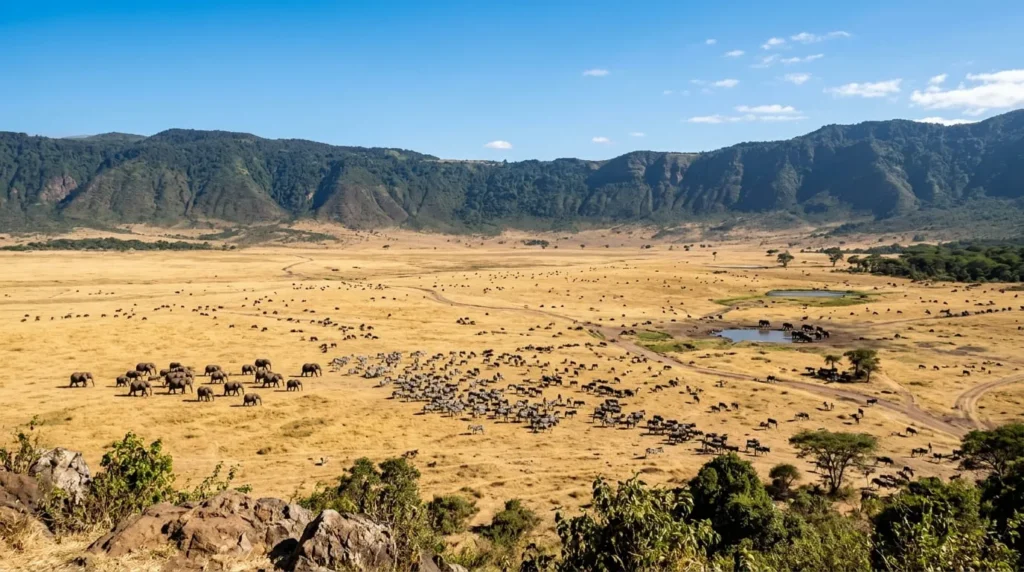
This is peak safari season for good reason. Daytime temperatures across the northern parks typically run between 68°F and 86°F. Nights cool noticeably, especially at higher elevations like the Ngorongoro Crater rim. Grass dies back across the plains. That makes lions, elephants, and buffalo far easier to spot against open ground. Rivers and waterholes shrink to a handful of reliable spots. This concentrates wildlife in predictable places instead of spreading it thin. Roads stay firm and dry, which matters most in the more remote southern and western parks. Some of those roads are barely passable in wetter months. The tradeoff is popularity. Northern circuit camps book up months ahead for July and August, and prices climb right along with demand.
2: The Wet Season, November to May
The wet season actually has two distinct phases. The short rains fall from November into December. These usually arrive as brief afternoon downpours that clear quickly. They rarely disrupt a day’s game drive. This period turns the plains green almost overnight. It draws migratory birds and brings a wave of newborn animals. Rates drop and lodges empty out, making it an underrated window for a quieter trip. The long rains, from March through May, are a different story. Storms can be heavier and more sustained. Some roads become difficult to navigate, and a handful of camps in the wetter southern parks close entirely for the season. Wildlife viewing in the Serengeti and Ngorongoro Crater still holds up reasonably well. That’s because the crater’s contained ecosystem keeps animals close together year-round. Even so, this is generally the slowest and least predictable stretch to plan a safari around.
Timing the Great Wildebeest Migration
The migration isn’t a single event pinned to one date. It’s a rolling movement of over a million wildebeest and zebra, following the rain. Where you should go depends on exactly when you’re traveling.
Calving Season, January to February
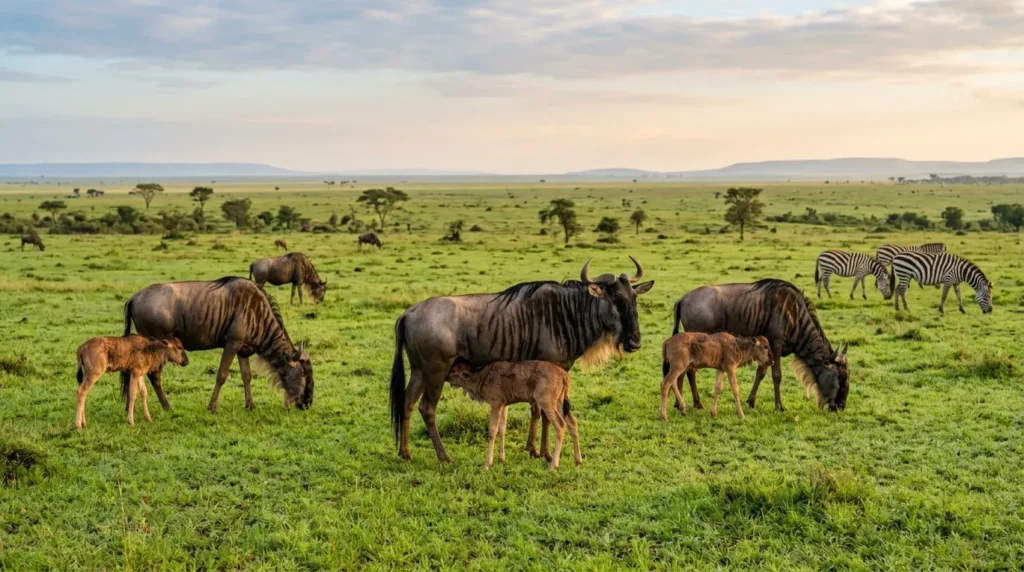
Each year, roughly half a million wildebeest calves are born within a few short weeks. This happens on the short grass plains around Ndutu, in the southern Serengeti and eastern Ngorongoro area. The concentration of newborns draws intense predator activity. Lions, hyenas, and cheetahs all work the herds. Daytime skies tend to be clear and hot, broken up by occasional short showers. The landscape is at its greenest. This window rewards travelers who want dramatic predator and prey action. It beats the river crossing spectacle most people picture when they think of the migration.
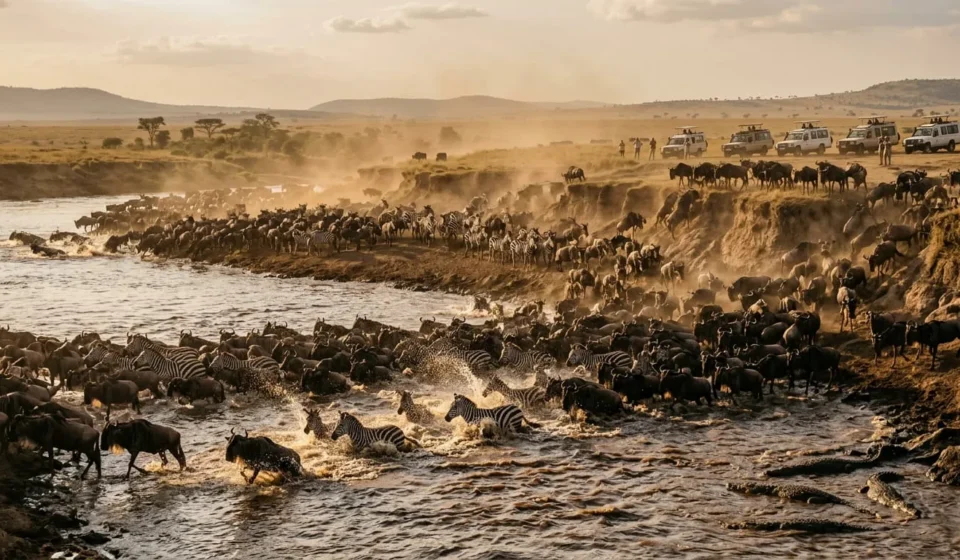
River Crossings, July to September
This is the image most people associate with a Tanzania safari. Enormous herds plunge across the Mara River in the northern Serengeti, with crocodiles waiting below. Crossings happen from July through September. The exact timing shifts from year to year, depending on rainfall patterns further south. No operator can guarantee a specific date. August tends to offer the most consistent activity. It also coincides with the single busiest and most expensive stretch of the year. Stay flexible with your dates rather than locking into one specific week. Your odds of catching a crossing improve considerably.
Best Time by Safari Region
Tanzania’s parks don’t all follow the same calendar. That’s why the region you’re prioritizing should shape your timing as much as the season does
Northern Circuit Parks
Serengeti, Ngorongoro, Tarangire, and Lake Manyara make up the northern circuit. All four can be visited year-round with good results. The Ngorongoro Crater in particular holds a resident population of wildlife inside its walls, regardless of season. The enclosed caldera traps water and vegetation, keeping animals close by. Tarangire is actually at its most dramatic in the dry season. Elephants gather along the Tarangire River in some of the largest herds found anywhere in the country.
Southern and Western Circuit Parks
Ruaha, Nyerere, formerly known as Selous, and Katavi sit further off the beaten path. They depend far more heavily on the dry season. Many camps here close entirely during the heaviest rains. Bush roads can become impassable between March and May. Visit these parks between June and October, when access is reliable and wildlife concentrates around the region’s rivers. Even in August, these southern parks stay noticeably quieter than their northern counterparts.
Adding Zanzibar or Kilimanjaro to Your Trip
A safari itinerary often gets paired with time on the coast or a Kilimanjaro climb. Adding either one shifts the timing calculus slightly.
Zanzibar Beach Timing
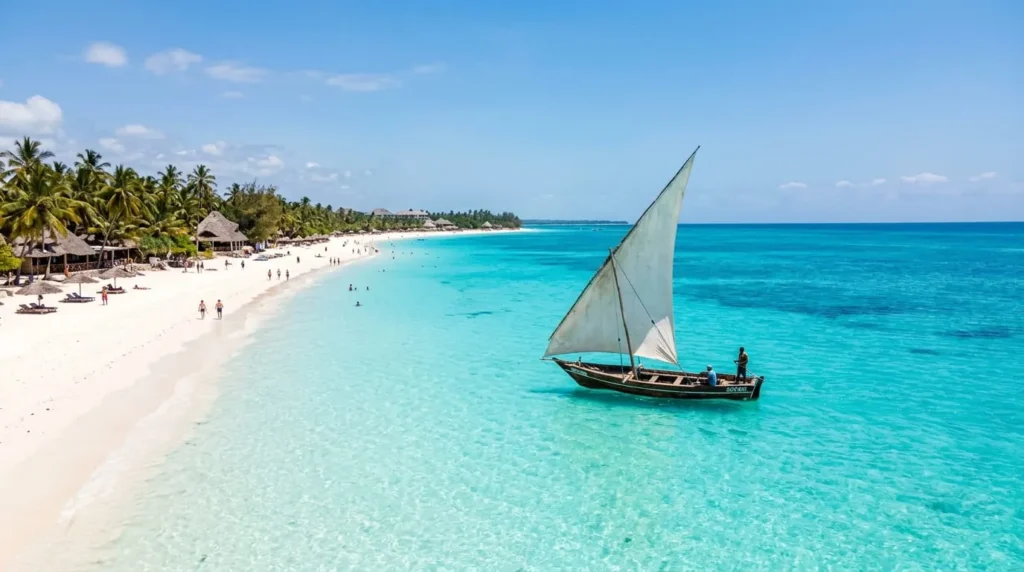
Zanzibar’s driest, sunniest stretch runs from June through October. That lines up neatly with safari’s peak season, making a combined trip easy to schedule. The island’s long rains, from March into May, bring high humidity and choppier seas. Snorkeling visibility drops too, so it’s worth avoiding for a beach add-on, even though safari prices dip during those months. December through February works reasonably well for the coast, despite short bursts of rain. It also overlaps with the wildebeest calving season, for travelers combining both.
Kilimanjaro Climbing Windows
For Kilimanjaro, the two most reliable climbing windows are January to February and June through October. Both fall outside the heaviest rains, giving clearer summit views and drier trails underfoot. Climbing during the long rains from March to May is possible but noticeably less comfortable. Expect slippery paths and poor visibility near the summit.
When to Go If You Want Fewer Crowds and Lower Prices
Peak dry season delivers the best odds for consistent wildlife sightings. But it also means shared sightings with several other vehicles, and rates well above the rest of the year. A few adjustments can ease both problems at once. Traveling in June or September keeps you inside the dry season while avoiding the July and August crush. School holidays elsewhere drive much of that demand. Heading south to Ruaha or Nyerere instead of the Serengeti trades a small amount of predictability for something else. You get a genuinely private experience, even at the height of peak season. The short rains in November and December bring some of the lowest rates of the year. You’ll get green scenery and newborn wildlife too, in exchange for occasional afternoon showers that rarely cancel a game drive.
Planning Around the Holidays
Even though December falls within the wet season, it’s one of the busiest and priciest months to book. Christmas and New Year week draws families taking advantage of school break, and camps fill up fast despite the short rains. If you’re set on traveling over the holidays, book six to nine months ahead, especially for camps in the Serengeti and Ngorongoro. Wildlife viewing stays good regardless. Summer break in June and July is the other predictable demand spike. It lines up with the start of the dry season and the early stages of the migration. If your calendar allows a trip in late September or October instead, you’ll likely find better availability. Rates tend to be lower too, for comparable wildlife viewing.
Flight Timing and Jet Lag for Long-Haul Travelers
Getting to Tanzania usually means a long-haul flight connecting through a European or Middle Eastern hub. Common options include Amsterdam, Istanbul, or Doha, since direct routes are limited. Door-to-door travel time often runs 18 to 22 hours once you include the layover. The time zone shift itself is manageable. Tanzania sits roughly seven to eight hours ahead of the East Coast, a gentler shift than a trip to Asia or Australia. Still, arriving after two long flights and heading straight into an early morning game drive can leave you groggy on day one. Building in one buffer night near Arusha or Kilimanjaro International Airport makes the first few days far more enjoyable.
Matching the Month to Your Priorities
If wildlife density matters most, aim for June through October. If the river crossings specifically are the goal, target August while staying flexible on exact dates. If you want dramatic predator action without the crowds, January and February around Ndutu deliver both. If your budget is the deciding factor, look at November, December, and the shoulder weeks of June or September. All combine solid conditions with meaningfully lower rates. There’s no single perfect month for every traveler. But there’s very likely a right one for what you’re actually hoping to see.