
Where to stay in Osaka comes down to two choices: Namba if you want food, neon, and easy airport access, or Umeda if you want polished hotels and fast trains to Kyoto and Kobe. Every other district on this list is a variation on those two, suited to a specific kind of trip. Osaka’s rail network is dense enough that almost any central base works, so the real question is how much noise, walking, and transfer time you are willing to trade for price.
This guide covers the main districts, which one suits you, what evenings feel like there, and how to choose by budget and arrival point. It also covers the mistakes that cost visitors the most time.
The Short Answer by Traveler Type
Match your trip to a district before you compare hotels. Most trips sort out like this:
- Namba or Shinsaibashi for a first visit built around food and nightlife
- Umeda for upscale hotels and day trips to Kyoto, Kobe, and Himeji
- Shin-Osaka for early Shinkansen departures and one-night stopovers
- Tennoji or Shinsekai for lower prices and a more local feel
- Universal City or the Bay Area for a Universal Studios Japan trip
- Nakanoshima, Honmachi, or Osaka Castle for quiet streets and river views
How Osaka Is Laid Out
Osaka has two centers. Kita, meaning north, is built around Umeda, home to Osaka Station, big department stores, and the business district. Minami, meaning south, covers Namba, Dotonbori, and Shinsaibashi, where most of the eating and nightlife sits.
The Midosuji subway line links them in about ten minutes and also stops at Shin-Osaka and Tennoji. Because so many sights sit along that one line, a hotel within a short walk of any Midosuji station keeps your days simple.
Other Osaka Metro lines and the JR Osaka Loop Line fill the gaps. Treat the Midosuji line as your spine and judge every hotel by how close it is to a station on it.
Choosing by Arrival Point
Your arrival route can settle the decision. From Kansai International Airport, Nankai trains run to Namba, JR West’s Haruka reaches Tennoji and Shin-Osaka, and airport limousine buses serve Umeda and Namba. Pick the district your train or bus already goes to, and you skip a transfer with luggage in hand.

If you arrive by Shinkansen from Tokyo, you land at Shin-Osaka. From there, the Midosuji line reaches Umeda in under ten minutes and Namba in about twenty, so a night in either center costs you very little extra travel.
How Trip Length Changes the Answer
Where to stay in Osaka also shifts with trip length. For one or two nights, stay wherever your train arrives, because transfers eat a big share of a short trip. For three or four nights, Namba is the safest pick for food and nightlife, and Umeda is better if you plan several excursions.
On stays of five nights or more, consider splitting the trip. Spend the first nights in Namba for the food and the last in Umeda or Shin-Osaka, which puts you next to your departing train or plane.
Osaka also works as a base for Kyoto and Nara. Hotel rates in Osaka are often lower than in Kyoto during peak seasons, and the ride back takes about 30 minutes, so sleeping in Osaka and visiting Kyoto by day is a common way to cut costs.
Namba and Dotonbori: Best for First Visits and Food
Namba suits most first-time visitors. The Dotonbori canal, Kuromon Market, and a dense run of shops serving takoyaki, okonomiyaki, and kushikatsu are all within a fifteen-minute walk. You can eat well at midnight here, which is not true of most Osaka neighborhoods.
Airport access is the other draw. According to Nankai Electric Railway, its Rapi:t limited express connects Kansai International Airport with Nankai Namba Station in about 40 minutes, and the ride requires a reserved seat and a small supplement. Kintetsu trains from Osaka-Namba Station also reach Nara in roughly 40 minutes, so day trips are easy.
The cost is noise. Dotonbori stays crowded well into the late evening, and hotels facing the main strip can be loud. Ask for a higher floor, or book a block or two away in Horie or Nipponbashi, where you keep the walk but lose most of the crowd.
Namba also has the widest range of prices in the city, from hostels and capsule hotels to towers like Swissotel Nankai Osaka, which sits directly above the Nankai station.
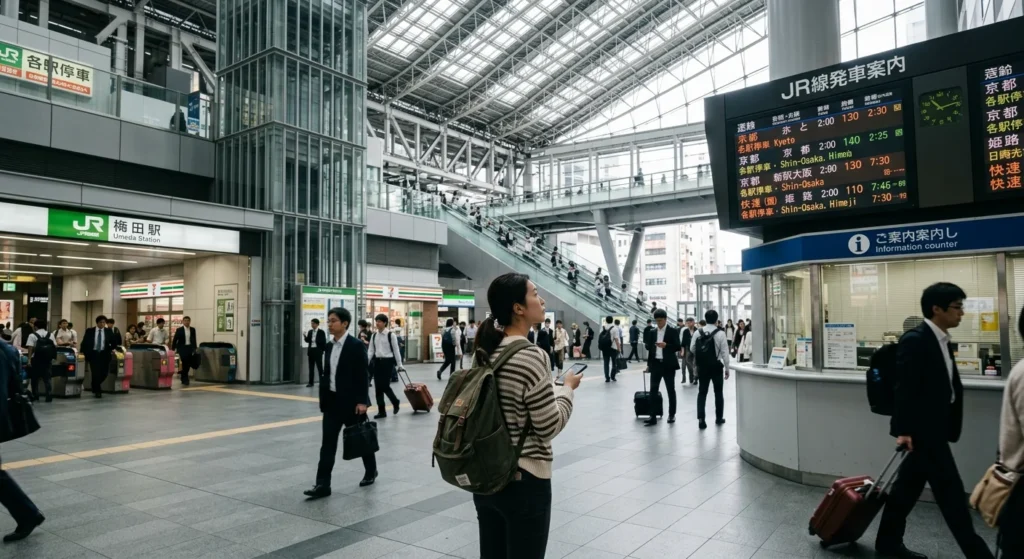
Umeda and Osaka Station: Best for Polished Hotels and Day Trips
Umeda is the transit hub of western Japan. Per JR West, Special Rapid trains from Osaka Station reach Kyoto in about 30 minutes and Kobe’s Sannomiya in about 20. If your plan includes two or three day trips, sleeping here saves real time.
Hotels skew newer and more upscale. The Ritz-Carlton Osaka and Hotel Granvia Osaka, which connects directly to the station, are the best known, and mid-range business hotels cluster around Chayamachi and Nakazakicho.
After dark, Umeda feels like an office district. The restaurants are excellent, especially around Kita-Shinchi, but the streets empty earlier than in Namba. Nakazakicho, a short walk northeast, has small cafes and vintage shops in old wooden houses and is a good place to spend an afternoon. The HEP Five Ferris wheel and the Grand Front Osaka complex are also within walking distance of the station.
Shin-Osaka: Best for Bullet Trains and Early Departures
Shin-Osaka is where Shinkansen from Tokyo, Nagoya, Hiroshima, and Fukuoka stop. JR Central lists Nozomi trains from Tokyo at about two and a half hours, and Kyoto is roughly 15 minutes away by Shinkansen. JR West’s Haruka airport express reaches Shin-Osaka from Kansai Airport in about 50 minutes.
The area itself is functional rather than charming. Food is mostly station restaurants and chains, and anything interesting is a Midosuji ride away. Choose Shin-Osaka when you have one night, a 7 a.m. train, or heavy luggage and no patience for transfers.
Shinsaibashi, Amerikamura, and Horie: Best for Shopping and Cafes
Shinsaibashi sits between Namba and Umeda on the Midosuji line, and Dotonbori is a ten-minute walk south. The covered Shinsaibashi-suji arcade, department stores, and Amerikamura’s youth fashion streets are all here.
Horie, just west, is quieter and full of independent boutiques and coffee shops. It works well for travelers who want Minami’s food without sleeping in the middle of it. Rates are usually a little higher than Namba for comparable rooms. Shinsaibashi Station also puts you on two subway lines, which helps when you want to reach Osaka Castle or Tennoji without changing at a busy hub.
Tennoji and Shinsekai: Best for Budget Stays and Local Color
Tennoji is the southern anchor of the Midosuji line and has better value than the two big centers. Abeno Harukas, a 300-meter skyscraper, holds a department store, a hotel, and an observation deck. Shitennoji Temple and Tennoji Zoo are a short walk away.
Tennoji is also convenient for arrivals, since JR West’s Haruka reaches it from Kansai Airport in about 30 minutes. Shinsekai, next door, has the Tsutenkaku tower and some of the city’s cheapest kushikatsu.
One caution: the streets southwest of Shinsekai toward Nishinari can feel rough after dark, and some travelers, especially those on their own, prefer to stay nearer Tennoji Station or the Abeno side. Daytime visits are fine, and the area’s food is a real bargain.
Universal City and the Bay Area: Best for Theme Park Trips
If Universal Studios Japan is the point of your trip, staying at Universal City means you walk to the gate. The JR Yumesaki Line from Osaka Station reaches Universal City Station in about 15 minutes, so staying elsewhere is also workable. Hotels beside the park include Hotel Universal Port and Hotel Keihan Universal Tower.
The tradeoff is dinner. The Bay Area has few good restaurants beyond the park’s own, and it takes a train to reach the rest of the city. Osaka Aquarium Kaiyukan, in nearby Osakako, makes a good second day. Families with young children often find the short walk from room to gate worth the limited dining, especially on a two-day ticket schedule.
Nakanoshima, Honmachi, and Osaka Castle: Best for Quiet Stays
Nakanoshima is a narrow island in the Dojima and Tosabori rivers, lined with museums, the Central Public Hall, and riverside walking paths. Conrad Osaka and The Rihga Royal are both here, and Umeda is a short walk.
Honmachi, further south along Midosuji, is a business district with the St. Regis Osaka and plenty of practical hotels that drop in price on weekends. Around Osaka Castle, Tanimachi and Morinomiya have quiet streets and easy subway access, though few restaurants stay open late.
Choosing a Hotel Type and Budget
Business hotels are the standard mid-range choice in Japan. Rooms are compact, often under 20 square meters, but they are clean and cheap, and chains like Dormy Inn and Toyoko Inn are reliable. Pack a bag you can lift stairs with, because floor space for a large suitcase is limited.
Capsule hotels and hostels are common in Namba and Shinsekai and suit solo travelers on tight budgets. Upscale towers cluster in Umeda, Nakanoshima, and Honmachi.
Short-term apartments are legal only if the host holds a license under Japan’s Private Lodging Business Act, so check that the listing shows a registration number. Osaka Prefecture also charges a small accommodation tax per person per night, and the amount rises with the room rate, so check the current schedule on the prefecture’s website.
When to Book and What Moves Prices
Cherry blossom season in late March and early April is the most expensive and crowded period. Golden Week, from late April into early May, and the mid-August Obon holidays follow closely. Book two to three months ahead for those dates.
Autumn foliage in November also lifts prices, as do concerts and baseball games that draw crowds to the Bay Area and Kyocera Dome. Weekends cost more in leisure districts like Namba, while business districts like Honmachi often get cheaper on Saturday and Sunday. Late January and February are the quietest months.
What to Check Before You Book
Walking time to a station matters more than distance to a landmark. Under five minutes is comfortable with bags, and ten is the practical limit in summer heat and humidity. Look at the actual route on a map, because rivers and rail lines can turn a short distance into a long detour.

Read recent reviews for mentions of noise and room size, which vary a lot between buildings. Confirm whether breakfast is included, and check the luggage policy. Many hotels hold bags before check-in and after check-out, and Japan’s takkyubin delivery services can send a suitcase ahead to your next stop.
Mistakes That Cost Visitors Time
Booking a cheap hotel far from the Midosuji line. A room in the outer wards may save 20 dollars a night, but two transfers each way will eat that back in time and train fares.
Ignoring the last train. Osaka Metro lines wind down around midnight, so staying in Umeda while eating in Namba means a taxi at closing time unless you plan.
Mixing up the Namba stations. Nankai Namba, Osaka-Namba, and Osaka Metro Namba are linked underground, but walking between them takes several minutes. Check which one your hotel is closest to, especially with luggage.
Skipping the elevator check. Many older stations have stairs only on some exits, so choose a hotel within five minutes of an elevator-equipped exit if you are carrying big bags.