
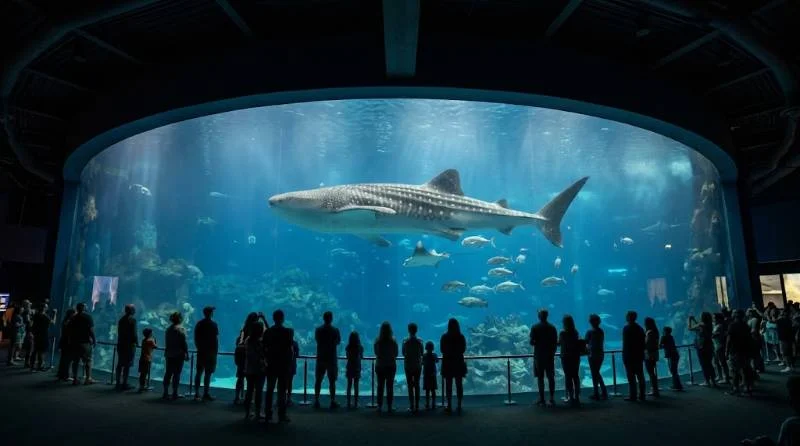
The biggest aquarium in the US is the Georgia Aquarium in Atlanta. It holds more than 11 million gallons of water. That is nearly double the volume of its closest rival.
Most pages stop at that one fact. It leaves out the questions that matter when you plan a trip. Does “biggest” mean water volume, tank size, or animal count? How does it compare with Shedd or Monterey Bay? And is bigger actually better for a day out?
This guide covers the numbers, a ranked comparison, and a practical plan for visiting.
The Biggest Aquarium in the US at a Glance
The Georgia Aquarium sits in downtown Atlanta and opened in November 2005. It was designed around one enormous exhibit called Ocean Voyager. That single habitat holds about 6.3 million gallons, which is more than half of the building’s water.
Across seven major galleries, the aquarium keeps tens of thousands of animals from hundreds of species. It is the largest aquarium in the Western Hemisphere.
When it opened, it was the largest aquarium in the world. It held that title until 2012. Large aquariums in Singapore and China have since passed it on the global list. At home, nobody has come close.
How “Biggest” is Measured
Rankings disagree because aquariums can be measured in several ways. Knowing which measure a list uses helps you read it correctly.
1: Total Water Volume
This is the standard measure. It adds up the water in every exhibit, from the largest tank to the smallest touch pool. Georgia Aquarium leads with more than 11 million gallons.
The number has grown over time. At opening, the exhibits held about 8 million gallons. New galleries and redesigned habitats pushed the total higher.
2: Largest Single Tank
Ocean Voyager holds roughly 6.3 million gallons. That one tank is larger than the entire water volume of most other major aquariums. It is bigger than all of the water at Baltimore or Monterey Bay combined.
3: Animal and Species Counts
These figures are the hardest to compare. Facilities count small fish, corals, and invertebrates in different ways. A big water total does not guarantee a bigger species list.
The National Aquarium in Baltimore is a good example. It reports more than 750 species with far less water than Georgia. If you care about variety, volume is a poor guide.
4: Building FootPrint
Floor space is a fourth option. Georgia Aquarium opened with about 550,000 square feet of covered space. That gives you a sense of how long a full visit takes on foot.
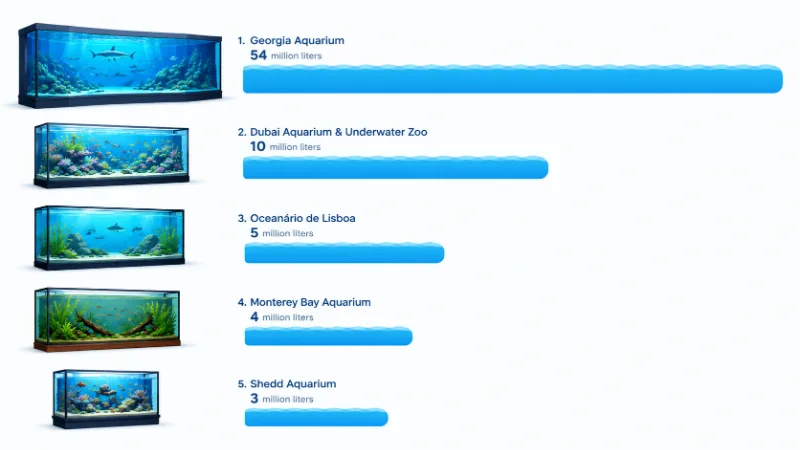
Biggest Aquariums in the US Ranked by Water Volume
Here is how the largest facilities compare by approximate water volume.
| Rank | Aquarium | Location | Approximate water volume |
|---|
| 1 | Georgia Aquarium | Atlanta, Georgia | More than 11 million gallons |
| 2 | The Seas at Epcot | Orlando, Florida | About 5.7 million gallons |
| 3 | Shedd Aquarium | Chicago, Illinois | About 5 million gallons |
| 4 | National Aquarium | Baltimore, Maryland | About 2.2 million gallons |
| 5 | Monterey Bay Aquarium | Monterey, California | More than 2 million gallons |
Figures are approximate. Operators revise them as exhibits change.
One caveat applies to the second spot. The Seas sits inside a theme park, so some lists treat it as an attraction rather than a standalone aquarium. Its tank held the record for the largest indoor saltwater aquarium until Georgia Aquarium opened.
If you exclude it, Shedd moves up to second. Either way, the top spot is never in doubt.
How the Biggest Aquarium in the US Compares with the World’s Largest
Searchers often mix up national and global rankings. Georgia Aquarium is first at home, but it is not first worldwide.
Marine Life Park in Singapore and Chimelong Ocean Kingdom in China both overtook it after 2012. Those resorts are built as destination complexes, with hotels, rides, and large entertainment areas around the tanks.
Georgia Aquarium is different in one useful way. It is a single building with a clear route through it. You can see the whole facility in a day without a park pass or a shuttle.
That makes the American record easier to experience than the global one, even though the global leaders are larger on paper.
What you Can See at the Biggest Aquarium in the US
Ocean Voyager and the Whale Sharks
Whale sharks are the largest fish on Earth. Georgia Aquarium is one of the few aquariums outside Asia that keeps them. That fact alone draws many visitors.

Ocean Voyager also holds manta rays, tiger sharks, and large schools of fish. An acrylic tunnel about 100 feet long runs through the exhibit. You walk beneath the animals as they pass overhead.
Here is a tip from experience. Skip the tunnel rush and stand at the large viewing window instead. The animals circle the tank, so patience pays off with closer passes.
Cold Water Quest and the Other Galleries
Cold Water Quest is home to beluga whales, sea otters, and penguins. It is a good stop for younger children because the animals are active and easy to see.
Tropical Diver recreates a coral reef with bright fish and one of the larger artificial reefs in any aquarium. River Scout covers freshwater species from around the world.
Dolphin Coast features bottlenose dolphins, with scheduled presentations. California sea lions are also part of the collection. Check the posted show times when you arrive, because the schedule changes by season.
How Georgia Aquarium got so large
A $250 million donation from the foundation of Bernard Marcus, a co-founder of The Home Depot, paid for most of the project. That gift made it possible to build at a scale no other city had attempted.
The size also creates real engineering demands. The aquarium recycles almost all of its water, which keeps operating costs and waste manageable. A dedicated animal health center cares for the larger animals. A partnership with the University of Georgia trains new aquatic animal specialists.
Bigger tanks also allow animals to live in groups that behave more naturally. That is one reason whale sharks and manta rays can share a single habitat.
Why the Whale Shark Exhibit Matters Beyond the Crowds
Keeping whale sharks is difficult. They are huge, they travel long distances in the wild, and they need strong water flow and open swimming room.
A tank of 6.3 million gallons gives them space to glide rather than turn constantly. That is the practical reason the aquarium was built around one giant habitat. The size solves a real husbandry problem.
Other Large Aquariums Worth Knowing
1: Shedd Aquarium, Chicago
Shedd holds about 5 million gallons and sits on the Museum Campus beside Lake Michigan. Its classical Greek building is a landmark. It draws roughly 2 million visitors a year.
Shedd works well as part of a larger city trip. Several major museums are within walking distance.
2: National Aquarium, Baltimore
The National Aquarium anchors Baltimore’s Inner Harbor. It has more than 100 exhibits and over 750 species in about 2.2 million gallons. It is smaller than Georgia but dense with variety.
3: Monterey Bay Aquarium
Monterey Bay Aquarium opened on October 20, 1984, at a cost of $55 million. It holds more than 2 million gallons and over 600 species. Its focus is the marine life of the bay outside its doors.
The Open Sea exhibit is the highlight. Tuna and sea turtles swim behind one of the largest single-pane windows in the world.

Is the Biggest Aquarium the Best One to Visit?
Not always. Size gives you spectacle, but it also means more walking and bigger crowds. A massive tank can feel less personal than a smaller, well-designed gallery.
Georgia Aquarium is the right choice if you want scale and whale sharks. Nothing else in the country offers the same combination. It suits groups with mixed ages, since there is something for each age.

Monterey Bay is better if you care about local ecology and thoughtful design. Shedd suits a city weekend. Baltimore works well for a half day at the harbor.
There are exceptions. Parents of toddlers may find a smaller aquarium easier. Nap schedules and long walks do not mix well with a facility this large. If you have only two hours, a smaller aquarium will let you see most of it.
Tips for Visiting Georgia Aquarium
Tickets and Timing
Buy timed tickets online before you go. Prices vary by date and package, so check the official site for current rates. Weekday mornings are the quietest. Weekends and school holidays fill quickly.
Plan on at least four hours for a full visit. Many people stay longer. Go to the busiest exhibits first, since lines grow by midday.
Getting There and What to Bring
The aquarium is at 225 Baker Street NW in downtown Atlanta. Parking is available nearby, and rideshare is a simple alternative on busy days.
Wear comfortable shoes. The galleries are cool and dim, so a light layer helps. Photography is easy in the tunnel, but skip the flash near the animals