The best places to surf are Hawaii’s North Shore, Jeffreys Bay in South Africa, Uluwatu in Bali, Ericeira in Portugal, and the Gold Coast in Australia. Still, the right pick depends on your ability and the month you can travel. A forgiving beach break in Costa Rica suits a first-timer far better than a famous reef that breaks over shallow coral.
This guide sorts spots by skill level, then covers wave types, seasons, and the safety habits that decide whether a surf trip goes well. Swell seasons are general patterns, so check a live forecast, like Surfline, before you book flights.
How to Choose a Surf Destination Before You Book
Start with wave type, because it sets how forgiving a spot is. Beach breaks wash over sand, shift with each tide and sandbar, and are the safest place to learn. Point breaks peel along a headland and give long, predictable rides. Reef breaks send waves over rock or coral, which makes them powerful and unforgiving if you fall.
Next, match the season to the coast. Most famous waves work only during a few months, when swell direction, wind, and tide line up. Arrive outside that window, and you may find flat water or onshore chop.
Crowds matter as much as size. A world-famous break can have dozens of surfers on one peak, and the local pecking order is real. Beginners often learn faster at a lesser-known beach nearby than at the headline spot.
Best Places to Surf for Beginners
Beginners need warm water, gentle whitewater, and sandy bottoms. These four spots deliver that, and all have surf schools and rental shops on the beach.
1. Waikiki, Oahu, Hawaii
Waikiki has a long surfing history, and the waves are slow, rolling, and easy to catch. Breaks like Queens and Canoes suit longboards and soft-top foamies. South swells arrive mostly from late spring through summer, which is the reverse of the North Shore’s winter season. Go early, since crowds build by mid-morning.
2. Tamarindo and Santa Teresa, Costa Rica
Costa Rica offers warm water year-round, so you can surf in boardshorts and a rash guard. Tamarindo has several beach breaks of different sizes, and Santa Teresa on the Nicoya Peninsula has consistent peaks. The dry season, roughly December to April, brings cleaner mornings, while the green season often brings bigger swell. Experts should note that nearby Playa Hermosa is a much heavier beach break.
3. Weligama, Sri Lanka
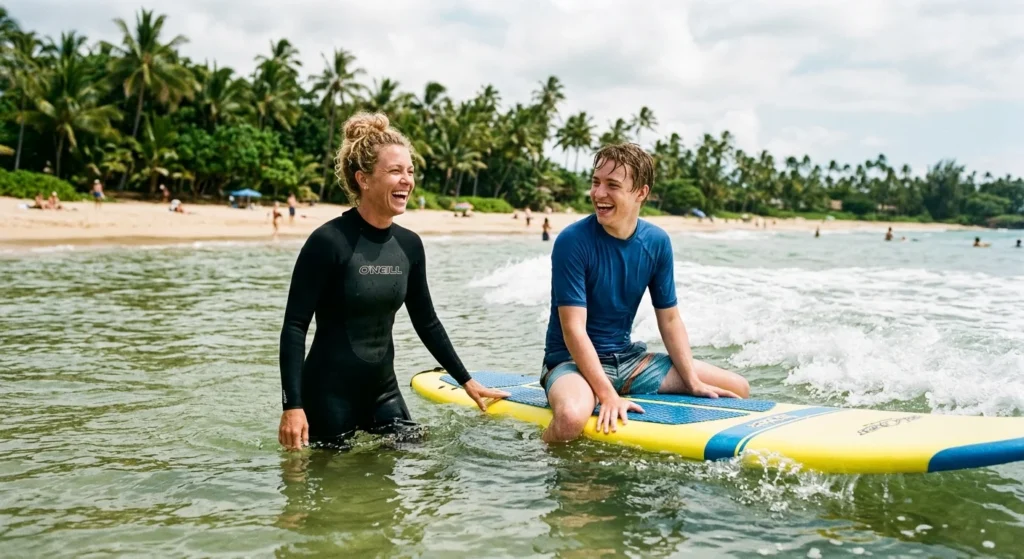
Weligama’s wide bay on the south coast has a sandy bottom and slow waves, which is why it fills with learners. The main season runs from about November to April. Arugam Bay on the east coast is the better move once you can paddle into green waves, with its season running roughly May to September.
4. Newquay, Cornwall, England
Fistral Beach in Newquay is one of England’s best-known surf beaches, with several surf schools nearby and swell that works most of the year. The water is cold, so plan on a 4/3mm or thicker wetsuit in winter. Spring and autumn often give the best mix of swell and manageable crowds.
Best Places to Surf for Intermediate Surfers
Once you can paddle, catch unbroken waves, and turn along the face, you can move to point breaks and slightly hollower beach breaks. These spots give longer rides and more variety.
1. Ericeira, Portugal
In 2011, Ericeira became Europe’s first World Surfing Reserve, a designation from the nonprofit Save the Waves Coalition. Within a few kilometers, you get Foz do Lizandro for easier waves, Ribeira d’Ilhas for a reliable right, and Coxos for experts only. The best swell tends to arrive from autumn through early spring.
2. Taghazout, Morocco
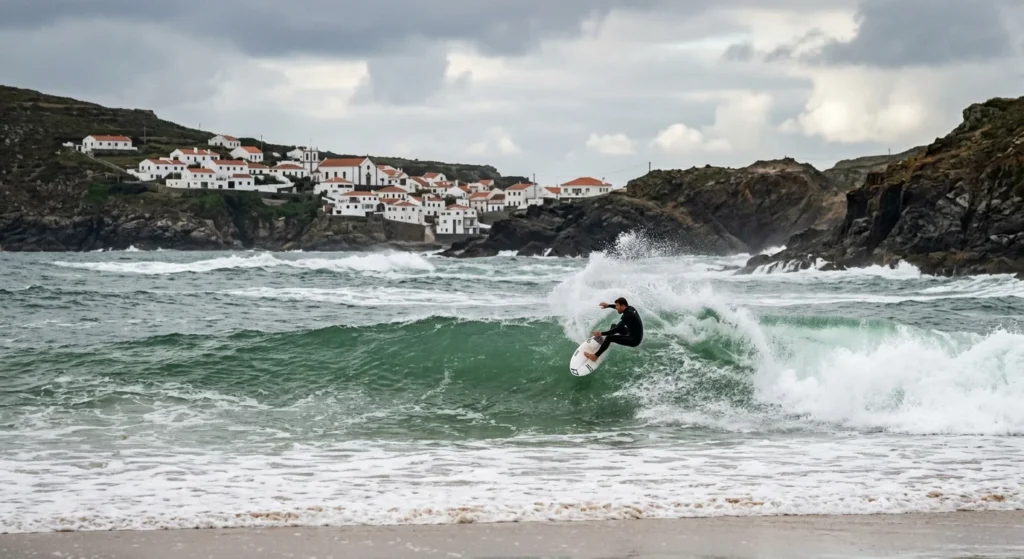
Taghazout is a small fishing town north of Agadir with a string of reef and point breaks, including Anchor Point, a long right-hander that works best for confident surfers when the swell is solid. Beginner-friendly beach waves are also close by, so mixed-ability groups do well here. The main season runs from October to March, and wetsuits are usually needed in winter.
3. Canggu, Bali
Canggu’s Batu Bolong and Old Man’s give mellow, rolling waves over sand and reef, with surf schools and board rentals close to the beach. The dry season, roughly April to October, brings generally offshore winds to Bali’s west and south coasts. Mornings are best, before the afternoon wind picks up.
4. Gold Coast, Australia
The Gold Coast is home to the Superbank, a run of sand-bottom point breaks that link Snapper Rocks, Rainbow Bay, Greenmount, and Kirra. When the sandbanks line up, rides can last several hundred meters. Ex-tropical cyclone swells often push the best conditions into February through April. Expect heavy crowds at Snapper, so try quieter beach breaks along the coast on smaller days.
Best Places to Surf for Advanced Surfers
Advanced spots break over shallow reef or rock, hold more power, and often have strong local etiquette. Treat these as places to work toward, not places to test yourself on a first trip.
1. Jeffreys Bay, South Africa
Jeffreys Bay is known for Supertubes, a right-hand point break with fast, open walls that suit surfers who can handle speed. The main season runs from about May to September, when winter swells from the Southern Ocean reach the Eastern Cape coast. The water is cool, so bring a full wetsuit and check local shark advisories before paddling out.
2. Uluwatu, Bali
Uluwatu is a cluster of left-hand reef breaks under limestone cliffs, with channels that make paddling out easier than at most reefs. The Peak, Racetrack, and Outside Corner break at different tides and sizes. Dry-season swells from April to October are the most consistent, and the tide changes how the reef works, so read the tide chart first.
3. Pipeline, North Shore, Oahu
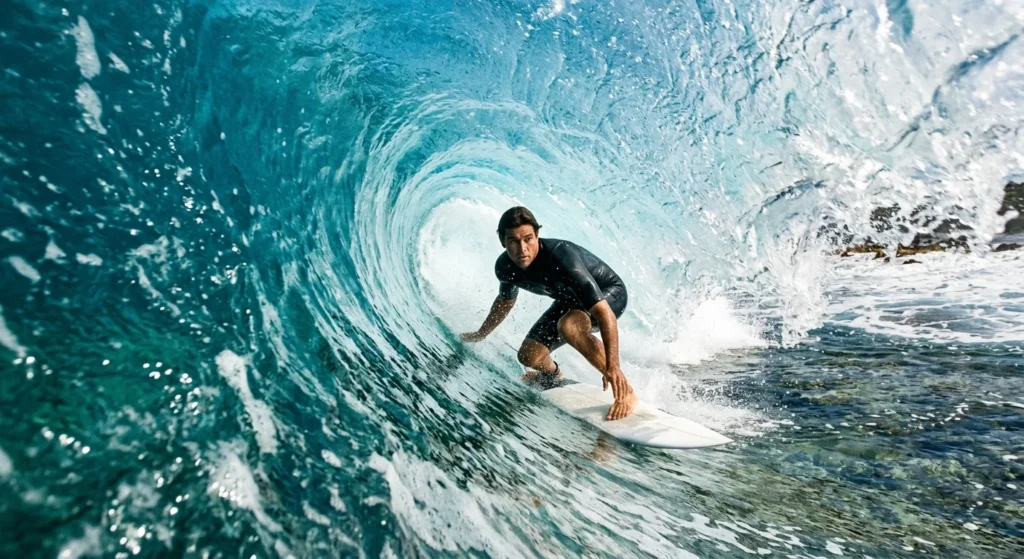
Banzai Pipeline breaks over a shallow, shaped reef off Ehukai Beach Park and produces some of the most photographed barrels in the sport. The North Shore season runs roughly November to February, when North Pacific storms send large swells. The Pipe Masters, a long-running professional contest, has traditionally been held there in December.
The reef is shallow, and the lineup is territorial, so watching from the beach for a few days is a sensible first step. Intermediate surfers can ease in at Haleiwa on smaller days.
4. Teahupo’o, Tahiti
Teahupo’o is a heavy left-hander that breaks over a shallow reef at the southern end of Tahiti Iti. It hosted the surfing events of the 2024 Paris Olympics, and the best swells usually arrive from May to October. Most visitors watch from a boat in the channel, which is the safest way to see it.
5. Nazaré, Portugal
Nazaré is the world’s best-known big-wave spot, created when Atlantic swells hit a deep underwater canyon close to shore. The big-wave season usually runs from October to February. Most people watch from the cliff-top lighthouse at Praia do Norte, and only specialist teams with jet skis and safety crews should be in the water.
6. Cloudbreak, Fiji
Cloudbreak is a powerful left-hand reef break off Tavarua Island, reached by boat from nearby resorts. It works best from about March to October, when Southern Ocean swells reach Fiji. The waves are long and fast, and the reef is shallow at low tide, so it suits experienced surfers only.
7. Mentawai Islands, Indonesia
The Mentawais off West Sumatra hold a chain of reef and point breaks, from friendly rights to hollow lefts. Most surfers visit by charter boat or at island camps, and the main season runs from about April to October. The remote location means medical help is far away, so travel insurance that covers surf trips matters.
Best Time to Surf by Region at a Glance
Use this table as a starting point when you compare destinations.
| Spot | Typical Season | Wave Type | Level |
| Waikiki, Hawaii | Late spring to summer | Soft reef waves | Beginner |
| Tamarindo, Costa Rica | December to April | Beach break | Beginner |
| Weligama, Sri Lanka | November to April | Sandy bay | Beginner |
| Ericeira, Portugal | Autumn to early spring | Reef and beach breaks | Intermediate |
| Taghazout, Morocco | October to March | Point and reef | Intermediate |
| Gold Coast, Australia | February to April | Sand point break | Intermediate |
| Jeffreys Bay, South Africa | May to September | Point break | Advanced |
| Uluwatu, Bali | April to October | Left reef | Advanced |
| North Shore, Hawaii | November to February | Reef | Advanced |
| Teahupo’o, Tahiti | May to October | Heavy reef | Expert |
| Nazaré, Portugal | October to February | Big wave | Expert |
Seasons and sandbar shapes change from year to year, so confirm conditions with a local surf shop or a live forecast before you book.
A Simple Rule for Matching Skill to Spot
Use a two-session rule, which is a personal rule of thumb, not an official standard. If you can paddle out without panic and catch a few waves in the first two sessions at a spot, it suits your level. If you spend both sessions struggling to get past the break, move to an easier beach nearby.
Pair every trip with a backup. Even at the best places to surf, flat spells happen, so stay near both a hard break and an easy one, as in Ericeira, Taghazout, or Bali.
Surf Etiquette and Safety Before You Paddle Out
The surfer closest to the breaking part of the wave, the peak, has right of way. Dropping in on someone already riding is the fastest way to start an argument, and at crowded breaks it can end your session. Wait your turn, paddle around the lineup on the way back out, and apologize if you make a mistake.
Rip currents are a risk at almost every beach break. NOAA advises swimming parallel to the shore to escape one, then angling back to land once you are out of the pull. Surfers use rips to paddle out faster, but beginners should learn to spot them before using them.
On reef breaks, wear booties where the reef is shallow and cover your head with your arms when you fall. Coral cuts infect easily in tropical water, so clean any scrape with fresh water as soon as you are out.
Wetsuits, Boards, and What to Pack
Water temperature decides your wetsuit. Tropical spots like Bali, Costa Rica, and Sri Lanka usually need only a rash guard, while Portugal, Morocco, and South Africa often call for a 3/2mm to 4/3mm wetsuit in winter. Cornwall in the coldest months calls for a 5/4mm suit with boots, gloves, and a hood.
Board choice matters too. A soft-top foam board of 8 to 9 feet is forgiving for learners, while intermediates often move to a funboard or mid-length. Advanced surfers heading to heavy reefs usually bring a step-up, which is a slightly longer, narrower board built for bigger, faster waves.
Airline surf-bag fees vary widely, so check the oversize and sports-equipment rules before you book. Renting locally can be simpler than flying with a board, especially on a first trip.
Lessons, Surf Camps, or Going Alone
First-timers should book at least two or three lessons. A coach teaches you how to read the lineup, pop up cleanly, and judge your own limits, which is hard to pick up from a video.
Surf camps bundle lessons, board rental, and lodging, and they work well in places like Costa Rica, Portugal, Morocco, and Sri Lanka. Intermediates benefit from a camp with video analysis, since it can speed up progress on turns and paddling.
Advanced surfers can go alone, but hire a local guide or boat driver at remote breaks like Cloudbreak or the Mentawais. Local knowledge about tides, currents, and hazards is worth more than any forecast app.