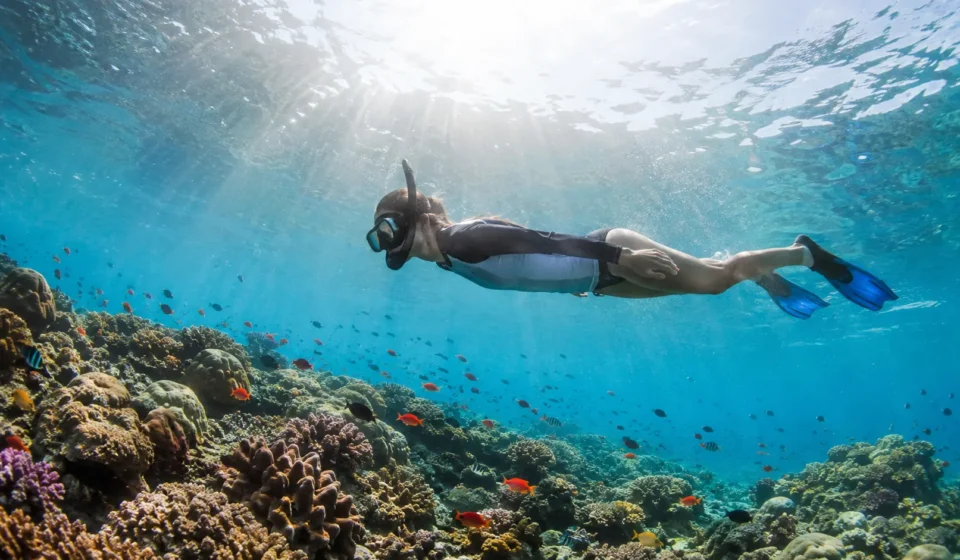
If you want to know the best places to snorkel in the USA, the honest answer depends on what kind of water you want under your fins. Warm, glassy bays in Hawaii feel completely different from the coral wall dives off Key Largo, and both are a world away from the kelp forests of California. This guide breaks down the spots worth planning a trip around, region by region, along with the timing and gear decisions that actually change how good your day in the water will be.
What Makes a Snorkeling Spot Worth the Trip
Not every clear-water beach is worth packing a mask for. The spots that make this list share three traits: consistent visibility, protected or calm entry points, and enough marine life to justify the swim out. Visibility matters more than most people expect. A reef with fifteen feet of visibility on a good day and two feet on a bad one is a gamble, while a site with steady thirty-foot visibility gives you a reliable experience no matter when you show up. Key West and Dry Tortugas rank among the best places to visit in Florida for snorkeling. Travelers seeking tropical barrier reefs can also explore popular things to do in Belize.
Protection from surf and current is the second filter. Open-ocean beaches can look inviting from the sand but turn into a workout the moment you’re past the break. The best sites for most snorkelers, especially families or first-timers, are bays, coves, or reef-protected lagoons where the water stays calm even when the ocean outside is rough.
Marine life density is the payoff. A protected bay with sand and a few rocks is pleasant but forgettable. The locations below combine calm water with actual reef structure, so you’re not just floating; you’re watching parrotfish graze coral or sea turtles glide past.
Best Places to Snorkel in Hawaii
Hawaii has the most consistent warm-water snorkeling in the country, and it’s not close. The islands sit far enough from the mainland that the water stays clear year-round, and volcanic reef structure gives fish plenty of places to hide and feed.
1. Hanauma Bay, Oahu
Hanauma Bay is the site most people picture when they think of Hawaiian snorkeling, and it earns the reputation. The bay is a collapsed volcanic crater, which means it’s naturally sheltered from open ocean swell, so the water inside stays calm almost every day of the year. Visibility regularly runs forty to sixty feet, and the shallow inner reef is packed with parrotfish, tangs, and the occasional green sea turtle.
The tradeoff is crowding. Hanauma Bay caps daily visitors and requires reservations, and arriving right at opening is the only reliable way to beat both the lines and the afternoon wind chop that can stir up sediment. If you show up mid-afternoon expecting the postcard version, you’ll likely get murky water and a packed parking lot instead.
2. Molokini Crater, Maui
Molokini is a partially submerged volcanic crater about three miles off Maui’s coast, accessible only by boat. Because it has no runoff, no sand to stir up, and open ocean on three sides, visibility here can exceed 150 feet on a calm morning, which is genuinely rare anywhere in the world. The inner crescent is shallow and beginner-friendly, while the backside drops into deeper water favored by more experienced snorkelers chasing bigger pelagic life.
This isn’t a walk-in spot, so factor in a boat tour, seasickness risk on the crossing, and a higher price point than shore snorkeling. For the visibility alone, it’s worth it at least once.
3. Kealakekua Bay, Big Island
Kealakekua Bay on the Big Island is a marine life conservation district, and the protection shows in both the coral coverage and the volume of fish. Spinner dolphins frequently pass through the bay in the early morning, and the coral along the north shore near the Captain Cook Monument is some of the healthiest in the state. Access by land requires a steep hike down a lava trail, so most visitors go by kayak or guided boat instead.
Best Places to Snorkel in Florida
Florida offers the only living coral reef system in the continental United States, running along the Keys. It doesn’t match Hawaii’s visibility, but the accessibility and the sheer number of dive and snorkel sites make it a strong choice for a first-timer or anyone based on the East Coast.
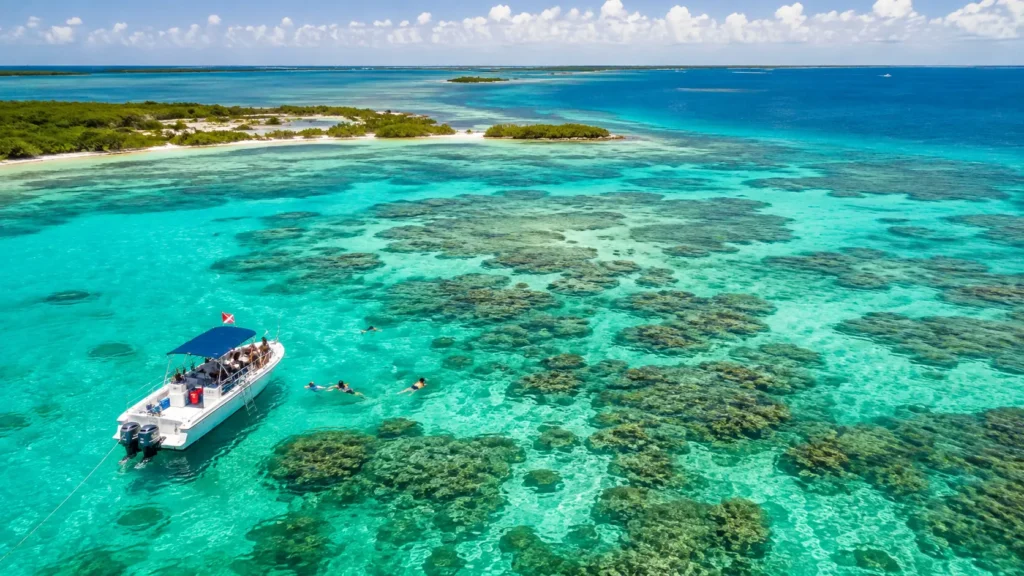
1. John Pennekamp Coral Reef State Park, Key Largo
John Pennekamp was the first underwater park in the country, and it’s still the easiest way to see a living reef system without a long boat ride. The park runs both glass-bottom boat tours and dedicated snorkel trips out to reefs like Molasses Reef and Grecian Rocks, both shallow enough for beginners but still dense with brain coral, sea fans, and reef fish. Visibility typically runs fifteen to thirty feet, lower than Hawaii but consistent enough to plan around.
2. Biscayne National Park
Biscayne is almost entirely underwater, and the snorkeling here gets overlooked because it requires a boat and doesn’t have Pennekamp’s name recognition. What it offers instead is quieter reefs and a mix of mangrove shoreline and open reef in a single trip. Rangers run scheduled snorkel excursions, which is the simplest way in if you don’t have your own boat.
3. Looe Key Reef
Further down the Keys near Big Pine Key, Looe Key is less crowded than the Key Largo sites and has some of the best remaining elkhorn and staghorn coral in the region. It sits about five miles offshore, so it’s boat-access only, but operators running out of Big Pine Key and Ramrod Key keep the trip short.
Best Places to Snorkel in the US Virgin Islands
Technically US territory, the Virgin Islands combine Caribbean-clear water with the convenience of not needing a passport for US citizens. St. John in particular has more protected coastline than almost anywhere else in the Caribbean, since most of the island is national park land.
1. Trunk Bay, St. John
Trunk Bay is famous for its underwater snorkeling trail, a marked path with placards identifying coral and fish species as you swim. The bay itself is calm and shallow near shore, which makes it one of the more forgiving spots on this list for someone snorkeling for the first time. It gets busy when cruise ships are in port, so an early morning visit is worth the effort.
2. Buck Island Reef, St. Croix
Buck Island is a national monument reachable by boat from St. Croix, and it has a marked underwater trail similar to Trunk Bay but with noticeably fewer people. The barrier reef around the island holds elkhorn coral formations and a steady population of reef fish, and the water clarity here tends to be some of the best in the territory.
Best Places to Snorkel Along the West Coast
West Coast snorkeling is a different experience entirely. The water is colder, the marine life leans toward kelp forest species rather than coral reef fish, and a wetsuit is not optional gear; it’s required equipment.
1. Channel Islands National Park, California
The Channel Islands, off the coast near Santa Barbara and Ventura, hold some of the healthiest kelp forests left in California. Snorkeling through a kelp canopy is a completely different sensation from reef snorkeling, with garibaldi fish, sea lions, and occasional leopard sharks moving through the towering kelp stalks. Water temperatures run from the low 50s to low 60s Fahrenheit depending on season, so a 5mm or thicker wetsuit is necessary even in summer.
2. La Jolla Cove, San Diego
La Jolla Cove is the rare West Coast spot that works for beginners without a boat trip. The cove is protected from most swell, and the marine reserve status means sea lions, leopard sharks in the summer months, and garibaldi are common sights within a short swim of the beach. Water temperature still calls for a wetsuit most of the year, but it’s noticeably milder than Northern California.
When to Go: Seasonal Timing for Each Region
Hawaii and the Florida Keys are both snorkelable year-round, but each has a preferred window. Hawaii’s calmest water and best visibility usually run from April through October, before winter swell picks up on north-facing shores. Florida’s best visibility tends to fall between May and September, though hurricane season overlaps that window, so checking the forecast a few days out matters more than picking a specific month.
The Virgin Islands follow a similar pattern to Florida, with the driest and calmest stretch running from December through June. The West Coast is really a summer and early fall activity for anyone without serious cold-water experience, since water temperatures peak between August and October.
What to Pack and How to Prepare
A well-fitted mask matters more than an expensive one. Press the mask to your face without the strap and inhale gently through your nose; if it stays sealed without help from the strap, it fits. A leaking mask will ruin a good reef day faster than any equipment upgrade will fix it.
Reef-safe sunscreen is not optional at any of the reef sites on this list. Hawaii and several Florida Keys sites have banned oxybenzone and octinoxate sunscreens because they damage coral, and enforcement has picked up in recent years. Mineral sunscreens with zinc oxide or titanium dioxide are the reliable choice.
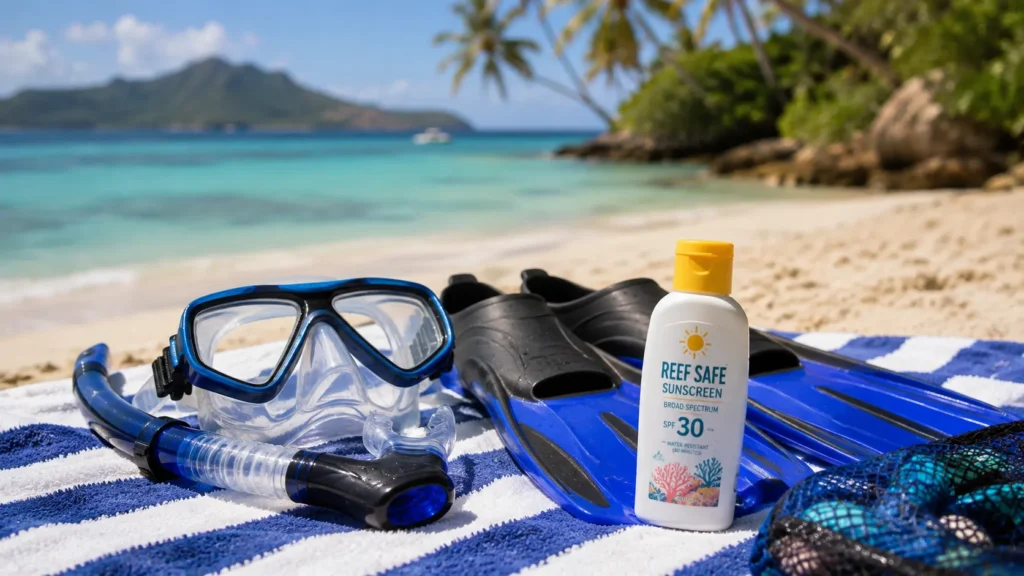
For warm-water destinations, a rash guard does double duty, protecting your back from sunburn while floating and reducing the amount of sunscreen you need on exposed skin. For West Coast trips, a wetsuit is not a comfort item; it’s the difference between a twenty-minute swim and a two-hour one.
Snorkeling Safety Tips Worth Knowing
Most snorkeling injuries come from two things: sunburn and fighting a current instead of swimming across it. If you feel yourself being pulled away from shore, swim parallel to the beach rather than straight back in, since most currents narrow and weaken outside a defined channel.
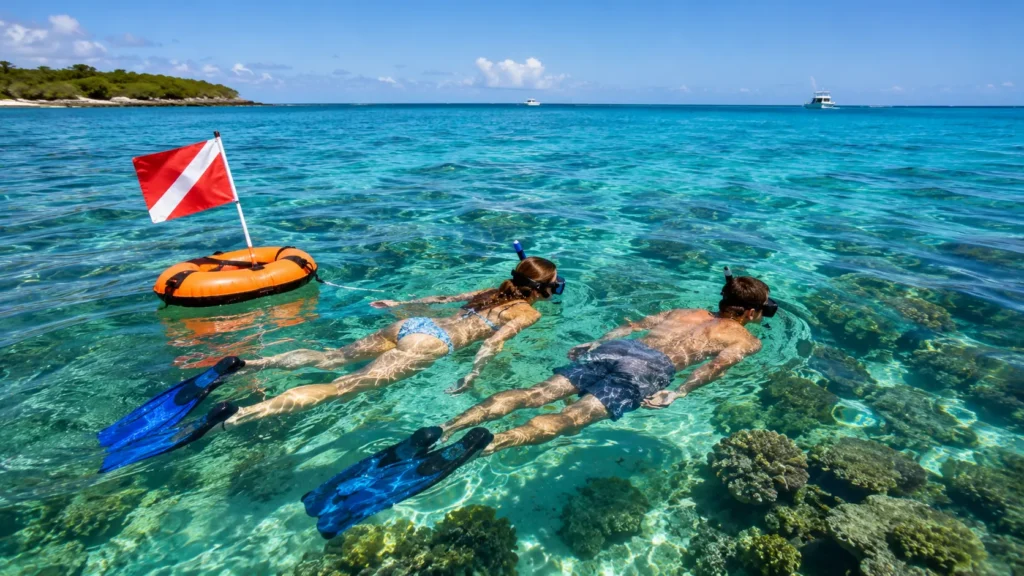
Never snorkel alone at an unfamiliar site, even an easy-looking one. Conditions that look calm from the beach can change once you’re past the first sandbar, and having a buddy nearby is the single biggest factor in staying safe if something goes wrong. Boat traffic is a real hazard at popular sites like Key Largo and La Jolla, so a bright dive flag or a rented float with a flag attached keeps you visible.
Finally, know your own limits with distance. It’s common to underestimate how tired a swim back against light current will feel after twenty minutes of looking down at a reef instead of watching your position. Turning back with energy to spare beats needing to be rescued.