
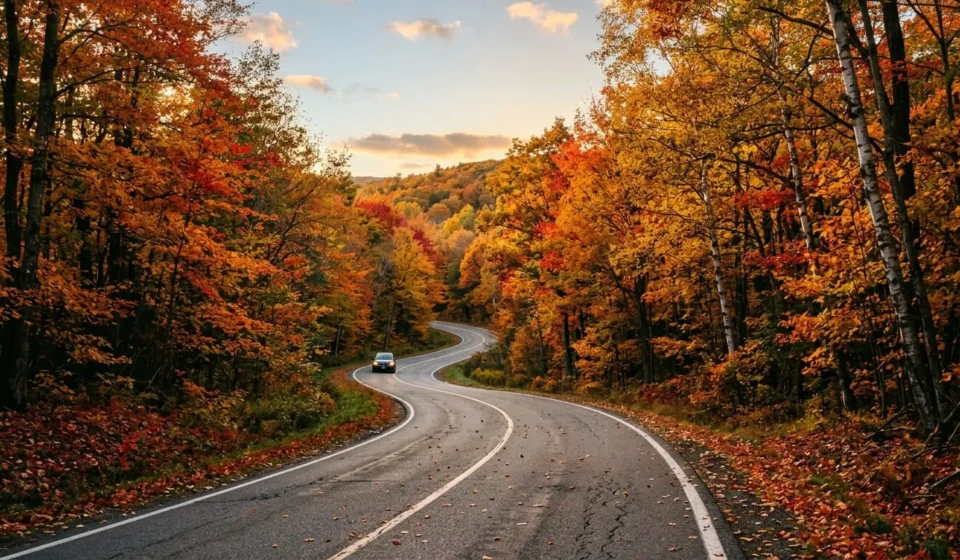
Fall foliage peaks in different regions between late September and early November, and the best places to see fall foliage span New England’s maple forests, the southern Appalachians, the Upper Midwest’s lakeshores, the aspen groves of the Rocky Mountains, and the river gorges of the Pacific Northwest. Where you should go depends on how far you want to travel, how many other travelers you want to share the view with, and which two to three weeks of the season you can actually get away.
Some of these regions are built around iconic scenic drives, while others reward a slower pace with small towns, orchards, and hiking trails woven between the color. The list below moves roughly from east to west, with practical notes on when each region tends to peak and how to time a visit around it. New England states lead fall foliage tourism, ranking high among the best states to visit in the USA. Upstate foliage trips combine well with an urban break using a 3-day New York itinerary.
What Makes Fall Foliage So Vivid
Leaves get their green color from chlorophyll, which breaks down as daylight shortens and temperatures drop in early autumn. Once chlorophyll fades, the yellow and orange pigments that were there all along become visible, while some trees, especially maples, also produce red pigments in response to bright, cool days and crisp nights.
That combination of temperature and daylight is why foliage timing shifts by hundreds of miles each week. Color moves from north to south, and from high elevation to low elevation, so the same species of tree can peak in mid-September in northern Vermont and not turn until late October in the Blue Ridge Mountains.
New England: The Classic Fall Foliage Destination
New England earns its reputation from sheer density of color, since sugar maples, birches, and oaks blanket entire mountain ranges instead of appearing in scattered patches. Vermont’s Green Mountains, New Hampshire’s White Mountains, and Maine’s coastal forests all peak within a few weeks of each other in early to mid-October.
The Kancamagus Highway in New Hampshire is one of the most direct routes through the color, a 34-mile stretch through the White Mountain National Forest with pull-offs at nearly every overlook. Stowe and Woodstock in Vermont pair mountain views with covered bridges and small-town centers, while Acadia National Park in Maine adds rocky coastline to the mix, with foliage framing granite cliffs and the Atlantic in the same photo.
Blue Ridge Parkway and the Great Smoky Mountains
The southern Appalachians offer a longer foliage season than New England, since elevation changes across the Blue Ridge Parkway stretch peak color out over several weeks instead of two or three. The parkway runs 469 miles through Virginia and North Carolina, with Shenandoah National Park anchoring the northern end and the Great Smoky Mountains near Asheville anchoring the south.
Newfound Gap Road through the Smokies climbs more than 5,000 feet, so a single drive can pass through summer-green valleys and full peak color near the ridge line on the same afternoon. This region also tends to draw fewer visitors than New England during the same window, which makes it a solid option if crowds are a bigger concern than driving distance.
The Upper Midwest’s Underrated Fall Color
Michigan’s Upper Peninsula, Wisconsin’s Door County, and Minnesota’s North Shore of Lake Superior get a fraction of the attention New England receives, despite forests of sugar maple, aspen, and birch that turn just as bright. Highway 58 through Pictured Rocks National Lakeshore pairs 200-foot sandstone cliffs with fall color reflected in Lake Superior, typically peaking in late September to early October.
Door County’s rural roads and orchard towns offer a quieter, slower version of leaf peeping, with cherry and apple orchards adding a working-farm feel to the scenery. Because these areas sit farther from major East Coast population centers, overlooks and small towns stay noticeably less crowded even during peak weekends
New York’s Adirondacks and Hudson Valley
The Adirondacks cover six million acres of mountains, lakes, and forest, and the region turns nearly as vivid as anything in New England while drawing a smaller share of foliage tourists. Whiteface Mountain and the High Peaks region offer wide, elevated views over multiple lakes at once, with peak color typically landing in the last week of September and first week of October.
South of the mountains, the Hudson Valley stretches the season into mid-October and adds orchards, vineyards, and historic river towns to the mix. A drive along the river with stops for apple picking or a stroll through a small town like Cold Spring or Rhinebeck pairs foliage with an easy day trip distance from New York City, without needing a multi-day mountain itinerary.
Aspen Gold in the Rocky Mountains
Aspens do not turn the deep reds common in eastern hardwoods, but their bright, almost fluorescent gold covers entire mountainsides across Colorado and Utah, usually peaking from late September through early October depending on elevation. Groves near Maroon Bells and Kebler Pass in Colorado are among the most photographed in the country, with white aspen trunks standing out against the gold canopy.
Utah’s Alpine Loop Scenic Byway climbs through aspen stands before dropping into canyons lined with oak and cottonwood, which turn later in the season and stretch the color window into late October. Because western foliage depends heavily on elevation, driving from a mountain pass down into a lower canyon can put you in peak color twice in the same day.
The Pacific Northwest’s Fall Colors
The Columbia River Gorge, straddling the border between Oregon and Washington, combines waterfalls with bigleaf maple and vine maple that turn gold and orange from mid to late October. Trails near Multnomah Falls and Eagle Creek get busy, but quieter viewpoints along the gorge’s back roads offer the same color with a fraction of the foot traffic.
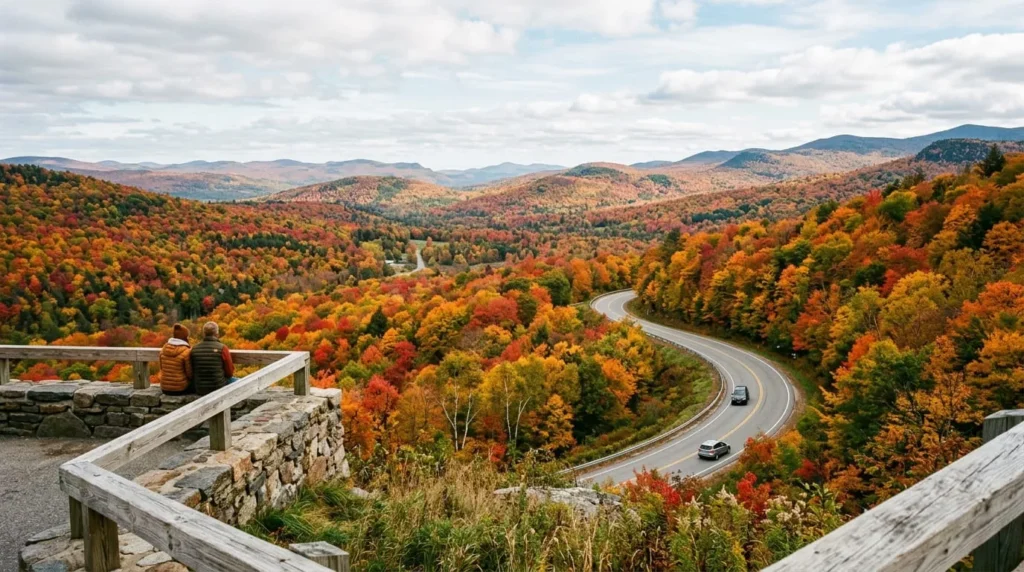
Farther north, the North Cascades add larch trees to the mix, a rare conifer that turns bright gold and drops its needles each fall instead of staying evergreen. Larch season is short, typically just one to two weeks in October, which makes timing more important here than almost anywhere else on this list.
How to Avoid the Crowds While Still Catching Peak Color
The most photographed overlooks in New England and the Smokies fill up fast on weekends during peak weeks, but the color itself is rarely limited to those specific spots. Choosing a less famous route through the same region, such as back roads in Vermont’s Northeast Kingdom instead of the main tourist corridors, often delivers comparable views with far less traffic.
Visiting on a weekday instead of a weekend cuts crowds significantly, and arriving at popular overlooks within an hour of sunrise avoids both the midday crowds and the flat light that washes out color in photos. Shoulder weekends, just before or just after the widely publicized peak, still show strong color in most regions while thinning out the crowds considerably.
State and county tourism sites often list secondary overlooks near the famous ones, and these tend to see a fraction of the visitors while offering a nearly identical view. Pairing a well-known route with one or two of these quieter stops is usually enough to avoid the worst of the traffic without giving up the scenery you came for.
How to Time Your Trip for Peak Color
Peak color is a two- to three-week window in any given location, and it shifts predictably by latitude and elevation. The table below gives a general sense of when each region tends to peak, though exact timing varies by a week or two depending on that year’s weather.
| Region | Typical Peak Window |
| Northern New England | Late September to early October |
| Southern New England | Early to mid October |
| New York (Adirondacks and Hudson Valley) | Late September to mid-October |
| Blue Ridge and Smoky Mountains | Mid to late October |
| Upper Midwest | Late September to early October |
| Rocky Mountains (aspens) | Late September to early October |
| Pacific Northwest | Mid to late October |
Most states with major foliage tourism, including Vermont, New Hampshire, and North Carolina, publish weekly or daily foliage reports during the season through their tourism departments. Checking one of these reports a few days before you travel is more reliable than relying on the general date ranges above, since a warm September or an early frost can shift the timeline in either direction.

Elevation matters as much as latitude within a single region. A mountain town at 2,000 feet can be a full week or two behind a ridge line at 5,000 feet in the same state, which is why routes that climb through multiple elevations, like the Blue Ridge Parkway or Utah’s Alpine Loop, often stretch their color window longer than flatter routes nearby.
Tracking Foliage Before You Go
A short list of reliable habits makes the difference between catching peak color and arriving a week too early or too late. Check a regional foliage tracking map the week before you leave, build in flexibility to shift your route by a day or two, and have a backup lower-elevation stop in mind in case the higher elevations have already dropped their leaves.

Booking lodging early matters more than the drive itself, since small towns near popular routes sell out months ahead of peak weekends. With a flexible date range and a willingness to explore roads beyond the most famous overlooks, nearly any of these regions can deliver the kind of fall color that makes the whole trip worth planning around.