Savannah rewards visitors who slow down and let the city set the pace. Spanish moss drips from live oaks, cobblestone streets wind past centuries-old mansions, and each of the historic squares invites you to sit for a while. Figuring out the best things to do in Savannah, GA is less about working through a checklist and more about deciding how you want to spend your limited hours here.
This guide covers the attractions worth prioritizing, the ones you can skip if time is tight, and the practical details most Savannah guides leave out, including which cemetery actually earns the trip outside downtown and when the city gets uncomfortably hot. Whether you have a single afternoon or a full weekend, here is how to plan things to do in Savannah that fit your pace.
Walk the Historic District’s Squares
The fastest way to feel Savannah’s character is on foot, moving between its squares. The city was laid out around 24 public squares in 1733, and 22 survive today, each shaded by oaks and anchored by a fountain or monument. Walking all 22 in one visit is possible, but it eats an entire day, and by the eighth or ninth they start to blend together.
If your time is limited, prioritize three. Chippewa Square sits at the center of the district and offers the classic view of wrought iron balconies and moss-draped branches. Monterey Square holds the Mercer-Williams House, made famous by the book and film Midnight in the Garden of Good and Evil. Johnson Square is the oldest and largest, ringed by City Hall and several churches, and it usually has the most foot traffic.
Treat the squares as a walking route rather than a single destination. String three or four together on your way to River Street or dinner, and you will cover the highlights without setting aside a separate block of time for them.
Spend an Hour in Forsyth Park
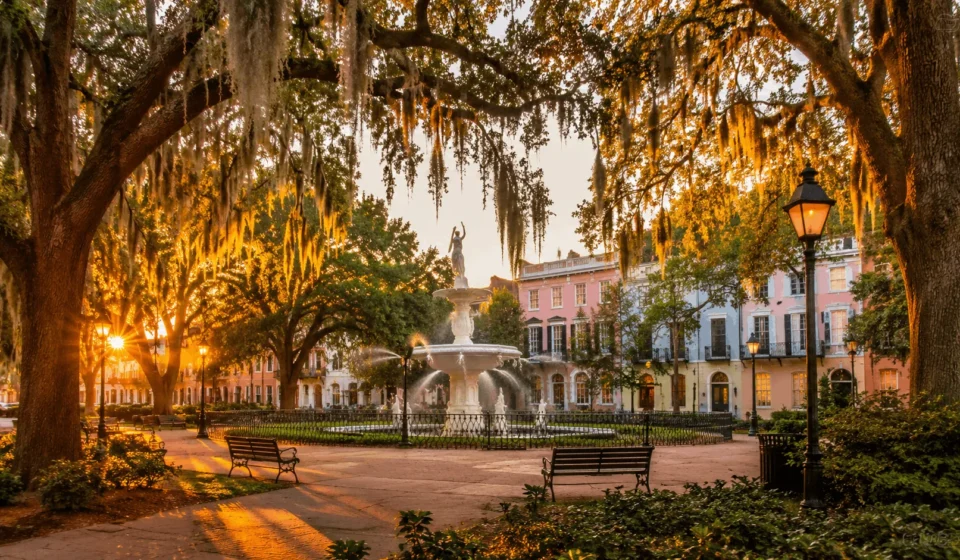
Forsyth Park anchors the southern end of the Historic District and rewards a slower visit than the squares. The 30-acre park has running paths, a dog park, tennis courts, and the Forsyth Fountain, one of the most photographed landmarks in Savannah.
Go in the late morning or around sunset. Midday sun in the warmer months makes the open lawn uncomfortable, and the park thins out once the heat sets in. If you visit in winter, note that the fountain is sometimes switched off to prevent the pipes from freezing, so do not plan a trip solely around that photo between December and February.
Tour One of Savannah’s House Museums
Savannah has several preserved house museums, and visiting all of them in one trip is rarely worth it. Pick one based on what actually interests you.
1: Owens-Thomas House and Slave Quarters
This tour gives the most complete picture of the city’s history. It starts in the slave quarters before moving into the main house. It presents the wealthy family’s life alongside the lives of the enslaved people who worked for them, without softening the contrast.
2: Mercer-Williams House
This house draws fans of Midnight in the Garden of Good and Evil, but the guided tour focuses on architecture and furnishings rather than the 1981 shooting that made the house famous. Go in with that expectation so you are not disappointed.
3: Juliette Gordon Low Birthplace
This stop suits families and anyone with a personal connection to Girl Scouts, since it covers her childhood and the founding of the organization.
If you only have one afternoon in Savannah, skip the house museums entirely and spend that time on the squares and River Street instead. The homes reward a second or third visit more than a first one.
Explore River Street and the Waterfront
River Street runs along the Savannah River at the base of the Historic District, connected to the bluff above by steep cobblestone ramps and stone stairways. The buildings here were once cotton warehouses, and most are now shops, restaurants, and candy stores.
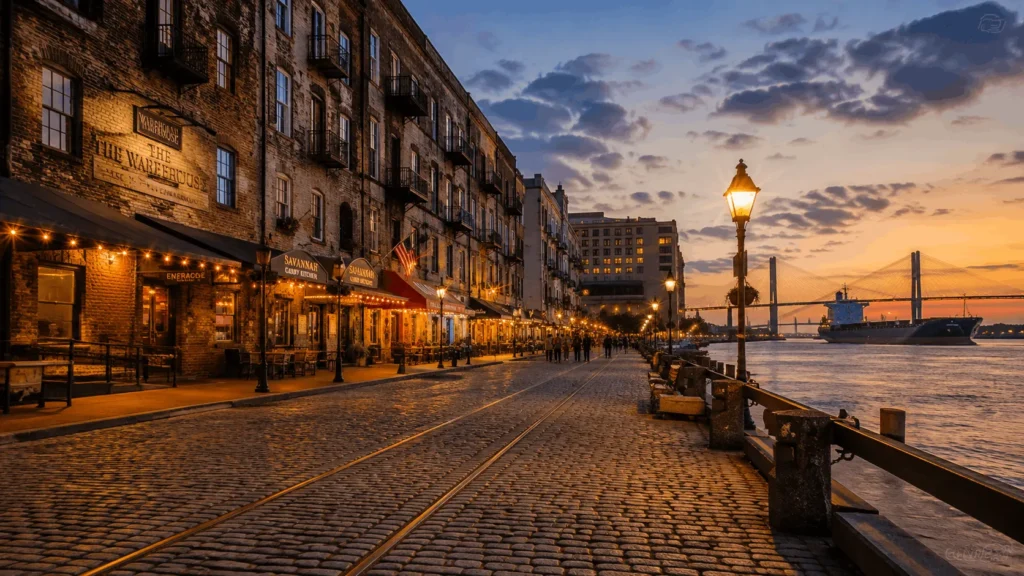
The street gets crowded and loud at night, especially on weekends, which some visitors enjoy and others find overwhelming. If you want the waterfront without the crowds, walk it in the early morning instead, when the shops are still closed but the light on the water is better for photos anyway. Watch for cargo ships, too. Savannah’s port is one of the busiest in the country, and it is common to see a container ship pass close enough to read its name.
Get on the Water With a Riverboat Cruise
A riverboat cruise is an easy way to see the city from a different angle, and it works well if you are traveling with kids or anyone who needs a break from walking. The standard sightseeing cruise runs about 90 minutes and covers the harbor and working port.
Sunset cruises book up fastest in spring, so reserve a few days ahead if that time slot matters to you. Skip the dinner cruise unless the view matters more than the food, which tends to be an afterthought on these boats.
Walk Through Bonaventure Cemetery
Bonaventure Cemetery sits about three miles outside the Historic District on a bluff above the Wilmington River. It is the one major attraction on this list you cannot walk to, so budget for a short drive or rideshare.
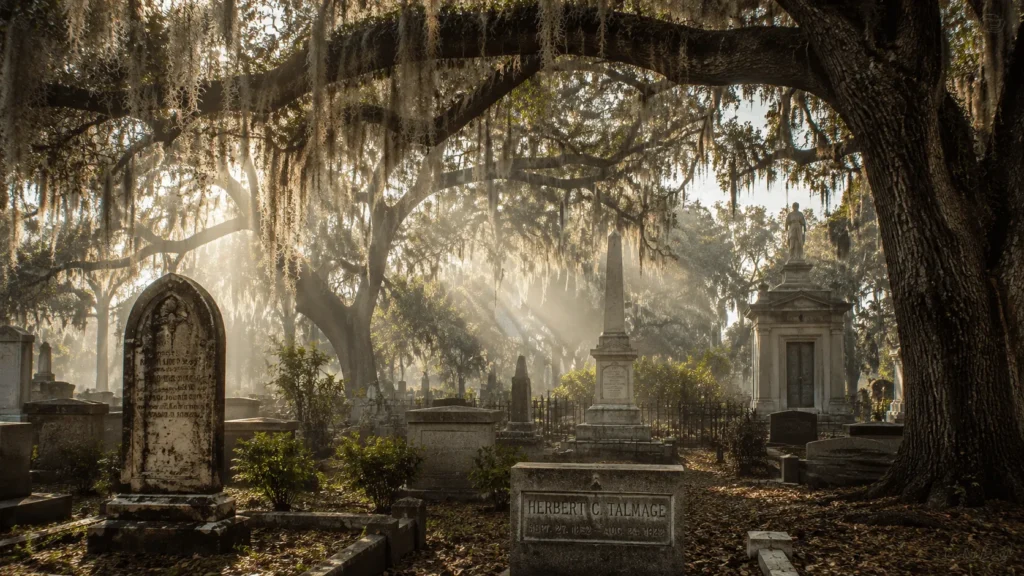
The cemetery spreads across roughly 160 acres of moss-draped oaks and 19th century monuments, and it is where the songwriter Johnny Mercer is buried. Most visitors come looking for the grave of Little Gracie, a child who died young and whose statue has become one of the most visited sites in the cemetery.
Colonial Park Cemetery, by contrast, sits right in the Historic District and takes ten minutes to see. If you are short on time or cannot arrange transportation, it gives you a taste of Savannah’s cemetery culture without the trip out to Bonaventure.
Take a Ghost Tour, One of the Most Popular Things to Do in Savannah, GA at Night
Savannah markets itself as one of the most haunted cities in the country, and a ghost tour after dark is one of the most popular things to do in Savannah, GA, regardless of whether you believe in ghosts. The real appeal is the storytelling and the chance to see the squares lit up at night.
Walking tours cover more ground and let you ask questions, while trolley tours suit anyone who does not want to be on their feet after a full day of sightseeing. Pub-crawl style ghost tours exist for an adults-only crowd and pair drinks with the stories. Pick the format based on your energy that evening, since the content overlaps across most operators anyway.
Eat Like a Local
Savannah’s food scene is built around Lowcountry cooking, and a few dishes are worth seeking out specifically: shrimp and grits, she-crab soup, and fried green tomatoes all show up on menus across the city.
Mrs. Wilkes Dining Room is the most famous stop for Southern comfort food, served family style at communal tables. The line forms well before the doors open, and reservations are not accepted, so arrive early or plan to wait.
If a long line is not for you, the Historic District has plenty of alternatives serving similar comfort food, and the quality difference is smaller than the hype suggests. Save a splurge meal for one of the upscale spots along Broughton Street, and treat everything else as a casual stop between attractions rather than an event to plan your day around.
Take a Day Trip to Tybee Island
Tybee Island sits about 20 minutes from downtown Savannah and is worth a half day if the weather cooperates. The beach is wide and easy, the historic lighthouse is open for climbing, and the town has a handful of casual seafood restaurants near the pier.
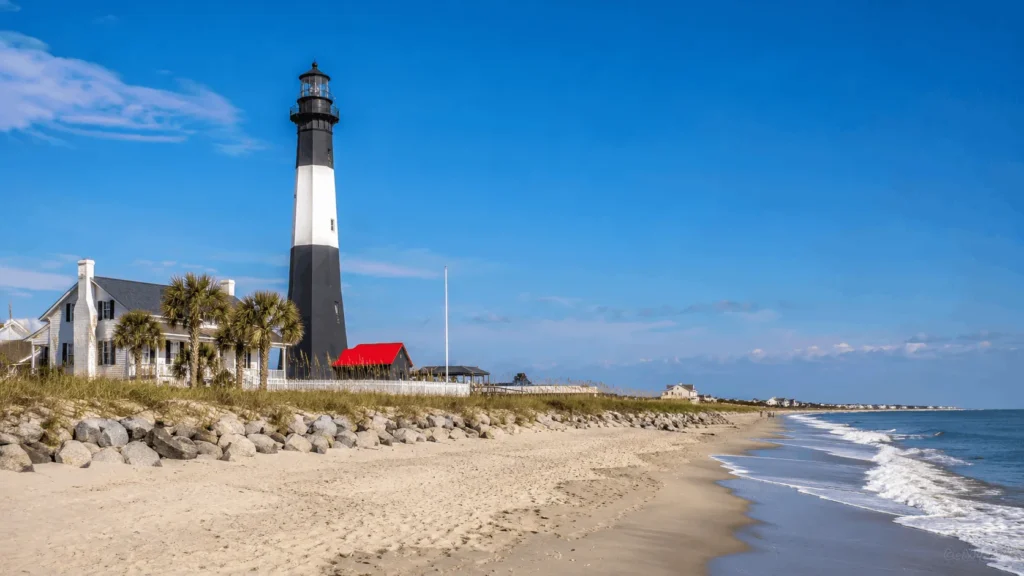
Treat Tybee as an add-on rather than a must-do. If you only have one full day in Savannah, spend it in the Historic District instead and save Tybee for a second day or a return trip. The island gets crowded in summer, and parking near the beach fills up by mid-morning on weekends, so arrive early if you decide to go.
Best Time of Year to Visit Savannah
Spring, from March through May, is Savannah’s busiest and prettiest season, with mild weather and the city’s gardens in bloom. March 17 draws enormous crowds for the St. Patrick’s Day parade, one of the largest in the country, so book accommodations well ahead if your trip lands anywhere near that date.
Summer brings heat and humidity that make walking tours genuinely uncomfortable by early afternoon, especially in July and August. If you visit then, plan outdoor activities for the morning and save museums or restaurants for the hottest part of the day.
Fall is a quieter alternative to spring with similarly comfortable weather. Winter is the slowest season and the cheapest for hotels, and while it can be chilly, the city rarely sees anything close to snow.
How Much Time You Need and How to Get Around
The Historic District is compact enough to see in two to three days, which is enough time to walk the squares, visit one house museum, spend an evening on River Street, and fit in either Bonaventure Cemetery or Tybee Island. A single day is workable if you focus on the squares, Forsyth Park, and River Street, and skip the rest.
The Historic District itself is walkable, and a car becomes useful only if you plan to visit Bonaventure Cemetery, Tybee Island, or sites further out. If you are flying in, Savannah/Hilton Head International Airport sits about 12 miles from downtown, and a rideshare into the Historic District takes roughly 20 minutes depending on traffic. That combination of walking and short drives covers nearly every worthwhile thing to do in Savannah, GA without wasting a day on logistics.