

A flight tracker shows you a plane’s real-time position, speed, altitude, and estimated arrival time by pulling data from ADS-B transponders that most commercial aircraft broadcast every few seconds. You type in a flight number, tail number, or route, and within seconds you get a live map of the aircraft along with its status.
Whether you are picking someone up at the airport, watching your own connecting flight for a delay, or just curious about the plane flying overhead, the process is nearly identical across every major flight tracker. This guide walks through exactly how to find a flight, read the data on the screen, and set up alerts so you are not refreshing the page every ten minutes.
Choosing a Flight Tracker
Before tracking anything, it helps to know what you are working with. Flightradar24 and FlightAware are the two most widely used platforms, and both offer solid free tiers. Flightradar24’s free plan gives you the live map, aircraft type, and real-time position with no time limit, though vertical speed, squawk codes, and more than seven days of history sit behind its paid Silver and Gold tiers. FlightAware’s free plan covers real-time tracking, basic delay information, and airport status, and its website works without creating an account at all.
Newer traveler-focused apps like Flighty and FlightElite lean less on the plane-spotter map and more on trip management: gate change alerts, AI-written delay explanations, and Apple Watch complications. If you just want a quick status check, typing a flight number straight into Google also returns a basic status card with no app required.
Find the Right Flight Number or Route
Every flight tracker search starts the same way. You need one of the following:
The airline code and flight number, such as UA2457 or DL118. This is the most reliable search method because it points directly at one specific flight. The departure and arrival airport codes, such as JFK to LAX, if you do not know the flight number but want to see everything flying that route today. The aircraft’s tail registration number, useful mainly for plane spotters tracking a specific airframe rather than a specific trip.
Flight numbers are printed on boarding passes, confirmation emails, and airline apps. If someone texts you “landing at 4 pm, flight UA2457,” that code is all a tracker needs.
Enter the Flight Number in the Tracker
Open the app or website and type the flight number into the search bar. Most trackers autocomplete as you type and show a short list of matching flights, including ones scheduled for later dates. Pick the correct date if the airline reuses the same flight number daily, which most do.
Once selected, the tracker loads a live map centered on the aircraft’s current position, along with a status panel showing scheduled versus estimated departure and arrival times, the gate, terminal, and current flight phase (boarding, taxiing, in the air, or landed).
Read the Live Map and Status Data
The map itself carries more information than most people notice on first glance. The plane icon usually points in the direction of travel, and tapping or clicking it opens a detail panel with:
Altitude, typically shown in feet, which climbs during ascent and drops during descent. Ground speed, shown in knots or miles per hour depending on your settings. Aircraft type, such as Boeing 737-800 or Airbus A321neo, along with the operating airline if it differs from the ticketed one. A progress bar or route line showing how far along the flight is between departure and arrival airports.
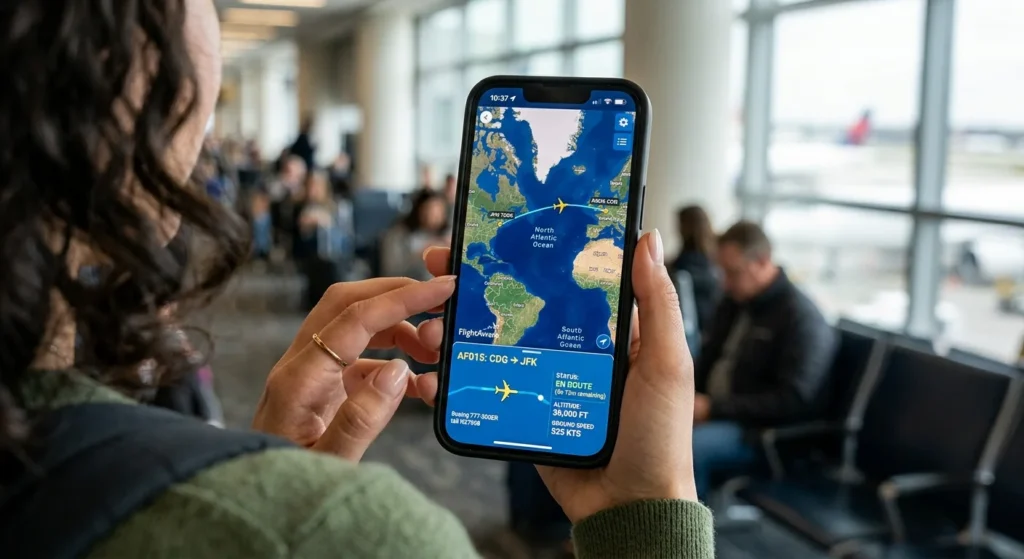
If the flight has not taken off yet, the tracker instead shows the scheduled gate, runway, and any known delay reason pulled from airline data feeds. Weather radar overlays, available on FlightAware’s premium plans and as a general layer on Flightradar24, can also explain why a flight is circling or holding on the ground before an active storm cell clears the area.
Set Up Alerts and Notifications
This is the step most people skip, and it is the one that actually saves time. Instead of manually reopening the app to check on a delay, set an alert once and let the tracker notify you.
In FlightAware, search for the flight and tap the bell icon to enable alerts for gate changes, departure, and arrival. Flightradar24 offers similar alerting on its mobile app under the flight’s detail page. Traveler-focused apps like FlightElite go further by explaining the alert in plain language, noting, for example, that a gate change happened because of a tight turnaround on the inbound aircraft, rather than just sending a bare notification.
If you are tracking someone else’s flight to plan a pickup, set the alert well before landing time. Most trackers push a notification the moment the aircraft touches down, and a second one when it reaches the gate, which is a more useful cue for timing your arrival at curbside pickup than the scheduled landing time alone.
Track Someone Else’s Flight Without an Account
You do not need the traveler’s ticket or airline login to track their flight. All you need is the flight number, which most people are happy to text over. Enter it into FlightAware’s website or Flightradar24’s app the same way you would for your own trip. Both platforms show the same live data regardless of who is flying.

For a completely account-free option, searching the flight number directly on Google works for a quick check, though it will not send you push notifications the way a dedicated app does. If precision on international or oceanic routes matters, Flightradar24 tends to have the strongest global map coverage, since it draws on both ADS-B ground receivers and satellite data for aircraft flying outside radar range.
Common Flight Tracker Features Worth Knowing
A few features show up across most trackers and are worth understanding before you rely on them for anything time-sensitive.
Flight history lets you see a plane’s past routes over several days, useful for checking whether an inbound aircraft is running late from its previous leg. Free tiers usually cap this at a few days, while paid tiers extend it to a year or more. Augmented reality mode, available in Flightradar24 and a few spotting-focused apps, lets you hold your phone up to the sky and see labels over real aircraft passing overhead. Airport status pages show overall delays and ground stops at a specific airport, which is useful context when your own flight’s delay reason is not obvious. Multiple flight watchlists let you track a full itinerary, including connections, in one place instead of searching each leg separately.
None of these require payment to get meaningful use out of a flight tracker for everyday travel. Paid tiers mainly add convenience and depth, such as ad-free maps, longer history windows, and more detailed weather layers, rather than unlocking basic tracking itself.
Flight Tracker vs. the Airline’s Own App
Airline apps and flight trackers answer slightly different questions, and it helps to know when to use which. An airline app pulls from that airline’s internal operations system, so it is usually the fastest place to see an official gate assignment, a rebooked itinerary, or a boarding pass update. A flight tracker pulls from ADS-B position data and public flight schedules, so it is better for watching where the plane physically is right now, especially on the inbound leg before your own flight has even been assigned a gate.
In practice, the two work well together. If an airline app says a flight is delayed, a flight tracker can often show why, by revealing that the inbound aircraft left its previous airport late or is holding for weather. If a flight tracker shows a plane still on the ground at its origin with less than an hour before your connection, checking the airline app for a rebooking option before you are stuck at the gate can save real time.
Why a Flight Might Not Show Up
Occasionally a search turns up nothing, or a flight in progress simply vanishes from the map. A few common reasons explain most of these gaps.
Private and some military aircraft can request ADS-B blocking, which removes them from public trackers entirely for privacy or security reasons. This is legal and intentional, not a bug in the tracker. Coverage gaps still exist over remote ocean and polar routes where ground-based ADS-B receivers cannot pick up a signal, though satellite-based tracking on platforms like Flightradar24 has closed most of this gap for long-haul international routes. A flight that has not been assigned an aircraft yet, common many hours before departure, will not show live position data because there is nothing to track yet, only a scheduled entry. Regional or codeshare flights sometimes list under a different operating carrier’s flight number than the one printed on your ticket, so a search under the marketing airline’s code can come up empty until you search the operating airline’s code instead.
If a search comes back blank, try the airport-to-airport route search instead of the flight number, which usually surfaces the flight under whichever code the tracker actually indexed it by.
A Few Practical Tips
Double-check the date when a flight number search returns multiple results, since airlines reuse flight numbers daily and picking the wrong date shows stale or future data.
Use two trackers side by side for anything important, such as an international connection with a tight layover. Data feeds occasionally lag by a minute or two, and cross-checking Flightradar24 against FlightAware or the airline’s own app catches discrepancies before they matter.
Turn on notifications rather than manually refreshing. A gate change alert that arrives ten minutes before you would have noticed on your own is the entire point of using a tracker instead of just watching the departure board.
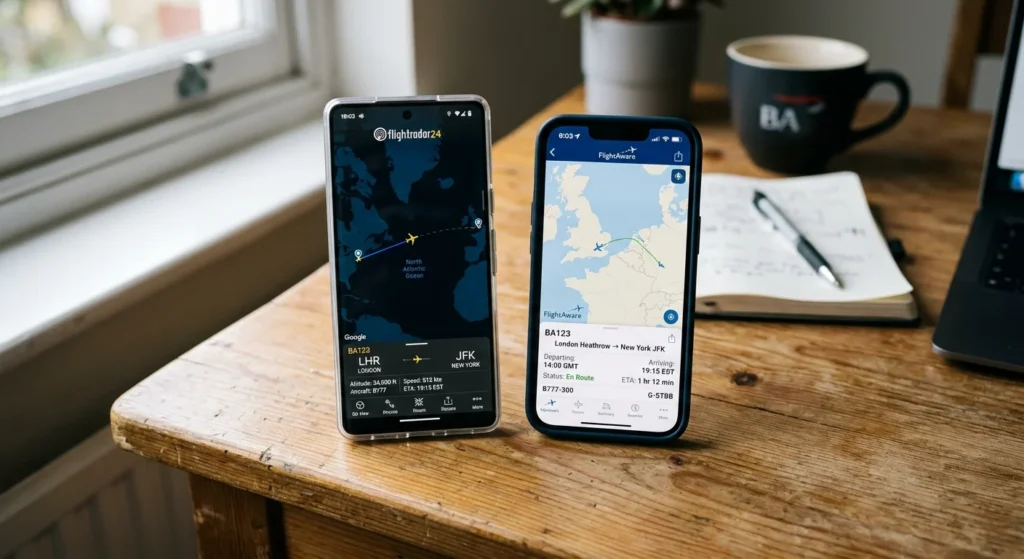
Bookmark the flight before it lands if you plan to check flight history later. Once a flight lands and enough time passes, some free tiers roll it out of the visible history window, so saving or screenshotting the details early avoids losing the record if you need it for an expense report or a delay compensation claim.