Cherry blossom season turns whole American cities pink and white for a few short weeks each spring, and the best places to see cherry blossoms in the USA range from world-famous festival grounds to quiet neighborhood parks most tourists never find. Washington DC gets the headlines, but it is far from your only option. Georgia has more cherry trees than DC does. New Jersey holds one of the largest single collections on the continent. Seattle, Portland, and San Francisco each offer a distinct West Coast take on the season.
This guide walks through the destinations that consistently deliver the best blooms, explains how bloom timing actually works so you can plan around it, and helps you pick the trip that matches what you want out of the season. Washington D.C. is not only one of the best cities to visit in the USA, but also the centerpiece of spring blooms. The blossom-viewing tradition itself, hanami, traces back to the best places to visit in Japan centuries ago, and several American cities carry that tradition with real pride.
How Cherry Blossom Timing Actually Works
Here is the detail most listicles skip: “cherry blossoms” are not one thing. Different varieties bloom in sequence, and that sequence is the closest thing to a planning system this season offers. Early-blooming varieties (like Okame and some ornamental types) can flower as early as late February or early March in warm cities. The famous Yoshino cherries, the pale pink-and-white trees around DC’s Tidal Basin, are the main event in most cities. Then come the Kwanzan cherries, with fuller, deeper pink double blossoms, roughly two weeks after the Yoshinos. That gap matters. In a city with both, like Washington DC, missing Yoshino peak does not mean missing the season. The Kwanzans at East Potomac Park give you a second window. Parks with many varieties, like Branch Brook Park in Newark, stretch their season even longer because something new keeps opening week after week. Peak bloom itself, when around 70 percent of blossoms are open, typically lasts only four to seven days. Trees usually pass through bud, first bloom, peak, then petal fall over about three to four weeks total. Timing shifts with winter temperatures and early spring warmth, so every date in this guide is a typical pattern, never a guarantee. Check each city’s official bloom tracker two to three weeks before your trip.
When Cherry Blossoms Bloom Across The USA
Typical bloom windows, based on widely published patterns. Exact timing shifts yearly with weather.
| City | Typical Bloom Window | Best For |
|---|---|---|
| Macon, Georgia | Mid to late March | Earliest major festival; warm weather |
| San Francisco, California | March to April | Culture-first festival; mild spring |
| Seattle, Washington | Mid to late March | West Coast trip without the DC crowds |
| Washington, DC | Late March to early April | First-timers; the iconic view |
| Portland, Oregon | Late March to early April | Riverfront walks; relaxed pace |
| Nashville, Tennessee | Late March to early April | Music city plus local festival |
| Newark, New Jersey | Early to mid-April | Fewest crowds; longest season |
| New York City, New York | Early to mid-April | City break with blossoms on the side |
| Philadelphia, Pennsylvania | Early to mid-April | Blossoms plus biking and hiking |
| Traverse City, Michigan | Late April to May | Late-season backup |
The 8 Best Places To See Cherry Blossoms In The USA
1. Washington DC: Tidal Basin And National Mall
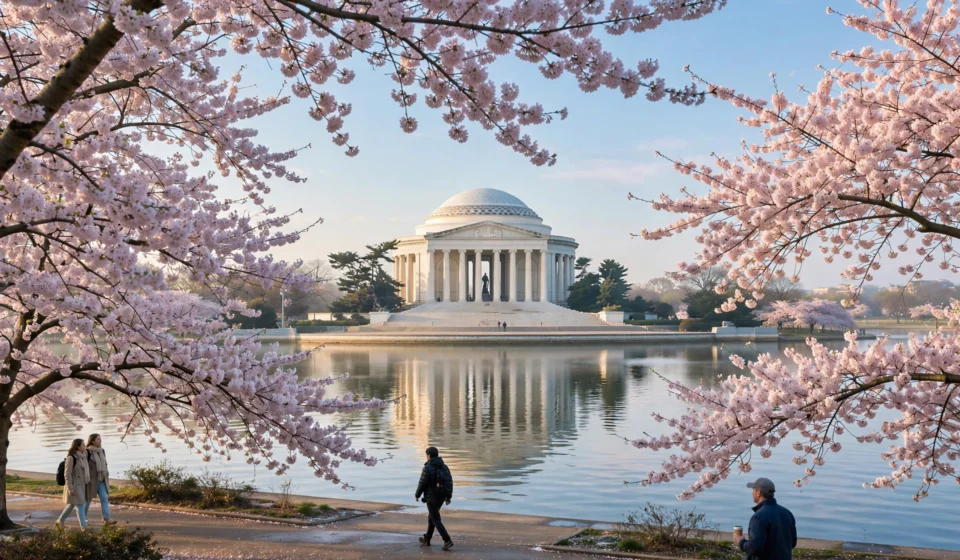
Washington DC remains the most recognized cherry blossom destination in the country. Around 3,700 cherry trees, most of them Yoshino, ring the Tidal Basin, framed by the Jefferson Memorial and the Washington Monument. The original trees were a gift from Japan in 1912, and that history still shapes the festival today. The National Cherry Blossom Festival typically runs for about four weeks from late March into April, with a parade, cultural performances, a kite festival, and evening events layered on top of the natural bloom. This is both the appeal and the drawback. Crowds around the Tidal Basin during peak bloom, especially on weekends, can be dense enough that walking the full loop takes over an hour. Go on a weekday morning before 8 am for the calmest version of the same view. For a quieter take, walk the East Potomac Park side of the peninsula, which holds a heavy concentration of Kwanzan cherries that bloom roughly two weeks after the Yoshinos around the main basin. Do not try to drive around the Tidal Basin during peak bloom. Parking is scarce, road closures happen, and Metro or rideshare will save you real time. Skip DC if you hate crowds and cannot visit on a weekday. You will spend more time navigating people than looking at trees.
2. Macon, Georgia: The Cherry Blossom Capital Of The World
Macon’s claim to the cherry blossom capital title has real weight behind it. The city counts an estimated 350,000 Yoshino cherry trees planted across its streets, parks, and private yards. The story goes that local resident William A. Fickling Sr. found a Yoshino tree in his own yard in the late 1940s, learned to propagate it, and helped spread the trees across the city over the following decades. The International Cherry Blossom Festival typically runs for about ten days in mid to late March, earlier than DC because of Georgia’s warmer climate. Expect concerts, a street party, a parade, nightly events, and trolley tours through the pinkest neighborhoods.
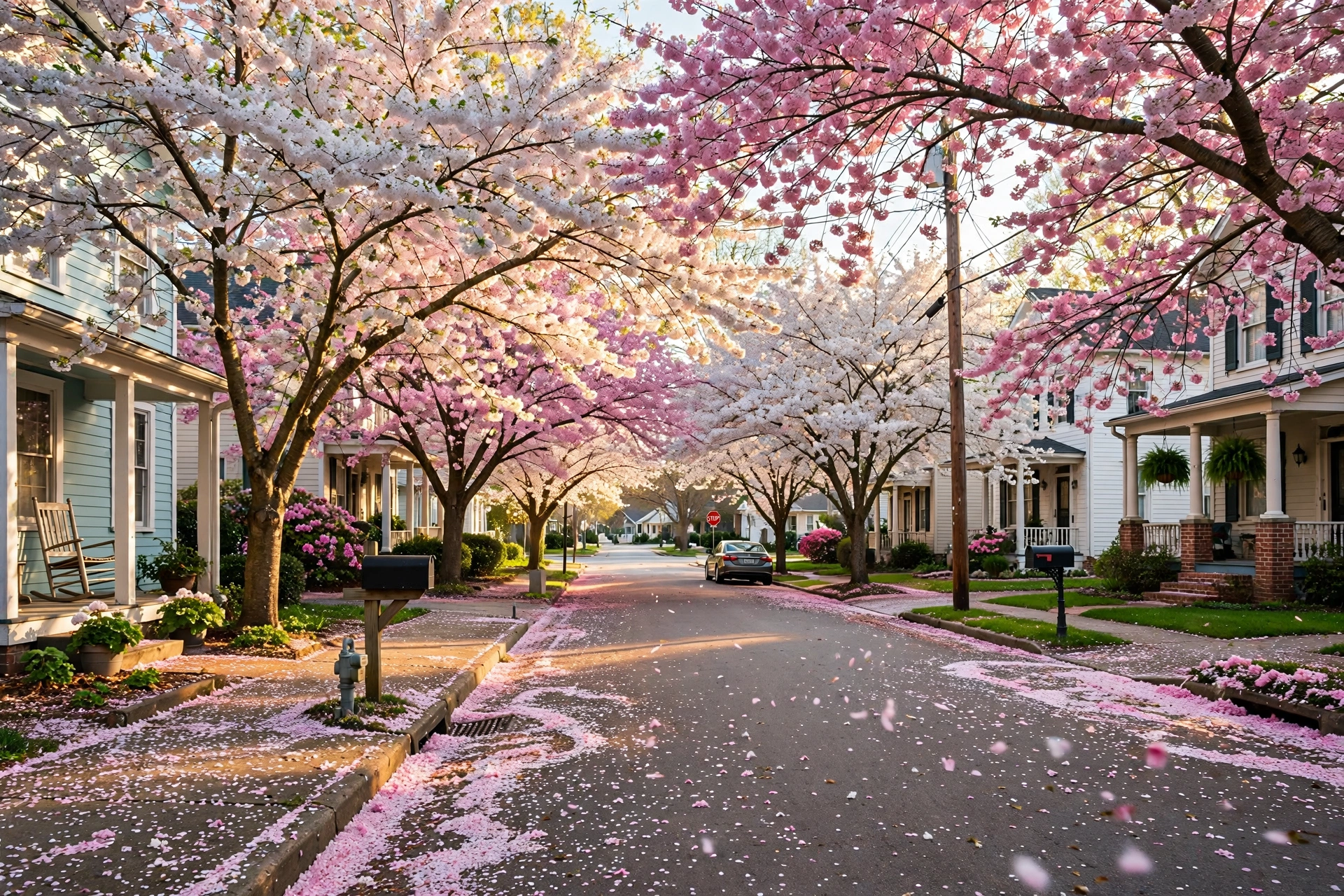
Because the trees are spread across the whole city rather than concentrated in one park, Macon has no single postcard spot like the Tidal Basin. What it has instead is a city that turns genuinely pink from nearly every angle, with far smaller crowds than the big East Coast festival cities. Macon is the pick if you want warm weather, a full festival atmosphere, and the highest tree count per trip anywhere in the country.
3. Branch Brook Park, Newark, New Jersey
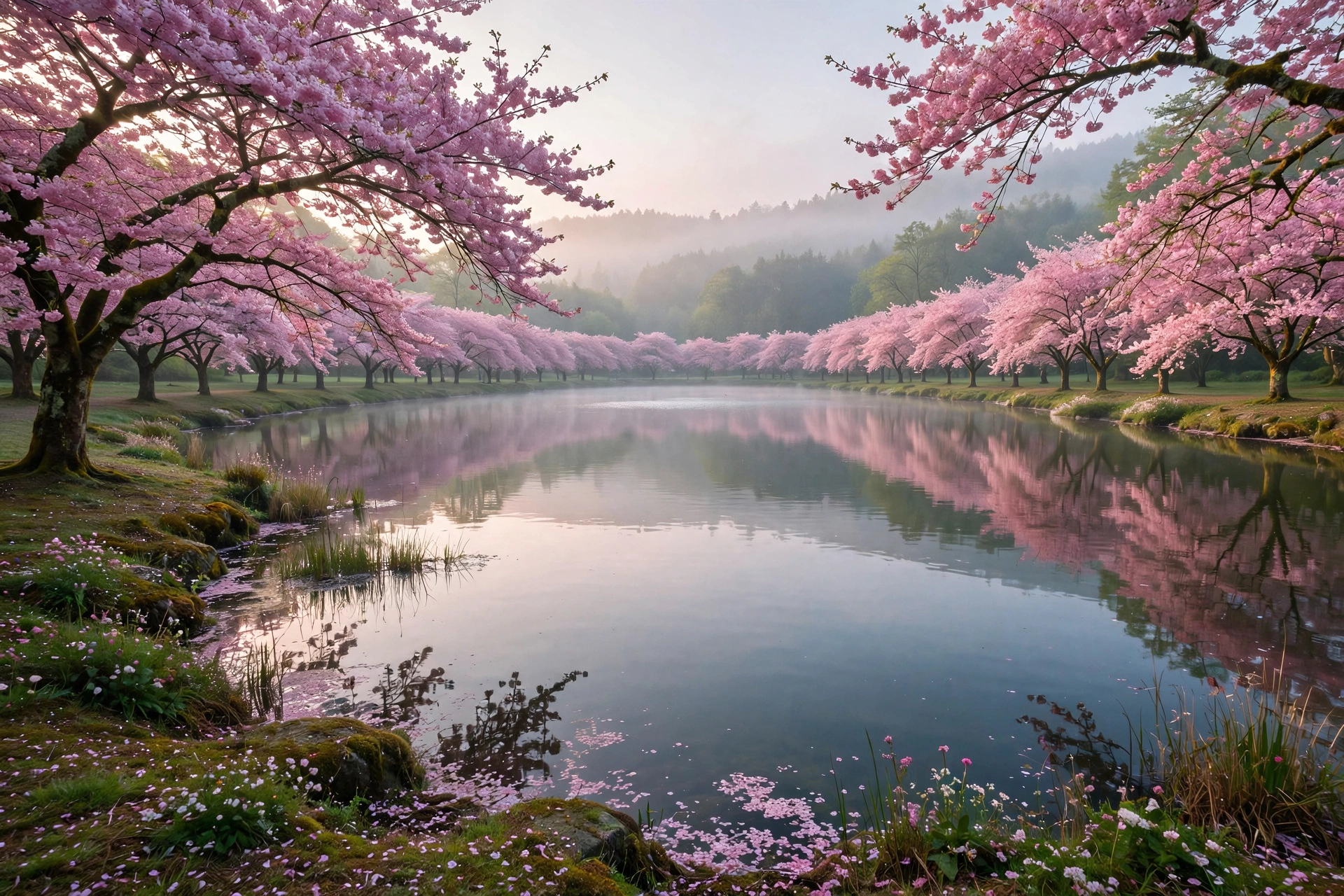
Branch Brook Park holds one of the largest collections of cherry blossom trees in the United States, with more than 5,000 trees across 18 or more varieties. That variety count is the park’s real advantage. Different varieties bloom in sequence from mid-March into early May, giving Branch Brook one of the longest effective cherry blossom seasons in the country. The park, designed by the Olmsted firm behind Central Park, hosts the Essex County Cherry Blossom Festival each April, with a 10K run, family day, bike tour, and Japanese cultural demonstrations. Because it is less internationally known than the Tidal Basin, the crowd is mostly regional, which keeps even a nice weekend noticeably calmer than DC. This is the strongest pick for photographers and for anyone whose dates are fixed. With 18 varieties, something is almost always in bloom. Morning visits give the softest light and the quietest paths. Check the park’s official bloom tracker before you go to aim at the densest week.
4. Philadelphia, Pennsylvania: Fairmount Park And The Subaru Cherry Blossom Festival
Philadelphia’s cherry trees, concentrated in Fairmount Park and along the Schuylkill River, were also a gift from Japan, given in 1926 to mark 150 years of American independence. The Subaru Cherry Blossom Festival of Greater Philadelphia runs events across several weeks in April, anchored by Sakura Sunday, a day of Japanese cultural performances, food, and family activities in the Horticulture Center area of the park.
The setting is what sets Philadelphia apart. The trees line riverbanks and wooded paths inside one of the largest urban park systems in the country, so a visit doubles as a hike or bike ride rather than a single stationary viewing spot. It suits travelers who want blossoms as part of a broader outdoor day. Go early in the day on Sakura Sunday itself if you want the full cultural program. Go on a regular weekday if you want the trees without the event crowds.
5. New York City, New York
New York works best as a blossom-plus-city trip. The blooms typically arrive in early to mid-April, and different parks peak at slightly different times, which means a missed window at one park can be recovered at another. Brooklyn Botanic Garden is the serious viewing pick, with its famous Cherry Esplanade and an annual Sakura Matsuri festival celebrating Japanese culture. Central Park offers easy-access blossoms around the Reservoir and Cherry Hill. Roosevelt Island and Riverside Park give quieter options with skyline or river backdrops. The garden can get very busy on peak weekends, so go right at opening or pick a weekday. Stay in Manhattan for a first NYC trip. Stay in Brooklyn if the garden is your main goal and you prefer the food scene there.
6. Seattle, Washington: The University Of Washington Quad
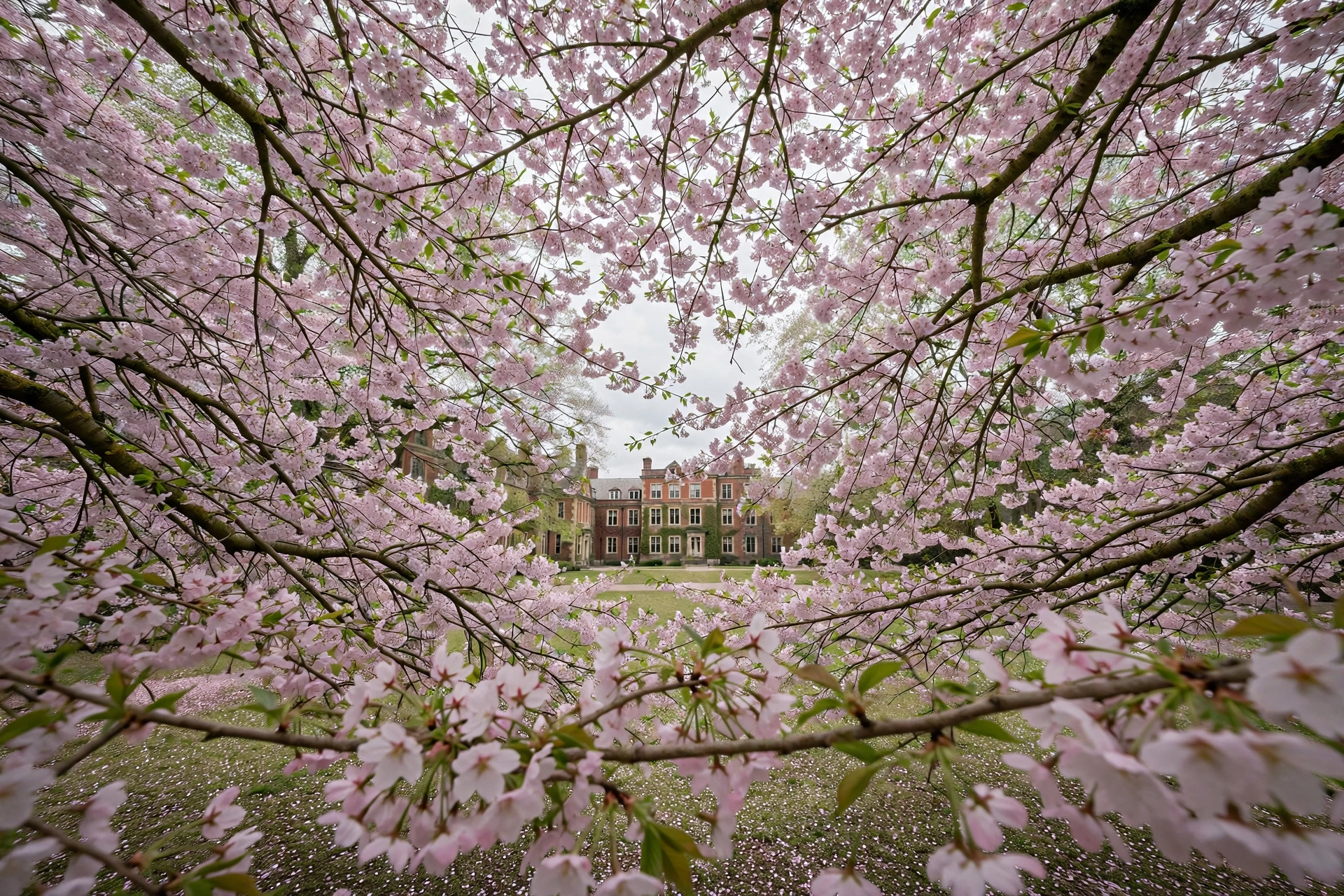
The University of Washington’s Quad holds a tight cluster of about 30 Yoshino cherry trees planted in the 1930s, and despite the modest count, it has become one of the most photographed cherry blossom spots on the West Coast. The trees form a dense canopy over the central lawn. Because they are packed so close together, you get a fully immersive view without much walking. It is also on an active university campus, which means peak-bloom weekends around midday get extremely crowded. Weekday mornings, or a weekend visit before 9 am, give you room to actually stand under the canopy instead of shuffling past it. Pair the Quad with the Washington Park Arboretum or the Seattle Japanese Garden for a fuller blossom day, then spend the afternoon at Pike Place Market or the waterfront. Seattle typically blooms in mid to late March, earlier than most northern cities. Pack for rain. Spring weather here changes fast, and wet paths are the norm rather than the exception.
7. Portland, Oregon: Waterfront Park And The Japanese American Historical Plaza
Portland’s cherry trees run along the Willamette River in Tom McCall Waterfront Park, with a striking concentration at the Japanese American Historical Plaza, where rows of trees create a soft pink walkway with river and bridge views. It is a very different photo backdrop from the campus and garden settings elsewhere on this list. Portland feels less formal than DC and less hectic than New York. It fits travelers who want a relaxed weekend: blossoms, good food, coffee, and walkable spring scenery. The Portland Japanese Garden, with its own carefully curated collection of flowering cherries, sits a short trip away in Washington Park, so one day can cover both a riverside walk and a traditional garden setting. Visit in the morning for soft light and fewer people. The waterfront fills up on sunny weekend afternoons.
8. San Francisco, California: Japantown
San Francisco’s Japantown hosts the Northern California Cherry Blossom Festival each April, one of the longest-running Japanese American cultural festivals in the country. Be honest with yourself about what this is: the blossom viewing here is smaller in scale than DC, Macon, or Newark. The festival itself, with taiko drumming, food stalls, traditional performances, and a grand parade, makes this a cultural event built around the trees rather than a pure nature destination. That makes San Francisco the right pick for travelers who care as much about Japanese American culture as the flowers, and a weaker pick if your main goal is acres of trees. If you want more blossoms while you are in California, best places to visit in California can help you build the rest of the trip.
More Cherry Blossom Spots Worth Knowing
These did not make the top eight, but each has a real reason to exist on your radar.
| Spot | Why It Deserves A Look |
|---|---|
| Nashville, Tennessee | Growing Cherry Blossom Walk plus a music-and-food city break; late March to early April |
| Boston, Massachusetts | Charles River Esplanade blossoms with skyline views; early to mid-April |
| Dallas, Texas | Dallas Blooms festival at the Dallas Arboretum runs late February to mid-April; earliest big-city option |
| St. Louis, Missouri | Missouri Botanical Garden’s Japanese garden; high visitor ratings; April |
| Traverse City, Michigan | Late April to May blooms with lake views; the best backup if you missed peak everywhere else |
Pick The Right Cherry Blossom Trip For You
| If You Want… | Go To | Why |
|---|---|---|
| The single most iconic photo | Washington DC | Nothing beats the Tidal Basin with the monuments |
| The most trees per trip | Macon, Georgia | ~350,000 Yoshinos across the whole city |
| The longest season | Branch Brook Park, Newark | 18+ varieties blooming mid-March into May |
| The calmest festival experience | Macon or Branch Brook Park | Regional crowds, not international tourist crowds |
| Blossoms plus a full city break | New York City | Multiple parks, museums, food, nightlife |
| A relaxed weekend trip | Portland | Waterfront walks, gardens, coffee, no rush |
| Japanese culture with the flowers | San Francisco | Festival-first experience in Japantown |
| A late-season second chance | Traverse City | Blooms into May when others are done |
| Blossoms on a budget | Branch Brook Park or Philadelphia | Free parks, cheaper hotels than DC or NYC |
Planning Tips That Actually Help
Check the official bloom tracker for your city two to three weeks before the trip. The National Park Service runs a bloom watch for DC, Essex County publishes one for Branch Brook Park, and the Brooklyn Botanic Garden runs CherryWatch. These beat any calendar date by a wide margin. Build flexibility into your plans. Book refundable hotels where possible, and keep your exact viewing day loose until the forecast firms up. Peak bloom typically lasts four to seven days, but the days just before peak often look nearly as good with smaller crowds. Go on weekdays and go early. This one rule does more for your trip than any other. The Tidal Basin at 7 am on a Tuesday and the Tidal Basin at 2 pm on a Saturday are effectively different destinations. Dress for spring, not summer. Mornings and evenings run chilly, especially near water. Wear comfortable walking shoes, bring layers, and carry a lens cloth: wind during peak bloom kicks up fine petal debris that lands on everything. Use transit near the big festival sites. DC’s Tidal Basin, Brooklyn Botanic Garden, and the UW Quad all punish drivers during peak bloom. Metro, subway, and campus shuttles are faster and cheaper than hunting for parking.
Cherry Blossom Photography Basics
Shoot in early morning or late afternoon for soft light and thinner crowds. Overcast days work well too, since diffused light avoids harsh shadows on the petals. Get below the canopy and shoot upward through the branches against the sky. This works especially well under the dense UW Quad canopy and along Branch Brook Park’s tree-lined paths. A longer lens compresses a row of trees into a denser wall of color. A wide lens works better when a landmark shares the frame, like the Jefferson Memorial across the Tidal Basin or the bridges along Portland’s waterfront. Respect the trees. Do not pull branches down for a shot or climb into beds for an angle. The blossoms are delicate, and the best photos come from patience with light and timing, not from wrestling the tree.
More Springtime Nature Trips On This Site
If you like planning trips around natural events, this site runs a whole “best places to see” series. Pair this guide with the best places to see tulips for a full spring flower itinerary, the best places to see fall foliage for the autumn counterpart, and the best places to see bioluminescence for a nighttime nature experience. Wildlife watchers can continue to the best places to see wildlife and the best places for whale watching in California, and aurora chasers should check the best places to see northern lights. The best places to see cherry blossoms in the USA reward travelers who plan around timing rather than luck. Pick your city, learn its typical window, watch the official bloom tracker as the season approaches, and give yourself the weekday-morning advantage. Do that, and spring will do the rest.