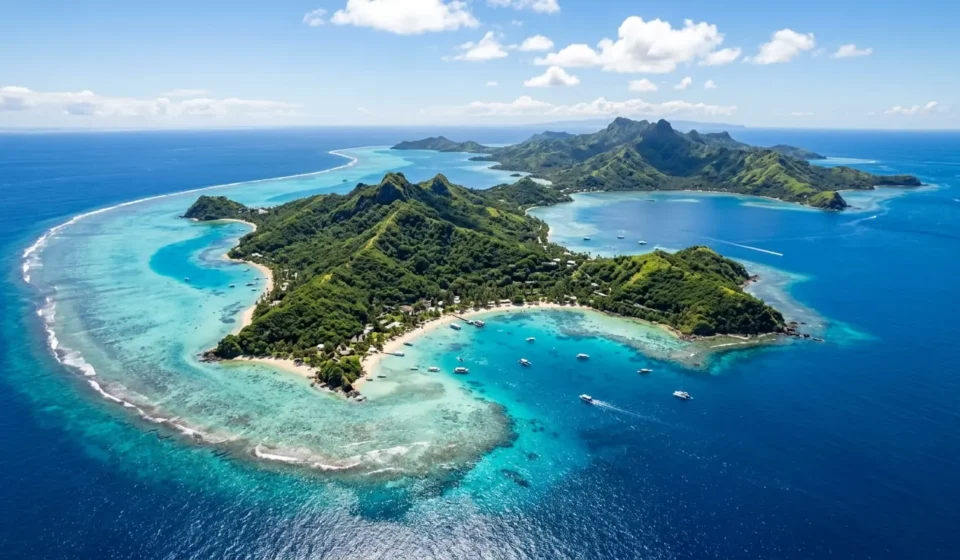
Fiji is not one destination but more than 330 islands, and that changes how you should plan around it. A useful fiji travel guide has to go past beach photos. It needs to help you pick the right island for your trip and work around the wet season. It should also help you budget for a country where prices swing wildly, from a backpacker dorm to a private-island bure. This guide breaks Fiji down by region, season and cost, based on how the country is actually laid out. Whether you are arriving for a week in Nadi or island-hopping through the Yasawas, here is what shapes a good trip.
Getting to Fiji and Finding Your Bearings
Almost everyone arrives at Nadi International Airport on Viti Levu, Fiji’s main island. Flights from Los Angeles and San Francisco run nonstop and take around 10 to 11 hours. Flights from eastern Australia and New Zealand take roughly 3 to 4 hours. Fiji sits just west of the international date line. A flight leaving the US at night can land two calendar days later. Fiji connects easily with main Oceania hubs, including the best places to visit in New Zealand. Visiting Fiji requires a valid passport; U.S. travelers looking for restriction-free islands can check places to travel without a passport.
Nadi itself is a functional airport town, not a beach destination. Its nearby beaches are unremarkable. Most visitors base themselves 20 minutes away on Denarau Island instead, or treat Nadi purely as a transit point. Suva, Fiji’s capital, sits across Viti Levu and works better as a culture stop than a sand-and-sun base.
Best Time to Visit Fiji
Fiji runs on two seasons, not four. The dry season, May to October, brings lower humidity and temperatures in the mid-70s to low 80s Fahrenheit. It is the most reliable stretch for diving and day trips, and also peak season. Prices climb accordingly, especially around July and August school holidays in Australia and New Zealand.
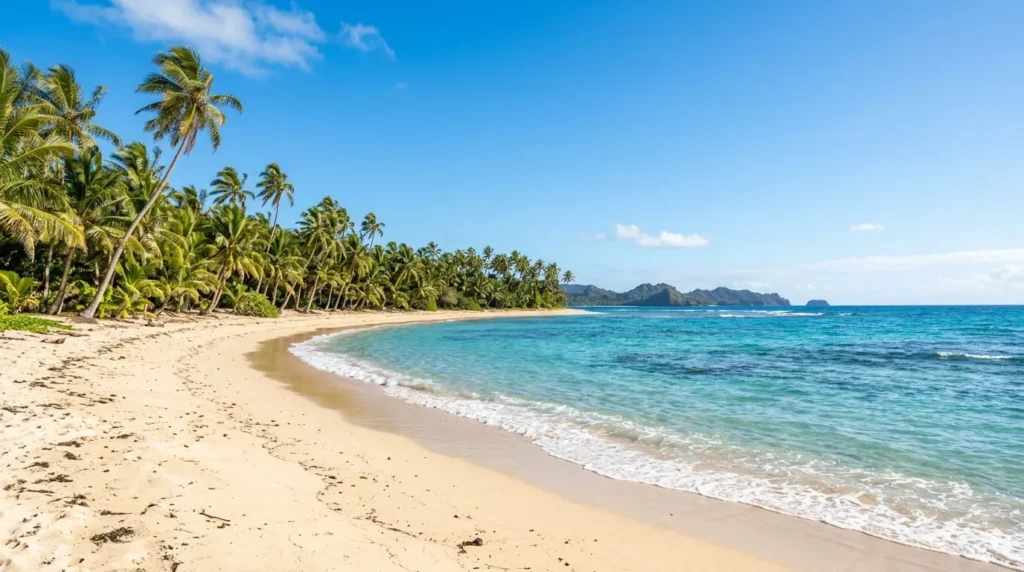
The wet season, November through April, is hotter and more humid, with afternoon downpours that tend to pass quickly. It also carries cyclone risk, concentrated mostly between January and March. That is not a reason to avoid Fiji outright: rain often clears fast, and rates drop noticeably. For lower prices without the heaviest rain, aim for May, June, September or October.
Entry Requirements and Practical Basics
Most visitors from the US, UK, Australia, Canada and the EU do not need a visa for stays under four months. A passport and proof of onward travel are enough. Confirm current rules with Fiji’s immigration department before flying.
Fiji uses the Fijian dollar. Resorts and larger shops take cards, but taxis and small vendors often expect cash. Withdraw money at the airport or a Nadi bank before reaching a smaller island. English is one of three official languages alongside Fijian and Hindi, so menus and signage are rarely a problem. Learning bula for hello and vinaka for thank you goes a long way with locals.
Where to Stay in Fiji
Fiji’s accommodation splits into a few distinct regions. Your choice of base matters more here than in most destinations, since inter-island transfers eat into your trip.
1: Denarau Island and Nadi
Denarau is a gated resort island 20 minutes from the airport, home to chains like Hilton, Sheraton and Sofitel. Its marina is the departure point for day cruises to the Mamanucas. Denarau suits a short trip or a first and last stop before heading further out, though the beach itself is average.
2: Coral Coast
Stretching along Viti Levu’s southern shore, the Coral Coast mixes mid-range and luxury resorts with real Fijian villages. It is a good middle ground between convenience and culture, reachable by road with no boat transfer needed. Beach snorkeling here is decent, if not Fiji’s best.
3: Mamanuca and Yasawa Islands
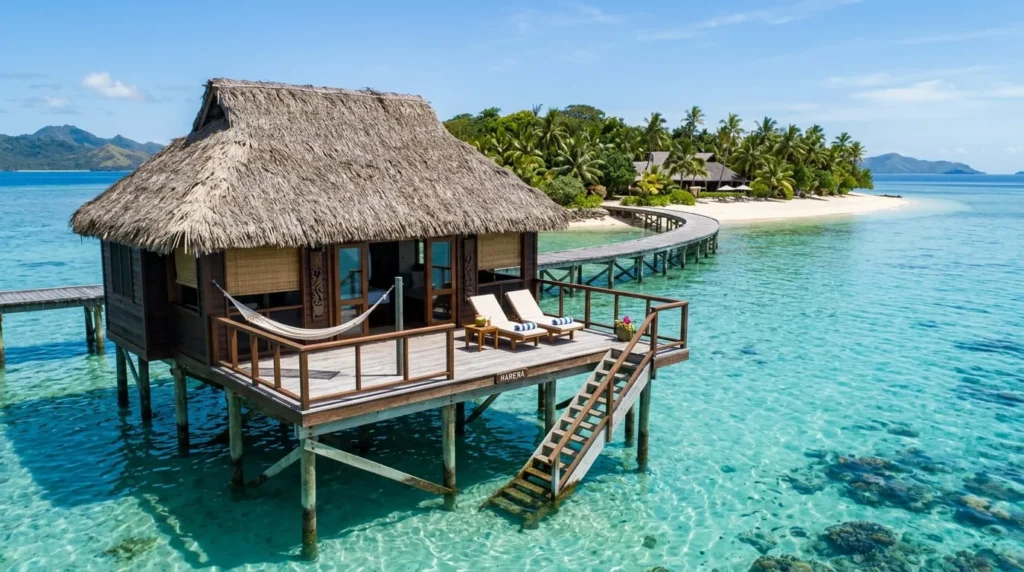
These islands are what most people picture when they imagine Fiji. Bures sit steps from the water, reefs lie just offshore, and the pace slows right down. The Mamanucas sit closer to Denarau, with ferry transfers of 30 minutes to two hours, and suit shorter stays. The Yasawas are farther out, four to five hours by boat, and reward travelers staying five nights or more with quieter islands. Book ferry transfers ahead, since boats to the outer Yasawas typically run once a day.
4: Suva and Taveuni
Suva is worth a day for its museum, market and colonial architecture, though most travelers pass through rather than stay. Taveuni, the Garden Island, draws divers to the Rainbow Reef and hikers to its waterfalls. It needs a domestic flight from Nadi, so it suits an add-on trip rather than a first visit.
Top Things to Do in Fiji
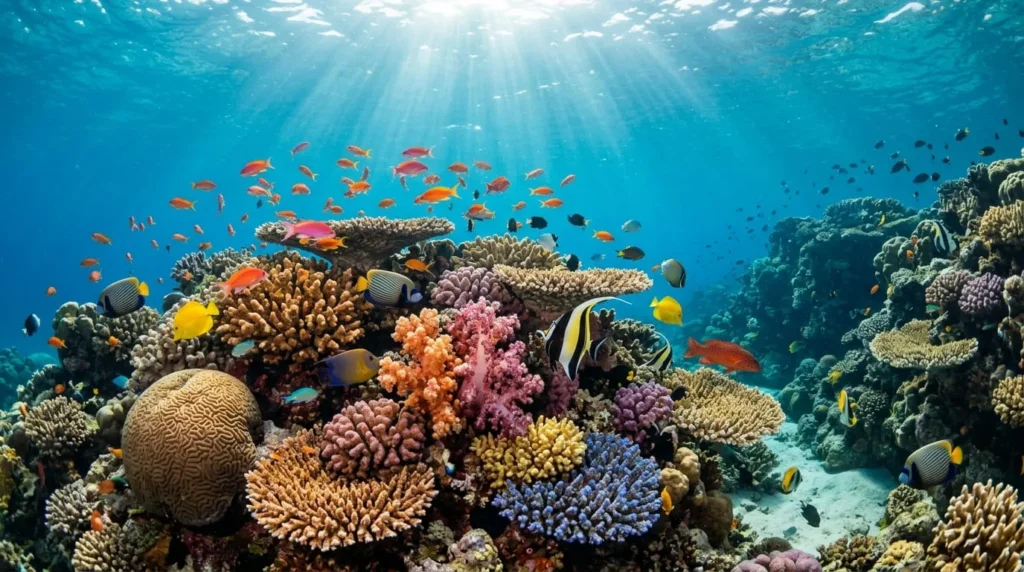
Snorkeling and diving are the main draw, and you do not need to be certified to see healthy reef. The Great Astrolabe Reef off Kadavu and the Rainbow Reef near Taveuni rank among Fiji’s best dive sites. Still, many resorts have decent reef access right off the beach. Cloudbreak, near the Mamanucas, is a world-class surf break reachable by boat from Nadi.
Day cruises from Denarau’s marina are the easiest way to sample outer islands without a multi-night stay. A typical trip includes a catamaran ride and a few hours on a small island with snorkeling gear provided. Lunch is included, usually for FJD 150 to 250 per person.
Inland, Viti Levu offers hiking through Colo-i-Suva Forest Park and a soak at the Sabeto hot springs and mud pool. The Sigatoka sand dunes, one of the country’s few archaeological sites, are also worth the detour. Village visits, arranged through a resort or guide, show Fijian community life and usually include a kava ceremony.
What to Eat in Fiji
Fijian food blends indigenous Fijian, Indian and Chinese influences. Kokoda is the dish to try first: raw fish marinated in citrus and coconut milk, similar to ceviche. It is usually served as a starter. Lovo is a feast cooked in an underground earth oven, with meat, fish and root vegetables wrapped in banana leaves. It is traditionally reserved for special occasions, though many resorts stage a lovo night weekly.
Kava, a mildly narcotic drink made from ground pepper plant root, sits at the center of Fijian social life. It numbs the tongue and tastes earthy rather than pleasant to most first-timers. Trying it during a village visit is considered a sign of respect.
Getting Around Fiji
Airport and Denarau taxis are the simplest way to reach your first hotel. Town taxis are cheaper if you can flag one down away from tourist zones. Agree on a price before getting in if the meter is not running.
For inter-island travel, ferry operators run scheduled boats from Denarau Marina to the Mamanucas and Yasawas. Journey times range from 30 minutes to five hours. Domestic flights connect Nadi to Suva, Taveuni and other islands in under an hour.
Renting a car only makes sense if you are staying on Viti Levu and comfortable driving on the left. Road conditions vary outside main routes, and street lighting is limited at night.
Budgeting for a Fiji Trip
Fiji accommodates a wide range of budgets, but the gap between tiers is larger than in many destinations. Backpacker dorms and budget guesthouses in Nadi or the Yasawas run roughly FJD 50 to 120 per night. Mid-range resorts on the Coral Coast or Mamanucas average FJD 400 to 800, often with breakfast included.
Luxury private-island resorts, particularly in the Yasawas, start around FJD 1,500 per night. The most exclusive properties climb past FJD 5,000, usually all-inclusive given the lack of nearby alternatives. Day cruises add FJD 150 to 300 per person. A resort dinner runs FJD 40 to 80. A meal at a local cafe in Nadi or Suva can cost under FJD 15. Budget an extra 10 to 15 percent above your estimate for transfers and activity add-ons.
Fijian Culture and Etiquette
Fiji is Christian-majority and socially conservative outside resort grounds, particularly in villages. Cover your shoulders and knees when visiting a village, remove your hat, and avoid touching anyone’s head, which is considered sacred. If invited into a village, bring a small gift of kava root as a courtesy, known as sevusevu. Do this before wandering on your own.
Sundays are typically quiet outside tourist areas, since many shops close and locals attend church. Tipping is not customary and is not expected in restaurants or from guides, though it is welcomed for outstanding service. Keep swimwear on the beach rather than in town or a village.