Finding the best places to go glamping starts with matching the landscape to the kind of trip you actually want. A canvas tent in the desert delivers a completely different experience than a canvas tent tucked into coastal fog, even though both fall under the same glamping label. The most common mistake travelers make is picking a site based on photos alone, without weighing climate, season, or what’s actually within reach of the property. This guide breaks down the strongest glamping regions by landscape, what each one does well, and how to match a destination to your travel style and budget.
What Makes a Glamping Destination Worth the Trip
Not every glamping property earns the name. The strongest destinations combine three things: a setting you cannot easily reach any other way, a structure that delivers real comfort, and easy access to the reason you came outdoors in the first place. That might be a trailhead, a river, or a stretch of coastline. Weaker properties tend to lean on the tent itself as the selling point and skimp on location.
Autumn glamping places travelers near scenic canopy views in the best places to see fall foliage. Luxury eco-lodges are a major draw among the best places to visit in New Zealand.
Before booking anywhere, check how far the site actually sits from the scenery shown in the marketing photos. A twenty-minute drive to the trailhead changes the whole trip. It also helps to confirm whether the bathroom is private or shared, since that single detail affects comfort more than almost anything else on the property.
National Park Glamping: Wake Up Inside the Wilderness
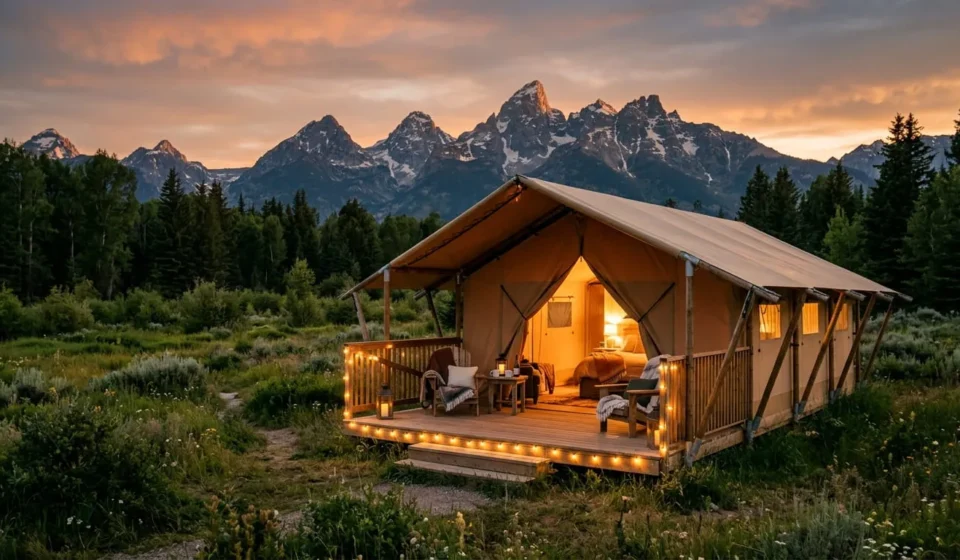
Properties built around national parks give you the shortest possible distance between your bed and the trailhead. Safari-style tent camps now operate near Zion, the Grand Canyon, the Great Smoky Mountains, Yellowstone, and Acadia, usually just outside the park boundary where private land allows for permanent structures.
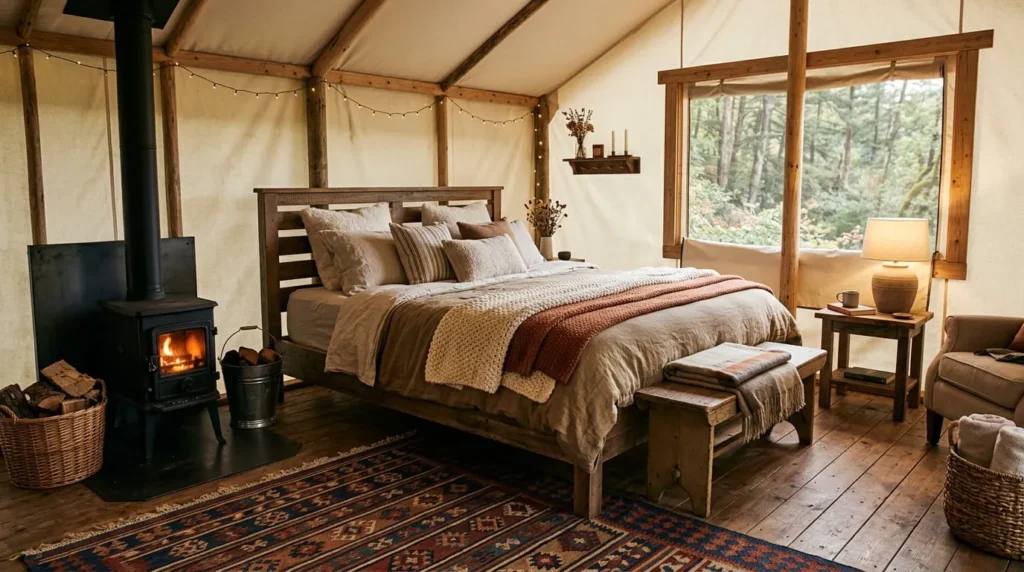
These camps typically include a real bed, a wood-burning stove, a private deck, and a shared dining area serving breakfast or dinner. Many run guided hikes, stargazing sessions, and campfire evenings as part of the stay. Because these locations sit right next to some of the most visited parks in the country, book at least three to four months ahead for a summer trip. Rooms near Zion and Yellowstone sell out early for July and August. Most of these camps also welcome dogs, which is worth confirming if you’re traveling with one.
Desert Glamping: Silence, Stargazing, and Red Rock
Desert glamping delivers the clearest night skies and the most dramatic light of any region on this list. Utah’s canyon country around Moab has become a hub for it, with properties like Ulum Moab and Conestoga Ranch near Bear Lake offering suite-style tents with real plumbing and private decks facing red rock or turquoise water. In Arizona, Backland sits close to Williams, putting the Grand Canyon, Flagstaff, and Sedona all within a short drive.
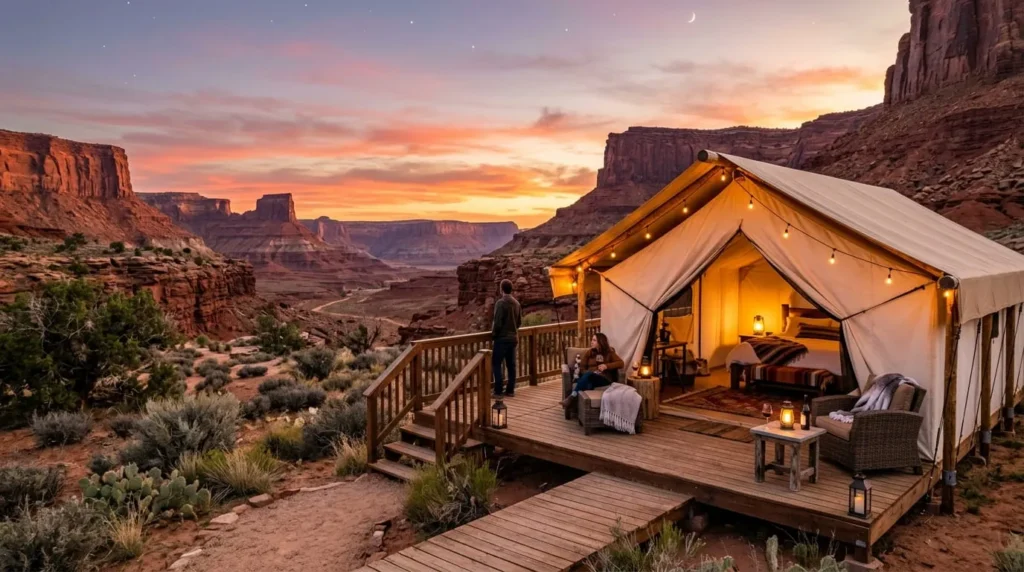
At the very top end, suites at Camp Sarika at Amangiri in Utah start around seven thousand dollars a night, which shows just how far the luxury tier of desert glamping can stretch. Spring and fall are the strongest seasons here. Summer daytime temperatures in the desert Southwest regularly climb past 100 degrees, which makes hiking uncomfortable and sometimes unsafe outside of early morning hours.
Mountain Glamping: Cool Air and Wide-Open Views
Mountain properties trade desert heat for cooler air and greener surroundings, which makes them a strong pick for summer trips when other regions get uncomfortable. Montana has become a standout for this, with camps like Bodhi Farms near Bozeman and The Ranch at Rock Creek putting guests within driving distance of Big Sky Resort and Yellowstone’s northern entrances.
Expect activities built around the season, including whitewater rafting, fly fishing, and horseback riding in summer, and skiing or snowshoeing access in winter at higher-elevation properties. One thing first-timers underestimate is altitude. Many mountain glamping sites sit above 5,000 feet, and even light hiking can feel harder than expected for the first day or two.
Coastal Glamping: Ocean Views Without Roughing It
Coastal glamping sites are harder to find than desert or mountain options simply because buildable land along the shoreline is limited. Big Sur’s Treebones Resort is one of the best-known examples, perched above the Pacific with rugged coastline views and an on-site dining program that includes an omakase-style sushi bar. On the opposite coast, camps near Acadia National Park in Maine put guests along a rocky shoreline with a completely different climate and rhythm.

Coastal weather is the trade-off. Fog rolls in fast along both the California and Maine coastlines, even in summer, so pack real layers rather than counting on warm evenings. Coastal sites also tend to book out faster during peak summer weekends, since good weather windows are less predictable than in the desert or mountains.
Glamping Close to Home: Regional Getaways Worth Considering
Not every glamping trip needs to involve a flight. Smaller regional properties have opened up around lakes, rivers, and state parks in places like the Southeast, the upper Midwest, and the Pacific Northwest, and they’re often the easiest way to try glamping for the first time without a major travel commitment. These sites tend to run smaller than the big national park camps, sometimes just a handful of tents or domes on a working farm or campground.
They also tend to be more affordable and more flexible about last-minute bookings, since they aren’t competing with national park tourism seasons the same way. For a weekend trip or a first glamping experience, a regional property within a few hours’ drive is often the smarter starting point before investing in a bigger trip.
How to Pick From the Best Places to Go Glamping This Year
1: Match the Season to the Landscape
Desert properties are strongest in spring and fall, when daytime heat is manageable and nights are cool enough for a campfire. Mountain properties peak in summer and shift toward winter sports at higher elevations. Coastal sites work for most of the year but come with more weather variability, particularly fog and wind, than the other two regions.
2: Decide How Much Isolation You Actually Want
Some glamping properties are genuinely remote, with no cell service and limited or no wifi, while others operate more like a boutique hotel with a restaurant and daily housekeeping. Neither is better, but they create very different trips. If you want to disconnect completely, ask directly about cell coverage before booking rather than assuming.
3: Set a Realistic Budget Range
Glamping spans a wide range, from simple canvas tents at regional campgrounds to five-figure luxury suites like those at Camp Sarika. Mid-range national park camps with a real bed, private deck, and shared dining typically sit well above a standard hotel room but below a luxury resort. Deciding on a rough budget first narrows the list fast and prevents sticker shock once you start comparing rates.
4: What to Pack and Expect on Your First Trip
Most glamping properties supply linens, towels, and often a fire pit or wood stove, so you don’t need traditional camping gear. Pack layers regardless of season, since desert nights and mountain evenings both drop in temperature fast after sunset. A headlamp is worth bringing even at full-service properties, since paths between tents are often unlit.
Cell service is unreliable at many remote sites, so download offline maps and let someone know your general plans before you arrive. Confirm ahead of time whether meals are included, since some properties run a full dining program while others expect guests to bring their own food or drive to a nearby town. Small details like these make the difference between a smooth first trip and a frustrating one.