
Planning a trip to Spain starts with one hard question: which cities do you actually pick? The best cities to visit in Spain depend on your travel style, but a few names come up on every good itinerary. Madrid, Barcelona, and Seville form the classic trio. Add Granada and Valencia for a first trip, or go deeper with San Sebastian, Cordoba, and the northern coast. This guide covers 14 cities, grouped by region so you can see which ones pair well together. Each entry tells you what the city is known for, how many days it needs, and who it suits best. At the end you will find ready-made 7, 10, and 14-day itineraries, budget guidance, and the best months to go.
Quick Answer: The Best Cities To Visit In Spain At A Glance
Short on time? This table compares all 14 cities on the factors that matter most when you plan: how long to stay, what it is best for, relative cost, and which cities connect easily by train.
| City | Nights Needed | Best For | Budget | Pairs Well With |
|---|---|---|---|---|
| Madrid | 3 | Art, nightlife, first-timers | $$ | Toledo, Segovia, Salamanca (day trips) |
| Barcelona | 3-4 | Gaudi, beaches, city energy | $$$ | Valencia, Girona |
| Seville | 3 | Flamenco, history, romance | $$ | Cordoba, Cadiz, Granada |
| Granada | 2 | Alhambra, tapas, mountain views | $ | Seville, Cordoba, Malaga |
| Cordoba | 1-2 | Mezquita, patios, slow travel | $ | Seville, Granada |
| Valencia | 2-3 | Paella, beaches, families | $$ | Barcelona |
| Malaga | 2 | Beach plus art, easy airport | $$ | Granada, Cordoba |
| Cadiz | 2 | Coast, history, relaxed pace | $$ | Seville |
| San Sebastian | 2-3 | Food, pintxos, bay views | $$$ | Bilbao |
| Bilbao | 1-2 | Guggenheim, Basque culture | $$ | San Sebastian |
| Santiago de Compostela | 1-2 | Camino, Galician food | $$ | (best with a rental car) |
| Toledo | Day trip | Three cultures, medieval streets | $ | From Madrid |
| Segovia | Day trip | Roman aqueduct, castle | $ | From Madrid |
| Salamanca | 1-2 | University city, Plaza Mayor | $ | From Madrid |
Budget tiers are relative to other Spanish cities, not exact prices. Barcelona and San Sebastian run the most expensive. Granada, Cordoba, and Salamanca give you the most for your money.
How To Pick The Right Cities For Your Trip
Start with your trip length. Seven days means two regions at most. Ten to fourteen days lets you combine central Spain with Andalusia, or Andalusia with Barcelona. First-time visitors should anchor on Madrid and Seville. They are easy to reach, packed with major sights, and show two very different sides of Spain. Add Barcelona if beaches and modernist architecture matter to you. Food lovers should not skip San Sebastian. The pintxos bars in the old town are the best eating experience in the country. Pair it with Bilbao for the Guggenheim and a full Basque Country loop. Beach seekers get the best mix of city and sand in Barcelona, Valencia, or Malaga. San Sebastian offers the prettiest bay, but the water is cooler up north. History buffs should build the trip around Andalusia: Seville, Cordoba, and Granada hold Spain’s greatest Moorish sites.
Madrid, Barcelona, And Seville: The Big Three
These three cities top almost every list of the best cities to visit in Spain. If this is your first trip, pick at least two of them.
1. Madrid: Art, Royal History, And Late Nights
Madrid is the capital, and it feels like it. Grand boulevards, the Royal Palace, and three of Europe’s greatest art museums sit within walking distance of each other. The Prado holds the world’s finest collection of Spanish masters. The Reina Sofia and Thyssen-Bornemisza complete the Golden Triangle of Art. The city comes alive after dark. Dinner starts around 9pm, and the tapas bars in La Latina and Malasana fill up late. Retiro Park gives you green space in the middle of it all. Plaza Mayor is touristy but worth one walk-through. Stay near Sol or Gran Via for your first visit. Plan three nights. That gives you two full days in the city plus a day trip to Toledo or Segovia.
2. Barcelona: Gaudi, Beaches, And Catalan Energy
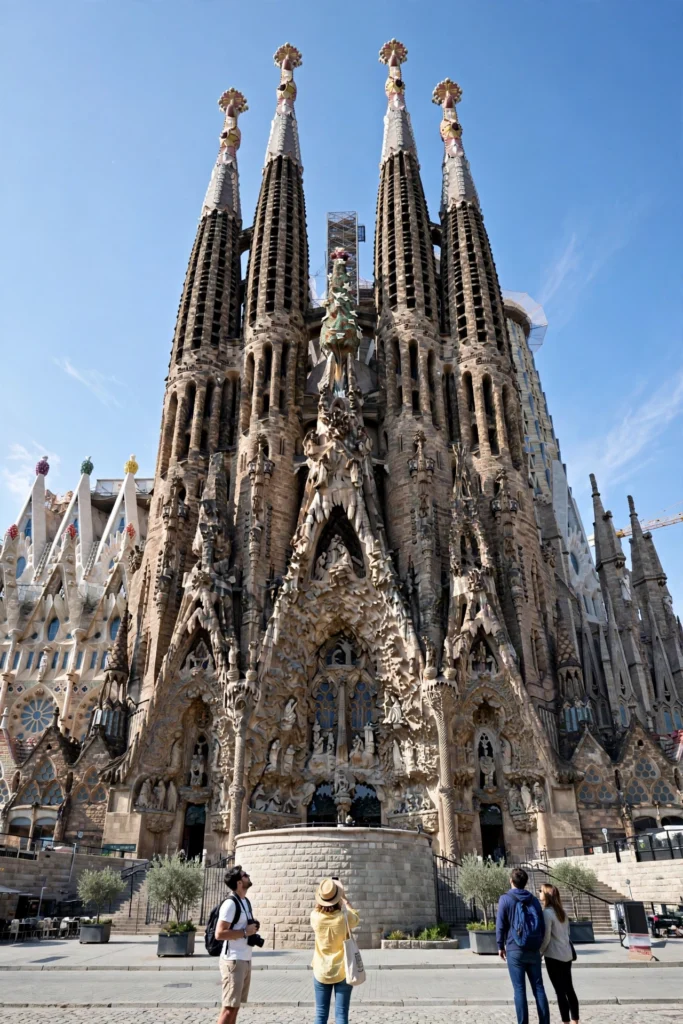
Barcelona is Spain’s most visited city, and the architecture explains why. The Sagrada Familia, Park Guell, Casa Batllo, and Casa Mila form a Gaudi trail you will not find anywhere else. The Gothic Quarter and El Born add medieval streets, small plazas, and the Picasso Museum. Then there is the beach. Barceloneta puts sand and sea minutes from the old town. Few European cities mix world-class sights and a real beach scene this well. The food scene runs from La Boqueria market to standout restaurants in Gracia and Sant Antoni. Book Sagrada Familia tickets weeks ahead. They sell out, especially in summer. Skip the overpriced restaurants on La Rambla and eat one street over. Three to four nights works well.
3. Seville: Andalusia At Its Most Romantic
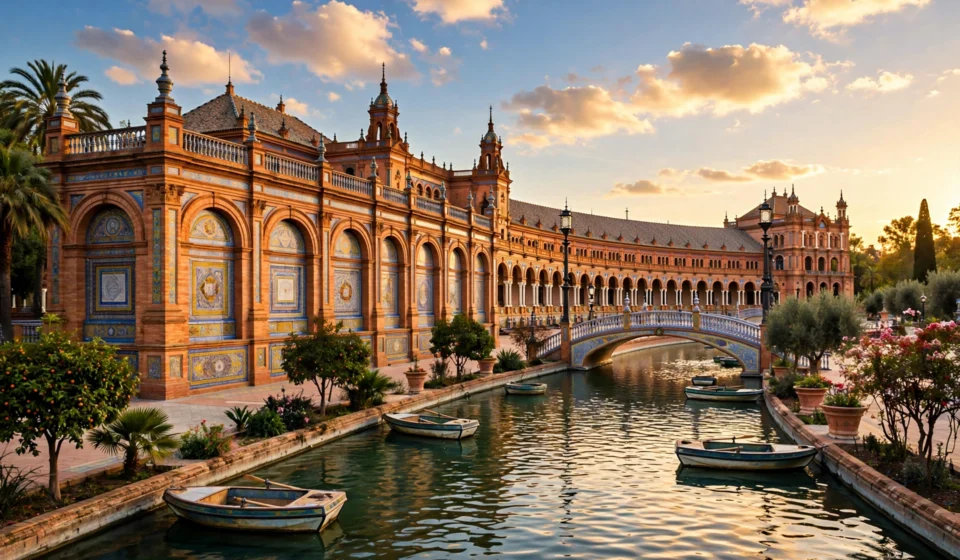
Seville is the city most travelers picture when they dream of Spain. The Royal Alcazar blends Moorish palaces with Christian additions. The cathedral, one of the largest Gothic churches in the world, holds the Giralda bell tower. Plaza de Espana is the most photogenic square in the country. The Santa Cruz old town keeps its Andalusian character: orange trees, tiled patios, and flamenco venues on side streets. Cross the river to Triana for a more local feel and some of the city’s best tapas. Spring is the sweet spot, when orange blossoms scent the streets. Summer heat is serious here. Daytime temperatures climb high in July and August, so plan sightseeing for mornings and evenings. Three nights lets you see the big sights without rushing. Check our guide to the best places to visit in Europe if you want to combine Seville with other European stops.
Granada And Cordoba: Moorish Spain
Andalusia’s two smaller cities hold Spain’s greatest Islamic-era monuments. They pair naturally with Seville on one southern route.
4. Granada: Home Of The Alhambra
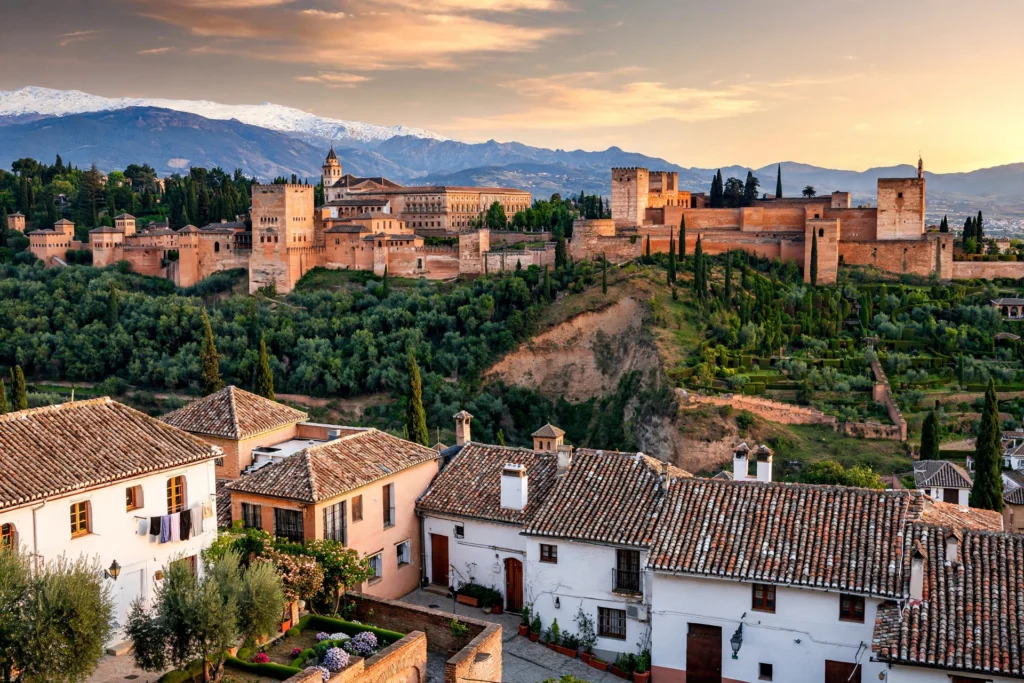
The Alhambra is the reason to come. This Moorish palace complex, with the Nasrid Palaces and Generalife gardens, is one of the most visited monuments in Europe. Book tickets the moment your dates are set. They sell out weeks ahead in peak season. The Albaicin, the old Moorish quarter, climbs the hill opposite the Alhambra. Its whitewashed lanes and viewpoints over the palace are free and unforgettable. Sacromonte adds cave houses and flamenco. The Sierra Nevada mountains frame every view. Granada still honors the old tradition of free tapas with each drink in many bars. Order a cana, see what arrives, and order another. Two nights is right: one day for the Alhambra, one for the old quarters.
5. Cordoba: The Mezquita And Flower-Filled Patios
Cordoba’s Mezquita-Cathedral is one of the most extraordinary buildings in Spain. A forest of red-and-white arches fills a 9th-century mosque, with a Renaissance cathedral built into its center. It tells the whole story of southern Spain in a single building. The Jewish Quarter around it is a tangle of whitewashed lanes and flower-covered courtyards. Visit in May if you can, when the patio festival opens private courtyards to the public. The Roman Bridge and the Alcazar gardens round out a relaxed visit. Most travelers rush Cordoba as a day trip. Stay one night instead. The old town empties after the tour buses leave, and the evening light on the Mezquita is worth it alone.
Valencia, Malaga, And Cadiz: The Mediterranean Coast
These three cities give you sea, sun, and serious culture in one stop. They suit travelers who want a beach break without giving up sightseeing.
6. Valencia: Paella, Beaches, And Futuristic Design
Valencia is Spain’s third-largest city and the birthplace of paella. Eat it at lunch, the proper Valencian time, not dinner. The old town holds the cathedral, the Lonja de la Seda silk exchange, and the massive Mercado Central food market. The City of Arts and Sciences adds a futuristic counterpoint: a planetarium, aquarium, and science museum in striking modern buildings. The Turia Gardens, a park built in a former riverbed, runs through the city. A wide city beach sits a short ride from the center. Valencia feels calmer and more livable than Barcelona. Families do well here. Two to three nights covers the highlights. If coastal Spain interests you beyond the cities, read our guide on bioluminescent spots in Spain for a different kind of shoreline experience.
7. Malaga: Picasso’s Hometown With A Beach
Malaga has grown from a cruise port into a real city break. The Picasso Museum sits in a 16th-century palace, and the Alcazaba fortress overlooks the harbor. The Atarazanas Market is a great lunch stop. The historic center is compact and walkable. The beach is minutes from the old town. Malaga’s airport connects to cities across Europe, which makes it a practical entry or exit point for an Andalusia trip. Stay in the old town, not the resort strip. Two nights works. From here, Granada and Cordoba are easy next stops.
8. Cadiz: One Of Europe’s Oldest Cities
Cadiz sits on a narrow peninsula in the Atlantic, and its history stretches back around 3,000 years. The old town mixes sea-facing plazas, Phoenician ruins, and a cathedral with a golden dome. The mood is relaxed and distinctly coastal. La Caleta beach sits right in the city. The seafood is excellent. Climb the Tavira Tower for its camera obscura and a full panorama. February brings one of Spain’s most famous carnivals. Cadiz pairs easily with Seville by train. Two nights gives you the old town, the beach, and a slow Andalusian rhythm.
San Sebastian, Bilbao, And Santiago: Northern Spain
The north is greener, cooler, and wetter than the south. It also holds Spain’s best food city and its most dramatic modern museum.
9. San Sebastian: Spain’s Food Capital
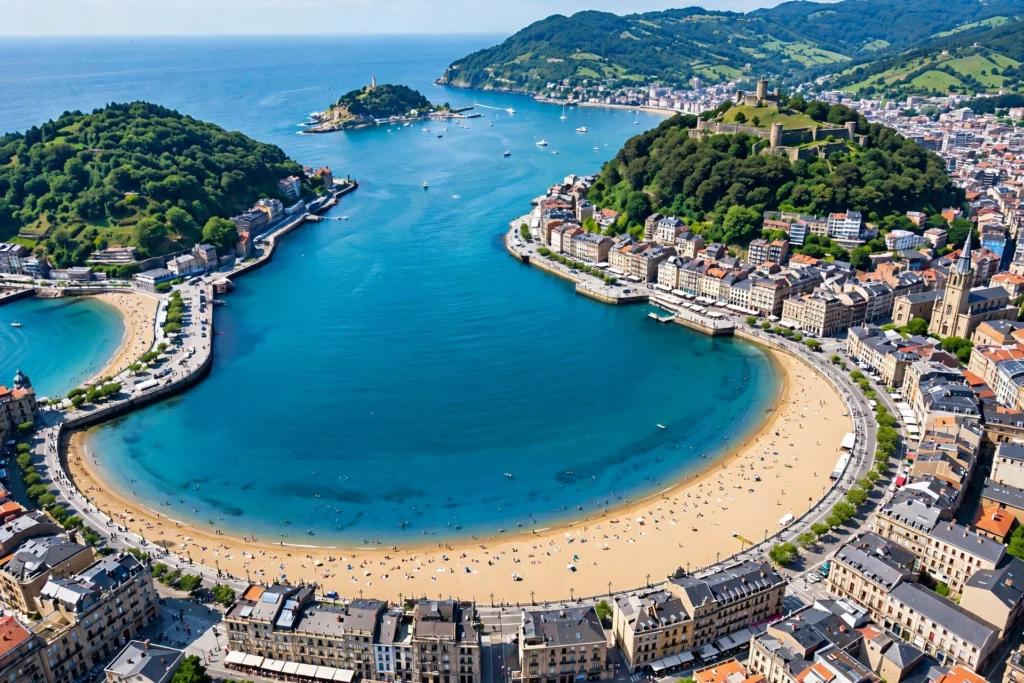
San Sebastian sits on a perfect crescent bay, La Concha, with an elegant old town behind it. The headline is the food. The pintxos bars of the Parte Vieja serve small plates that range from traditional to wildly creative. Going bar to bar is the essential local ritual. The city also holds one of the highest concentrations of Michelin-starred restaurants anywhere. Ride the funicular up Monte Igueldo for the classic bay view. The beach scene is real, though the Cantabrian Sea runs cooler than the Mediterranean. This is one of Spain’s priciest cities. Two to three nights is ideal. For a trip this food-focused, Spain ranks among the world’s best solo travel destinations too, since pintxos bars are built for grazing alone or with friends.
10. Bilbao: The Guggenheim Effect
Bilbao’s story is one of the great urban turnarounds. A declining industrial port reinvented itself around the Guggenheim Museum, Frank Gehry’s titanium landmark from 1997. The building alone is worth the trip. The art inside rewards a morning. The Casco Viejo old town and the Ribera Market add local character. The pintxos scene here is less polished than San Sebastian’s and easier on the wallet. Combine the two cities: they sit about 75 minutes apart by bus. One to two nights is enough for most visitors. Art lovers may want longer.
11. Santiago de Compostela: The End Of The Camino
Santiago is the endpoint of the Camino de Santiago pilgrimage, and its granite old town has a pull even if you never walk a step. The cathedral dominates the main square. The Galician food scene, especially octopus and seafood, is a highlight on its own. Stay at least one night. The city feels different after the day-trippers leave. A rental car helps here if you want to explore the Galician coast beyond the city.
Three Small Cities Worth A Day Trip: Toledo, Segovia, And Salamanca
These three sit within easy reach of Madrid. Each one justifies at least a day.
12. Toledo: The City Of Three Cultures
Toledo sits on a rocky hill above the Tagus River, about 30 minutes from Madrid by high-speed train. Christians, Muslims, and Jews built here side by side for centuries, and the layers show: a Gothic cathedral, synagogues, mosques, and the Alcazar fortress all sit within walking distance. The old town is compact but dense. A long day trip works, from morning to evening. Staying one night shows you the empty streets after dark, which is Toledo at its best.
13. Segovia: The Roman Aqueduct
Segovia’s Roman aqueduct is the star: 2,000 years old, 28 meters high at its tallest, built without mortar. The Alcazar castle at the other end of town looks like something from a fairy tale. The medieval old town between them is a UNESCO site. The high-speed train from Madrid takes about 30 minutes. A day trip is easy. Try the local roast suckling pig while you are there.
14. Salamanca: The Golden University City
Salamanca’s university dates to 1218, and the whole old town glows gold at sunset thanks to its sandstone buildings. The Plaza Mayor is one of the most beautiful squares in Spain. The old and new cathedrals sit side by side. Look for the carved frog hidden on the university facade. Students say finding it brings good luck. One to two nights lets you enjoy the student energy after dark.
3 Ready-Made Spain Itineraries: 7, 10, And 14 Days
These routes cluster cities by region and rail links so you spend less time in transit.
7 days: Madrid plus Andalusia. Madrid (3 nights, with a Toledo day trip), Seville (2 nights), Granada (2 nights). This is the classic first-timer route. You get the capital, flamenco country, and the Alhambra with minimal backtracking.
10 days: add Cordoba and Malaga. Madrid (3 nights, Toledo day trip), Cordoba (1 night), Seville (3 nights), Granada (2 nights), Malaga (1 night, fly home from its airport). Cordoba breaks up the Seville to Granada leg nicely.
14 days: the grand loop. Madrid (3 nights, Toledo and Segovia day trips), Cordoba (1 night), Seville (3 nights), Cadiz (2 nights), Granada (2 nights), Barcelona (3 nights). Fly into Madrid and out of Barcelona, or reverse it. This covers the big three, Moorish Andalusia, the coast, and Gaudi country at a comfortable pace. For the north, swap Andalusia for a Basque loop: Bilbao (2 nights), San Sebastian (3 nights), with a Rioja wine day trip. It pairs well with 3 to 4 nights in Barcelona at the start.
When To Visit Spain’s Cities
April, May, September, and October are the best months for most cities. Temperatures sit in a comfortable range for walking, crowds thin out, and prices drop from summer peaks. Summer works for the north and the coast. San Sebastian, Bilbao, and Santiago stay cooler while Seville and Cordoba bake. Winter brings the lowest prices, though some smaller sights cut hours. Festival windows are worth planning around. Las Fallas fills Valencia in March. Seville’s Semana Santa and Feria de Abril bring the city to life in spring. Pamplona’s San Fermin festival takes over the city in July. Dates shift slightly each year, so confirm on Spain’s official tourism portal before you book.
How To Travel Between Cities
Spain’s high-speed AVE trains make a city-only trip one of the easiest in Europe to plan. Madrid connects to Barcelona, Seville, Valencia, and Malaga in roughly two to three hours each. Book tickets on Renfe’s official site as early as your dates are set. Advance fares are usually much cheaper than station prices. The network radiates from Madrid, so plan your route around that hub. Cordoba sits on the Madrid to Seville line, which makes it a natural stopover. Toledo, Segovia, and Salamanca are simple day trips from the capital. Buses cover the gaps trains miss, like Bilbao to San Sebastian. For budget airlines within Spain, check carry-on size limits before you pack, since low-cost carriers enforce them strictly.
Which Spanish Cities Cost More
Barcelona and San Sebastian are the most expensive cities on this list. Hotels, restaurants, and attractions all run higher, especially in summer. Madrid sits in the middle: the capital has options at every price. The best value is in Andalusia and the university cities. Granada, Cordoba, and Salamanca offer lower hotel rates and cheaper meals. Granada’s free tapas tradition stretches your food budget further. Valencia and Malaga land in the middle, with beach-city prices that stay reasonable outside August. Save money by traveling in shoulder season, staying slightly outside the old town, and eating where locals eat. Lunch menus (menu del dia) are the best deal in Spanish restaurants.
If Barcelona Feels Too Crowded, Try These Instead
Barcelona’s popularity has a downside: packed sights and rising prices. If the crowds put you off, these swaps keep the spirit of the trip.
Instead of Barcelona’s beach plus architecture, try Valencia. You get a real beach, a striking old town, and the City of Arts and Sciences with far fewer crowds.
Instead of Barcelona as a Catalonia base, try Girona. This smaller city north of Barcelona has one of Spain’s best-preserved old towns and a famous Jewish quarter. It works as a day trip or an overnight.
Instead of San Sebastian’s prices, try Bilbao. The pintxos are cheaper, the Guggenheim anchors the visit, and the Basque atmosphere is the same.
Instead of Seville in August, head north. San Sebastian, Bilbao, and Santiago stay comfortable while Andalusia swelters.
Practical Tips Before You Go
Book the big sights before you arrive. The Alhambra, Sagrada Familia, and Royal Alcazar all sell out, sometimes weeks ahead. Timed entry is now the norm at major monuments. Adjust to Spanish meal times. Lunch is the main meal, usually between 2 and 4pm. Dinner rarely starts before 9pm. Many small shops still close for a few hours in the afternoon, especially outside the big cities. Keep valuables secure in Barcelona and Madrid. Pickpocketing targets tourists in crowded areas and on the metro. A crossbody bag worn in front solves most of the problem. Set up a flight tracker while you plan. Fares to Spain swing with the seasons, and tracking prices for a few weeks usually beats booking on the first search.
Conclusion
The best cities to visit in Spain reward travelers who pick a region and slow down. Madrid, Barcelona, and Seville anchor any first trip. Granada and Cordoba add Moorish depth. Valencia, Malaga, and Cadiz bring the coast. San Sebastian, Bilbao, and Santiago show a greener, cooler Spain. Choose fewer cities and give each one enough time. Book your trains and big sights early, travel in spring or fall if you can, and leave room for long lunches. If Spain leaves you wanting more of southern Europe, our guide to the best places to visit in Italy makes a natural next trip.