Here is how to stay fit while traveling without setting foot in a gym. Short bodyweight workouts, lots of daily walking, and a protein-first eating plan will keep you in shape on almost any trip. The goal is maintenance, not progress. Keep your body moving, eat reasonably well, sleep as much as you can, and you will come home feeling good instead of starting over.
Set A Realistic Goal For The Trip
Forget trying to get fitter on vacation. That almost never happens, and chasing it ruins trips. Aim to maintain what you have. If you keep most of your strength and stamina through a one or two week trip, you have won. Shorten your standards on purpose. Your normal routine might be five gym sessions a week. On the road, two or three 15-minute sessions plus daily walking counts as success. Lower the bar before you leave, and you will actually clear it. Think in weeks, not days. Miss a workout on Tuesday because of a delayed flight? You have not failed. You still have the rest of the week. Travel fitness is about the average, never the perfect day.
The 15-Minute Hotel Room Workout
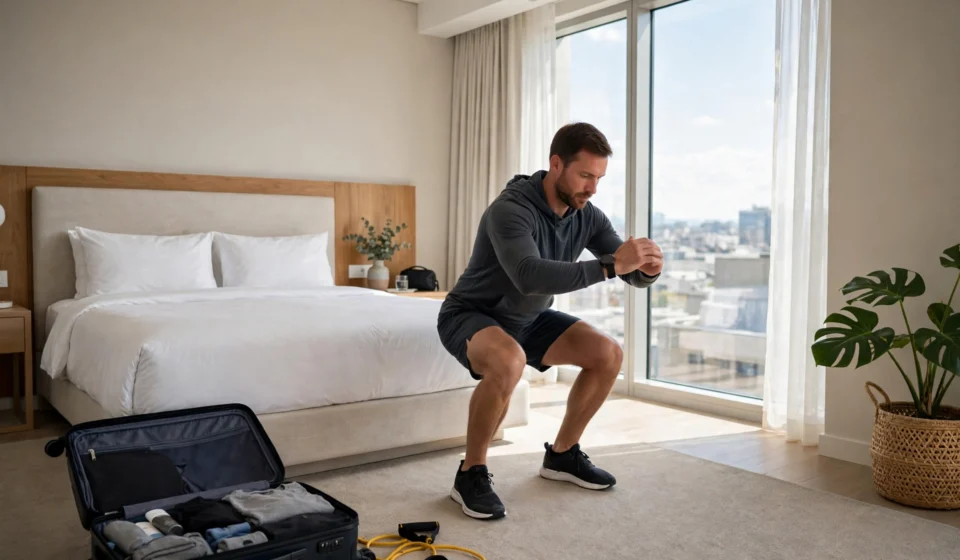
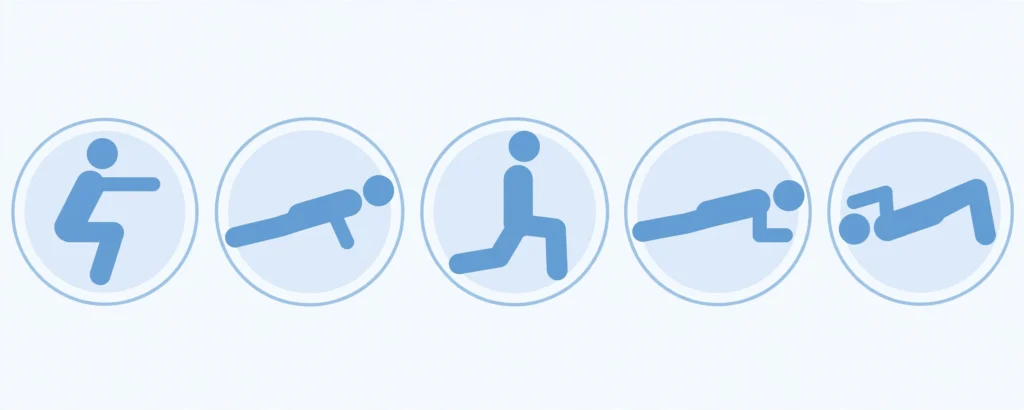
This is the core routine. Five exercises, three rounds, no equipment, fits in any hotel room. Do it in the morning before the day starts, and it is done.
The Routine
Do each exercise for the listed reps, rest 30 seconds between exercises, and repeat the full circuit three times.
| Exercise | Reps | What It Works |
|---|---|---|
| Bodyweight squats | 15 | Legs and glutes |
| Push-ups | 10 | Chest, shoulders, arms |
| Reverse lunges (each leg) | 10 | Legs and balance |
| Plank | 30 seconds | Core |
| Glute bridges | 12 | Glutes and lower back |
Three rounds takes about 15 minutes. That covers your strength work for the day. Add a brisk walk later and you have a complete training day with zero equipment.
Make It Easier
New to exercise or coming back after a break? Do two rounds instead of three. Swap push-ups for wall push-ups or knee push-ups. Hold the plank for 15 seconds. Do chair squats, sitting back onto the edge of the bed or a sturdy chair, if regular squats feel shaky. The routine still works. Shorter and easier beats skipped.
Make It Harder
Already train regularly? Slow every rep down to three seconds. Add a fourth round. Turn squats into jump squats and lunges into walking lunges down the hallway. Finish with a one-minute plank instead of 30 seconds. You can also split the routine: do the circuit in the morning and repeat it in the evening for a full 30-minute day.
What To Pack To Stay Fit While Traveling
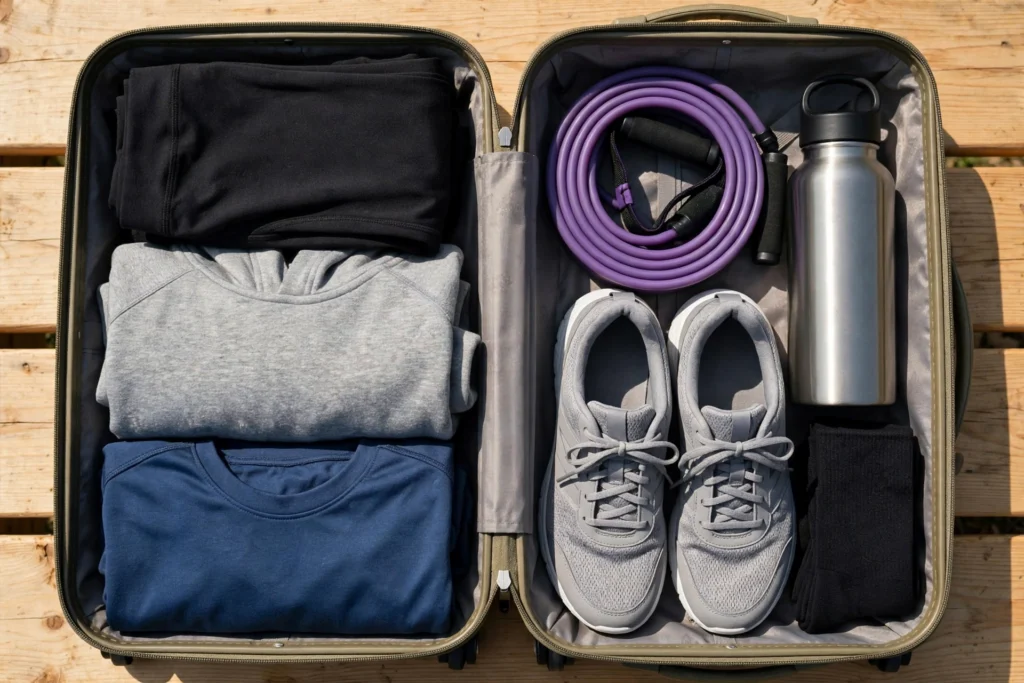
Pack fitness gear first, before the “maybe” clothes. Everything here fits in a carry-on and weighs almost nothing.
- Resistance band (loop style): the single best travel fitness tool. Adds real resistance to squats, rows, and presses in a hotel room.
- Workout clothes: two sets max. You can rewear or rinse them in the sink.
- Walking shoes you already broke in: never travel in new shoes.
- Swimsuit: pools, beaches, and hotel hot tubs are free workouts waiting to happen. Pack it even when you doubt you will use it.
- Refillable water bottle: keeps you drinking water all day without buying plastic bottles. Our guide to the best travel bottles for toiletries also covers leak-proof bottle picks that survive a packed bag.
- Jump rope (optional): the lightest cardio tool ever made, if you have the space and the coordination.
Check your carry-on packing limits before you fly so the gear actually fits alongside everything else. If your bag is tight, the resistance band and workout clothes are the non-negotiables. Everything else is a bonus.
Match The Plan To Your Trip Type
Generic advice fails because trips are not generic. Here is how to stay fit while traveling for the four most common trip types.
Business Trips
Your problem is time and unpredictability. Meetings run late, dinners are mandatory, and the hotel gym closes at 10. Book hotels with 24-hour gyms when you can, or at least a pool. Do the 15-minute hotel room routine first thing in the morning. Treat it like brushing your teeth: non-negotiable and quick. Walk between meetings when the distance is under a mile. Take the stairs. At client dinners, eat the protein first, enjoy one drink, and stop there. Nobody notices, and you feel better the next morning.
Beach Or Resort Vacations
Your problem is the opposite: too much free time and too much food. The fix is making movement part of the fun. Swim every day, even if it is just 20 minutes of playing in the water. Walk the beach in the morning before it gets hot. Book one active excursion per trip: snorkeling, kayaking, a bike rental, a coastal hike. If you want ideas, check out the best snorkeling spots across the USA for a trip that keeps you moving in the water. One excursion plus daily swimming and walking is more activity than most people get in a normal week at home.
Road Trips
Your problem is sitting. Hours of it. The plan is simple: stop every two to three hours, get out, and move for five to ten minutes. Walk around the rest stop. Do a quick set of squats and push-ups against your car. Stretch your hip flexors, which tighten up fast on long drives. Pack a cooler with real food: fruit, sandwiches, yogurt, nuts. Gas station food is a trap, and eating well on a road trip mostly comes down to what you bring. When you reach your stop for the night, do the hotel room routine before dinner.
Visiting Family Or Friends
Your problem is other people’s schedules and other people’s food. You cannot control the menu, and nobody wants to be the guest who disappears for an hour to work out. Offer to be the one who suggests the walk. “Let’s walk to coffee” or “show me the neighborhood” turns sightseeing into exercise without anyone feeling dragged along. Do the 15-minute routine before everyone wakes up. At meals, load your plate with whatever protein and vegetables are available and enjoy the rest in normal portions. If the family has an active tradition, a hike, a bike ride, a swim, join in. That counts.
Move Without Working Out
Some days, skip the routine entirely and let the destination do the work. Travel is full of movement if you stop outsourcing it to cars and tour buses. Walk between attractions instead of taking taxis when the distance is reasonable. You will see more of the place and stay fit while traveling without thinking about it. Take walking tours, explore markets on foot, and climb the viewpoint instead of driving to it. Glamping getaways are perfect for this: hiking trails, lake swims, and long walks between sites build activity into the whole trip. Big museums, zoos, botanical gardens, and theme parks can easily put you past 15,000 steps in a day. After a day like that, you do not need a workout. You need dinner and sleep. The CDC’s physical activity guidelines suggest adults aim for at least 150 minutes of moderate activity per week plus muscle-strengthening on two days. A travel week built on walking, swimming, and two rounds of the hotel routine clears that bar easily.

Eat Well On The Road
You do not need a perfect diet on a trip. You need a simple system that survives restaurants, airports, and other people’s cooking.
Anchor every meal with protein. Eggs at the hotel breakfast bar. Grilled chicken or fish at restaurants. Greek yogurt, jerky, or a protein bar from a shop when you are on the move. Protein keeps you full, which matters most when tempting food is everywhere.
Drink water before you drink anything else. Carry your refillable bottle and refill it at every chance. Dehydration on travel days feels like fatigue, and most people fix it with sugar or caffeine instead of water.
At airports, look for the same foods in every terminal: hard-boiled eggs, fruit cups, salads with grilled protein, nuts. Eat a real meal before you board instead of hoping the plane food is decent. On the plane, one snack is fine. Three is boredom eating.
Limit alcohol to one or two drinks. You do not have to be the person who skips the wine tasting. Just know that the third glass is the one that ruins tomorrow’s workout and your sleep. Alternate every drink with water.
Sleep Through Jet Lag
Bad sleep wrecks fitness faster than missed workouts. Protect it like part of the plan.
Get sunlight on your face the morning you arrive, especially after eastward flights. Light is the strongest signal for resetting your body clock. Take a walk outside within a few hours of landing, even if you are tired. The walk doubles as movement and helps you stay awake until a reasonable bedtime.
Keep your first night’s schedule simple. Eat dinner at local time, skip the long nap (20 minutes max if you must), and go to bed at a normal local hour. A good travel pillow built for long flights makes a real difference on red-eyes, and sleeping well on the plane means you land closer to adjusted. Keep the room dark, cool, and quiet. Pack earplugs and an eye mask. They weigh nothing and save trips. Avoid booking the room above the bar or next to the elevator if you have a choice.
Stretch On Planes And Long Drives
Sitting for hours stiffens everything. A two-minute stretch routine, done every couple of hours, keeps you loose.
In your seat: roll your shoulders forward and backward five times each. Tilt your ear toward each shoulder and hold for 15 seconds. Press your palms together in front of your chest and hold for ten seconds to wake up your chest and arms. Draw the alphabet with each foot to keep your ankles moving.
When you can stand: reach overhead and lean side to side. Do ten bodyweight squats in the galley area or at a rest stop. Stretch your hip flexors with a half-kneeling lunge if you have floor space. Long flights are also the best time to plan the active parts of your trip. Use a flight tracker to watch your progress, then land with a walking plan for your first afternoon instead of collapsing into bed.
The 72-Hour Reset When You Get Home
The trip is over, but the job is not. Most people lose their routine in the three days after returning, and then “after the trip” becomes three weeks. Do this instead. Day one: unpack, grocery shop, and go to bed at your normal time. No workout needed. Just eat a normal home-cooked dinner and sleep in your own bed. Day two: do the 15-minute hotel room routine at home. You already know it. No gym trip required, no decision fatigue. Eat your normal meals. Day three: go back to your regular workout schedule, whatever it was before the trip. If you maintained with the travel routine, you will be surprised how little you lost. The faster you return to normal, the less “restarting” you ever have to do.
Staying Fit While Traveling: Final Thoughts
Learning how to stay fit while traveling comes down to three habits: a short workout you can do anywhere, daily walking built into the trip itself, and eating with protein and water as your anchors. Pack the resistance band. Do the 15-minute routine most mornings. Walk everywhere you reasonably can. You will not come home fitter than you left. You will come home feeling good, sleeping well, and ready to pick up your normal routine without dread. For a traveler, that is the real win.