

Lisbon packs hills, tiled facades, riverfront squares, and some of Western Europe’s friendliest prices into a compact capital. That compactness can mislead you. Neighborhoods a few blocks apart feel like different cities, and the wrong base can mean steep climbs with luggage, noisy nights above a bar, or long commutes to the sights you came for. This guide explains where to stay in Lisbon by travel style, with honest pros and cons for every area and hotel ideas to start your search.
The Short Answer: Best Areas to Stay in Lisbon
Not sure where to begin? Use this quick list, then read the sections that match your trip.
- First-time visitors: Chiado or Baixa
- Romance and views: Alfama or Príncipe Real
- Nightlife: Bairro Alto or Cais do Sodré
- Luxury and space: Avenida da Liberdade
- Museums and a slower pace: Belém
- Early flights: a hotel near the airport
How to Choose Your Lisbon Base
Three factors matter more than any star rating.
First, hills. Lisbon is built on seven of them, and cobblestones turn a short walk into a workout. Baixa is flat, while Alfama, Bairro Alto, and Príncipe Real demand real climbing.
Second, noise. Nightlife districts stay loud until the early hours, especially on weekends, so light sleepers should check room location and window quality before booking.
Third, transit. The metro, trams, and trains are cheap and reliable, but they cluster around the downtown core. A hotel near a metro stop saves time and energy, and that matters more than a slightly nicer room.
Also think about trip length. On a short stay, convenience wins. On a longer stay, a quieter neighborhood with local cafes can feel more rewarding.
Chiado: Best Overall for First-Time Visitors
Chiado sits on the hillside west of downtown, and it earns its reputation as the best all-round base. Elegant bookshops, historic cafes like A Brasileira, small theaters, and boutique shops line its streets. You can walk down to Baixa in minutes, climb up to Bairro Alto for dinner, and reach the metro or Tram 28 without a long hike.
The trade-off is crowds. The streets near the Santa Justa Lift and the shopping centers feel packed in high season. Walk a few blocks uphill, and the atmosphere softens quickly. Prices also run higher than in many other central areas.

Chiado has plenty of stays across budgets. Bairro Alto Hotel is the polished five-star pick with a famous rooftop. Lisboa Pessoa Hotel offers boutique comfort with a literary theme, and Casa do Barão is a small, charming guesthouse with a garden and pool. Look for rooms on upper floors or facing inner courtyards if you want quiet.
Baixa: Best for Convenience and Flat Streets
Rossio Square, Praça do Comércio, and the Rua Augusta arch put the main landmarks on your doorstep. Rossio Station also runs trains to Sintra, and two metro lines meet nearby, so day trips are simple.
This is the easiest neighborhood for travelers who dislike hills or arrive with heavy bags. It also has a wide range of hotels, from hostels to polished boutique properties.
The downside is personality. Baixa feels busy and touristy, shops cater to visitors, and some streets are quiet at night after the restaurants close. Many of the best meals are a short walk away in other areas. Treat it as a practical base and spend your evenings exploring the neighborhoods above.
Good options include Hotel da Baixa for reliable four-star comfort, My Story Hotel Figueira for a stylish stay on a pretty square, and Home Lisbon Hostel for budget travelers who want a friendly, social base.
Alfama: Best for History and Atmosphere
Alfama is the oldest part of Lisbon, a maze of narrow lanes, tiled facades, and sudden river viewpoints. It survived the 1755 earthquake better than downtown, which is why it still feels medieval. Fado music drifts from small restaurants at night, and the early morning streets feel wonderfully local before day-trippers arrive.
Staying here is a trade between charm and convenience. The streets are steep, uneven, and often too narrow for taxis, so dragging a suitcase to your door can be tiring. Public transport is limited, and Tram 28 is packed for much of the day. Hotels are few, which keeps prices high.
If atmosphere matters most, Memmo Alfama offers views and a rooftop pool, Santiago de Alfama blends a restored palace with modern design, and Hotel Convento do Salvador is a former convent near the Portas do Sol viewpoint. Even if you sleep elsewhere, an evening walk through these lanes is worth the climb, especially around sunset.
Príncipe Real: Best for Boutique Style and Quiet Charm
Príncipe Real sits uphill from Chiado and Avenida da Liberdade, and it feels like a stylish neighborhood where people actually live. Antique shops, concept stores, and independent restaurants fill the streets around the leafy Jardim do Príncipe Real, and a small farmers’ market appears there on Saturdays. The Miradouro de São Pedro de Alcântara delivers one of the best sunset views in the city.
It suits couples and travelers who want a calmer, more refined base without losing access to the center. Bairro Alto and Cais do Sodré are close enough for a night out, yet your hotel stays far from the loudest bars.
Expect hills and higher prices. Memmo Príncipe Real has a pool and wide views, Casa Balthazar is a charming townhouse hotel, and Casa do Jasmim suits travelers who want a boutique stay at a gentler price.
Bairro Alto: Best for Nightlife
Bairro Alto is Lisbon’s nightlife engine. By day it is a sleepy grid of laundry lines, tile fronts, and small shops. After dark, bars spill onto the streets, and the crowd does not thin until the early hours. If you came to Lisbon to go out, you can stumble home in minutes.
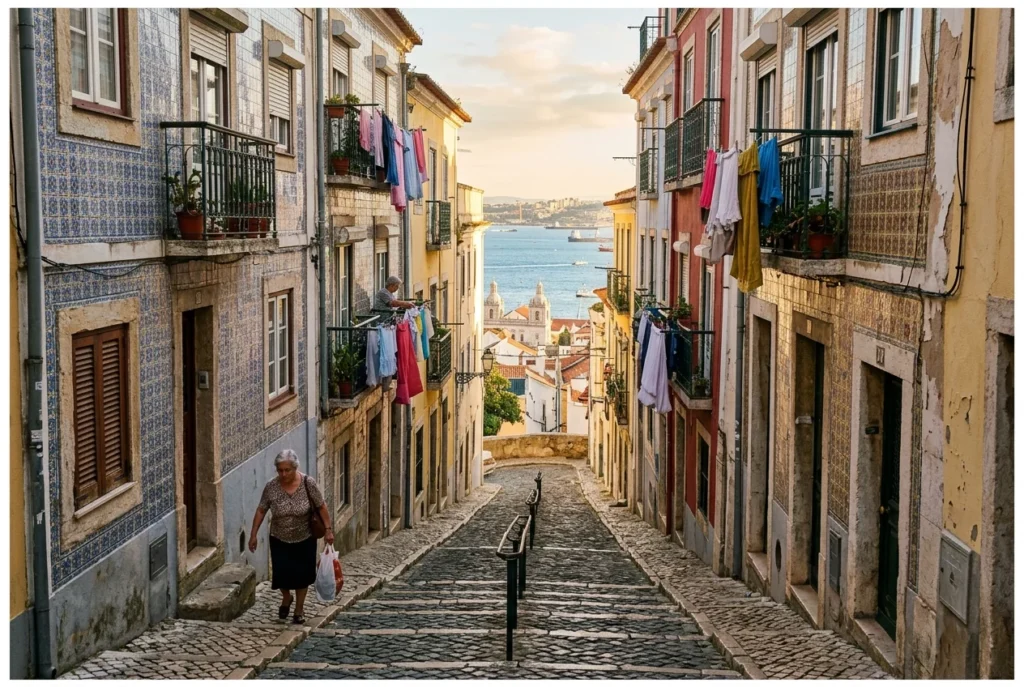
Light sleepers should look elsewhere or choose a hotel on a side street with good soundproofing. The hill also means a steep walk to reach the metro, and airport transfers usually work best by taxi or rideshare. For many travelers, staying in Chiado and visiting Bairro Alto at night is the smarter plan.
Avenida da Liberdade: Best for Luxury and Space
Avenida da Liberdade is Lisbon’s grand boulevard, lined with trees, designer stores, and some of the city’s best luxury hotels. The wide pavements and central promenade feel spacious after the tight lanes of the old quarters, and Restauradores Square connects you to Baixa in a short stroll. Parque Eduardo VII at the top gives you green space and big city views.
This area suits travelers who value comfort, service, and quiet evenings over medieval charm. Marquês de Pombal is a major metro hub, which makes getting around easy. The drawback is atmosphere. It feels polished and a little corporate compared with the older districts, and prices run high.
The One Palácio da Anunciada is a five-star palace with pools, Torel Palace offers boutique drama and garden views, and Hotel Valverde brings small-scale luxury.
Cais do Sodré and Santos: Best for Food and Creative Energy
Cais do Sodré has shed its rough reputation and become one of Lisbon’s liveliest districts. The Time Out Market food hall draws crowds from morning to midnight, and Pink Street comes alive with bars and clubs at night. Trains to Cascais leave from the station, and the riverfront is a short walk away.
Neighboring Santos is calmer and more creative, with galleries, design shops, and restaurants favored by locals. JAM Lisbon is a stylish riverside option with a rooftop pool, while Pensão Amor offers an eccentric, artistic stay above a famous bar.
Choose carefully if you value sleep. Pink Street is loud on weekends, and the noise carries into nearby buildings. Santos is the safer bet for a livelier area with fewer late-night crowds.
Belém: Best for Museums and a Slower Pace
Belém sits on the Tagus about 6 kilometers west of downtown, and it feels like a separate town. Jerónimos Monastery, Belém Tower, the Monument to the Discoveries, and the MAAT museum are all within walking distance, and the riverside gardens are flat and pleasant. The famous Pastéis de Belém bakery is a short stroll away, so breakfast pastries are easy.

The cost is distance. A tram or train ride into central Lisbon takes around 15 to 20 minutes, and evenings are quiet. Belém works well for longer stays, repeat visitors, and families who want open space. Altis Belém Hotel and Spa offers river views and a pool, Jerónimos 8 is a solid mid-range pick near the monastery, and Palácio do Governador is a luxury stay in a former fortress.
Best Places to Stay in Lisbon by Traveler Type
Budget travelers get the best value in Baixa, where hostels and simple hotels cluster near transit. Home Lisbon Hostel is a friendly choice with private rooms and dorms. Couples usually prefer Alfama or Príncipe Real for atmosphere and views. Families benefit from aparthotels in Chiado, Baixa, or Avenida da Liberdade, where a kitchen and a sofa bed make the extra space worth the price. Groups of friends often pick Cais do Sodré for bars and food within a short walk. Travelers with limited mobility should choose Baixa or the flatter parts of Avenida da Liberdade and look for hotels with elevators, since many historic buildings have steep stairs. If you land late or leave at dawn, an airport hotel can save you a stressful transfer, though Lisbon’s airport is only about 30 minutes from the center by metro or taxi.
Getting Around Lisbon From Your Hotel
Lisbon is walkable, but the hills shape every route. The metro is the fastest way to cross town, and a rechargeable transit card keeps fares low across metro, buses, and trams. Trams are charming but slow and crowded, so treat them as part of the sightseeing rather than a quick commute. Taxis and rideshares are affordable, which helps if your hotel sits on a steep street. The airport connects to the center by metro in roughly 30 minutes, though neighborhoods on hilltops often need a short taxi ride at the end. Lisbon is generally safe, but pickpockets work the busiest tram lines and tourist squares, so keep valuables close.
Practical Tips for Booking Your Lisbon Stay
Book early for spring and summer, since the best boutique hotels fill quickly and prices climb. Autumn and winter offer lower rates and mild weather. Check whether your hotel has an elevator, air conditioning, and soundproof windows, because older buildings often lack them. Read recent reviews for noise comments, particularly in Bairro Alto and Cais do Sodré. Pay attention to the exact street, since two addresses in the same neighborhood can differ by a ten-minute uphill walk. Many travelers also prefer hotels and aparthotels over short-term rentals, which have strained housing for residents. Finally, always confirm current rates and availability on a booking platform before you plan your trip.
Final Thoughts on Where to Stay in Lisbon
The best place to stay in Lisbon depends on your priorities. Chiado gives first-time visitors the strongest mix of charm and convenience, while Baixa wins for flat streets and easy transit. Alfama and Príncipe Real reward travelers who want atmosphere, and Avenida da Liberdade delivers comfort and space. Nightlife fans can lean toward Bairro Alto or Cais do Sodré, and Belém suits a slower, culture-focused trip. Pick the neighborhood that fits your pace, then book a hotel on a quiet street close to a metro stop. Your Lisbon stay will feel easier from the first morning.