The best places to see bioluminescence in the USA are the Indian River Lagoon in Florida, the beaches of San Diego, Tomales Bay in Northern California, and the San Juan Islands in Washington. Each one glows for a different reason and on a different schedule, so picking the right spot at the right time of year decides whether you see the show or stare at dark water.
Bioluminescence happens when tiny marine organisms make light through a chemical reaction inside their bodies. Around most of the American coast, the glow comes from dinoflagellates, single-celled plankton that flash blue-green when the water around them moves. A paddle stroke, a breaking wave, or a fish swimming past can set off thousands of them at once.
This guide covers the five most dependable places to catch it, with the best months for each and practical notes on getting out on the water after dark. For the global picture, read our worldwide bioluminescence guide.
Indian River Lagoon and Mosquito Lagoon, Florida
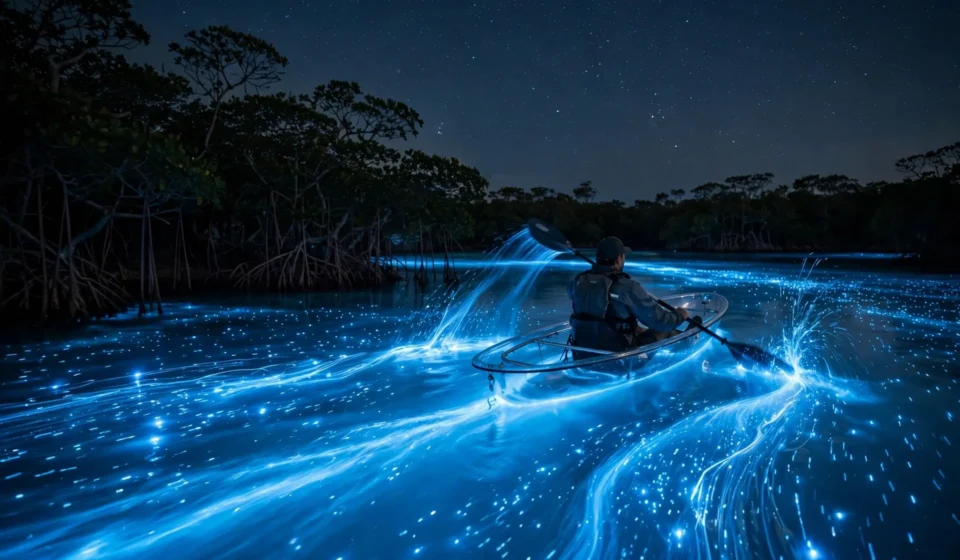
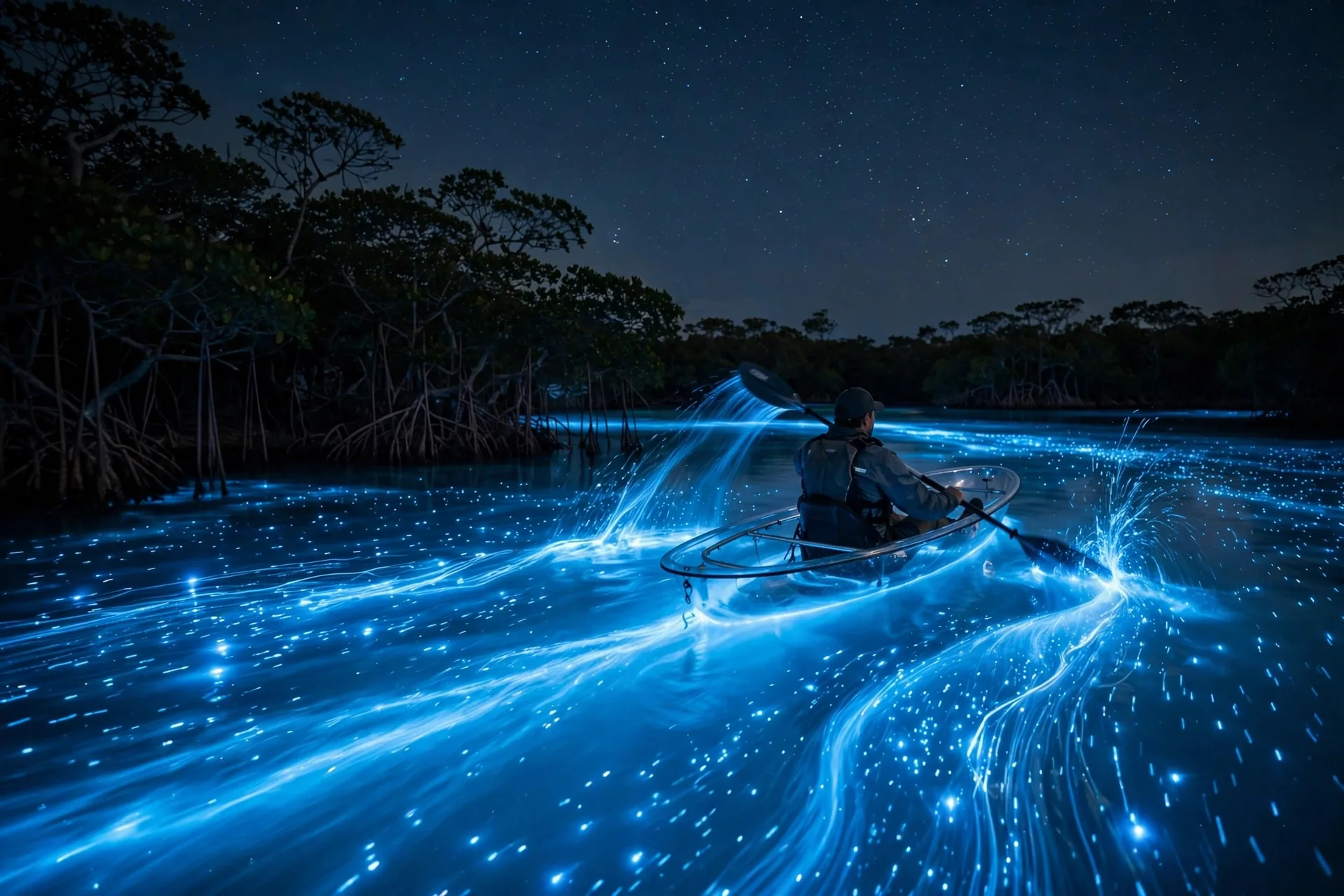
If you want the safest bet in the country, start here. The lagoons along Florida’s Space Coast, near Titusville, hold dense populations of glowing dinoflagellates all summer. On a dark night in peak season, the water lights up around your kayak with every stroke, and fish leave bright trails as they dart underneath.
The season runs from June through October, with July and August usually the brightest months. Warm, calm water grows the plankton faster, so late summer trips after a string of hot days tend to deliver. In the cooler months, some local operators switch to comb jelly trips. These small drifting animals pulse with their own light, a quieter but stranger show.
How to See It
Book a guided night tour out of Titusville or the Merritt Island area, and pick a clear kayak if you can. The transparent hull lets you watch the glow beneath you, not just around you. The Banana River near Cocoa Beach is a calmer alternative when the main lagoon tours sell out. Go on or near a new moon, and reserve ahead in July and August, when tours fill fast.
San Diego and Southern California
Southern California offers a different kind of show. Here the glow comes from red tide events, when specific algae bloom close to shore and turn breaking waves electric blue. It is the least predictable entry on this list. A bloom can last a few nights or several weeks, and some years bring nothing at all.
When it hits, though, it is spectacular from the sand. No boat needed. National Geographic has reported that Southern California saw these glowing tides several years running, with October and November the most active months. Mission Bay, La Jolla Shores, Newport Beach, and Torrey Pines are the beaches locals watch first.
How to See It
You cannot plan this one months out. Watch local surf reports and social media for bloom alerts, then go the same night if you can. Walk the beach after full dark, keep white lights off, and give your eyes fifteen minutes to adjust. The waves do the rest.
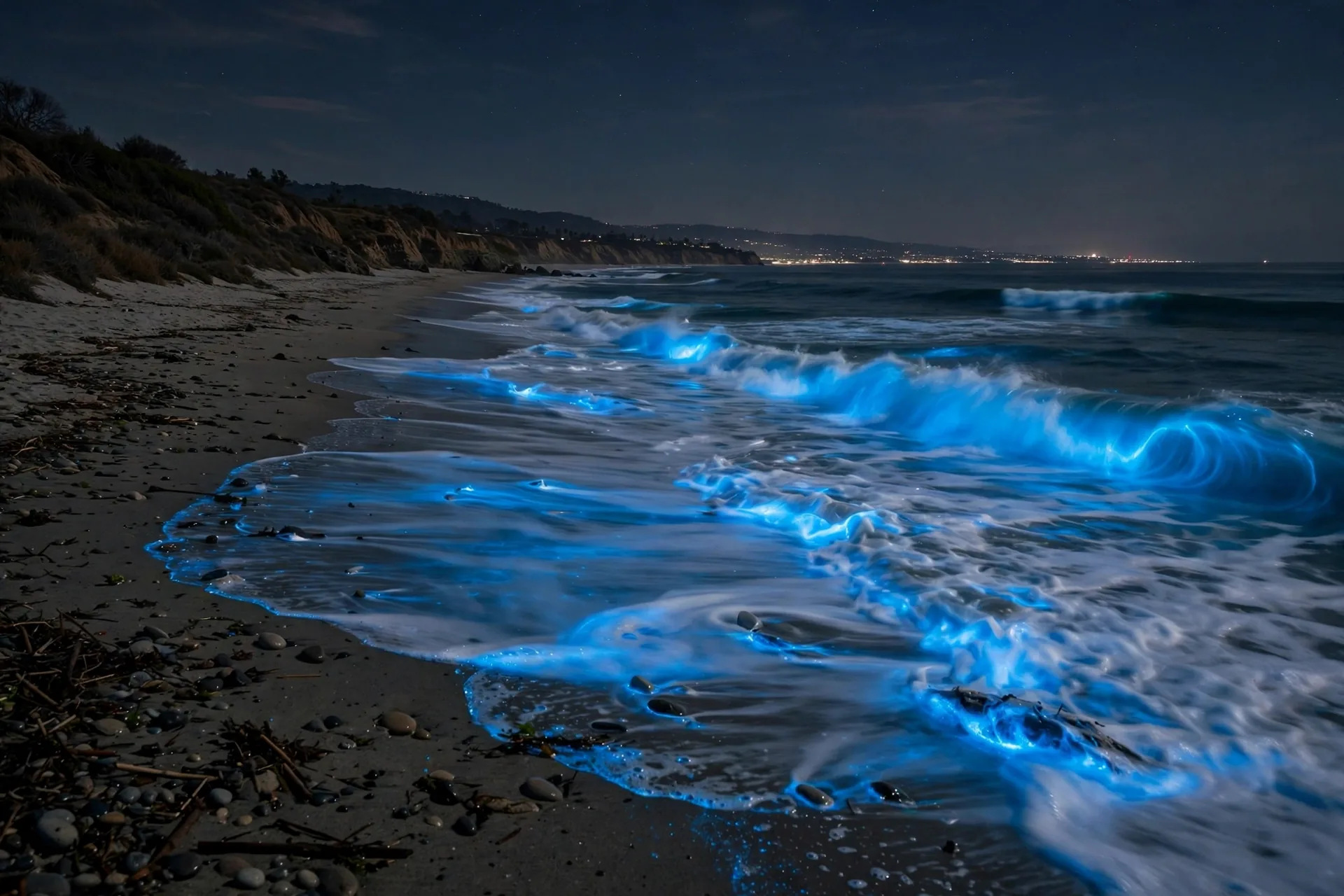
Tomales Bay, California
An hour north of San Francisco, Tomales Bay trades the open ocean for calm, sheltered water. That matters, because still water and dark skies are the two things glowing plankton need most. Summer into early fall is the window, when warm water and long nights overlap.
This is a kayak-only experience, and a guided one. Local park rules restrict independent night launches to protect nesting waterbirds, so nearly everyone goes out with an outfitter. The upside is expertise. Guides track the plankton daily and will tell you honestly whether the night is worth it.
How to See It
Book a guided night paddle a few weeks to months ahead for summer weekends, since groups are small and sell out. Dress warmer than you think. Even in August, the bay gets cold after dark, and you will be sitting still on the water for two hours.
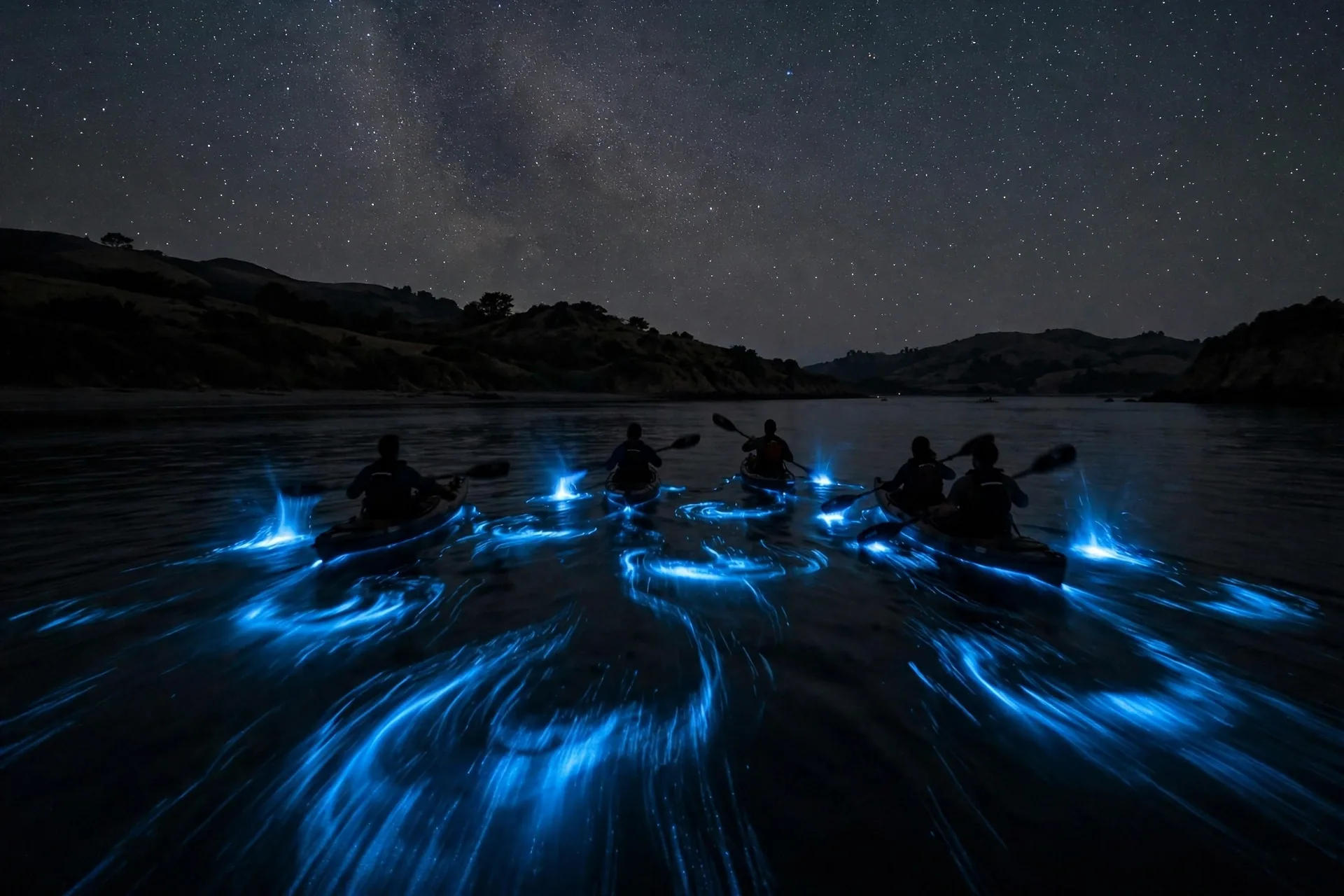
San Juan Islands, Washington
The Pacific Northwest rounds out the list with the cold-water version of the phenomenon. Around Friday Harbor and the quiet coves of the San Juan Islands, summer plankton blooms can light up the water on calm nights. It is subtler than Florida, and you may need to work a little harder, but the setting, a dark evergreen shoreline under a starry sky, is hard to beat.
Puget Sound beaches near Seattle, including Carkeek Park and Golden Gardens, also flash on the right nights. These are do-it-yourself spots. Pick a beach far from city lights, wait for full dark, and disturb the shallow water with your hand or a thrown stone.
How to See It
For a guaranteed outing, join a guided bioluminescence kayak tour in the San Juans or Hood Canal. Seattle’s Child notes that tours typically run about two hours and start around $100 per person, and they advise booking early since summer dates go fast. Bring a windproof layer. Night temperatures on the water drop quickly even in July.
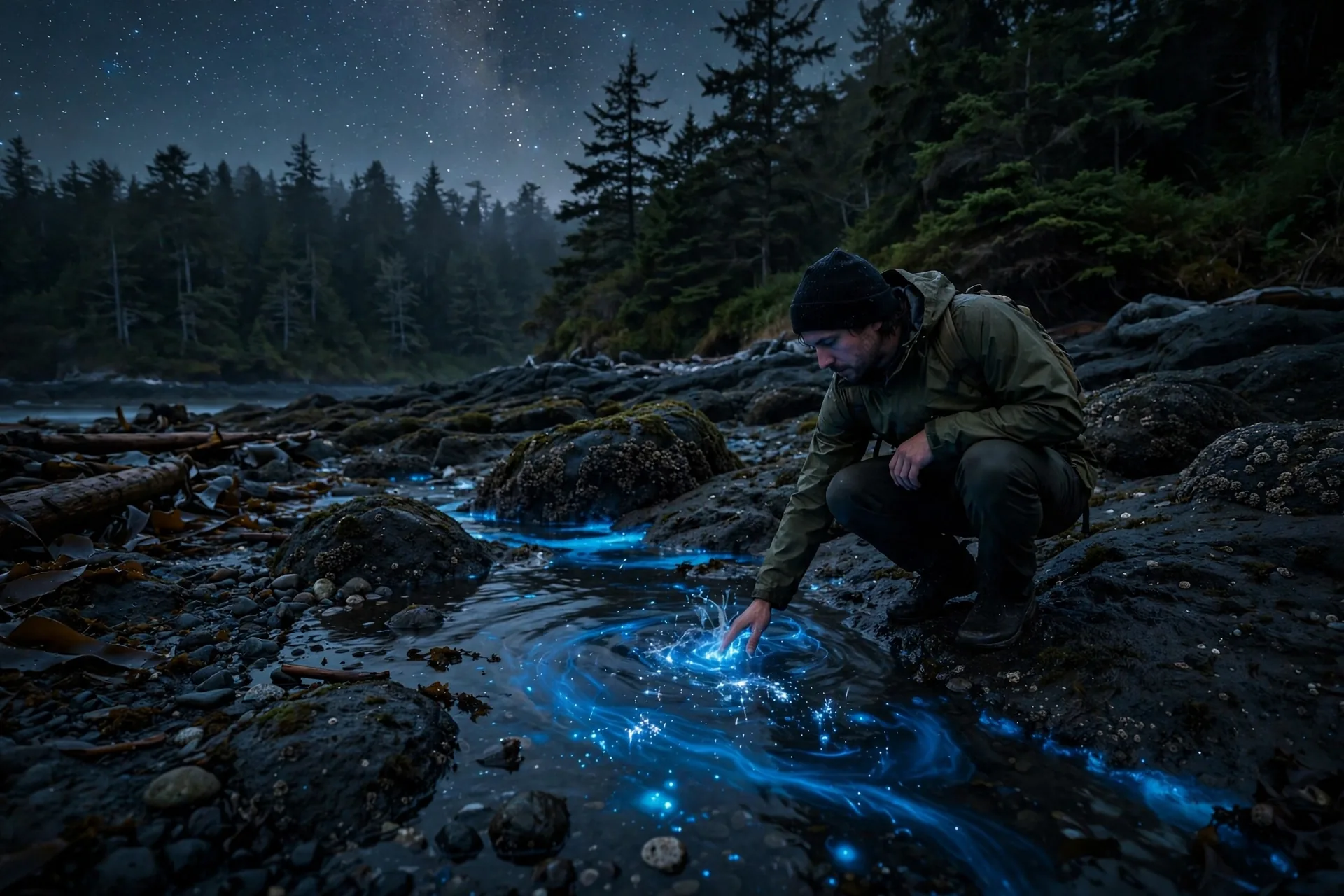
Manasquan, New Jersey
One honorable mention for the East Coast. Manasquan Beach has lit up on scattered summer nights when the right plankton drift close to shore. There is no season to circle and no tour to book, which is exactly the point. If you live nearby, it costs nothing to check.
Follow local beach reports and go on a moonless night after a stretch of warm, calm weather. Treat it as a bonus, not a plan. Anyone traveling specifically for the glow should pick one of the four spots above.
When to Go: the Best Month for Each Spot
| Spot | Best Months | What Glows | How to See It |
|---|---|---|---|
| Indian River Lagoon, Florida | June to October | Dinoflagellates | Clear-kayak tour from Titusville |
| San Diego, California | Late summer to November, varies by year | Red tide algae | Beach walk during a bloom |
| Tomales Bay, California | June to September | Dinoflagellates | Guided night kayak |
| San Juan Islands, Washington | June to September | Dinoflagellates | Guided kayak tour |
| Manasquan, New Jersey | Occasional summer nights | Dinoflagellates | Watch local reports |
Five Tips for a Better Night on the Water
- Plan around the new moon. Even a half moon can wash out the glow, so check the lunar calendar before you book anything.
- Give your eyes time. It takes fifteen to twenty minutes in full darkness for your night vision to peak, so arrive early and stay patient.
- Kill the white lights. A red-light flashlight preserves night vision for everyone nearby, and many guides require them.
- Book summer tours early. Florida and Tomales Bay weekends sell out weeks ahead in July and August.
- Skip the sunscreen and bug spray right before you get in the water. Chemical residue can harm the organisms you came to see.
Frequently Asked Questions
When is bioluminescence season in Florida?
June through October, with July and August the brightest months. Warm, calm water after hot days gives the best glow, and a new moon night is ideal.
Can you swim in bioluminescent water?
It depends on the spot. In Florida’s lagoons the experience is by kayak, not swimming. Some places elsewhere, like La Parguera in Puerto Rico, do allow swimming. Always follow the local operator’s rules, and skip sunscreen and bug spray before getting in the water.
Is bioluminescence in California predictable?
No. Southern California’s glow comes from red tide blooms that can last a few nights or several weeks, and some years bring nothing at all. Watch local surf reports for bloom alerts and go the same night if you can.
How much do bioluminescence kayak tours cost?
Guided tours in the Pacific Northwest typically run about two hours and start around $100 per person, according to Seattle’s Child. Florida clear-kayak tours vary by operator and season, so check current prices when booking.
Do I need to book in advance?
Yes for Florida in July and August and for Tomales Bay, where small groups sell out weeks ahead. San Diego needs no booking at all, just a bloom alert and a dark beach.
If you time it right, any of these five places can deliver the glow, and they are only the American chapter of the story. Start with Florida for the safest bet, chase a red tide in San Diego for the most dramatic photos, and keep exploring. Continue with our worldwide bioluminescence guide.