
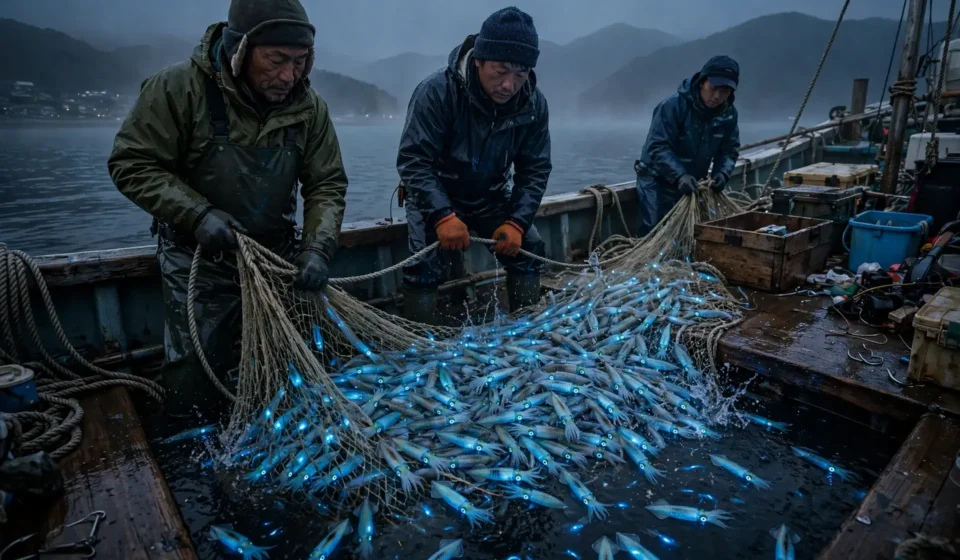
The best place to see bioluminescence in Japan is Toyama Bay, where millions of firefly squid rise from the deep each spring and turn the shoreline electric blue. The season runs from March to May, with the brightest displays usually in April.
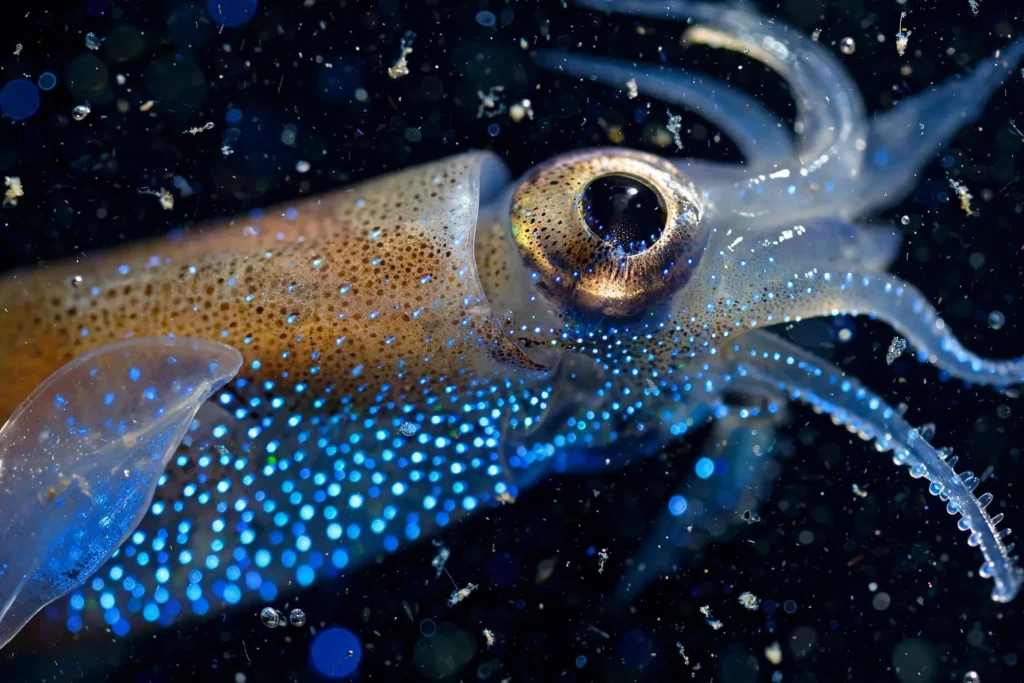
These are not plankton. Hotaru ika, the firefly squid, are small deep-sea squid lined with light-producing organs. They spend most of the year in the dark depths of the Toyama Trough, then gather near the surface in spring to spawn, flashing blue light to communicate. When thousands gather at once, the bay glows like a city seen from above.
This guide covers where to go, when to go, and how to join the famous early-morning sightseeing boats. For glowing spots beyond Japan, see our worldwide bioluminescence guide.
Toyama Bay: Firefly Squid Capital
Toyama Bay on Honshu’s western coast is the only place in the world where firefly squid gather in such numbers. The bay’s deep underwater trench funnels nutrient-rich water upward, which draws the squid toward the coast each spring. On peak nights, waves push them so close to shore that the surf itself sparkles.
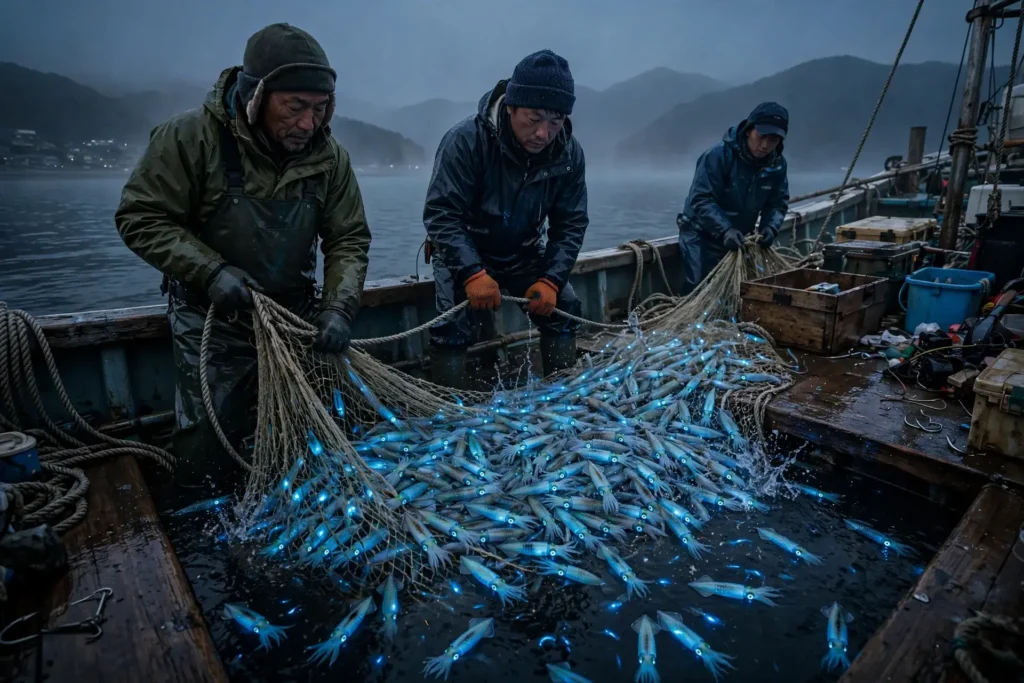
The spectacle is tied to the local fishing tradition, not staged for tourists. Fishermen have hauled these glowing squid from the bay for generations, and the sightseeing boats simply let visitors watch the real harvest happen.
How to See It
Join a firefly squid sightseeing boat from Namerikawa port. Boats depart shortly after 3am and travel 1 to 2 kilometers offshore to the fixed nets, where you watch fishermen haul in the catch as the squid flash around the boat. Yes, it is an early start, but the blue glow against the pre-dawn dark is worth it. Book ahead, since seats are limited and the season is short.

The Firefly Squid Museum
In Namerikawa, the Hotaruika Museum is the world’s only museum dedicated to the firefly squid. It runs its own sightseeing tours during the March to May season and keeps live exhibits the rest of the year, so it is the fallback if you visit outside the glowing months.
The museum also explains the science, how the squid use their light organs to communicate and camouflage, and covers the local food culture. Firefly squid are a spring delicacy in Toyama, served as sushi, sashimi, and tempura for just a few weeks a year.
When to Go
| Timing | What Happens | How to See It |
|---|---|---|
| Early March | Season begins, squid start rising | First sightseeing boats from Namerikawa |
| April to early May | Peak spawning, brightest displays | 3am boat tours; book ahead |
| Late May | Season winds down | Last boat tours of the spring |
| June to February | Off-season | Firefly Squid Museum exhibits in Namerikawa |

Five Tips for the Firefly Squid Season
- Book the boat tour early. The season lasts about two months and seats sell out, especially on weekends.
- Aim for April. That is the historical peak, when the largest numbers gather near the surface.
- Dress for a cold pre-dawn. You will be on open water at 3am, so bring a warm, windproof layer even in spring.
- Stay in Toyama or Namerikawa the night before. A 3am departure is painful enough without a long drive.
- Visit the museum as backup. If weather cancels the boats, the Hotaruika Museum keeps the trip worthwhile.
Frequently Asked Questions
When is firefly squid season in Japan?
March to May, with the peak usually in April and early May. Outside these months, the squid stay deep and the bay goes dark.
Where is the best place to see firefly squid?
Toyama Bay, on Honshu’s western coast, and specifically the port town of Namerikawa, where the sightseeing boats depart. Nowhere else in the world gathers them in these numbers.
What time do the sightseeing boats leave?
Shortly after 3am. The boats head 1 to 2 kilometers offshore to the fishing nets and return as dawn breaks.
Can you see firefly squid from the shore?
Sometimes. On peak nights, waves wash glowing squid onto the beach, but it is unreliable. The boat tour is the dependable way to see them.
Is there really a firefly squid museum?
Yes. The Hotaruika Museum in Namerikawa is the world’s only museum dedicated to the firefly squid, with live exhibits, science displays, and its own seasonal sightseeing tours.
Japan’s glow is unlike anywhere else on this list. No plankton, no red tides, just millions of tiny squid turning the sea into a mirror of the night sky. Time it for April, set the 2am alarm, and go. For glowing spots beyond Japan, see our worldwide bioluminescence guide.