
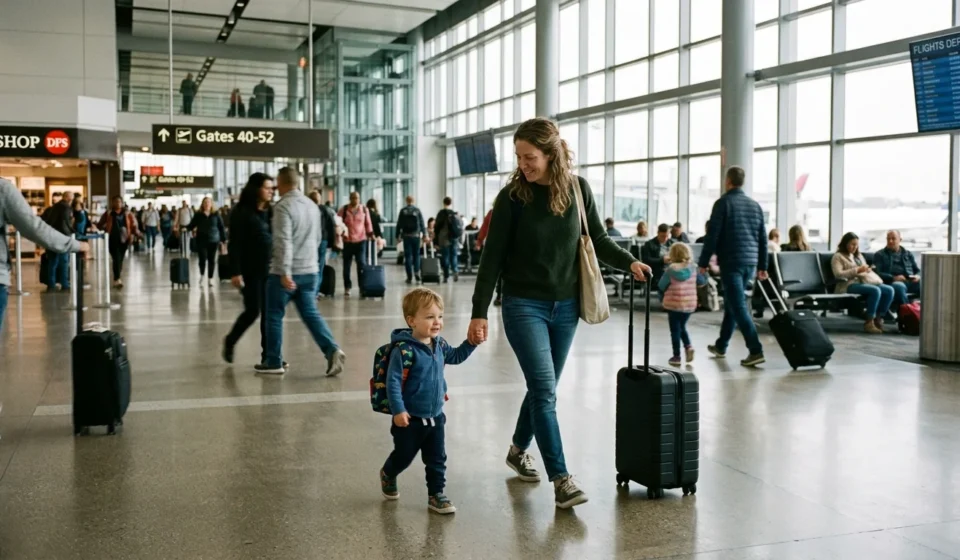
The best way to travel with a toddler is to build the trip around naps, pack for delays, and keep your expectations for the day low. Most trips go well when you cut down on connections, bring more snacks than seems reasonable, and treat every stop as a chance to burn off energy. This guide covers flights, road trips, trains, sleeping away from home, and the small details that cause most of the stress.
Start With the Trip Itself
A toddler handles one change of scenery well and three poorly. Before you book anything, ask whether the trip needs to be as long or as complicated as you are planning.
A direct flight of two hours is easier than a cheaper route with a layover, even if the layover itinerary saves money. Every connection adds a security line, a gate change, a diaper stop, and another chance for a tired child to melt down. If you must connect, choose a layover of at least 90 minutes so you are not sprinting with a stroller.
Pick destinations that suit short legs and short attention spans. A beach rental with a kitchen usually works better than a packed city itinerary, because you can feed a toddler at 5:30 p.m. without waiting for a restaurant table. Keep one major activity per day and leave the rest of the schedule open.
Plan Around Naps and Bedtime
Sleep is the single biggest factor in how a travel day feels. The American Academy of Sleep Medicine recommends 11 to 14 hours of sleep in every 24 hours for children aged 1 to 2, naps included, so a skipped nap shows up quickly as a tantrum.
For flights, there are two common approaches. A departure that lands on the toddler’s usual nap window gives them a good chance of sleeping in the air. A flight right after a normal morning wake-up works well for children who nap in the afternoon at the destination.
Avoid the last flight of the day unless your child sleeps easily anywhere. An overtired toddler at 9 p.m. in a loud gate area is hard to calm, and the arrival is rough for everyone. For road trips, many parents start driving at nap time or just before bedtime so the child sleeps through the longest stretch.
What to Pack in a Toddler Carry-On
Pack the carry-on as if your checked bag will be lost, because sometimes it is. You need enough for 24 hours without anything else.
- Two or three full sets of diapers or pull-ups, plus wipes and a changing pad
- A complete change of clothes for the toddler and one spare shirt for you
- More snacks than the trip requires, in separate small bags
- A refillable cup with a spill-proof lid and any formula or milk you need
- Three or four small, new-to-them activities, such as sticker books, magnetic drawing boards, or a lift-the-flap book
- A comfort item, like a lovey or blanket, kept within reach and never in checked luggage
- Hand sanitizer, a small first-aid kit, and any prescribed medicine in its original packaging
- Plastic bags for dirty clothes and trash
Wrap two or three of the activities in paper if your child enjoys unwrapping. It stretches ten minutes of play into twenty. Keep the best item hidden until the toddler is truly bored.
Getting Through the Airport
Arrive earlier than you would on a solo trip, since everything takes longer with a toddler. Two and a half hours before a domestic flight is a comfortable buffer for most families.
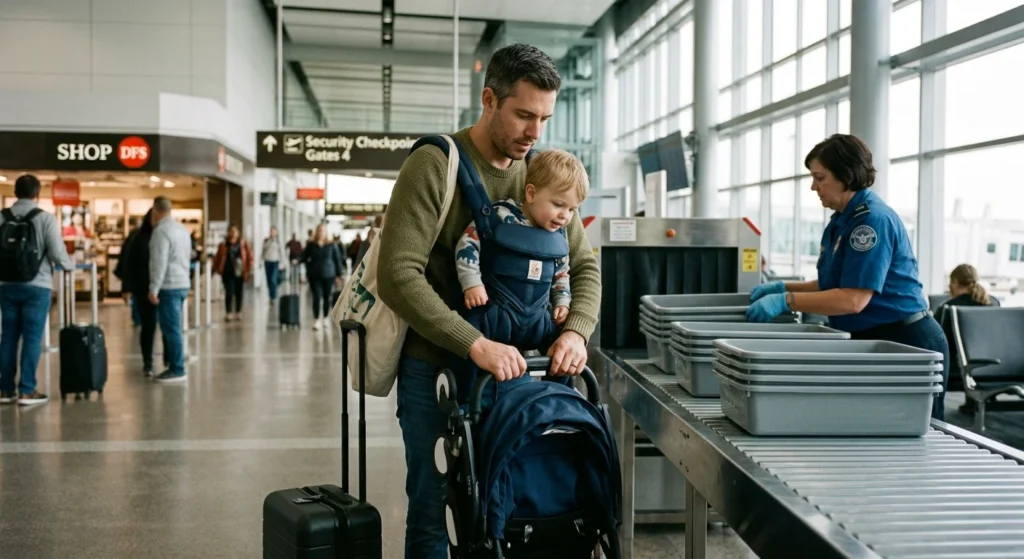
At security, the Transportation Security Administration allows formula, breast milk, and juice for toddlers in reasonable quantities that exceed the usual 3.4-ounce limit. Tell the officer at the start so the items can be screened separately. Children aged 12 and under can usually keep their shoes on, which saves one stressful step.
Strollers go through the X-ray machine, so you will carry your toddler through the metal detector or scanner. A baby carrier helps here, because you need both hands for bags and bins. Fold the stroller before you reach the belt and pull out anything loose in the basket.
Use the time before boarding to let your toddler move. Walk the terminal, find a play area if the airport has one, and skip the pre-board unless you need extra time with a car seat. Boarding last means less time confined in the plane.
Surviving the Flight
The Federal Aviation Administration recommends that children under 40 pounds ride in an approved child restraint system rather than on a lap. Look for a label stating the seat is certified for use in motor vehicles and aircraft. A toddler who turns 2 needs their own ticket on most airlines in any case.
If you want something lighter than a car seat, the CARES harness is an FAA-approved option for children who weigh roughly 22 to 44 pounds and can sit upright in their own seat. It weighs about a pound and fits in a purse. Check your airline’s rules before relying on it.
Ear pressure during takeoff and landing causes pain for some toddlers. The Mayo Clinic suggests encouraging swallowing with a bottle, a cup of water, or a snack during descent, since swallowing helps open the tubes in the ears. Do not wait until the child is already crying to offer something.
Keep your toddler moving in small ways on a long flight. Walk the aisle when the seatbelt sign is off, and rotate between snacks, books, and a tablet. The American Academy of Pediatrics suggests limiting screen time for ages 2 to 5 to about an hour a day of high-quality programming, so travel days are a fair time to bend that guideline if you return to normal afterward.
Never give a sedative or antihistamine to make a toddler sleep unless your pediatrician has told you to. The reactions can be unpredictable, and some children become more wired, not drowsier. If you want a plan for a rough flight, ask your doctor before you leave.
Road Trips With a Toddler
A car is more forgiving than a plane because you control the schedule. It also demands more stops than most adults expect. Plan a break every 90 minutes to two hours, and make each one at least 15 to 20 minutes so your toddler can run.
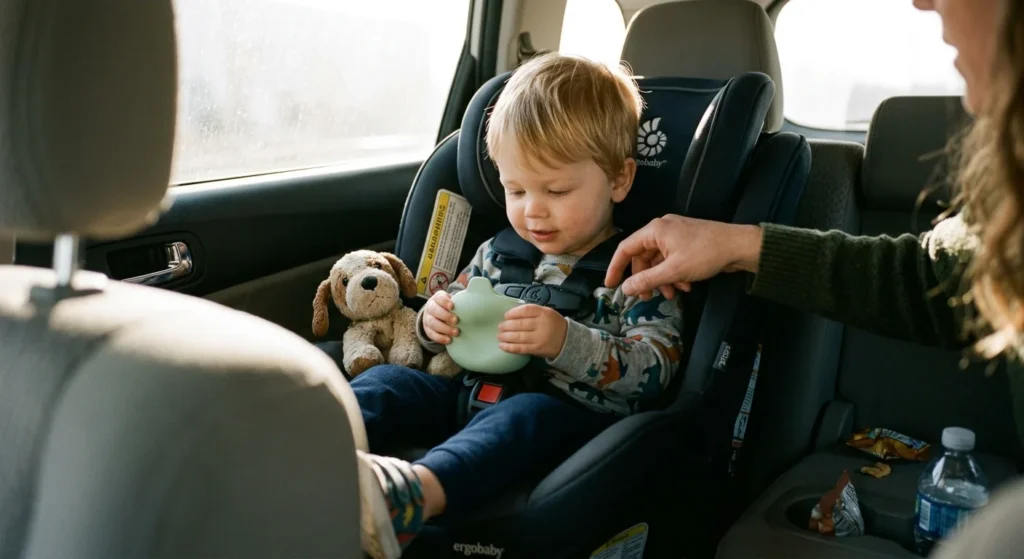
The American Academy of Pediatrics recommends keeping children in a rear-facing car seat as long as possible, until they reach the highest weight or height limit for their seat. Check the label on your own seat, because limits differ by model. Make sure the harness is snug, and the chest clip sits at armpit level, even on a short trip.
Pack a “car bag” within reach of the front seat instead of buried in the trunk. It should hold snacks, wipes, a spare outfit, a few toys, and a bag for trash. Rotate toys every hour so each one feels new.
Never leave a child alone in a parked car, even for a quick errand. The National Highway Traffic Safety Administration warns that temperatures inside a vehicle can rise to dangerous levels within minutes. Take the toddler with you every time you step out.
Trains and Buses
Trains are often the easiest way to travel with a toddler. You can walk the carriage, get a table for coloring or snacks, and avoid takeoff and security lines. Amtrak and many European railways let children under a certain age ride free or at a reduced fare, though the age limits differ by operator, so check before booking.
Book a seat near the toilet or a baggage area, and choose a table seat if your toddler likes to play with toys. Buses are tighter and harder to leave, so keep trips short and carry a stroller that folds in a few seconds.
Sleeping Away From Home
A new bed is the second biggest challenge after the journey itself. Ask your hotel or rental host in advance for a crib, or bring a portable one with a firm, flat mattress. The American Academy of Pediatrics advises against soft bedding, bumpers, and pillows for sleeping toddlers, and the same rules apply away from home.
Recreate the usual routine as closely as you can. The same bath, the same book, the same white noise machine, and the same lovey tell your toddler it is time for bed, even in a different room. A small battery-powered night light also helps if the room is unfamiliar.
If the room is shared, a hotel bathroom with the fan on can work as a sleeping spot for the adults after the toddler is down. Some families book a suite with a separate bedroom for this reason alone. Cover bright windows with blackout curtains or a portable blackout shade.
Adjust to time zone shifts gradually. For a one- or two-hour change, shift meals and bedtime by 30 minutes each day beforehand. For larger differences, follow local time right away, get outside in daylight, and accept two or three rough days.
Food, Snacks, and Hydration
Toddlers eat less predictably when they travel, so aim for familiar foods in new settings. Bring cheese sticks, crackers, fruit pouches, and dry cereal, which keep well and cause little mess.
Offer water often, especially on planes where the air is dry. Cut grapes lengthwise and avoid whole nuts, popcorn, and hard candy, which are choking hazards for young children. Keep snacks in small portions so your toddler is not tempted to grab a handful at once.
At restaurants, ask for food to come out immediately and bring something to do. A toddler who has to wait forty minutes for a meal is not going to wait politely.
Health and Safety Notes
Carry a small kit with a thermometer, bandages, any regular medication, and a pediatrician-approved fever reducer in the correct dose for your child’s weight. Write your pediatrician’s phone number and your child’s allergies on a card in your wallet. Check whether your health insurance covers urgent care at your destination.
For international trips, look at the Centers for Disease Control and Prevention travel page for your destination. It lists recommended vaccines and food and water precautions, and some vaccines for young children need to be scheduled weeks ahead. Talk to your pediatrician at least six to eight weeks before departure.
Keep a recent photo of your toddler on your phone and dress them in a bright color in crowded places. Write your phone number on a wristband or temporary tattoo if you are visiting a busy attraction.
When Things Go Wrong
A delayed flight or a long meltdown will happen at some point. Staying calm matters more than staying on schedule, since toddlers pick up on stress quickly. Step away from the crowd, offer a snack and water, and give your child a few minutes of one-on-one attention before you move on.
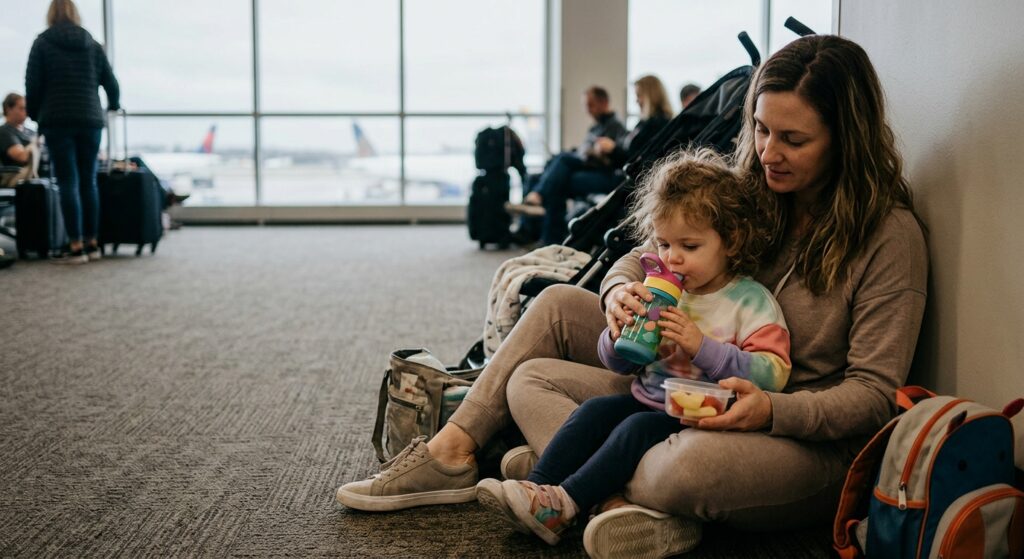
If a flight is canceled, ask the airline about rebooking before you leave the desk, and check the app while you stand in line. Keep your carry-on stocked so a four-hour delay means a long day, not an emergency. Most children bounce back quickly when the next nap or meal arrives.