
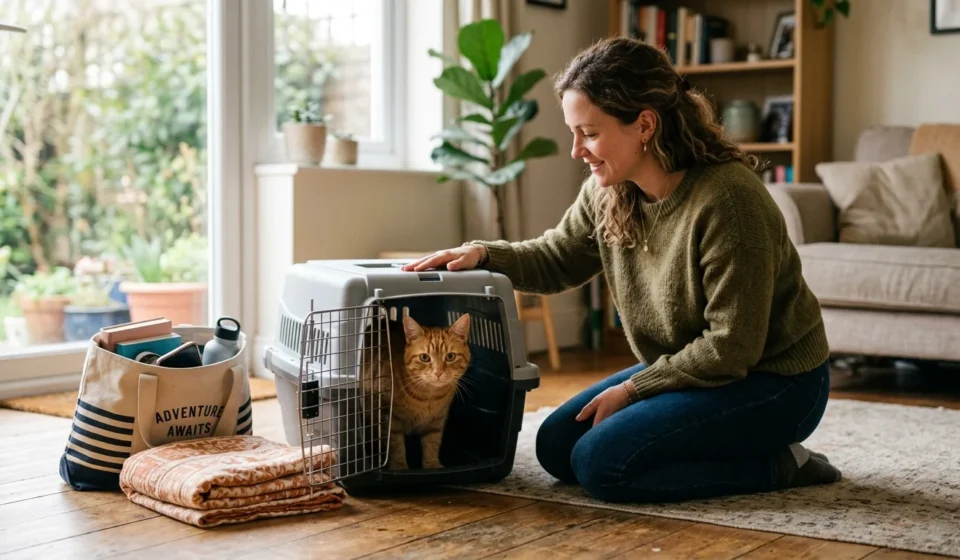
To travel with a cat safely, see your vet before the trip, train your cat to accept a sturdy carrier, keep the cat inside it whenever you are moving, and pack a small kit with food, water, litter, and paperwork. Most cats dislike change, so the goal is not a cat who loves the road. The goal is a cat who stays calm enough to get from your front door to a new room without panic.
This guide walks through the whole process, from deciding whether the trip makes sense to what you do in the first hour after you arrive. It also covers the car, airport, train, and hotel details that most checklists skip.
Decide Whether Your Cat Should Make the Trip
Start by asking whether the trip is better for your cat than staying home with a sitter. A healthy adult cat on a weekend away is often happier in familiar surroundings with someone visiting once or twice a day. Longer stays, moves, and extended family visits change that math, because a cat left alone for a week is a bigger problem than a cat in a carrier for a day.
Some cats are poor candidates for travel. Senior cats with kidney or heart disease, extremely anxious cats, and flat-faced breeds such as Persians and Exotic Shorthairs can struggle with stress and temperature changes. Many airlines restrict snub-nosed breeds in cargo for this reason, so ask your vet for a straight answer before you book anything.
Book a Vet Visit and Sort Out the Paperwork
Schedule the appointment at least a month before departure. That gives you time to fix any health issue and to test any medication at home. Ask the vet to confirm that vaccines, especially rabies, are current.
Check that your cat’s microchip is registered with your current phone number, since a chip only helps if the registration is up to date. Add a collar with an ID tag and a breakaway buckle as a second layer.
Airlines and many states ask for a health certificate, formally called a certificate of veterinary inspection, and it is usually valid for about 10 days. Rules vary by destination. Hawaii has its own strict entry requirements, and international trips follow the rules of the country you are entering, which you can look up on the USDA APHIS pet travel page. Start early, since some countries require blood tests or waiting periods that take weeks.
Do not sedate your cat on your own. The American Veterinary Medical Association advises against sedating pets for air travel unless a veterinarian prescribes it, because sedatives can raise the risk of breathing and heart problems. If your cat panics in the car, ask about a prescription anti-anxiety medication such as gabapentin, and run a trial dose at home so you know how your cat reacts.
Train Your Cat to Like the Carrier
Carrier training is the step most people skip, and it changes the whole trip. A cat who only sees the carrier before a vet visit learns to hide when it appears. Start at least three weeks out.
Choose the Right Carrier
Pick a carrier sturdy enough to hold its shape, with a secure latch and ventilation on several sides. Your cat should be able to stand, turn around, and lie down comfortably, but a roomier carrier is not better if it will not fit under an airline seat. Models that open from the top or split in the middle let you lift a nervous cat out gently instead of pulling it through a small door.
Hard-sided carriers suit car travel because you can buckle them in. Soft-sided carriers are easier to fit under a seat, and most airlines list under-seat limits of roughly 18 by 11 by 11 inches, though the exact size depends on the airline and the aircraft. Check your airline’s current numbers before you buy.
Build a Positive Association
Leave the carrier open in a room where your cat already spends time, with a worn T-shirt or familiar blanket inside. Drop treats in it now and then, and move mealtime closer until your cat eats inside it. This usually takes a week or two.
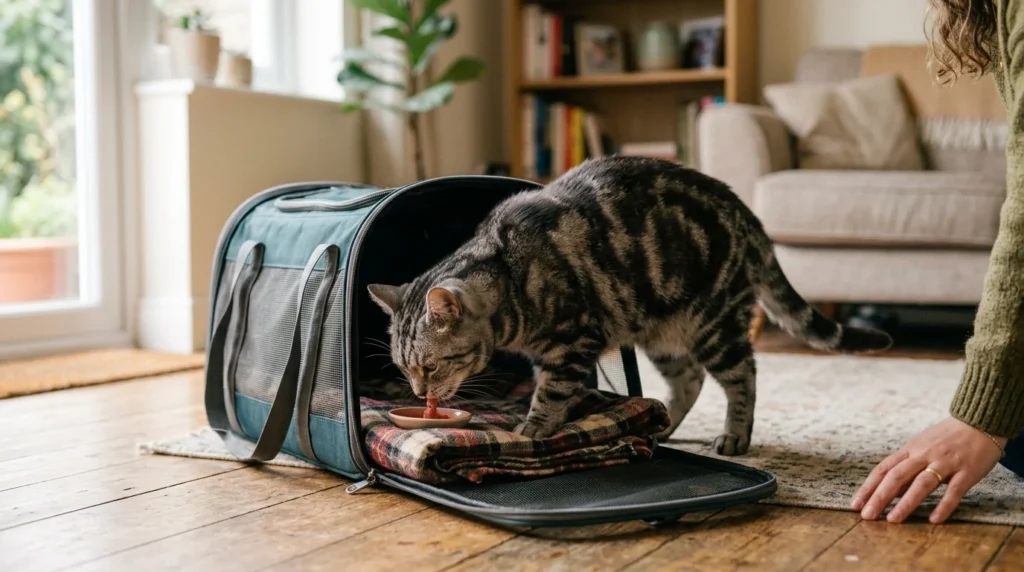
Once your cat walks in on its own, close the door for a few seconds and reward. Lengthen the time, then lift the carrier and walk a few steps. Finish with short car rides that end somewhere pleasant, like your backyard, instead of the vet.
If you want to try a feline pheromone spray, apply it to the carrier blanket about 15 minutes before leaving. The evidence for these products is mixed, but they are low risk and some cats seem calmer.
Pack a Cat Travel Kit
Keep everything in one bag so you are not digging around when your cat has an accident. Here is what to include:
- A carrier liner or absorbent pad, plus two spares
- The food your cat eats at home, enough for the trip plus two extra days
- Collapsible bowls and water from home or bottled water
- A small disposable litter tray, a bag of your usual litter, and a scoop
- A well-fitted harness and leash
- Health certificate, vaccine records, and your vet’s phone number
- Any medication in its original labeled packaging
- Paper towels, wipes, trash bags, and a spare towel
- A blanket or shirt that smells like home
Switching food mid-trip is a common cause of an upset stomach, so stay with the brand your cat already knows. Buy the harness weeks early and practice indoors. An H-style or vest harness is harder to slip out of than a simple neck strap.
How to Travel With a Cat in a Car
Secure the carrier so it cannot slide or tip. The back seat floor behind the front seat works well, or you can run a seat belt through the carrier handle or straps on the seat. Never let your cat roam loose in the car, since a cat can end up under the brake pedal, and the front passenger seat is unsafe because of airbags.
Never leave your cat in a parked car. The AVMA warns that the temperature inside a vehicle can climb to dangerous levels within minutes, even on mild days with the windows cracked. If you need to stop for food, use a drive-through or have another adult stay in the car with the air running.
Feed a light meal about three to four hours before you leave to reduce the chance of car sickness, since drooling and vomiting are common in cats on the road. Cover part of the carrier with a light blanket so your cat can see a little and still feel hidden.
On trips longer than four to six hours, stop to offer water and a litter tray. Do this inside the closed car with the windows up, and clip the leash to the harness before you open the carrier door. A cat that bolts from a parked car at a rest stop is very hard to catch.
How to Fly With a Cat
1. Cabin or Cargo
Take your cat in the cabin whenever you can. The carrier counts as your carry-on or personal item on many airlines and must fit under the seat in front of you for the whole flight. Fees run roughly $95 to $150 each way on the large U.S. airlines, and each flight has a cap on pets, so reserve a spot by phone right after you buy your ticket.
Cargo is a different level of risk, and many airlines limit it during hot or cold weather. Talk it through with your vet before you consider it. Direct flights, early morning or late evening departures in summer, and midday departures in winter all reduce stress and temperature exposure.
2. Getting Through Airport Security
The TSA requires you to take your cat out of the carrier and carry it through the metal detector while the empty carrier goes through the X-ray machine. Put the harness and leash on before you reach the line. You can ask for a private screening room, which is much calmer if your cat is likely to struggle.
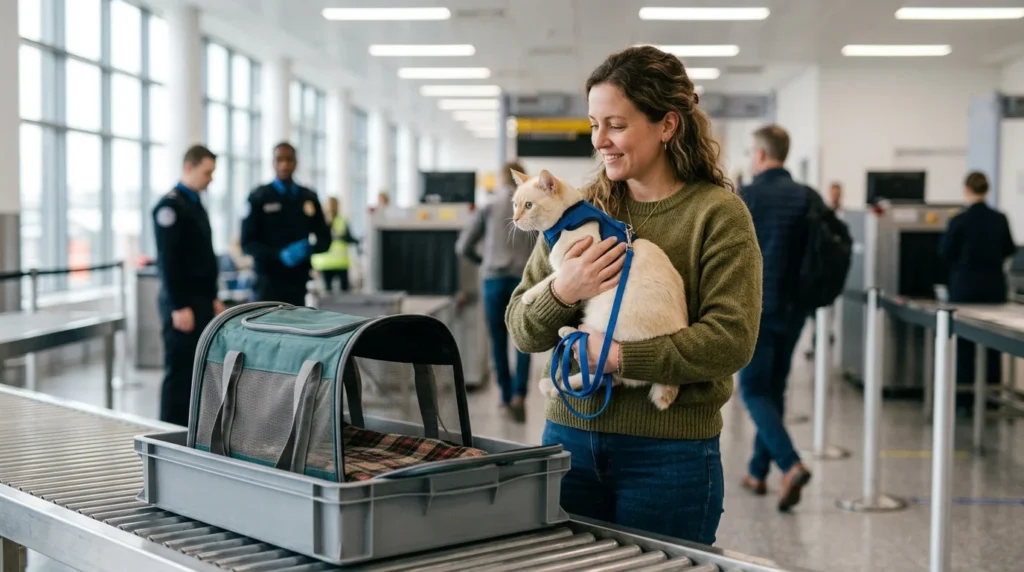
Keep a firm grip and never put your cat on the conveyor belt. After screening, put your cat back in the carrier before you do anything else, including putting your shoes back on.
3. On the Plane
Your cat stays in the carrier under the seat for the entire flight, including takeoff and landing. Keep the carrier zipped, speak quietly, and resist the urge to take your cat out to comfort it. If the flight is long, offer a few drops of water through the mesh.
Traveling by Train or Bus
Amtrak accepts cats on many routes for trips up to seven hours, with a fee of around $26 and a combined weight limit of 20 pounds for the pet and carrier. Check the current rules, since they change and some routes are excluded. Most intercity buses, including Greyhound, accept only service animals, so a bus is rarely an option.
Staying in Hotels and Rentals
Confirm the pet policy in writing before you book. Some hotels allow cats but not dogs, and fees range from about $25 to over $100 per stay or per night. Vacation rentals add another question, which is whether the host expects extra cleaning or has guests with cat allergies coming next.
Once inside the room, look it over before you open the carrier. Block gaps under the bed, check closets, cover open vents if you can, and close the bathroom door. Cats can squeeze into spaces that look far too small, and a cat stuck inside a box spring is a real problem.
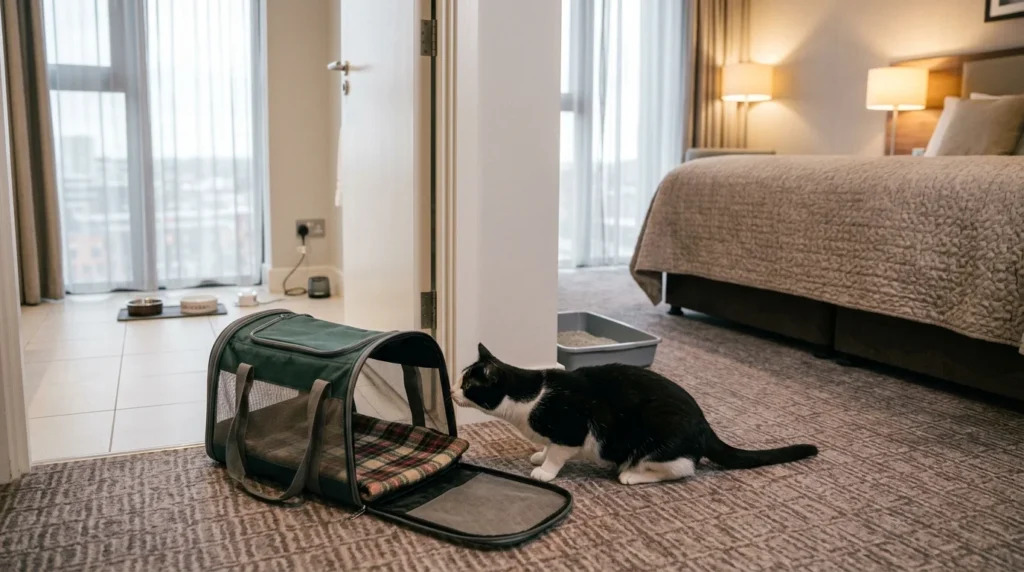
Set up the litter tray in the bathroom and the food and water on the other side of the room. Hang a do-not-disturb sign so housekeeping does not open the door and let your cat out. If you have to leave, put your cat in the carrier or the closed bathroom and tell the front desk.
The First Hour at Your Destination
Prepare one small room first, then bring in the carrier and close the door. Open the carrier and let your cat come out on its own schedule, even if that takes an hour. Leave the carrier in the room as a hiding spot.
Offer water and a small meal, but do not worry if your cat skips it for a few hours. A cat that goes a full day without eating needs a call to a vet, since cats can develop liver problems when they stop eating for too long. Let your cat explore the rest of the house or apartment only after it is eating and using the litter tray.
Warning Signs to Watch and When to Call a Vet
Some stress is normal, including hiding, loud meowing, and a skipped meal. Open-mouth breathing, panting, repeated vomiting, collapse, or a cat that cannot settle after many hours needs a vet’s attention right away. Cats rarely pant from heat or excitement the way dogs do, so treat it as an emergency.
Look up an emergency vet near your destination before you leave, and save the number in your phone. If you plan to travel with a cat often, keep the carrier in the living room year-round so it stays familiar, and have your vet recheck your cat’s health before every long trip. This guide is general information and does not replace advice from your own veterinarian.