
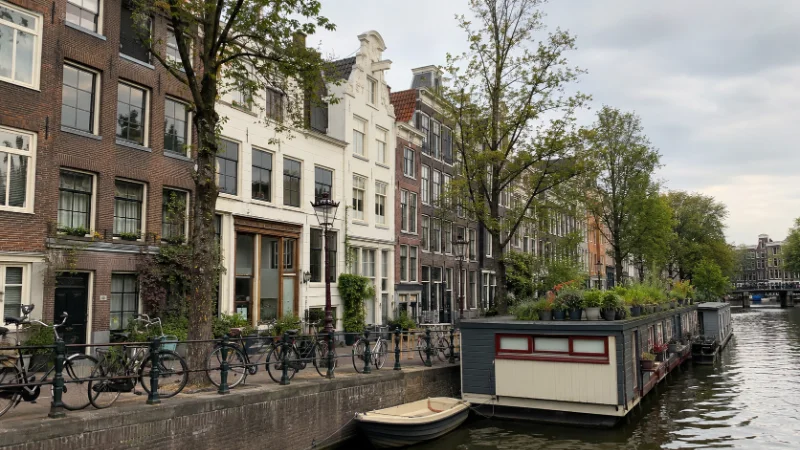
Amsterdam travel works best when you plan around three things: the canals, the bikes, and the weather. The city is compact enough to see most of it on foot or by bike in three to four days, and the canal ring, the museum quarter, and the neighborhoods just outside the center each reward a different pace of visit.
Getting To and Around Amsterdam
Schiphol Airport sits about 15 minutes from Centraal Station by direct train, and trains run every ten minutes through most of the day. A one-way ticket costs around 6 euros, which is cheaper and often faster than a taxi during rush hour.
Once you’re in the city, walking covers the center well, but Amsterdam is built for two wheels, not four.
1. By Bike
Renting a bike costs roughly 10 to 15 euros a day from shops like MacBike or Black Bikes, both with multiple pickup points near Centraal Station. Stick to the marked bike lanes, signal turns with your arm, and don’t walk in the bike lane even for a few steps, since local cyclists move fast and won’t slow down for tourists.
Locking your bike properly matters here. Bike theft is common enough that most rental shops include two locks, and you should use both every time you park.
2. Public Transit and the GVB Card
The GVB runs trams, buses, and the metro across the city, and a 24- or 48-hour unlimited ticket is the simplest option if you’re not renting a bike. You can buy these at Centraal Station, through the GVB app, or by tapping a contactless card directly at the reader, which charges per trip with a daily fare cap.
Trams are the fastest way to cross town during the day, while the metro is more useful for reaching areas south of the center like the RAI or Zuidas business district.
Where to Stay in Amsterdam
The center (Centrum) puts you within walking distance of the main sights, but hotel prices run higher, and street noise picks up on weekend nights. De Pijp and Jordaan sit just outside the ring, both walkable to downtown, and both quieter after dark.
De Pijp has a younger, more local feel, with the Albert Cuyp Market running through it six days a week. Jordaan is calmer and more residential, with narrower streets and fewer tour groups.
If you’re traveling on a tighter budget, Amsterdam Oost has newer hostels and apartment rentals at lower rates, connected to the center by a short tram ride.
Best Time to Visit Amsterdam
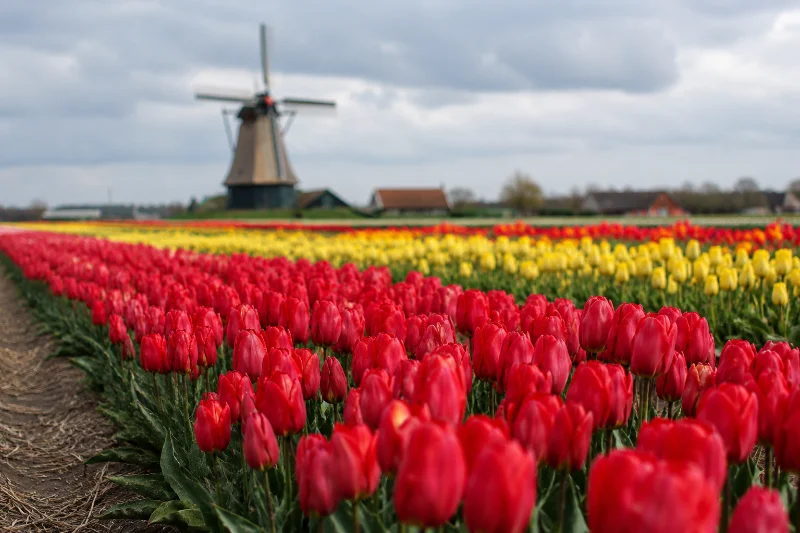
April through May brings tulip season, with Keukenhof gardens open for about eight weeks and day trips running from Centraal Station most mornings. Hotel prices climb during this window, and canal cruises book out several days ahead.
June through August is warmest, with long daylight hours that stretch past 9 pm, but it’s also the busiest and most expensive stretch of the year. September and October offer a middle ground: fewer crowds, mild temperatures, and lower hotel rates than peak summer.
Winter has its own appeal if you don’t mind the cold. The city puts up light installations in late November through the Amsterdam Light Festival, and museums are noticeably less crowded from December through February.
Things to Do Beyond the Canals
The canals are the obvious draw, but a lot of what makes a trip worthwhile sits a few streets back from the water.
1. Museums Worth the Ticket Price
The Rijksmuseum and Van Gogh Museum both require timed tickets booked online, often a week or more ahead in peak season. The Anne Frank House sells tickets exactly six weeks in advance, and they sell out fast, so this is usually the first booking to lock in once your dates are set.
For something less crowded, the Foam photography museum and the Micropia museum (dedicated to microorganisms, oddly enough) both draw smaller lines and offer a different pace than the big three.
2. Neighborhoods Locals Actually Like
Noordermarkt in Jordaan runs a Saturday farmers market and a Monday flea market, both worth a stop if your visit lines up. Across the water by ferry, Amsterdam Noord has converted shipyards now housing bars, a climbing gym, and the NDSM wharf, which feels more industrial and less polished than the center.
De Hallen in Oud-West, a former tram depot turned food hall and cinema, is a good stop if you want a break from walking without sitting through a formal restaurant meal.
Food and Drink Worth Trying
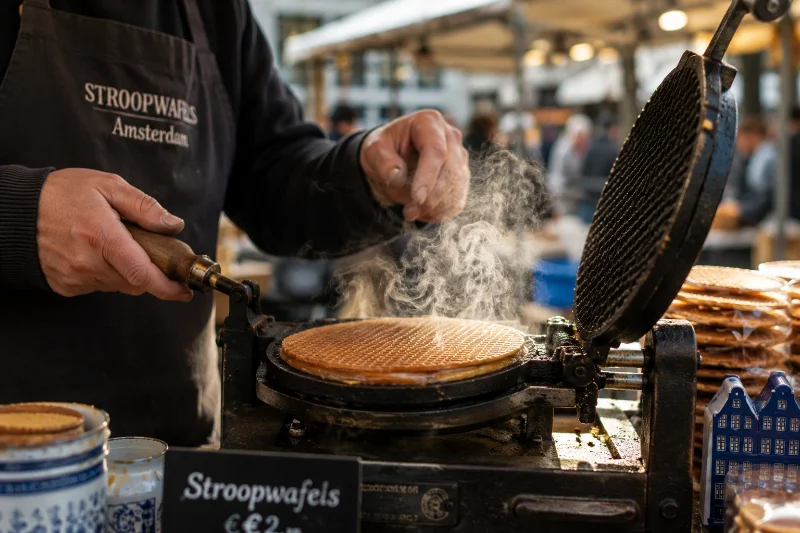
Stroopwafels are sold fresh and warm at several market stalls, and the version cooked to order at Albert Cuyp Market tastes noticeably different from the packaged ones in souvenir shops. Herring stands, common near the canals, serve raw herring with chopped onion and pickles, eaten in a few bites the traditional way.
For a full meal, the brown cafes scattered through Jordaan serve simple Dutch food like stamppot and bitterballen in low-lit, wood-paneled rooms that have barely changed in decades. Indonesian food is also widely available in Amsterdam, a legacy of Dutch colonial history, and a rijsttafel (a spread of small dishes) at a restaurant like Kantjil & de Tijger is a filling, shareable meal for a group.
Practical Tips for a Smooth Trip
Cash is rarely needed. Most shops, restaurants, and even some market stalls accept contactless cards, and several smaller vendors don’t take cash at all anymore.
Tap water is safe to drink straight from the tap, so carrying a refillable bottle saves money over a few days. Tipping isn’t expected the way it is in the US, though rounding up or leaving 5 to 10 percent for good table service is common practice.
Coffeeshops, which sell cannabis, are separate from regular cafes (koffiehuis), which serve coffee and food. The distinction trips up a fair number of first-time visitors browsing menus expecting a normal lunch spot.
Packing for Amsterdam means planning for rain regardless of season. A compact umbrella or waterproof jacket earns its space in the bag more often than not, since weather here shifts within the same afternoon more than most first-time visitors expect.