Puerto Rico packs a five-hundred-year-old walled city, a bioluminescent bay, a rainforest, and two boat rides’ worth of quiet islands into an area smaller than Connecticut. The best things to do in Puerto Rico split naturally into a few clusters: San Juan’s history and food, the natural sites east and southwest of the capital, and the outer islands of Vieques and Culebra.
Walk Old San Juan and Its Forts
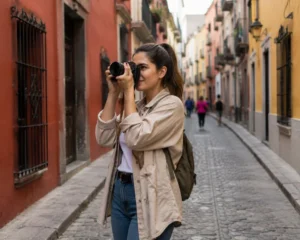
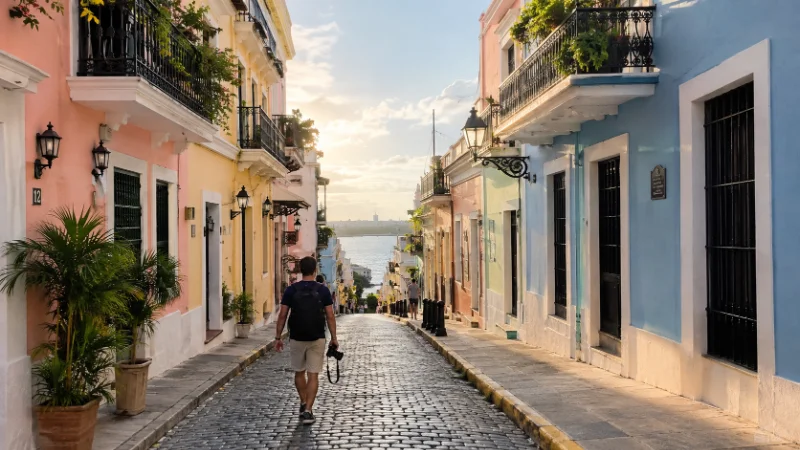
Old San Juan is the part of the trip most people picture, and it earns the reputation. The seven-block district sits on a peninsula guarded by two Spanish forts, Castillo San Felipe del Morro and Castillo San Cristóbal, both still open for self-guided walks along the walls.
El Morro alone takes about ninety minutes to see properly, and locals fly kites on the grass lawn in front of it most evenings. If time is short, prioritize Calle Fortaleza and Calle del Cristo, which have most of the boutique shops, cafes, and blue cobblestone paving made from ship ballast stones.
Set aside a half day minimum. Between the forts, the city walls, and the cathedral, Old San Juan rewards slow walking more than a checklist.
See the Bioluminescent Bay
Puerto Rico has three bioluminescent bays, and that is unusual for anywhere on earth. Mosquito Bay on Vieques is the brightest of the three and is often cited by marine biologists as the most luminous bay in the world, thanks to a dense concentration of dinoflagellates that light up blue when the water is disturbed.
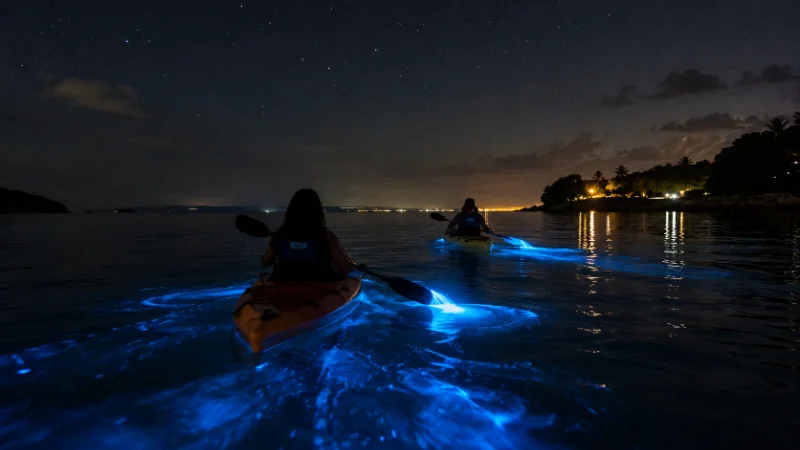
Laguna Grande in Fajardo is the easiest to reach from San Juan, roughly an hour by car, and most tours go out by kayak on a moonless night. La Parguera in the southwest is the only one of the three where swimming is currently allowed.
Book this one ahead. Tour operators cap group sizes and cancel on cloudy or full moon nights, since the glow is far less visible under bright moonlight.
Hike El Yunque, National Forest
El Yunque is the only tropical rainforest in the United States National Forest system, and it sits about forty minutes from San Juan. The most popular trail, La Mina, leads to a waterfall with a swimmable pool at the bottom, and it gets crowded by mid-morning on weekends.
For a quieter hike, the trail up to Mount Britton Tower climbs through cloud forest and ends at a stone observation tower with views out to the coast on clear days. Bring a rain jacket regardless of the forecast, since the forest gets over one hundred inches of rain a year and showers pass through fast.
Entry requires a timed reservation through the recreation.gov system during peak season, so check availability before driving out.
Island Hop to Vieques and Culebra
Vieques and Culebra sit off Puerto Rico’s east coast, and both run on a slower schedule than the mainland. Culebra’s Flamenco Beach regularly appears on lists of the best beaches in the Caribbean for its clear water and the fact that rusted amphibious tanks from a former naval bombing range still sit on the sand.
Vieques has wild horses roaming its roads, a former naval base that is now a wildlife refuge, and the Mosquito Bay tour mentioned above. Ferries run from Ceiba on the mainland, though schedules change often enough that checking the current timetable the same week of travel is worth the five minutes it takes.
Most visitors give each island a full day trip, but an overnight stay lets you catch the bay tour without a late ferry back.
Eat Your Way Through Puerto Rican Food
Puerto Rican food deserves its own section rather than a side note. Mofongo, mashed fried plantains usually served with garlic sauce and a protein like chicharrón or shrimp, shows up on nearly every menu and varies a lot from kitchen to kitchen. Lechón, whole roasted pig, is the centerpiece at roadside stands called lechoneras, and the town of Guavate southeast of San Juan has a strip of them known locally as La Ruta del Lechón.
For something faster, a pinchos cart, skewered grilled meat brushed with sauce, is a common lunch on the street. Alcapurrias and bacalaítos, both fried, are the standard beach snack, sold from small stands right on the sand in towns like Luquillo.
Coffee grown in the central mountains around towns like Adjuntas and Yauco is also worth seeking out, since Puerto Rican coffee was a major export in the nineteenth century and small farms are reviving the crop today.
Explore the Camuy Caves and Karst Country
The northwest interior of the island is riddled with limestone caves, and the Rio Camuy Cave Park gives access to one of the largest cave river systems in the world. A tram takes visitors down into the sinkhole entrance, followed by a walking tour past stalactites and an underground river that has carved through the rock for thousands of years.
Above ground, the same limestone region is dotted with steep, forested hills called mogotes, giving the area a look that is different from anywhere else on the island. It pairs well with a day trip that also includes the Arecibo Observatory area, formerly home to one of the world’s largest radio telescopes.
Surf and Relax on the West Coast
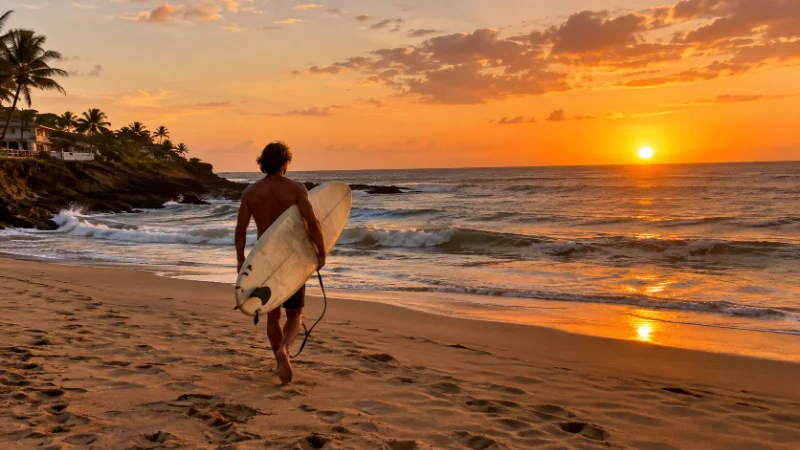
Rincón, on the far west coast, is Puerto Rico’s surf town, with breaks that draw international competitions during the winter swell season from November through March. Domes Beach and Maria’s Beach are the two most consistent spots for beginners taking a lesson.
Outside of surf season, the same beaches work fine for swimming and sunset watching, and the town has a cluster of surf shops willing to rent boards by the hour rather than the day. Rincón also tends to have fewer crowds and lower prices than the resorts near San Juan, which makes it a common stop for travelers extending a trip past the capital.
Practical Tips for Visiting Puerto Rico
Puerto Rico is a US territory, so US citizens do not need a passport to fly in from the mainland, and there is no currency exchange since the US dollar is used. Renting a car is the most practical way to reach El Yunque, the Camuy Caves, and Rincón, since public transit outside San Juan is limited.
The dry season from December through April sees the most visitors and the highest hotel rates, while summer months are quieter but bring more rain and a higher chance of tropical storms later in the season. Hurricane season officially runs June through November, and it is worth checking the forecast before booking travel in September or October specifically.
San Juan’s international airport, Luis Muñoz Marín, has direct flights from most major US East Coast cities, which keeps flight costs lower than many other Caribbean destinations.