
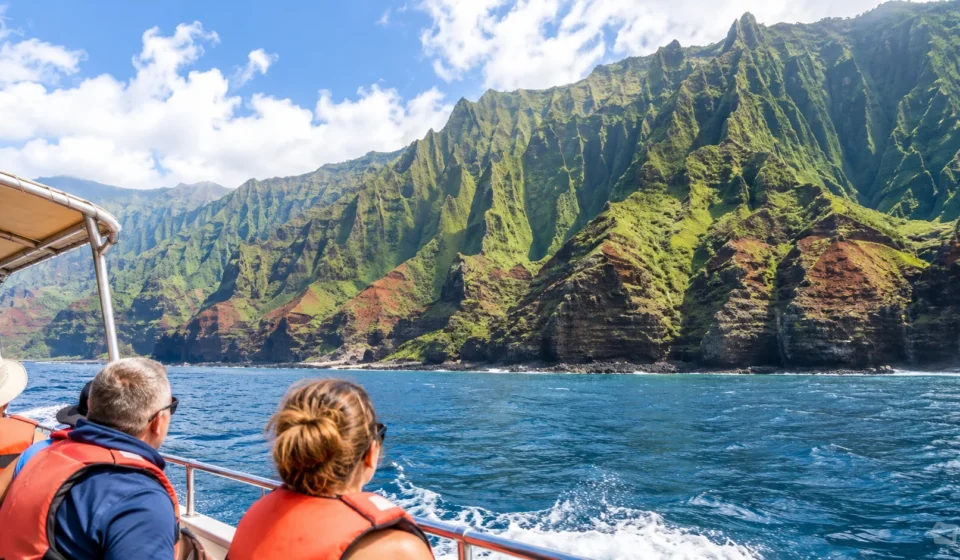
What to do in Kauai comes down to three choices: hike the Napali Coast or the Waimea Canyon rim, swim on whichever shore is calm that season, and book a boat or helicopter to see cliffs no road reaches. Most of the island’s best days need a reservation or a weather check first. This guide sorts the options by shore and season, then lists what to book before you land.
Pick a Side of the Island Before Anything Else
Kauai’s main highway runs most of the way around the island but never closes the loop, because the Napali Coast blocks it. That splits a trip into the north shore (Hanalei, Haena) and the south and west (Poipu, Waimea Canyon). The drive from Hanalei to Poipu takes roughly an hour and a half each way, so sleeping on one side and day-tripping to the other gets tiring.
Season decides which shore is safe to swim. From about November through March, north swells make many north shore beaches dangerous while the south shore stays milder. In summer the pattern flips, and the north shore calms down enough for snorkeling and paddleboarding.
Rain follows a similar pattern. The north and east sides get more of it, and Mount Waialeale in the interior is among the wettest spots on Earth. If the forecast looks wet in Hanalei, drive south, where the sun is more likely.
Hike the Napali Coast Without Camping
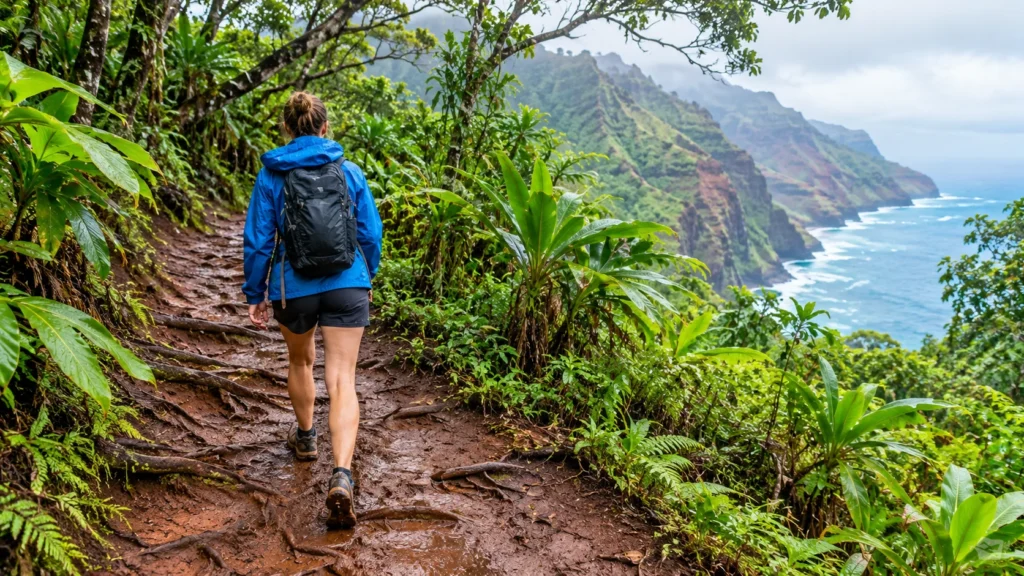
The first two miles of the Kalalau Trail, from Kee Beach to Hanakapiai Beach, are the most popular day hike on the island. Hawaii State Parks rates the full trail as difficult, and even this stretch is muddy, rocky, and steep in places. Expect 4 miles round trip and carry more water than seems necessary.
You don’t need a hiking permit for this section, but every day visitor needs a Haena State Park reservation through gohaena.com. Nonresidents pay $5 per person plus $10 per vehicle, and the park limits entry to 900 visitors per day, according to a Kauai Visitors Bureau reminder reported by The Garden Island. Reserve as soon as your dates open, because parking sells out.
Hanakapiai Beach, the Falls, and Kalalau Camping
Hanakapiai Beach has strong currents, so treat it as a lunch stop and keep out of the water. Hanakapiai Falls adds a longer trail inland, listed by state parks as 4 miles, and the stream crossings can rise quickly after rain. Start at dawn and turn around if the water looks brown and fast.
Overnight trips to Kalalau need a separate camping permit, and the booking system changed in February 2026. Confirm the current portal on the Hawaii State Parks site before you plan around it.
Look Over Waimea Canyon and Kokee
Waimea Canyon, on the west side, is often called the Grand Canyon of the Pacific. The lookouts along Waimea Canyon Drive and Kokee Road show red rock walls dropping up to roughly 3,000 feet toward the Waimea River. Go in the morning, since clouds tend to fill the canyon by afternoon.
Nonresidents pay $5 per person and $10 per vehicle, and that fee covers both Waimea Canyon and Kokee State Parks. For a short hike, the moderate Canyon Trail leads to the top of Waipoo Falls.
Road work has caused delays and limited parking at the lookouts, per a notice from the state parks division. Kokee camping is closed for improvements from May 2026 through spring 2027, and Polihale State Park is listed as closed until further notice. Check the DLNR page the week you travel.
Best Beaches and Ocean Days
1. Poipu and the South Shore
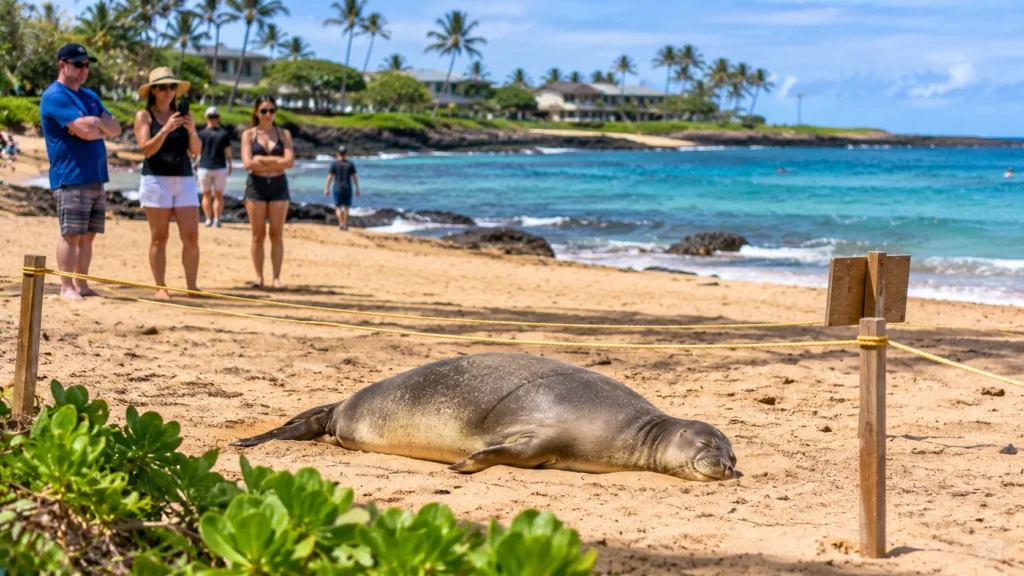
Poipu Beach Park has a sheltered swimming area and often hosts Hawaiian monk seals resting on the sand. NOAA Fisheries asks people to stay at least 50 feet from a seal, and farther from a mother with a pup. Nearby Spouting Horn shoots seawater up through a lava tube, and it puts on the best show when a swell is running.
2. Hanalei Bay and Tunnels Beach
In summer, Hanalei Bay is good for beginner paddleboarding and Tunnels Beach for snorkeling over the reef. In winter both can turn rough, so watch from the sand and ask a lifeguard before wading in. Parking near Tunnels is tight, so arrive early or walk in.
3. Napali Coast by Boat or Helicopter
Boat tours of the Napali Coast mostly depart from the south and west sides, and they run most reliably in the calmer summer months. Operators cancel in rough seas, so book early in your trip to leave room to reschedule. Helicopter flights cover the interior waterfalls and the Waialeale crater, which boats can’t see.
Waterfalls, Rivers, and Easy Sightseeing
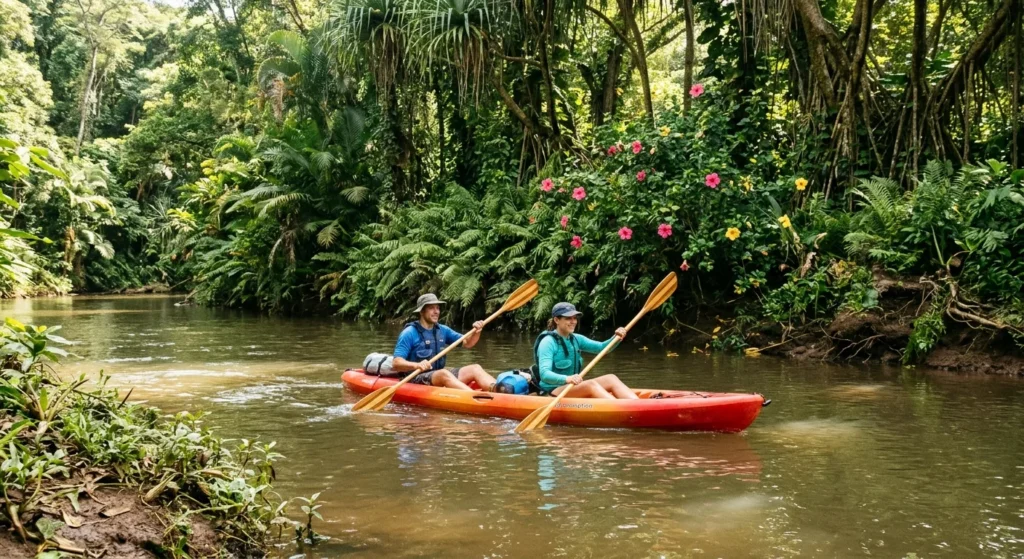
The Wailua River is one of the few boat-navigable rivers in Hawaii, and kayaking it is a good half-day for beginners. Wailua River State Park now charges nonresidents $5 per person and $10 per vehicle. Strong hikers can add the muddy walk to Secret Falls.
Wailua Falls and Opaekaa Falls both have roadside lookouts, so they work on days when you don’t want to hike. Kilauea Lighthouse on the north shore requires a reservation, and it’s a good spot for seabirds and, in winter, whales.
For a mid-length walk, Kuilau Ridge Trail climbs through forest with wide interior views. The Sleeping Giant (Nounou) trail gives an east-side panorama. Both are better on clear mornings.
A Three-Day Route That Limits Driving
If you only have three days, give each one a region so you aren’t crossing the island repeatedly. Start on the west and south with Waimea Canyon in the morning, then Spouting Horn and Poipu in the afternoon. This is also the easiest first day after landing at Lihue airport.
Spend day two on the east side with a Wailua River kayak trip, a stop at Opaekaa Falls, and a late hike up Sleeping Giant. If it rains, swap the hike for the Kauai Museum in Lihue.
Save the north shore for day three, since the Haena reservation and early start are the hardest to schedule. Hike to Hanakapiai Beach in the morning, then spend the afternoon in Hanalei town. If surf is high or the north is rained out, swap days and spend the time on the south shore instead.
Food, Farms, and Rainy-Day Plans
Wet weather doesn’t ruin a Kauai trip if you keep a few indoor options ready. The Kauai Museum in Lihue covers island history, and Grove Farm Homestead preserves a plantation-era home. Kauai Coffee Company near Kalaheo offers tastings.
For food, try shave ice, poke, and plate lunches from roadside stands and farmers markets. Hanalei’s taro fields are worth a pull-off for the view, since taro is the base of poi.
What to Book Before You Fly
These items sell out or require advance entry, so sort them first:
- Haena State Park day-use reservation through gohaena.com
- Kalalau camping permit, if you plan an overnight trip
- Kilauea Lighthouse timed entry
- Napali boat tour and any helicopter flight
- Guided or rented Wailua River kayak in peak months
- Rental car, since public transit on the island is limited
Ocean and Trail Safety Basics
Never turn your back on the ocean. Sneaker waves can hit Kauai beaches without warning, especially in winter, and rip currents are common at unguarded beaches. If a sign says no swimming, believe it.
On trails, wear shoes with real tread, carry water, and watch the sky upstream. Flash floods can fill a dry streambed fast, even when it isn’t raining where you stand.
Whatever you choose to do in Kauai, check closures and conditions the morning of, because storms and road work can change the plan.