
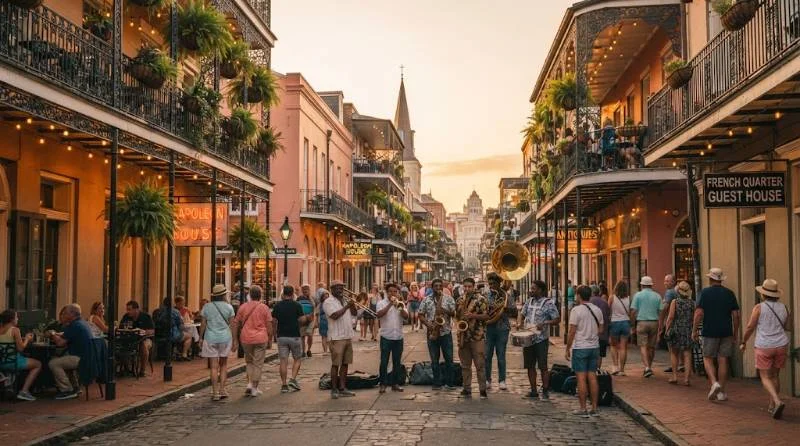
If you are wondering what to do in New Orleans, the short answer is eat, listen, and walk. The city rewards slow days. Beignets for breakfast, jazz after dark, and a long stroll between them make a full trip. This guide covers fifteen things worth your time, grouped by area so you can plan a sensible route. It also covers when to go, how to get around, and which popular stops are worth skipping or timing carefully.
What to do in New Orleans: the French Quarter
Most first-time visitors stay in or near the French Quarter, so start here. It is compact and easy to walk, with history on nearly every block. Plan a half day for the main sights.
1: Bourbon and Royal Streets
Bourbon Street is loud and crowded after dark, and most visitors want to see it once. Go in the late afternoon, when the balconies and street performers are easier to enjoy.
Royal Street runs parallel and feels completely different. You will find antique shops, art galleries, and street musicians playing jazz on the corners. It is the better choice for a calm walk.
Drinks are allowed on the street in plastic cups, but glass is not. Ask the bar for a go cup before you leave.
2: Beignets at Café du Monde
Café du Monde has served beignets and café au lait since the 1860s. The beignets are square doughnuts buried in powdered sugar. Order them hot, and skip the black trousers.
Lines can stretch long by mid-morning. Go early on a weekday, or use the to-go window, which usually moves faster than the tables.
3: Jackson Square
Jackson Square is the open green heart of the French Quarter. Artists hang paintings on the iron fence, and tarot readers and musicians work the sidewalks. St. Louis Cathedral faces the square, and its three white spires are the city’s best-known landmark. Step inside for a few quiet minutes.
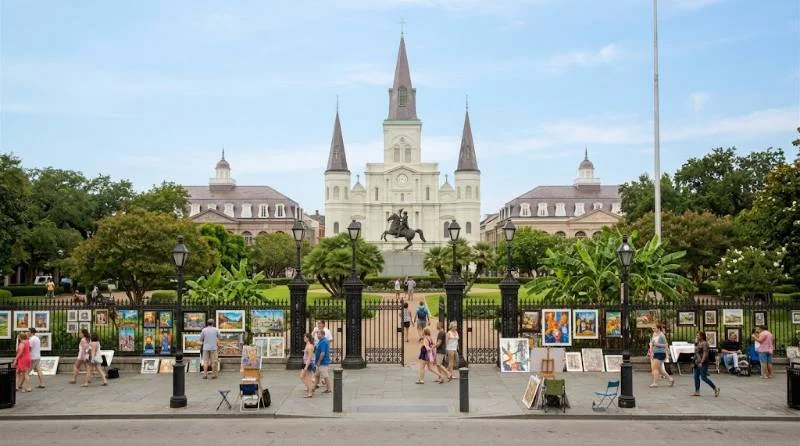
The Cabildo and the Presbytère stand on either side of the cathedral. Both are part of the Louisiana State Museum. The Presbytère covers Mardi Gras and Hurricane Katrina, which makes it a good rainy-day stop.
Preservation Hall
Preservation Hall is a small venue that has hosted traditional jazz since 1961. Sets run under an hour, and the room is small enough that every seat feels close to the band. Book ahead, since popular shows sell out, especially on weekends.
Music and nightlife
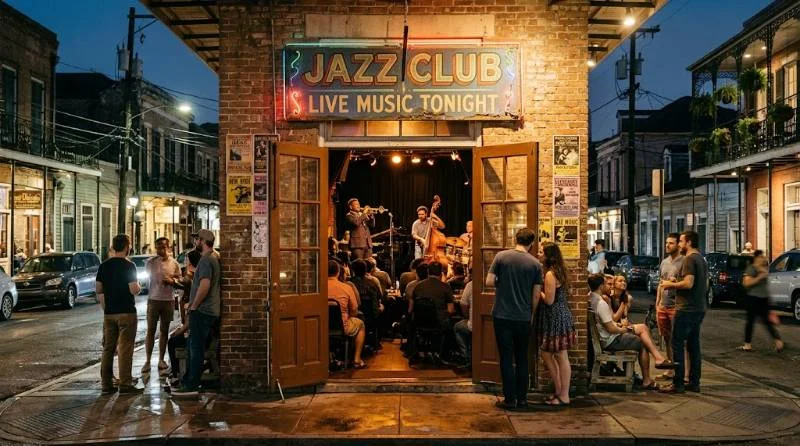
New Orleans is the birthplace of jazz, and live music is not limited to one venue. You can hear it on almost any night.
Frenchmen Street
Frenchmen Street in the Marigny neighborhood is where many locals go for live music. Small clubs line a few blocks, and many charge little or nothing at the door. Walk the strip, listen at the doors, and stay where the band sounds best. Tip the musicians when the bucket comes around.
Classic cocktails
New Orleans invented several famous drinks. The Sazerac is the city’s official cocktail, made with rye, bitters, and a rinse of absinthe. The Hurricane is sweeter and comes from Pat O’Brien’s. The Carousel Bar at Hotel Monteleone is a working merry-go-round bar that takes about fifteen minutes to turn a full circle. Order a Vieux Carré while you ride.
What to eat
Food is a main reason people visit, so build your days around meals. Creole and Cajun cooking share ingredients but differ in style. Creole cooking often uses tomatoes and reflects city kitchens, while Cajun cooking comes from the countryside.
Local classics
Start with gumbo, which is a thick stew served over rice. Try a po’boy, the city’s overstuffed sandwich, filled with fried shrimp or roast beef. Order a muffuletta, a round Sicilian-style sandwich with olive salad, and share it, because one is large. Finish with bananas foster, a dessert of bananas and rum flamed tableside, which Brennan’s created.
A long lunch
Lunch is often the best value at the city’s famous restaurants. Several long-running Creole restaurants offer fixed-price lunch menus that cost less than dinner. Reserve ahead, and check the dress code before you go.
Beyond the French Quarter
Leave the Quarter for at least one full day. The best architecture, museums, and neighborhood life are farther out.
1: St. Charles streetcar
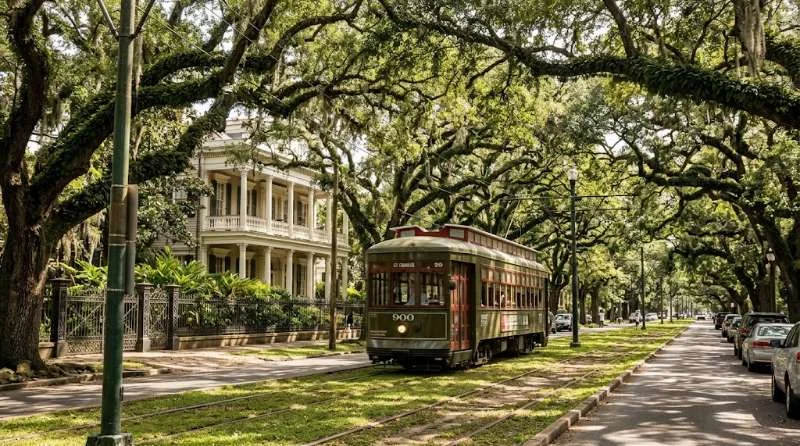
The St. Charles line is the oldest continuously operating streetcar line in the world. Board on Canal Street and ride uptown beneath the oak trees. Get off in the Garden District and walk past nineteenth-century mansions with deep porches and iron fences. Lafayette Cemetery No. 1 sits nearby, though you should check its current visiting rules.
2: National WWII Museum
The National WWII Museum sits in the Warehouse District, and its location is no accident. Higgins Industries built the landing craft used on D-Day in New Orleans. Exhibits include aircraft, immersive films, and personal accounts from veterans. Allow at least three hours, and buy tickets online before you go.
3: City Park
City Park is larger than New York’s Central Park and holds some of the oldest live oak trees around. The park also has the New Orleans Museum of Art. The adjoining Sculpture Garden is free to enter. Rent a bike, walk the paths, or take a paddleboat on the lagoon.
4: Swamp tour
A swamp tour is the easiest way to see Louisiana wildlife. Tours depart from points roughly forty minutes to an hour outside the city, and guides point out alligators, herons, and cypress trees. Choose a small boat for quiet and better photos. Larger airboats are faster and louder.

5: Steamboat cruise
For the river itself, the steamboat Natchez runs jazz cruises from the riverfront near Jackson Square. The Natchez is the city’s last authentic steam-powered paddlewheeler, and the jazz cruise pairs live music with skyline views. The Riverwalk promenade is free and lovely at sunset.
6: Cemetery tour
New Orleans buries its dead in raised tombs because the water table is high. St. Louis Cemetery No. 1 is the most famous, and you can only enter with a licensed guide. Tours are short, so book ahead and dress for the heat.
7: Mardi Gras World
If you cannot visit during Mardi Gras, Mardi Gras World shows how the parade floats are built. Artists sculpt and paint giant figures in a working studio near the river. It is a good option for families and rainy days.
Timing and transport
Spring is the most popular season, from February through May. The weather is mild, and festivals fill the calendar, including the French Quarter Festival and Jazz Fest. Fall is a good second choice once the heat eases.
Summer is hot and humid, with sudden afternoon storms. Hurricane season runs from June through November, so choose flexible bookings. Hotel prices rise during Mardi Gras and major festivals, so book early. Mardi Gras falls on a different date each year because it follows Easter.
You do not need a rental car. The French Quarter, Marigny, and Warehouse District are all walkable. Streetcars serve St. Charles and Canal Street, and ride-share apps fill the gaps. Parking in the Quarter is scarce and expensive. At night, stay on lit, busy streets and take a ride home instead of walking through quiet blocks.
A simple three-day plan
If you have three days, this order keeps walking short and meals well spaced.
Spend the first day in the French Quarter. Eat beignets, walk Jackson Square and the cathedral, and browse Royal Street. Take a long lunch, rest, then hear jazz at Preservation Hall. End the night on Frenchmen Street.
Use the second day for the wider city. Ride the streetcar to the Garden District in the morning, then spend the afternoon at the National WWII Museum. Finish with dinner in the Warehouse District.
Save the third day for nature and slower activities. Take a swamp tour in the morning, or spend the day in City Park and the art museum. Close the trip with a sunset walk on the Riverwalk or an evening jazz cruise.
First-timer tips
Reserve Preservation Hall, cemetery tours, and your swamp tour before you arrive. Keep everything else loose. The best moments in this city, like a street band outside a bar, are often unplanned.
A common street trick is a stranger betting he can name where you bought your shoes. Say no and keep walking. A hotel far from the Quarter saves little once you add the cost of rides. Trying to see everything in a day wears you out. Plan three main stops a day and leave room for a long meal.
Bring comfortable shoes, because the sidewalks are uneven, and carry water in warm months. A light rain jacket helps all year. Carry a little cash for tips, since street musicians and many small bars still rely on it.
Free things to do
A trip here does not need a big budget. Walking the French Quarter, watching the artists at Jackson Square, and strolling the Riverwalk all cost nothing. Frenchmen Street clubs often charge little or no cover, and the Sculpture Garden in City Park is free to enter. A ride on the St. Charles streetcar costs only a small fare and works as a sightseeing tour. On many Sundays in cooler months, neighborhood second line parades move through the streets with brass bands, and anyone can watch.
How many days you need
Three days is the sweet spot for a first visit. It lets you cover the Quarter, the Garden District, a museum, and one outing beyond the city without rushing. Two days works if you stay in the Quarter and skip the swamp. With four days, you can add a day trip, such as a plantation tour on the river road. If you visit a plantation, choose one that tells the full story of the enslaved people who lived and worked there.
Pick a pace
The people who enjoy New Orleans most treat the list above as a menu, not a checklist. Pick four or five stops that match your tastes, then leave gaps. Linger over a second coffee, follow a brass band, and let dinner run long. That unhurried rhythm is the real answer to what to do in New Orleans.