The best things to do in Madagascar are watching indri lemurs in the eastern rainforest, walking the stone spires of Tsingy de Bemaraha, and photographing baobabs at sunset near Morondava. Add a whale-watching trip, a night walk for mouse lemurs, and a few days on an island beach, and you have the core of most itineraries.
The island is much bigger than most visitors expect, and roads are slow, so a few well-chosen regions beat a rushed tour of everything. This guide covers the main experiences, groups them into routes, and explains the timing and transport questions that decide whether a plan works.
What to Know Before You Choose Your Activities
The dry season, roughly May to October, is the easiest window. Travel writer Emma at That Travel recommends it because the national parks are open, and she warns that wet-season travel can close roads and some parks. October sits at the edge of that window, so you can catch jacaranda blooms in the cities and still reach the western parks before the rains start in November.
Distance is the real constraint. Long drives get longer on rough roads, and group tours follow fixed routes. That Travel reports that local authorities are often reluctant to rent cars to tourists, so many independent visitors hire a driver instead.
Malagasy and French are the main languages, and English is less common outside tourist areas, so a local guide is useful in parks. The currency is the Malagasy ariary, and ATMs are scarce outside major cities, so withdraw cash when you reach a larger town.
A first visit works best at about two weeks, with one or two regions. Beyond the Bucketlist says that doing everything on its long list would take over a month, so most travelers who plan the best things to do in Madagascar choose carefully.
Wildlife Experiences Worth Planning Around
1. Listen for Indri Calls in Andasibe-Mantadia National Park
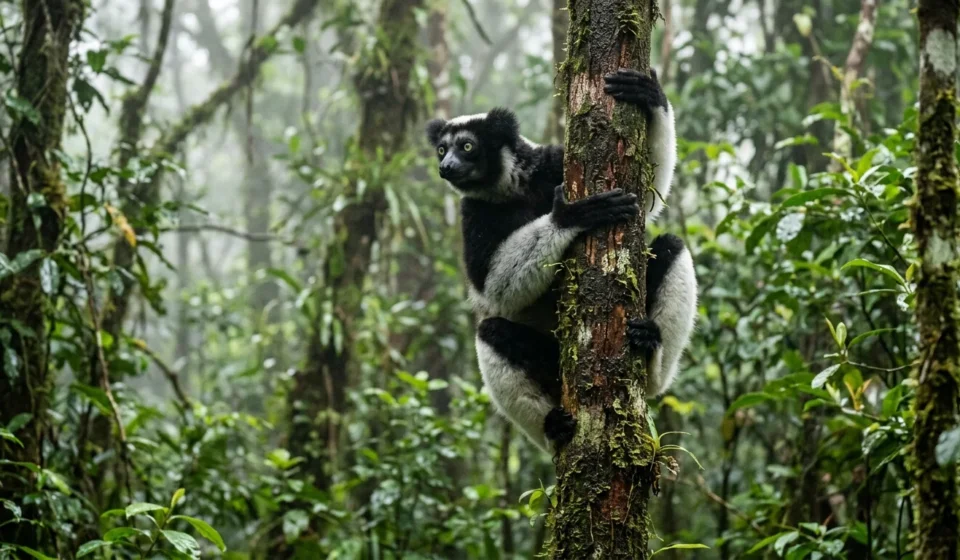
Andasibe-Mantadia is the most popular place to see lemurs, and the indri is the main draw. Its wailing call carries a long way through the forest, so groups are often located by sound before sight. The park lies east of Antananarivo, which makes it an easy first stop.
That Travel ranked it the best lemur site the author found, partly because guides keep visitors at a respectful distance. Baby lemurs are most often seen between June and November.
2. Meet Ring-Tailed Lemurs at Anja Community Reserve
Anja is a small community-run reserve in the south, along the RN7 highway. Local guides lead short walks among granite boulders where ring-tailed lemur troops are easy to find. Beyond the Bucketlist includes it on its list of southern road trip stops. Isalo is a half-day drive farther south.
3. Soak in the Hot Springs at Ranomafana National Park
Ranomafana is a rainforest park that That Travel lists among the best places to see lemurs. Beyond the Bucketlist adds its hot springs as a reason to visit, which suits tired legs after a day of trekking. Add it to a southern circuit if you want more rainforest after Isalo’s dry canyons.

4. Take a Night Walk for Mouse Lemurs and Chameleons
Many lemurs and reptiles are active after dark, so a guided night walk adds species you will miss by day. Mouse lemurs, the smallest in Madagascar, are common targets. Ask your guide to use a red light, because white light can startle them.
That Travel saw this happen when a different guide aimed a white beam at a mouse lemur. Night walks run in Andasibe and the neighboring Analamazaotra Special Reserve.
5. Try for a Fossa Sighting in Kirindy Forest
The fossa is a catlike relative of the mongoose and the main predator of lemurs. Sightings are rare nearly everywhere, and Kirindy Forest in the west gives better odds, though nothing is guaranteed. Beyond the Bucketlist lists dinner among Kirindy’s fossa as one of its picks. Treat any sighting as a bonus.
6. Search for Aye-Ayes on Nosy Mangabe
Nosy Mangabe is a small island reserve near Maroantsetra, reachable only by boat, and part of Masoala National Park. It is a well-known place to look for the nocturnal aye-aye on night walks, though sightings take luck.
Beyond the Bucketlist suggests hiring a guide for a few days and parking any rental car securely on the mainland. Leaf-tailed geckos and rare frogs live there too.
7. Plan Birdwatching Across Three Habitats
Cox & Kings counts more than 270 bird species on the island, about 120 of them found nowhere else. To see a fair range of endemics, you need the eastern rainforest, the southern spiny forest, and the western dry deciduous forests. A single trip through Andasibe, the south, and the Morondava area covers all three.
Landscapes You Will Not See Anywhere Else
1. Walk the Grand Tsingy at Tsingy de Bemaraha
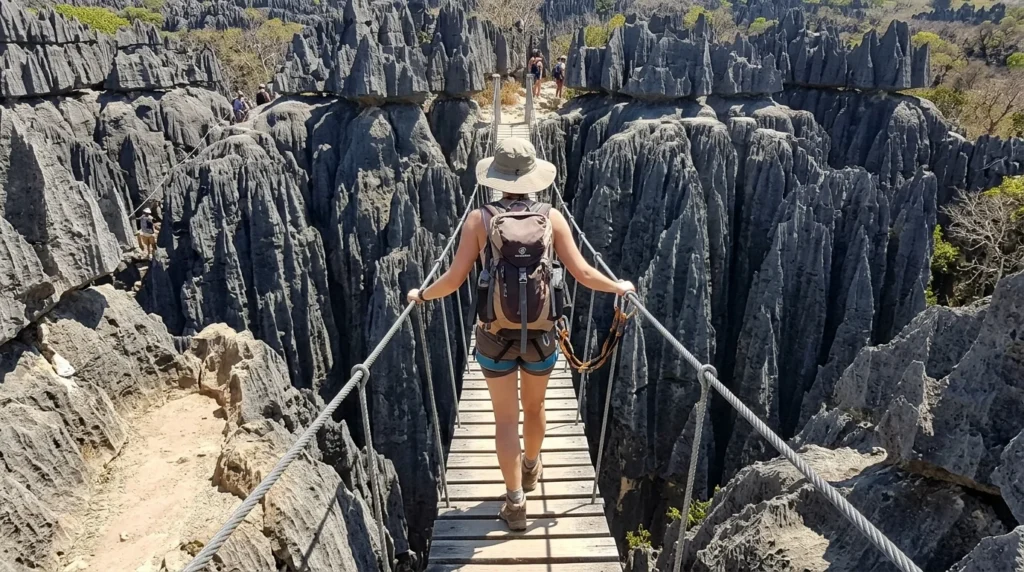
Tsingy de Bemaraha is a national park of eroded limestone needles, and it looks like nowhere else. It has two sections, Grand Tsingy and Petit Tsingy, and both can be hiked. That Travel advises spending at least two full days to see both sides, and camping inside the park is possible.
White sifaka sometimes appear on the trails, so tell your guide you want to see them.
2. Watch Sunset at the Avenue of the Baobabs
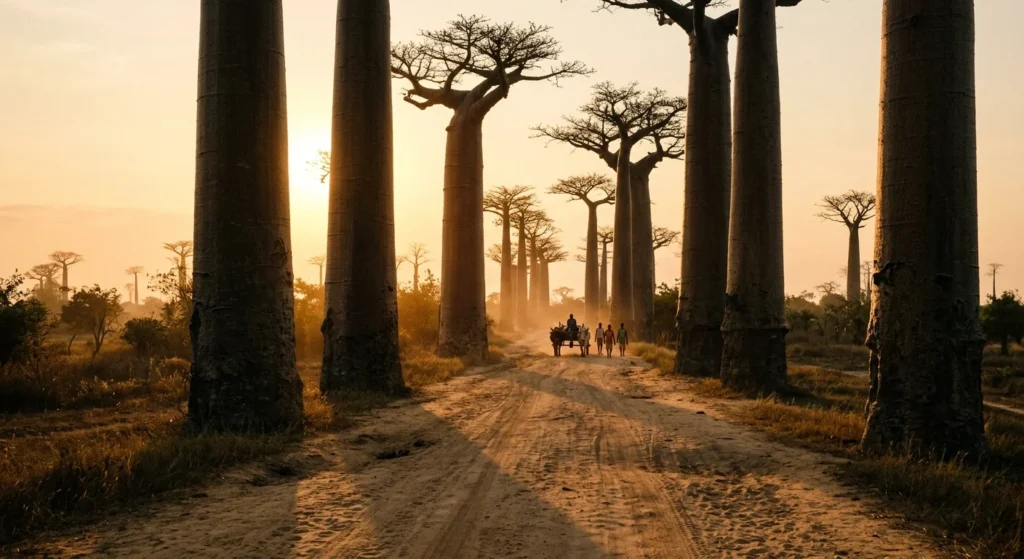
The Avenue of the Baobabs near Morondava is the best-known place to see these trees, and sunset is the favorite hour. Walking the length takes about 15 to 30 minutes, depending on how many photos you take.
A small cafe sells baobab juice, which That Travel compares to a cross between pear and pineapple. Six of the world’s nine baobab species grow only in Madagascar. In the wet season, the trees rise above flooded rice fields, though some roads close.
3. Hike and Swim in Isalo National Park
Isalo is a sandstone landscape of canyons, columns, and dry grassland, and many travelers name it their favorite park. Trails lead to natural pools, some with waterfalls, and a swim is welcome after a hot hike.
The Bara people, a nomadic community, live in and around the park, so ask a guide about local culture. Beyond the Bucketlist also mentions white sifaka near the pools.
4. Float Down the Tsiribihina River
This slow river trip usually starts near Miandrivazo and ends near Belo-sur-Tsiribihina, taking two to three days by pirogue or wooden barge. You camp on sandy banks, swim near waterfalls, pass villages, and watch for lemurs and birds. Beyond the Bucketlist says it suits slow, local-style travel and warns not to expect luxury.
It also works as a route toward Tsingy de Bemaraha. That Travel counts the three-day river trip among her best experiences, since the road takes at least two days. May to October is the best window.
5. Paddle a Pirogue Through Petit Tsingy
A pirogue is a small wooden dugout, often two boats lashed together, pushed through shallow water with a long pole. That Travel recommends trying one at Tsingy de Bemaraha, where you can glide through Petit Tsingy. Midday heat on the water is intense, so pack sunscreen and a hat.
Beaches and Whale Watching
See Humpback Whales Off Sainte-Mari
Humpbacks travel from Antarctic waters to Madagascar to breed and give birth. Cox & Kings puts the season at June to September, while That Travel says July to September, so plan for July through September to overlap both.
The two major viewing areas are the Bay of Antongil and Sainte-Marie Island, also called Nosy Boraha. Sightings are also reported near Nosy Be, Fort-Dauphin, and Morondava.
Relax on Nosy Be and the Smaller Islands
Most of the best beaches are on small islands called nosys. Nosy Be is the most developed and has plenty to do. Nosy Komba is quieter and offers a chance at black lemurs.
Sainte-Marie, the pirate island, has a pirate cemetery, and Ile aux Nattes just south has turtles. Keep your distance from turtles while snorkeling.
Culture, Food, and City Stops
1. Tour the Presidential Palace in Antananarivo
Many travelers skip the capital, but it rewards half a day. That Travel’s favorite stop was the Presidential Palace, where guides explain the history of Madagascar’s former royal family. Rova Fort, Analakely Market, and Lac Anosy are other options. Traffic is slow, so group stops by neighborhood.
2. Try a Vichy Massage in Antsirabe
Les Thermes in Antsirabe offers one of the odder experiences on the island. That Travel paid about $2.50 for a hot tub session and a vichy massage, which turned out to be a vigorous scrub and hose-down more than a relaxing rubdown.
The building looks like a cross between a clinic and a school gym. Treat it as a quirky stop, and check the current price, since this figure comes from a past visit.
3. Learn About Antandroy Culture in Ifotaka
Cox & Kings recommends the Ifotaka Community Forest, where the Antandroy people harvest forest products from some areas while others stay intact for ecotourism. Spend a morning at the local market, or walk with an Antandroy guide into sacred forests to see large decorated tombs. After several days of wildlife, this stop puts the focus on people.
4. Visit the Aluminium Workshops Near Antananarivo
The Ambatolampy district is known for artisans who cast aluminium pots and pans using traditional methods. They welcome visitors, and buying a souvenir supports the workshops, according to That Travel. Seasonal fruit markets elsewhere vary by region, with soursop and custard apple in one area and mangoes in another.
5. Eat Mofo Gasy and Bol Renversé
Malagasy food draws on French, Indian, Southeast Asian, Chinese, and Swahili influences, and it is usually cheap. Mofo gasy are coconut milk and rice flour doughnuts, and they are naturally vegan. Bol renversé is a rice dish with the sauce layered underneath, then flipped onto the plate.
Matching These Experiences to a Route
Grouping stops by region keeps the plan realistic. The things to do in Madagascar fall into three circuits.
The eastern circuit is the shortest. It centers on Andasibe-Mantadia and fits into about a week, with night walks and indri. Add Nosy Mangabe or Sainte-Marie only if you have spare days and accept boat transfers.
The southern circuit follows the RN7 highway through highland towns such as Antsirabe and Ambatolampy, then Anja and Isalo. Beyond the Bucketlist wrote up an 11-day budget version of this drive.
The western circuit links Morondava, the baobabs, Kirindy, and Tsingy de Bemaraha, with the Tsiribihina as an optional river leg. Beyond the Bucketlist says that leg needs about three weeks and that the west takes careful planning.
For a first trip of about two weeks, choose two circuits at most. The eastern and southern circuits pair well with one island, while the west suits travelers with three weeks or more.
Ethical Lemur Encounters and Trip Costs
Skip any place that lets visitors feed or hold lemurs. That Travel explains that feeding makes animals dependent on people and can put babies at risk of the illegal pet trade. It points to Andasibe as a hands-off example.
Cost depends on how you travel. That Travel quotes group tours from about 2,500 pounds for two weeks, and says independent trips with a hired driver cost much less.
Park rules, prices, and season dates change, so confirm them with operators before booking. Choose the things to do in Madagascar that fit your dates, then build the rest of the trip around them.