
The best place to see bioluminescence in Spain is Galicia, where a phenomenon locals call the Mar de Ardora turns the shoreline electric blue on warm summer nights. It also appears along the coast of Cadiz and in the coves of the Balearic Islands, usually between June and September.
Mar de Ardora means “sea of fire.” The glow comes from Noctiluca, a tiny algae that flashes blue when the water moves. Spain’s displays are never guaranteed, since they depend on warm, calm seas and dark skies, but when the conditions line up, the effect is every bit as magical as the famous tropical bays.
This guide covers where the Ardora appears, the best months for each coast, and how to give yourself the best chance of seeing it. For glowing spots beyond Spain, see our worldwide bioluminescence guide.
What Is the Mar de Ardora?
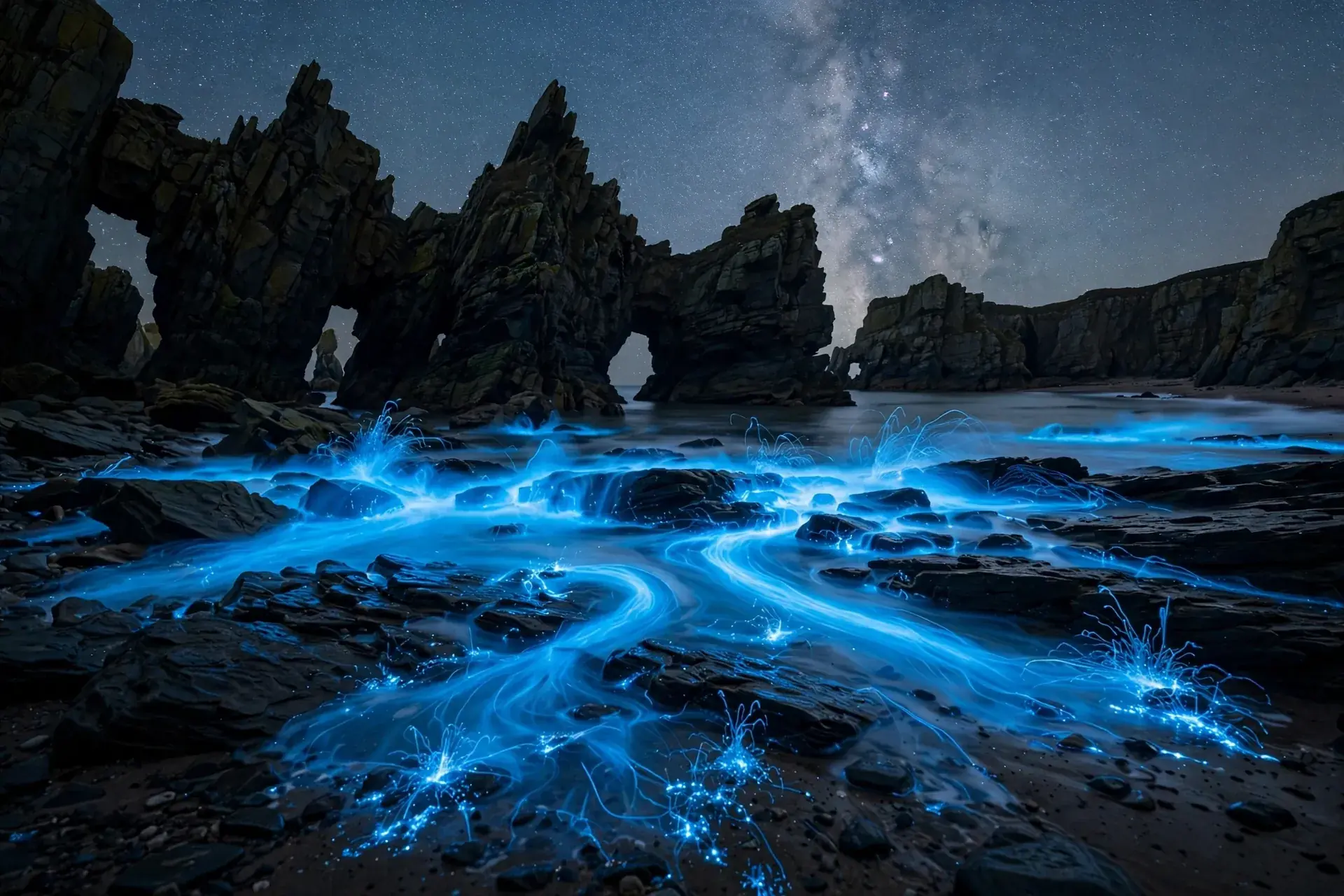
On certain summer nights, Galicia’s Atlantic beaches start to glow. Each footstep on the wet sand leaves a trail of blue light, and every wave breaks with a luminous edge. Locals named it the Mar de Ardora, the burning sea, long before scientists identified the cause.
The light comes from blooms of Noctiluca algae, which flash when disturbed by waves, footsteps, or a hand trailing through the shallows. Warm water and calm seas let the organisms multiply, which is why the Ardora belongs to summer. It is the same family of plankton behind Australia’s sea sparkle, in a very different ocean.
Galicia: The Heart of the Ardora
Galicia is where Spain’s bioluminescence is most dependable. As Catedrais Beach near Ribadeo, famous by day for its cathedral-like rock arches, transforms after dark in June and July, when the algae gather along the shore. The Cies and Ons Islands, part of a protected national park off the coast, offer some of the darkest skies in Spain, which makes any glow dramatically more visible.
Smaller beaches like Balares and Rebordelo in the province of A Coruna have also hosted documented Ardora nights, usually on moonless evenings in high summer. The pattern is always the same: heat, calm water, and darkness.
How to See It
Visit between June and September and pick the calmest, warmest night of your trip. Walk the beach after full dark, well away from town lights, and test the shallows with your hand. If you are heading to the Cies Islands, remember they require advance booking and an overnight stay, since the last boats leave before dark.
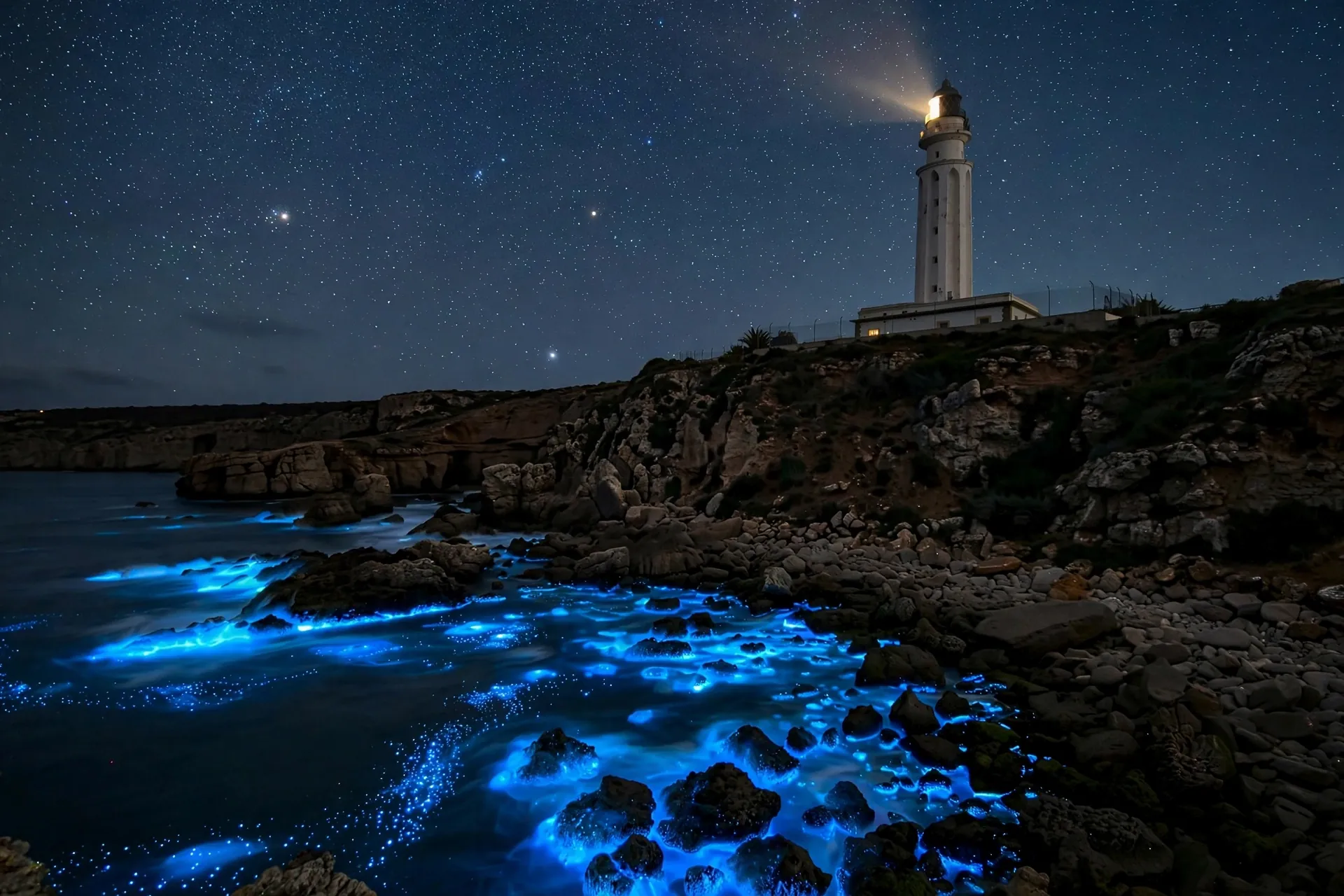
Cadiz: Trafalgar Lighthouse Beach
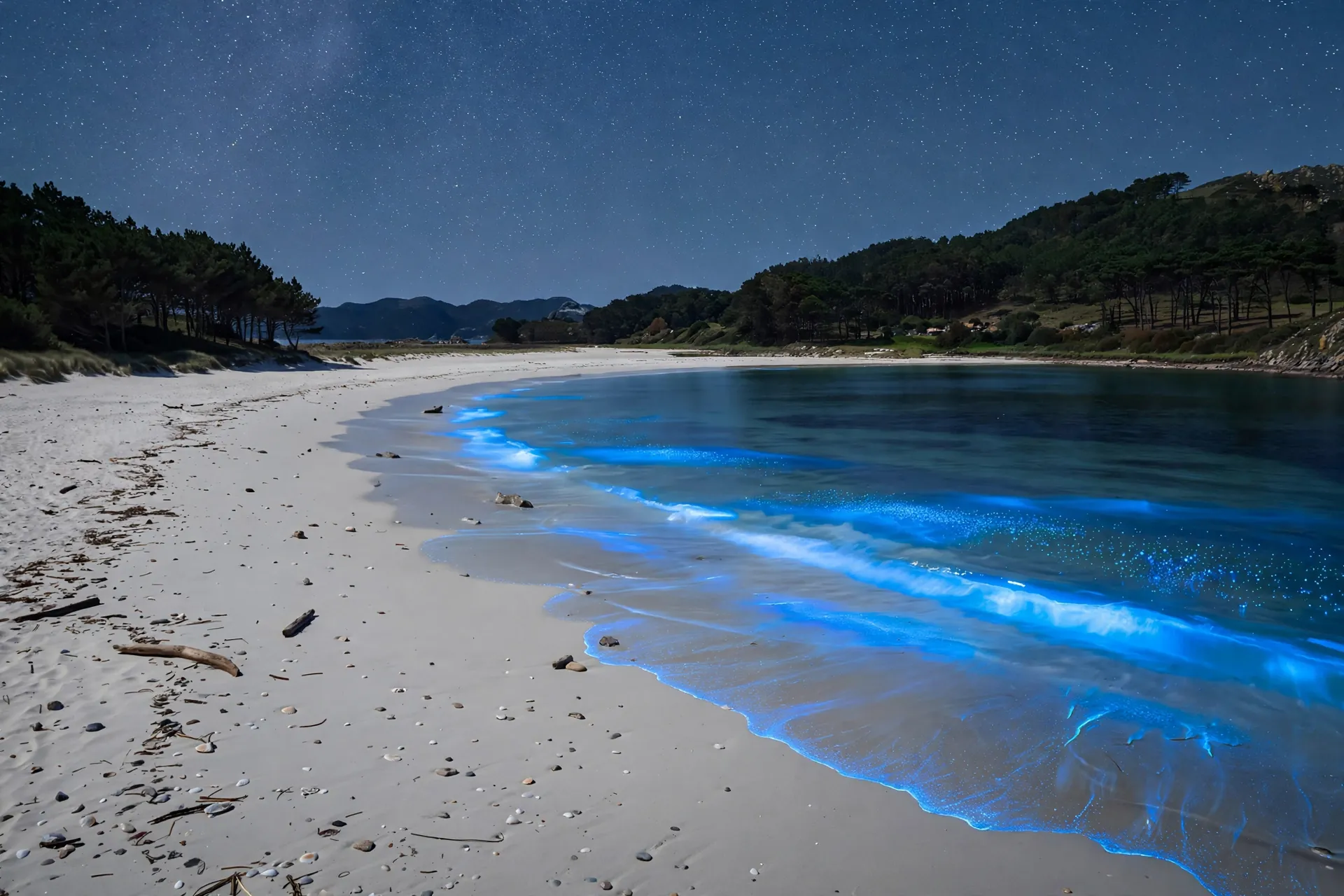
In Andalusia, Trafalgar Lighthouse Beach near Cadiz is known for its nighttime light shows during the warmer months, generally from June to September. The beach’s calm, shallow waters create favorable conditions for the glowing organisms, especially on still nights.
This is southern Spain’s most talked-about Ardora spot, and it pairs naturally with a summer trip along the Costa de la Luz. As with Galicia, there is no schedule to book, just conditions to watch: warm sea, light winds, and a moonless sky.
How to See It
Stay near the coast in summer and walk down to the shoreline after dark on calm nights. Keep white lights off so your eyes stay adjusted, and check the water’s edge first, since the glow often shows in the swash before it spreads.
The Balearic Islands
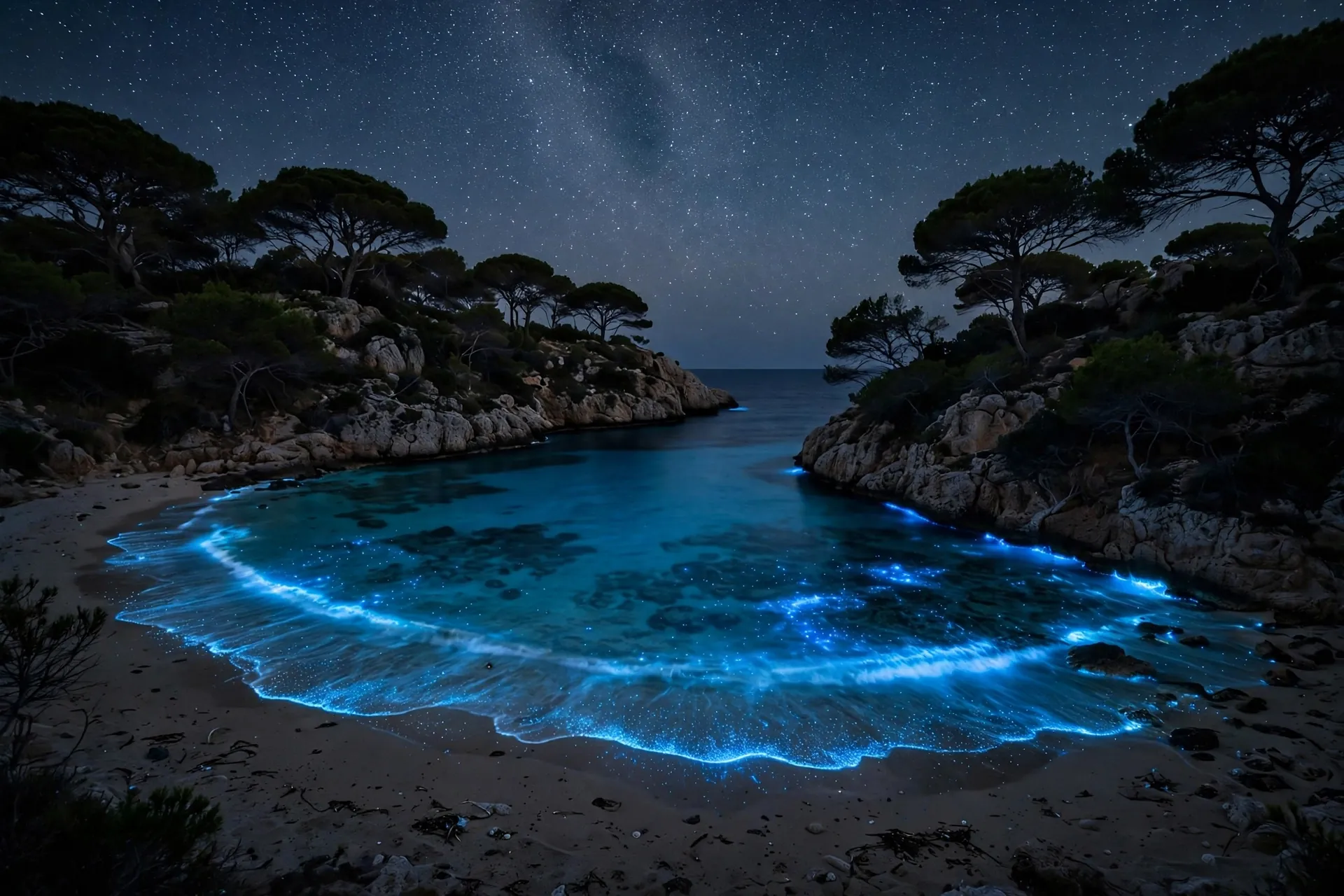
The Balearics add a Mediterranean chapter to the story. Beaches like Es Pujols on Formentera and Cala Macarelleta on Menorca have surprised swimmers with glowing water on warm summer nights, when conditions let the plankton gather in the sheltered coves.
Benalmadena on the Costa del Sol has even been promoted as an interactive bioluminescent beach experience. Treat these southern spots as wonderful bonuses rather than the main plan, and put Galicia first if the Ardora is the reason for your trip.
How to See It
Linger on the beach after sunset in July and August and watch the waterline once it is fully dark. The clear, shallow coves of Formentera and Menorca are ideal, since you can see the glow develop right at your feet.
When to Go
| Spot | Best Months | What Glows | How to See It |
|---|---|---|---|
| As Catedrais Beach, Galicia | June to July | Noctiluca (Mar de Ardora) | Night beach walk |
| Cies and Ons Islands, Galicia | June to September | Noctiluca (Mar de Ardora) | Overnight stay, dark beaches |
| Trafalgar Beach, Cadiz | June to September | Noctiluca | Calm-night shoreline walk |
| Formentera and Menorca, Balearics | July to August | Noctiluca | Shoreline after dark |
Five Tips for Seeing the Ardora
- Pick a new moon night. Moonlight is the single biggest glow-killer, so check the lunar calendar first.
- Go on warm, calm nights. Heat and still water are what let the algae bloom in the first place.
- Get away from town lights. The darker your beach, the brighter the blue looks.
- Arrive after full dark and wait. Give your eyes fifteen to twenty minutes to adjust before judging the night.
- Respect the water. Do not wade through dense blooms on purpose, keep lights low, and take all trash with you.
Frequently Asked Questions
What is the Mar de Ardora?
It is Galicia’s name for bioluminescence, meaning “sea of fire.” Blooms of Noctiluca algae make the shoreline glow blue on warm summer nights when the water is disturbed.
When is the best time to see bioluminescence in Spain?
June through September, on warm, calm, moonless nights. Galicia peaks a little earlier, with As Catedrais at its best in June and July.
Where is the best place in Spain to see it?
Galicia is the most dependable region, especially As Catedrais Beach and the Cies Islands. Cadiz and the Balearic Islands also glow in the right conditions.
Can you swim in the glowing water?
The Ardora is best enjoyed from the shoreline. Avoid swimming through dense blooms on purpose, and always respect local guidance about the water.
Is the glow guaranteed on any given night?
No. It depends on water temperature, calm seas, and darkness, so treat it as a seasonal possibility. Warm, still, moonless nights give you the best odds.
Spain’s glow is Europe’s best-kept luminous secret, and Galicia is where it burns brightest. Time it for a warm, moonless summer night, and walk the shoreline after dark. For glowing spots beyond Spain, see our worldwide bioluminescence guide.