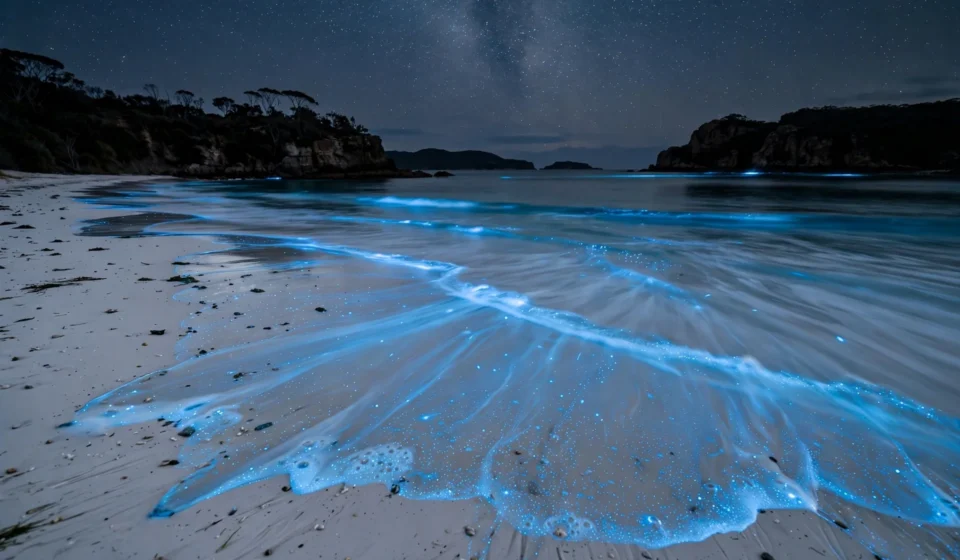
The best places to see bioluminescence in Australia are Jervis Bay in New South Wales, the Gippsland Lakes in Victoria, and the coast around Hobart in Tasmania. The glow comes from Noctiluca scintillans, a plankton locals call sea sparkle, which lights up blue when waves or footsteps disturb it.
Australia’s displays are less predictable than the famous tropical bays of the Caribbean. Blooms depend on warm water, nutrients, and rainfall, so a beach can glow brilliantly one week and stay dark the next. That is why timing and local sighting reports matter more here than anywhere else on this list.
This guide covers the three most dependable spots, plus a few honourable mentions, with the best months for each and how to catch a bloom. For glowing spots beyond Australia, see our worldwide bioluminescence guide.
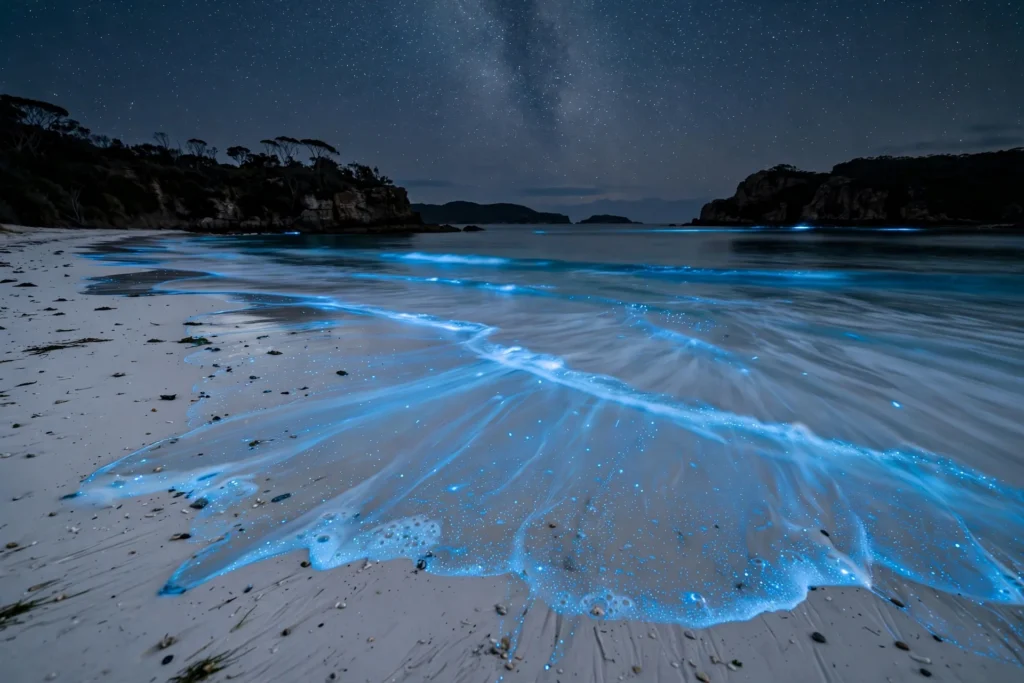
Jervis Bay, New South Wales
Jervis Bay is widely regarded as the most reliable place to see bioluminescence in Australia. The bay’s sheltered beaches, including Hyams Beach, Barfleur Beach, Blenheim Beach, and Callala Bay, have produced repeated displays, with significant events lighting up the shoreline in recent years. It sits about three hours south of Sydney, which makes it an easy weekend trip.
The pattern locals watch for is a warm spell followed by rainfall, which feeds the plankton with nutrients and triggers the bloom. Late summer into early autumn, roughly February through April, brings the warmest water and the best odds. Even then, nothing is guaranteed on any single night, so flexibility helps.
How to See It
Walk the beach after full dark on a moonless night and look for blue edges on the breaking waves. Stamping the wet sand or swirling your hand in the shallows can trigger the glow when plankton are present. Check local news and the Bioluminescence Australia community group for recent sighting alerts before you drive down.
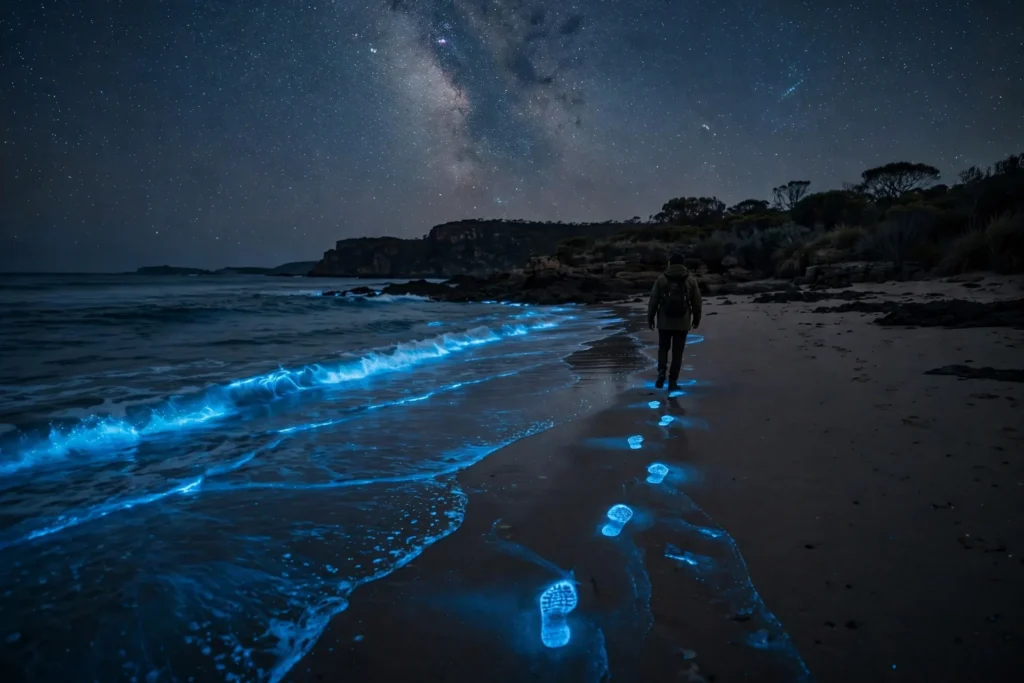
Gippsland Lakes, Victoria
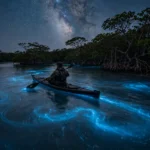
The Gippsland Lakes region is one of Victoria’s most dependable spots for the glow. From December through February, the warm, calm lakes around Metung, Nungurner, Lake Victoria, and Lake Tyers can light up blue when the water is disturbed. A kayak or canoe is the ideal way to experience it, since each paddle stroke trails light across the black water.
Visibility changes night to night with weather and water conditions, so treat it as a seasonal possibility rather than a nightly show. Pair it with a summer lakes holiday and check with local operators, who track plankton activity closely.
How to See It
Base yourself around Metung or Lakes Entrance in summer and join an evening paddle when conditions look right. Calm, warm nights after still days give the best chance. As always, a dark, moonless sky makes the difference between a faint shimmer and a proper light show.
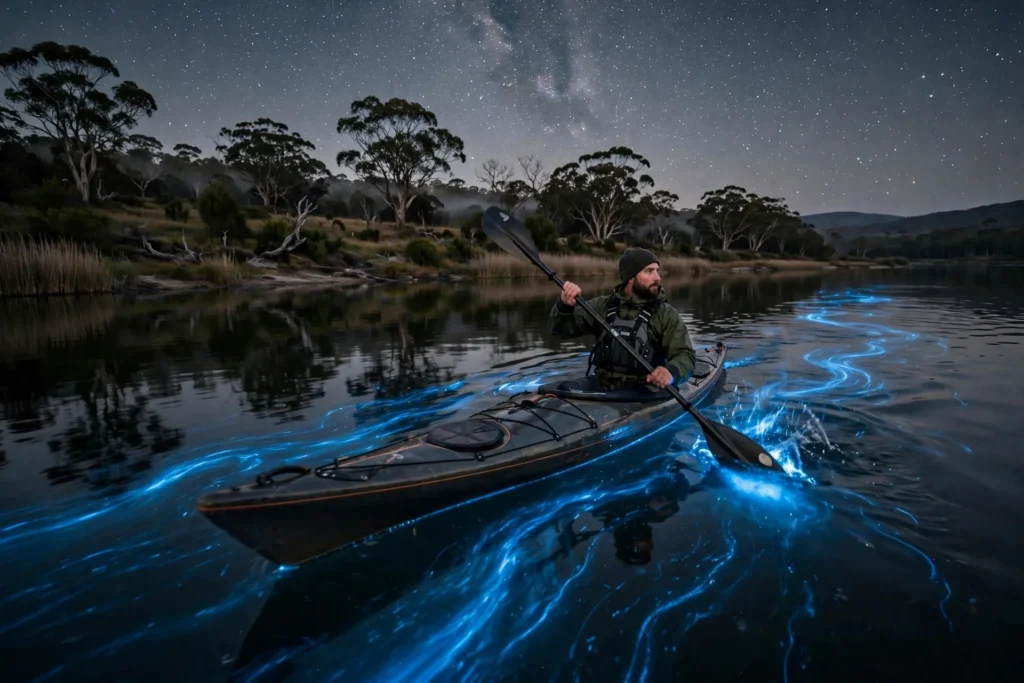
Tasmania
Tasmania produces some of the brightest sea sparkle displays in the country. Calm summer nights around Hobart, the Tasman Peninsula, and Lauderdale near the capital have all delivered striking glows, and local photographers rank Tassie blooms among Australia’s finest. The island’s dark skies help too, since there is so little light pollution to compete with the water.
Like the mainland spots, Tasmanian blooms are event-driven rather than nightly. Warm, settled summer weather is the trigger to watch for, and the same community sighting groups that cover Jervis Bay will usually flag a Tasmanian bloom within hours.
How to See It
Head to a calm, dark beach near Hobart on a moonless summer night and test the shallows with your hand or a thrown stone. Lauderdale and the Tasman Peninsula are the names locals mention most. Bring warm layers, since even summer nights on the water get cold, and a tripod if you want to photograph it.
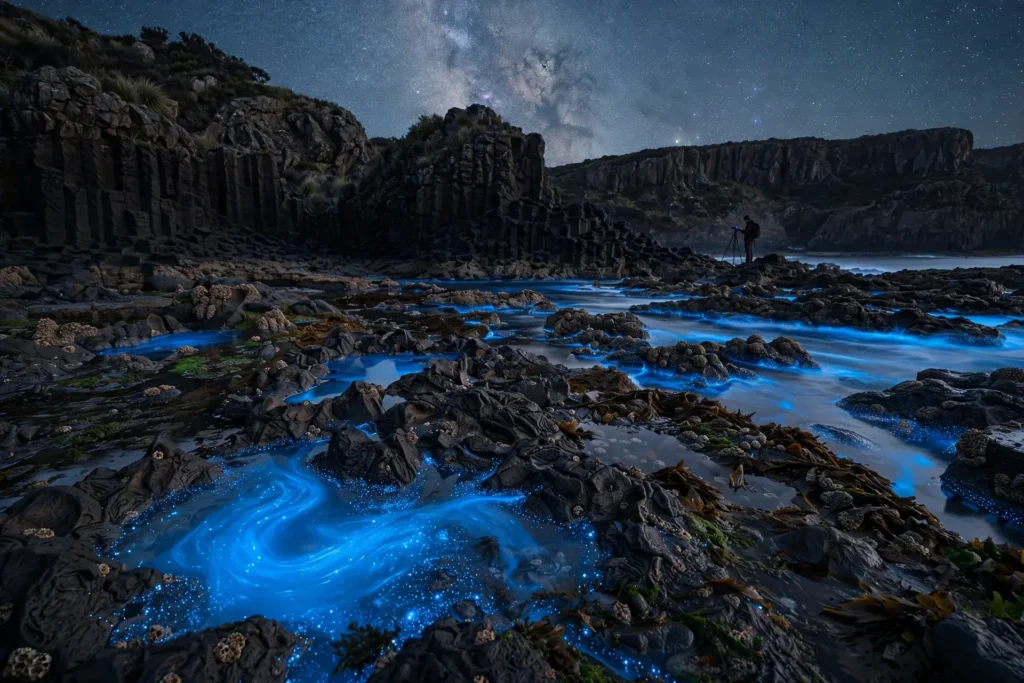
Other Spots Worth Watching
Port Phillip Bay near Melbourne and the Surf Coast around Lorne have both flashed on rare occasions, but sightings are uncommon and not worth a dedicated trip. Port Lincoln in South Australia has documented flares as well. Treat all three as bonuses if you are already nearby, and put your planning energy into the big three above.
When to Go
| Spot | Best Months | What Glows | How to See It |
|---|---|---|---|
| Jervis Bay, New South Wales | February to April | Noctiluca (sea sparkle) | Beach walk after dark |
| Gippsland Lakes, Victoria | December to February | Noctiluca (sea sparkle) | Evening kayak |
| Tasmania (Hobart, Tasman Peninsula) | December to March | Noctiluca (sea sparkle) | Calm beaches at night |
| Port Phillip Bay and Lorne, Victoria | Occasional | Noctiluca (sea sparkle) | Watch local reports |
Five Tips for Chasing the Glow in Australia
- Follow sighting alerts. The Bioluminescence Australia community group and local news flag blooms fast, often the same night.
- Go after warm spells plus rain. That combination feeds the plankton and precedes most Jervis Bay events.
- Choose the new moon. Even a half moon dulls the contrast, so check the lunar calendar before heading out.
- Give your eyes twenty minutes. Full darkness adaptation is the difference between seeing a shimmer and seeing the show.
- Bring a tripod for photos. Long exposures capture what your eyes struggle to hold, and a red-light flashlight keeps everyone’s night vision intact.
Frequently Asked Questions
When is the best time to see bioluminescence in Australia?
February through April for Jervis Bay, December through February for the Gippsland Lakes, and summer for Tasmania. Everywhere in the country, a moonless night matters more than the month.
Can you predict when a bloom will happen?
Not precisely. Blooms depend on water temperature, nutrients, and rainfall, so they arrive as events rather than on a schedule. Your best tools are recent sighting reports and the pattern of warm weather followed by rain.
Is Jervis Bay really the best spot in Australia?
It is the most reliable, with the longest record of repeated displays, but no beach in Australia glows every night. Go in season, watch the alerts, and have a backup plan for the weekend.
Is it safe to swim in bioluminescent water in Australia?
Sea sparkle itself is not dangerous to swimmers, but only swim where you would normally swim at night and always follow local beach safety advice. Most people experience the glow from the sand or a kayak.
How do I photograph bioluminescence?
Use a tripod, a long exposure of several seconds, and manual focus set to infinity. A dark, moonless night is essential, and keep white lights off while you shoot.
Australia’s glow is a chase, not a guarantee, and that is part of the fun. Pick your season, watch the alerts, and head out on the darkest night you can find. For glowing spots beyond Australia, see our worldwide bioluminescence guide.