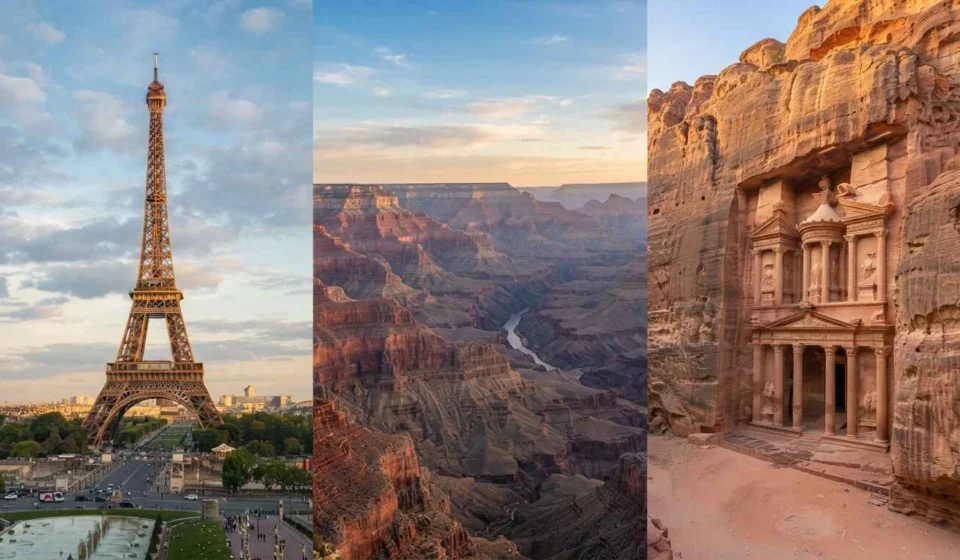
The best tourist attraction gives you a clear reason to show up: a story you can’t get anywhere else, a view that photos don’t do justice, or an experience that changes how you see a place. Landmarks like the Eiffel Tower and the Grand Canyon earn repeat visits because they deliver on that promise year after year, not because a list says so.
What Actually Makes a Tourist Attraction the Best
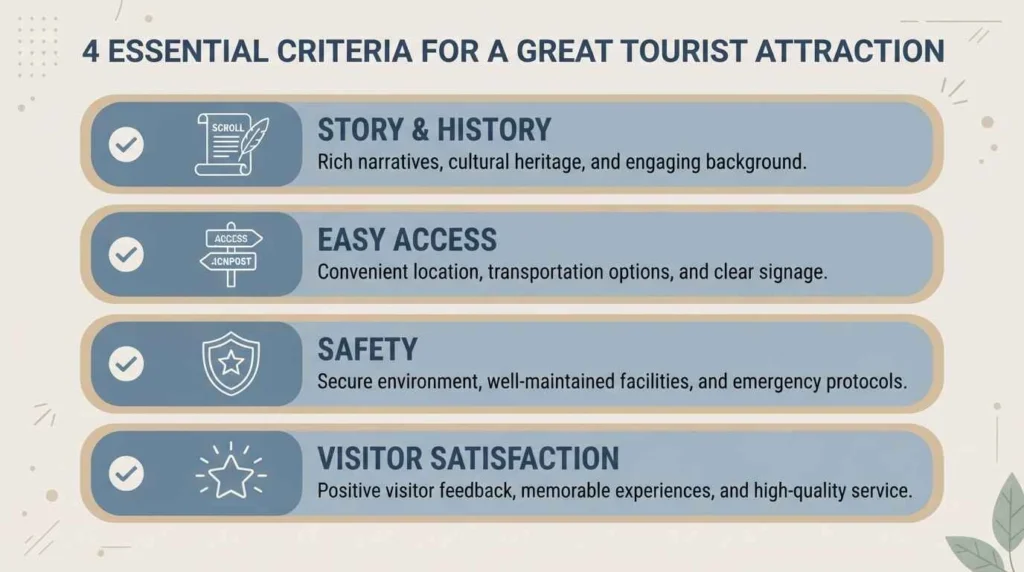
Rankings differ depending on who’s compiling them, but the same factors keep showing up. A strong attraction has a story worth telling, whether that’s a pharaoh’s tomb or a waterfall that locals call “the smoke that thunders.” It also needs to be reasonably easy to reach, safe to visit, and consistent enough that most visitors leave satisfied rather than disappointed. Landmarks shape top urban destinations featured in the best cities to visit in the USA. Historic monuments across the continent define key stops among the best places to visit in Europe.
Petra is a good example of how story and access work together. The site sat mostly forgotten after a 4th-century earthquake and shifting trade routes pushed it into decline, until a Swiss explorer rediscovered it in the early 1800s. That history is part of what draws visitors now, along with the practical fact that you can walk the site in a single day if you go early
Types of Tourist Attractions Worth Planning a Trip Around
Not every traveler wants the same thing, so it helps to think in categories rather than one master list.
Historical and Archaeological Landmarks
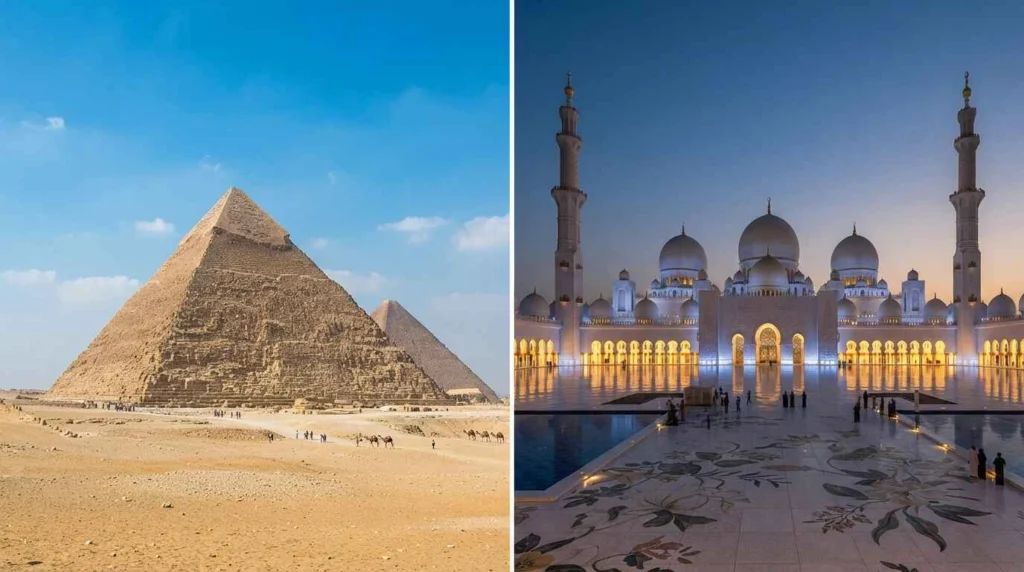
The Great Pyramid of Giza is the last surviving structure from the Seven Wonders of the Ancient World, and it still draws millions of visitors to the site outside Cairo every year. The Great Wall of China and Chichen Itza fall into the same bucket: places where the draw is standing inside a piece of history rather than looking at it in a museum case.
Natural Wonders
Some attractions need no architecture at all. Victoria Falls, on the border of Zambia and Zimbabwe, is known locally as “the smoke that thunders” for the mist it throws into the air. The Grand Canyon and the Great Barrier Reef work the same way, rewarding visitors who see them from more than one angle, whether that’s a canyon rim trail or a flight over the reef
Modern Architecture and Iconic Buildings
Newer attractions compete on design rather than age. The Sheikh Zayed Grand Mosque in Abu Dhabi was built with roughly 100,000 tons of white marble and includes a chandelier over 50 feet tall. Entry is free, but visitors need to preregister and follow a dress code that covers arms and legs, which catches some first-time visitors off guard.
Museums and Cultural Institutions
Not every top attraction is outdoors. The Van Gogh Museum in Amsterdam holds one of the largest collections of the artist’s work anywhere, spread across multiple floors with interactive exhibits alongside the paintings. Museums like this one give travelers a rain-day option that still counts as a highlight of the trip.
How to Choose the Right Attraction for Your Trip
A “best of” list is a starting point, not a plan. The right pick depends on how you travel and what you can realistically fit into your schedule.
Match the Attraction to Your Travel Style
Someone chasing photos and quick highlights will get more out of a half-day stop at a landmark like the Empire State Building (a highlight of any New York itinerary), with its two observation decks and skyline views. Someone who wants depth might prefer a full day at a site like Pompeii, where guided tours cover the ruins in more detail than a self-guided walk allows.
Check the Season and Expected Crowds
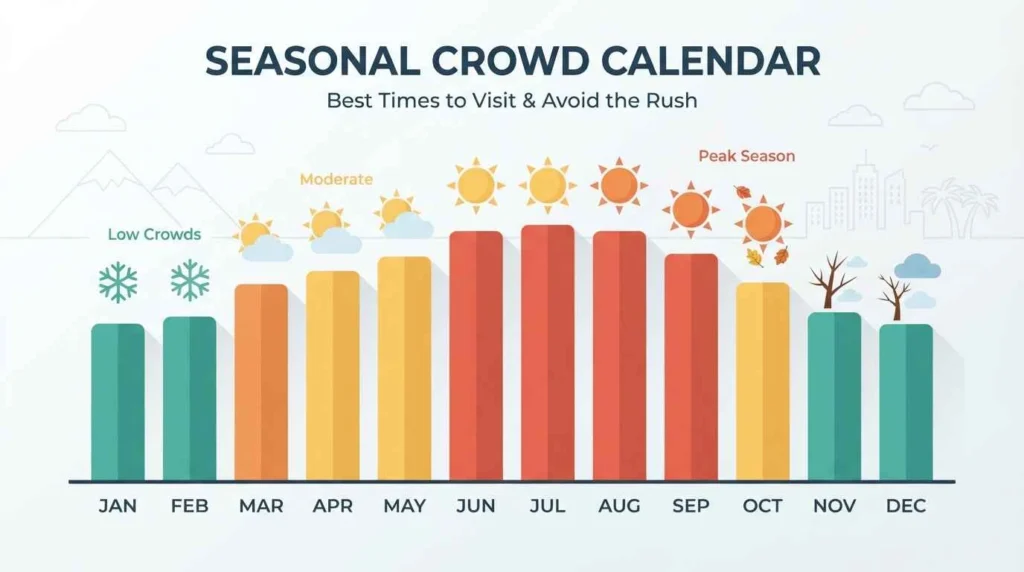
Timing changes the experience more than most people expect. Petra is easier to enjoy in the off-season, when the crowds thin out around the Treasury and the Monastery. Some sites, like Mount Fuji’s climbing trails, effectively close outside a specific window each year, so checking dates before booking flights saves a wasted trip.
Budget for Tickets, Tours, and Getting There
Costs vary more than the marketing photos suggest. Some landmarks, like the Brooklyn Bridge or the Lincoln Memorial, cost nothing to visit. Others, like a tram ride to the top of the Gateway Arch, charge a separate fee on top of free museum access, so it’s worth checking the fine print before you assume a “free” attraction has no costs at all.
Common Mistakes People Make When Picking a “Must-See” Spot
The biggest mistake is treating a top-10 list as a fixed itinerary instead of a menu. Trying to hit five major landmarks in one day usually means rushing through all of them and enjoying none. It also pays to check entry rules in advance. Visitors to the Sheikh Zayed Grand Mosque who show up without preregistration or the right clothing can be turned away at the door, even though admission itself is free.
Skipping the lesser-known alternative nearby is another common miss. Travelers who go all the way to St. Louis for the Gateway Arch often skip the Cahokia Mounds eight miles away, home to the largest pre-Columbian site north of Mexico, simply because it wasn’t on the list they started with.
The best tourist attraction for your trip is the one that fits your time, budget, and interests, not just the one topping someone else’s ranking. Check the season, confirm the entry rules, and leave room in your schedule for at least one stop you didn’t plan.
Frequently Asked Questions (FAQs)
What is Considered the Best Tourist Attraction in the World?
There’s no single answer, since rankings depend on the source and the criteria used. Landmarks like the Eiffel Tower, the Great Wall of China, and the Grand Canyon consistently appear near the top of most lists because of their history, accessibility, and visitor volume.
How Do I Decide Which Attraction is Worth Visiting?
Look at three things: whether the story or view genuinely interests you, how much time and money it takes to get there, and whether recent visitor reviews match what you’re hoping to experience. A landmark that’s a perfect fit for a history buff might be a poor fit for someone traveling with young kids.
3:Are Natural Wonders Better than Man-Made Landmarks?
Neither is objectively better; they offer different experiences. Natural sites like Victoria Falls or the Great Barrier Reef reward visitors who enjoy the outdoors, while man-made landmarks like La Sagrada Familia or the Colosseum appeal more to travelers interested in architecture and history.
Is it Better to Book a Guided Tour or Explore on Your Own?
It depends on the site. Places with dense history, like the Colosseum or Pompeii, tend to benefit from a guide who can explain what you’re looking at. Simpler landmarks, like a public park or an observation deck, are easy to enjoy without one.
What’s the Best Time of Year to Visit Popular Tourist Attractions?
This varies by destination and climate. As a general rule, shoulder seasons (just before or after peak summer or holiday travel) offer smaller crowds and lower prices, though some sites have specific access windows tied to weather or safety, so it’s worth checking each destination individually.