

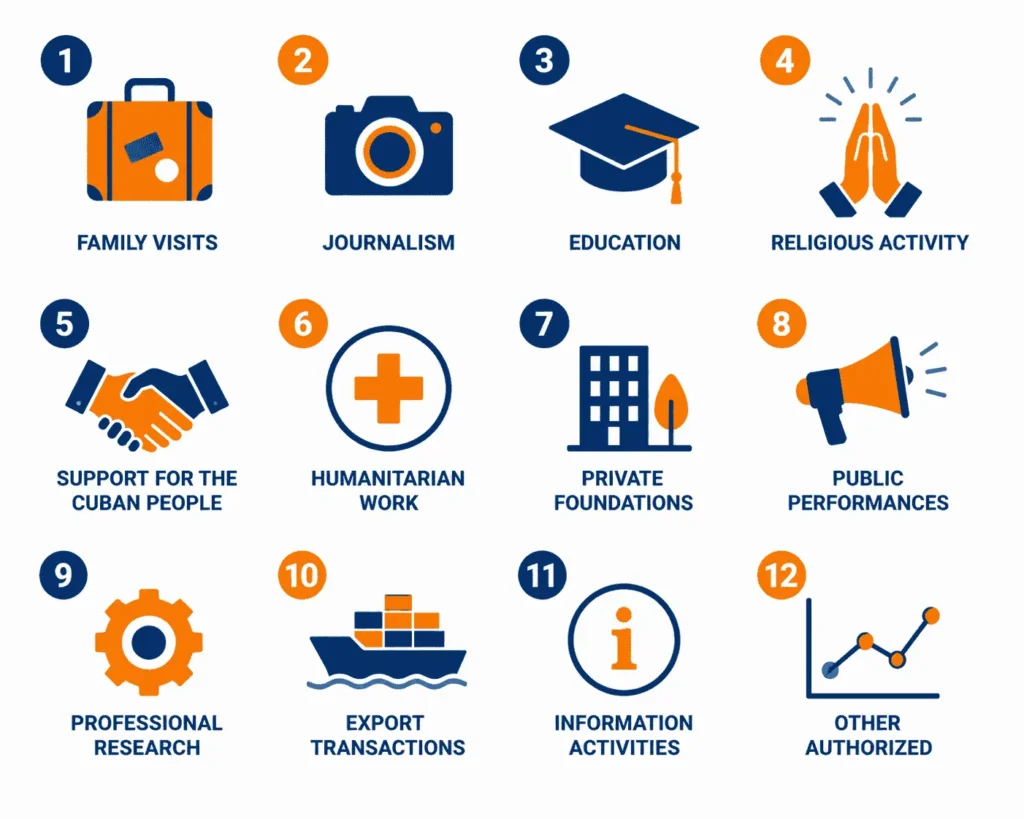
Yes. Americans can legally travel to Cuba, but not as tourists. The trip has to fall under one of 12 categories set by the U.S. Treasury’s Office of Foreign Assets Control, and “support for the Cuban people” is the one most travelers use.
What Counts as Legal Travel to Cuba for Americans
Cuba travel for U.S. citizens has been restricted since the early 1960s, when the government imposed a trade embargo after the Cuban Revolution. That embargo is still in force, and pure tourism, meaning beach resorts with no other purpose, is still off the table for Americans. What changed over the past decade is how the legal categories work.
The 12 OFAC-Approved Travel Categories
OFAC’s general license covers 12 reasons for travel: family visits, official government business, journalism, professional research and meetings, educational activities, religious activities, public performances and competitions, support for the Cuban people, humanitarian projects, private foundation or institute activities, exporting informational materials, and certain authorized export transactions. You don’t apply for a license in advance. You self-certify which category fits your trip when you book, and you’re expected to actually follow it.
Why “Support for The Cuban People” is The Default Choice
Most independent travelers use this category because it’s the most flexible. It requires a full schedule of activities that put money directly into Cuban hands rather than government-run businesses: eating at family-owned restaurants, hiring local guides, staying in private homes. A typical day needs real activities on it, not a loose plan to wing it once you land.
How to Get a Cuban Visa and Complete Entry Paperwork
Two separate paperwork tracks apply here: the Cuban government’s entry requirements, and the U.S. government’s authorization requirement. Missing either one causes real problems.
The Cuban Tourist Card
Almost every American entering Cuba needs a Cuban Tourist Card, sometimes called a Cuban visa. If you’re flying directly from the U.S., you need the pink version; flying in from a third country like Mexico or Panama requires the green version. Airlines often sell it during check-in, and prices generally run $50 to $100 depending on the carrier. You can also buy it in advance through an authorized third-party visa service.
The D’Viajeros Form
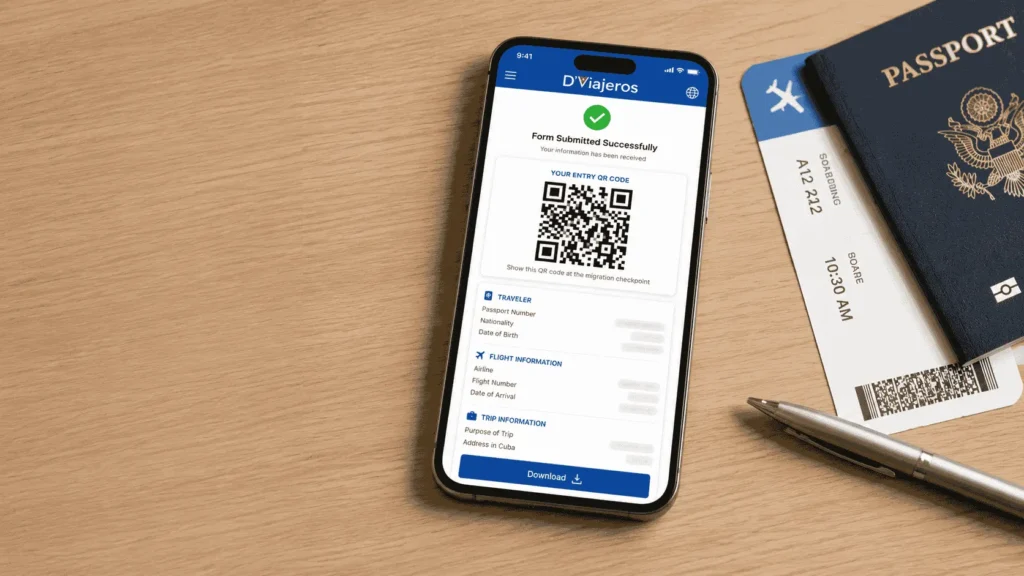
Cuba also requires travelers to complete the D’Viajeros Advance Information form online before arrival, no earlier than seven days out. It covers basic health and customs declarations, and submitting it generates a QR code you’ll need to show at check-in and again at Cuban immigration. Save it to your phone and print a copy, since Wi-Fi at the airport isn’t reliable.
Flights, Airports, and What to Expect on Arrival
American Airlines, United, Delta, JetBlue, and Southwest all run scheduled flights to Cuba from hubs like Miami, Houston, New York, and Fort Lauderdale, mostly landing in Havana, though some routes serve Santa Clara, Holguin, and Camagüey. You don’t need to route through a third country to make the trip legal; flying direct from the U.S. is fine as long as your travel category checklist is in order. At Cuban immigration, agents generally aren’t concerned about American visitors. If you’d rather not have a Cuba stamp in your passport, you can ask the agent to stamp a separate paper instead
Money in Cuba: Why us Cards don’t Work
U.S.-issued credit and debit cards do not function in Cuba because of the sanctions, and using one, even by accident, can flag your account back home. That means cash is the only real option. Budget around $100 to $150 per day if you’re covering meals, transport, tips, and activities, and bring more than you think you’ll need since running out mid-trip is a genuine hassle, not just an inconvenience. U.S. dollars can be exchanged for Cuban pesos at the airport, hotels, and licensed exchange houses, though you’ll pay a penalty on USD specifically, so some travelers bring euros instead.
Where You Can and Cannot Stay
Most large hotels and resorts in Cuba are owned or partly controlled by the Cuban government, and OFAC maintains a list of specifically restricted properties that Americans are barred from paying. Booking a hotel just because it shows up on a travel site isn’t enough due diligence.
Casas Particulares and Paladares
The workaround, and honestly the better experience for most travelers, is staying in casas particulares: privately owned guesthouses, many of them listed on Airbnb, that put money directly into a family’s pocket. Eating at paladares, privately run restaurants often set up inside someone’s home, works the same way. Both fit naturally into the “support for the Cuban people” category.

Records to keep, and for How Long
OFAC expects travelers using the general license to keep proof that their trip matched its stated category: a day-by-day itinerary, lodging confirmations, and receipts for activities. The rule is to retain these for five years after the trip. In practice, almost no one gets asked to produce them at the border, but the requirement is real, and travelers who’ve been asked years later have been glad they saved a folder.
Safety and Current Conditions
Cuba carries a Level 2 travel advisory from the State Department, its “exercise increased caution” tier, largely due to intermittent nationwide power outages that have grown more frequent since October 2024. Scheduled and unscheduled outages of up to 12 hours happen daily in Havana, and longer outside the capital. Pack a portable charger, bring a paper copy of anything you need, and don’t count on hotel generators running the full outage. Violent crime against tourists is rare, but pickpocketing and opportunistic theft have increased alongside the country’s economic strain.
Cuba is legal to visit as an American once you pick the right category and follow through on it. Get the paperwork sorted before you fly, bring enough cash, book a casa instead of a resort, and keep your receipts. The rest of the trip, the old cars, the live music, the crumbling colonial streets, is exactly what everyone tells you it is.
Frequently Asked Questions (FAQs)
Can Americans travel to Cuba for tourism?
No. Tourism alone isn’t an authorized reason under U.S. law. Your trip needs to fit one of the 12 OFAC categories, most commonly “support for the Cuban people,” which requires a full schedule of qualifying activities.
Do Americans need a visa for Cuba?
Yes, in the form of a Cuban Tourist Card, plus the online D’Viajeros form completed within seven days of arrival. Airlines usually sell the tourist card at check-in.
Can Americans use credit cards in Cuba?
No. U.S.-issued cards don’t work there because of the sanctions. Bring enough cash in USD or euros to cover the entire trip.
Is it legal to fly direct from the U.S. to Cuba?
Yes. Several major U.S. airlines run direct flights to Havana and other Cuban cities, and flying direct doesn’t affect the legality of your trip as long as your travel category is legitimate.
Is Cuba safe for American travelers right now?
The State Department rates Cuba at Travel Advisory Level 2. Violent crime against visitors is uncommon, but frequent power outages and rising petty theft are worth planning around.
Planning your itinerary connects smoothly with places to travel without a passport.